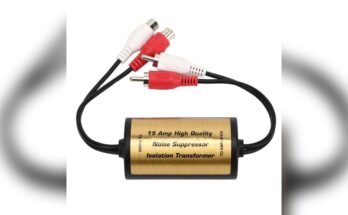
If you want to feel every beat and enjoy richer sound in your car, connecting a subwoofer to your factory stereo is the key. But you might be wondering, “How can I do this without messing up my original setup?” You’re in the right place.
This guide will walk you through simple, clear steps to boost your car’s audio power. By the end, you’ll know exactly how to connect your subwoofer and transform your driving experience. Ready to turn up the bass and make your music come alive?
Let’s get started!
Check Your Factory Stereo
Before connecting a subwoofer, examine your factory stereo carefully. It helps to know what outputs and wires are available. This step makes installation easier and avoids mistakes.
Factory stereos vary by car brand and model. Some have built-in subwoofer outputs, while others only have speaker wires. Knowing this helps you choose the right connection method.
Identify Output Options
Look at the back of your stereo for output ports. Common outputs include RCA jacks or a dedicated subwoofer output. RCA outputs use red and white connectors and send audio signals clearly.
If your stereo has no RCA outputs, check for a speaker-level output. This sends audio through regular speaker wires. Some stereos also have a line-out converter built-in for subwoofers.
Locate Speaker Wires
Find the speaker wires coming from your stereo to your car speakers. These wires usually have two colors—one positive and one negative. Use a test light or multimeter to confirm the correct wires.
Speaker wires allow you to connect a subwoofer amplifier if no RCA output exists. Identify the rear speaker wires, as they often provide better bass signals. Label the wires to avoid confusion during installation.

Choose The Right Subwoofer
Choosing the right subwoofer is very important for a good sound system. The subwoofer adds deep bass sounds that regular speakers cannot produce. Picking a subwoofer that fits your factory stereo helps you get clear and strong bass. This section explains key points to help you choose the right subwoofer for your car.
Powered Vs. Passive Subwoofers
Powered subwoofers have a built-in amplifier. They are easy to install and need fewer extra parts. You only connect them to your stereo and power source. Passive subwoofers need an external amplifier to work. They require more work but can offer more power. Choose powered subwoofers for simple setups. Pick passive if you want more control and power options.
Matching Impedance And Power
Check the impedance of your subwoofer and stereo. Impedance is measured in ohms. Matching impedance ensures the stereo and subwoofer work well together. Mismatched impedance can cause poor sound or damage. Also, match the power rating. The subwoofer’s power rating should be close to the stereo’s output power. This keeps the sound clear and stops damage to parts.
Gather Necessary Tools And Accessories
Gathering the right tools and accessories is the first step to connect a subwoofer to a factory stereo. The correct equipment makes the installation easier and safer. It helps avoid damage to your car’s electrical system and ensures the best sound quality.
Prepare everything before starting. This saves time and reduces frustration during installation. Knowing what you need keeps the process smooth and organized.
Wiring Kits And Connectors
A wiring kit contains all cables needed for the subwoofer connection. It usually includes power wires, ground wires, and RCA cables. Choose a kit that matches your subwoofer’s power requirements.
Connectors link the wires to your stereo and subwoofer. Use high-quality connectors to avoid loose connections and signal loss. Common types are spade connectors, ring terminals, and butt connectors.
Basic Tools Needed
Simple tools help with cutting, stripping, and securing wires. A wire stripper removes insulation cleanly without damaging the wire. Crimping tools attach connectors firmly.
Screwdrivers and pliers assist in removing panels and tightening screws. Electrical tape or heat shrink tubing protects wire joints from moisture and short circuits. Have these tools ready for a smooth installation.
Connecting Using Line Output Converter
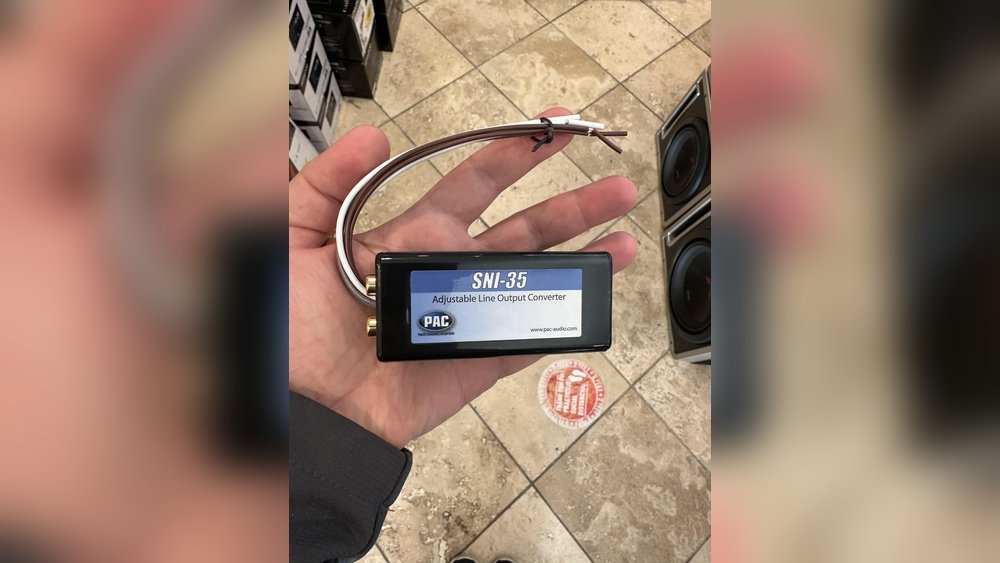
Connecting a subwoofer to a factory stereo can be tricky. Many factory stereos do not have dedicated subwoofer outputs. A line output converter (LOC) helps solve this problem by converting speaker-level signals to low-level signals. This allows you to connect the subwoofer amplifier to the factory stereo safely and clearly.
Using a line output converter keeps sound quality good. It also protects your stereo from damage by matching signal levels. This method works well for most factory stereos and keeps the installation clean and simple.
What Is A Line Output Converter
A line output converter changes high-level speaker signals into low-level RCA signals. Factory stereos send strong signals to speakers, but subwoofers need weaker signals. The LOC makes this change possible. It lets you use a subwoofer amplifier with a factory system.
The LOC connects to your factory speaker wires. It then sends the signal to your subwoofer amplifier through RCA cables. This process keeps sound clear and avoids distortion. The LOC is small and easy to install inside your car.
Step-by-step Wiring Process
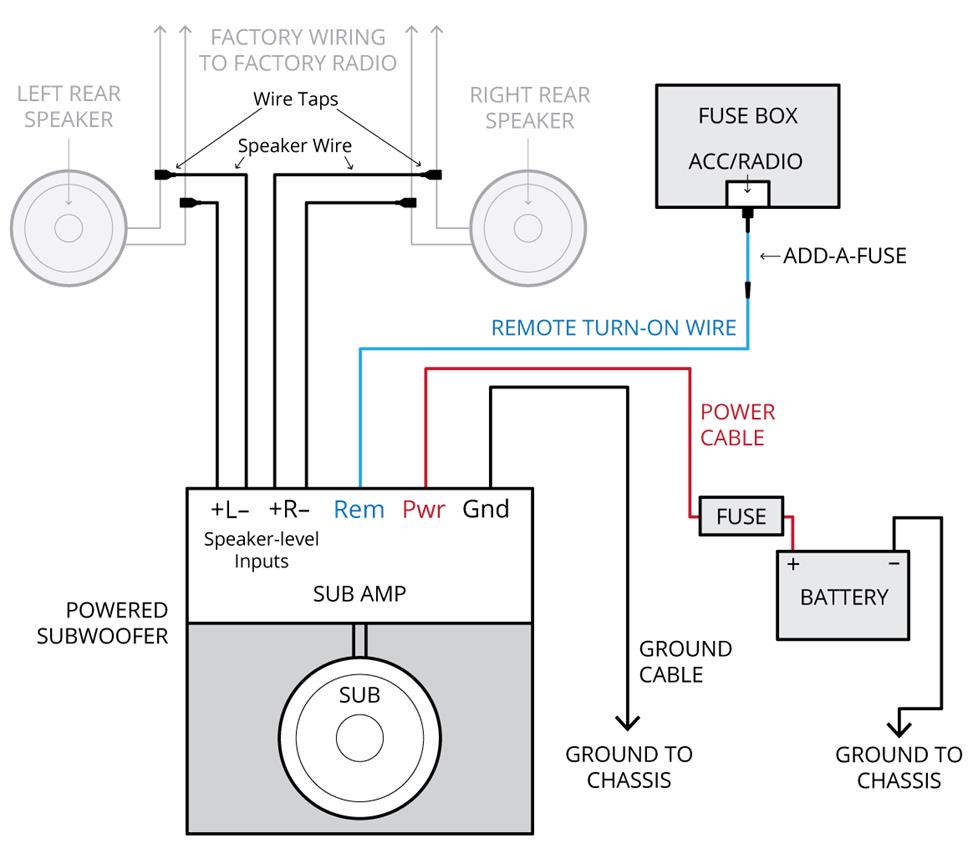
First, disconnect your car battery to stay safe. Find the factory speaker wires behind your stereo or at the speakers. Use a wire stripper to expose some wire on both sides.
Next, connect the LOC input wires to the factory speaker wires. Match positive to positive and negative to negative. Use crimp connectors or solder for a strong connection.
Then, connect the RCA cables from the LOC output to the subwoofer amplifier input. Make sure the connections are secure and tight.
Finally, connect the subwoofer to the amplifier. Reconnect your car battery and test the system. Adjust the subwoofer settings on the amplifier for best sound.
Direct Speaker Wire Connection
Connecting a subwoofer directly to the factory stereo’s speaker wires is a simple way to add deep bass. This method uses the existing wiring in your car. It avoids complicated adapters or extra parts. You can enjoy better sound with just a few steps.
Identifying Speaker Wires
First, find the speaker wires behind your stereo or in the door panels. Usually, these wires come in pairs—one positive and one negative. The positive wire often has a stripe or a different color. Use a test light or multimeter to confirm which wire carries the signal. Mark the wires clearly to avoid confusion later.
Wiring Subwoofer To Speaker Wires
Next, connect the subwoofer’s input wires to the speaker wires. Strip a small section of insulation from both wires. Twist the subwoofer wire with the positive speaker wire. Do the same for the negative wires. Secure the connections with electrical tape or wire connectors. Make sure no bare wire is exposed. This ensures a safe and clean connection.
Installing The Amplifier
Installing the amplifier is an important step to connect your subwoofer to a factory stereo. The amplifier powers the subwoofer and improves sound quality. Proper installation ensures clear and deep bass without distortion. Follow these key steps to install the amplifier correctly and safely.
Selecting The Right Amplifier
Choose an amplifier that matches your subwoofer’s power needs. Check the subwoofer’s RMS power rating and find an amplifier with similar output. Avoid an amplifier that is too weak or too strong for the subwoofer. Also, consider the number of channels the amplifier has. A mono amplifier is best for a single subwoofer. Ensure the amplifier fits in your car’s space.
Wiring Power And Ground
Connect the amplifier to the car battery using a power wire. Use a fuse close to the battery to protect the system. Ground the amplifier to a clean metal part of the car chassis. Keep the ground wire short and thick to avoid noise. Proper power and ground wiring prevent electrical problems and ensure stable performance.
Connecting Signal And Speaker Wires
Use RCA cables or a speaker-level adapter to send audio signals to the amplifier. Connect the cables from the factory stereo to the amplifier’s input. Then, connect the amplifier’s output wires to the subwoofer. Make sure all connections are tight and secure. Incorrect wiring can cause poor sound or damage the system.
Testing And Tuning The System
Testing and tuning your subwoofer system is key for great sound. Proper tuning ensures clear bass without distortion. This step helps balance your subwoofer with the factory stereo. It improves your listening experience and protects your equipment from damage.
Checking Connections
Start by inspecting all wire connections. Make sure the subwoofer wires are secure and tight. Loose connections can cause poor sound or no sound at all. Check the RCA cables or speaker wires for any damage. Replace any worn or frayed cables before proceeding. A solid connection is the base of good sound quality.
Adjusting Gain And Crossover Settings
Set the gain control to match your factory stereo volume. Too high gain causes distortion and can damage the subwoofer. Start low and slowly increase until the bass sounds clear. Next, adjust the crossover frequency to blend the subwoofer with your factory speakers. Set it around 80 Hz for most systems. This blocks higher frequencies and lets the subwoofer focus on deep bass. Fine-tune these settings by listening to different music types. Small adjustments make a big difference in sound quality.
Safety Tips And Common Mistakes
Connecting a subwoofer to a factory stereo can improve your sound experience. Safety is important during this process. Avoid common mistakes to protect your car’s electronics and sound system. Follow simple tips to keep everything working well and avoid damage.
Avoiding Electrical Issues
Turn off the car before starting any wiring. This stops short circuits and sparks. Use the correct wires for power and ground connections. Check all connections twice to avoid loose wires. Use a fuse near the battery to protect the system. Keep wires away from sharp metal edges and heat sources. Avoid running power and signal wires together to stop noise.
Preventing Damage To Stereo And Subwoofer
Match the subwoofer’s power rating with the amplifier and stereo. Do not overload your factory stereo with a too powerful subwoofer. Use a line output converter if your stereo lacks subwoofer output. Connect wires firmly to prevent shorts or disconnections. Avoid cutting the stereo’s original wires too much. Test the system at low volume first to check sound and connections. Stop immediately if you hear distortion or strange noises.

Frequently Asked Questions
How Do I Connect A Subwoofer To A Factory Stereo?
To connect a subwoofer, use a line output converter (LOC) to tap into the factory stereo’s speaker wires. Then, connect the LOC to the subwoofer amplifier input. Finally, wire the subwoofer to the amplifier and secure all connections properly.
Can I Add A Subwoofer Without Changing The Factory Stereo?
Yes, you can add a subwoofer using a line output converter. This device converts speaker-level signals to RCA outputs. It allows integration with the factory stereo without replacement or modification, preserving the factory system’s original features.
What Tools Are Needed To Connect A Subwoofer To Factory Stereo?
You need a line output converter, amplifier, speaker wire, RCA cables, wire strippers, and electrical tape. A multimeter is useful for checking connections. Proper tools ensure safe, effective installation and prevent damage to the stereo system.
Will Connecting A Subwoofer Affect Factory Stereo Sound Quality?
Adding a subwoofer enhances bass response without compromising factory stereo clarity. Proper installation maintains sound balance. Using a high-quality amplifier and correct wiring ensures the factory system performs optimally with the new subwoofer.
Conclusion
Connecting a subwoofer to your factory stereo can boost your sound quality. Use the right cables and settings for the best results. Take your time to check all connections carefully. Test the sound before driving to avoid surprises. Enjoy deeper bass and clearer audio in your car.
This simple upgrade makes your music more enjoyable. Remember, safety first when working with car electronics. Now, your car audio feels richer and more powerful.