Are you having trouble with your car stereo not working right? Before you spend money on a new system or costly repairs, it’s smart to check the wiring first.
Testing your car stereo wiring might sound tricky, but it’s easier than you think. With the right steps, you can find out if the problem is a loose connection, a blown fuse, or something else. Keep reading to learn simple, clear ways to test your car stereo wiring yourself—and get your music back on track fast.
Tools Needed For Testing
Testing car stereo wiring needs the right tools. These tools help find wiring problems and ensure a good connection. Using proper equipment makes the job safer and easier. Below are the tools needed for testing car stereo wiring.
Essential Equipment
A multimeter is the most important tool. It measures voltage, resistance, and continuity in wires. This tool shows if wires carry power or have breaks.
Wire strippers help remove insulation without damaging wires. Good wire strippers make connections cleaner and safer.
Test leads or probes connect the multimeter to wires. They must fit well and provide clear contact.
A car stereo wiring diagram is useful. It shows wire colors and their functions. This helps identify which wires to test.
Optional Accessories
A circuit tester can quickly check if wires have power. It lights up or beeps when power is present.
Electrical tape is handy for covering exposed wires after testing. It protects wires from short circuits and damage.
Alligator clips attach test leads to wires for hands-free testing. This allows more precise measurements.
A digital camera or phone can document wire setups. Photos help remember wiring connections for later.
Preparing Your Car Stereo
Preparing your car stereo is the first step in testing the wiring. It helps avoid damage and keeps you safe. Proper preparation makes the entire process easier. Follow clear steps to get ready before testing.
Disconnecting The Battery
Start by disconnecting the car battery. This prevents electrical shocks and short circuits. Use a wrench to loosen the negative terminal. Remove the cable and keep it away from the battery. This step protects you and the car’s electrical system.
Accessing The Wiring Harness
Next, locate the wiring harness behind the stereo. Remove the stereo unit carefully from the dashboard. Use a panel tool to avoid damage to the trim. Once the stereo is out, find the wiring harness connectors. These connectors link the stereo to the car’s electrical system. Inspect them for any visible damage or loose wires before testing.
Identifying Wiring Colors
Identifying wiring colors is the first step in testing car stereo wiring. It helps you know which wire does what. Each wire color usually has a specific function. Understanding these colors makes testing easier and safer. You avoid mistakes like mixing power and speaker wires. This section explains common wire color codes and how to match wires to their functions.
Common Wire Color Codes
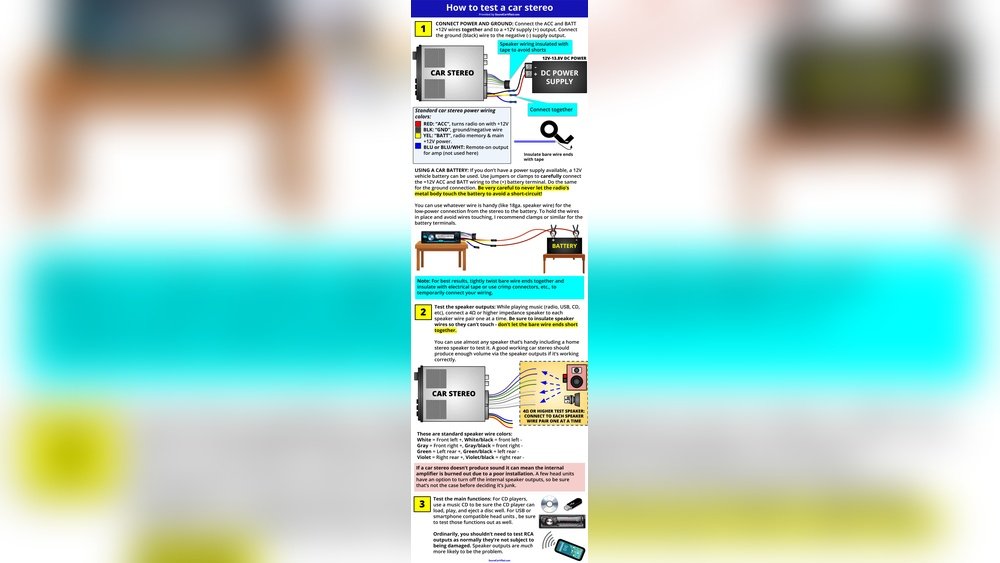
Car stereo wires follow common color codes. These colors help identify power, ground, and speaker wires quickly. The most common colors are:
- Yellow: Constant 12V power from the battery
- Red: Switched 12V power, turns on with ignition
- Black: Ground wire, connects to car chassis
- Blue: Power antenna or amplifier turn-on
- White and White with Black Stripe: Front left speaker positive and negative
- Gray and Gray with Black Stripe: Front right speaker positive and negative
- Green and Green with Black Stripe: Rear left speaker positive and negative
- Purple and Purple with Black Stripe: Rear right speaker positive and negative
Knowing these colors helps you trace wires easily. Some car brands may differ, so check your car’s manual.
Matching Wires To Functions
Match each wire color to its job before testing. Connect power wires to the car’s battery and ignition system. Attach speaker wires to the correct speaker terminals. Use a multimeter to check for voltage on power wires. Test speaker wires for continuity to avoid shorts or breaks.
Label wires as you test them. This keeps your work organized. Correct matching prevents damage to your stereo or car electronics. It also improves sound quality by ensuring proper connections.

Using A Multimeter
Using a multimeter is a reliable way to test car stereo wiring. It helps find breaks, shorts, and power issues. This tool gives clear information about the wires inside your car stereo system. It’s easy to use and provides accurate results.
Testing with a multimeter requires a few simple steps. Each step checks a different aspect of the wiring. Follow the steps carefully to avoid mistakes. Safety is important. Turn off the car before testing wires.
Setting Up The Multimeter
First, turn on your multimeter. Set it to the correct mode. For wiring tests, use the continuity or voltage mode. Attach the black probe to the common port. Connect the red probe to the voltage or resistance port.
Check the multimeter’s battery before starting. A low battery can give wrong readings. Hold the probes firmly to avoid loose contact. Keep the probes away from each other to prevent false signals.
Checking Continuity
Continuity checks if the wire is complete. Set the multimeter to continuity mode. Touch the probes to both ends of the wire. A beep means the wire is good. No sound means the wire is broken or disconnected.
Test each wire one by one. This helps find any broken connections. If the wire fails, replace or repair it. Continuity testing is quick and shows hidden issues.
Measuring Voltage
Voltage testing shows if power flows through the wire. Switch the multimeter to DC voltage mode. Connect the black probe to ground or the car’s metal frame. Touch the red probe to the wire’s power terminal.
Read the voltage value on the screen. It should match the car stereo’s voltage, usually 12 volts. Low or no voltage means a problem with power supply or fuse. Voltage testing confirms if the stereo gets enough power.
Testing Speaker Wires
Testing speaker wires is an important step when installing or fixing a car stereo system. It ensures sound quality and prevents damage to your speakers or stereo unit. Simple tools like a multimeter or a test light can help check if the wires work correctly. This process helps find any broken or loose connections fast.
Verifying Speaker Connections
Start by turning off your car’s stereo system. Locate the speaker wires connected to the stereo and speakers. Check if the wires match the stereo’s wiring diagram. Use a multimeter set to measure resistance (ohms). Touch the probes to the wire ends. A good wire usually shows a small resistance value. If it reads open or very high resistance, the wire may be broken.
Next, gently wiggle the wires while watching the multimeter. If the reading changes, the connection might be loose. Secure the wire ends tightly to the speaker terminals. Make sure no bare wire touches other metal parts. This can cause short circuits or poor sound quality.
Detecting Faulty Wires
Look for visible damage on the wires like cuts, cracks, or burns. Damaged insulation can cause shorts and sound issues. Use a test light to check for power flow along the wires. Connect the test light to the car’s battery and touch the wire ends. If the light does not glow, the wire may be broken or disconnected.
Another way is to swap wires with a working speaker. If the problem moves with the wire, the wire is faulty. Replace any damaged or broken wires with new ones. Use wires of the same gauge and type for best results. Proper wires ensure clear sound and long stereo life.

Checking Power And Ground Wires
Checking the power and ground wires is the first step in testing car stereo wiring. These wires supply electricity to the stereo system. Without proper power and grounding, the stereo will not work correctly. Testing these wires helps find problems early. It also prevents damage to the stereo or car electrical system.
Confirming Power Supply
Start by locating the power wire. It is usually red or yellow. Use a multimeter set to measure voltage. Connect the black probe to a metal part of the car. Touch the red probe to the power wire. The meter should show about 12 volts. No voltage means a problem with the wire or fuse. Check the fuse box and wiring connections. Make sure the car ignition is on for switched power wires.
Ensuring Proper Grounding
The ground wire is often black or brown. It connects the stereo to the car’s metal body. Use the multimeter to check resistance. Place one probe on the ground wire and the other on the car frame. The meter should read near zero ohms. High resistance or no reading means a bad ground. Clean the connection point or find another grounding spot. A good ground prevents noise and power issues in the stereo.
Troubleshooting Common Issues
Troubleshooting common car stereo wiring issues helps find and fix problems fast. Understanding basic faults saves time and effort. This guide covers frequent problems and clear steps to solve them. Follow these tips to get your stereo working well again.
No Sound Problems
Check if the stereo powers on. If yes, inspect speaker wires for loose or broken connections. Use a multimeter to test wiring for continuity. Confirm the fuse is not blown. Ensure the head unit settings are correct and volume is up. Test speakers with another audio source to rule out speaker damage.
Distorted Audio
Distortion often comes from bad wiring or poor connections. Check all wires for corrosion or damage. Tighten any loose connectors. Test the ground wire to make sure it is secure. Lower the volume to see if distortion persists. Faulty speakers or amplifier issues can also cause distortion. Swap components to isolate the problem.
Intermittent Connections
Intermittent sound means wires may be loose or damaged. Wiggle the wiring harness while the stereo plays to find cuts or breaks. Secure all plugs firmly. Clean connectors with electrical contact cleaner. Check for worn insulation that may cause shorts. Replace damaged wires to avoid future problems. Consistent connections ensure stable audio output.
Reassembling And Final Checks
After testing your car stereo wiring, the next step is reassembling the components and doing final checks. This step ensures your stereo works well and stays safe while driving. Taking time here prevents future issues and keeps your system stable.
Securing Connections
Check each wire connection carefully. Make sure all wires are tight and properly attached. Use electrical tape or wire connectors to cover exposed wires. Loose connections cause sound problems or short circuits. Keep wires neat and away from sharp edges or moving parts. Proper securing prevents damage and keeps the system safe.
Testing The Stereo System
Turn on the car stereo after reassembly. Play music and listen for clear sound from all speakers. Adjust the volume and check bass and treble. Make sure all functions like radio, Bluetooth, or CD player work well. Look for any static or interruptions. Test the system in different car modes, like ignition on and off. Confirm everything works before closing the dashboard completely.
Frequently Asked Questions
How Do I Check Car Stereo Wiring Connections?
Use a multimeter to test each wire for continuity and voltage. Ensure wires match the car’s wiring diagram. Check for loose or damaged connections to avoid sound issues.
What Tools Are Needed To Test Car Stereo Wiring?
You need a multimeter, wire strippers, electrical tape, and a wiring diagram. These tools help you identify wires and verify proper voltage and continuity safely.
How To Identify Positive And Negative Stereo Wires?
Positive wires usually have a red or yellow color; negative wires are black or brown. Use a multimeter to confirm polarity by checking voltage and continuity.
Can Faulty Wiring Cause Stereo Sound Problems?
Yes, loose or broken wires can cause no sound or static. Testing wiring ensures proper connections and helps diagnose issues quickly.
Conclusion
Testing car stereo wiring is easier than it seems. Use simple tools like a multimeter to check connections. Look for loose wires or bad contacts that cause sound issues. Take your time and follow safety steps. Clear wiring helps your stereo work better and last longer.
Keep these tips in mind for a smooth audio experience. Now, you can enjoy your music without interruptions.