Can A Car Battery Recharge Itself While Driving?
Most drivers have heard that their car battery can “recharge itself” while driving. You may have even noticed that your car starts fine after a long trip, but struggles after sitting idle for days. However, the reality is more complex than it seems. Many people misunderstand how car batteries and charging systems really work. Understanding this process can help you avoid common issues, save money, and extend your battery’s lifespan.
Let’s break down how car batteries, alternators, and your vehicle’s electrical system interact. You’ll learn what really happens when you drive, what factors affect battery charging, and how to keep your car starting reliably.
How Car Batteries Work
A car battery is more than just a box under your hood. It stores chemical energy and converts it into electrical energy to power your car’s starter motor, lights, and electronics. Most modern vehicles use a lead-acid battery because it’s affordable, reliable, and delivers a quick burst of power.
When you turn the key, the battery sends electricity to start the engine. Once the engine is running, the battery’s main job is over. Now, another part of your car takes over the task of providing power and recharging the battery.
The Role Of The Alternator
The alternator is the heart of your car’s charging system. It’s a small generator driven by a belt connected to the engine. When the engine runs, the alternator spins, producing electricity.
- It powers the vehicle’s electrical systems (lights, radio, sensors, etc.)
- It sends extra electricity to recharge the battery
Without the alternator, your car battery would quickly drain and the car would stop running, even if the battery was fully charged at the start.
Why Car Batteries Need Recharging
Every time you start your car, the battery loses a bit of its stored energy. Also, accessories like headlights, wipers, and AC use battery power when the engine is off. If you don’t drive enough to recharge the battery, it will eventually go flat.
Can A Car Battery Really Recharge Itself?
The short answer: No, a car battery cannot recharge itself. It needs an external energy source. In your car, the alternator provides this energy—but only when the engine is running.
Let’s clear up some common myths:
- The battery does not “make” new energy on its own.
- The battery cannot recharge just by sitting or resting.
- Only an outside force (alternator or a charger) can refill its energy.
When people say “the battery recharges while driving,” what they mean is that the alternator is working to restore lost energy. The driving itself does not recharge the battery—the engine must be running and the alternator must function properly.
How The Alternator Charges The Battery
When the engine runs, the alternator produces electricity by spinning a magnet inside coils of wire. This creates alternating current (AC), which is converted to direct current (DC) for the car’s systems.
Here’s a simple overview of what happens:
- The engine turns the alternator’s belt.
- The alternator generates electricity.
- The car’s electrical system uses some of this electricity.
- Any extra electricity charges the battery.
The alternator only charges the battery if there is surplus energy left after running all of the car’s other systems.
How Long Does It Take To Recharge?
The time needed to recharge a battery depends on how much it was drained. For example:
- After a normal engine start, 15-30 minutes of driving is usually enough to replace the lost charge.
- If the battery is deeply discharged (e.g., from leaving headlights on), it may take several hours of continuous driving.
Short trips, especially in the city, might not give the alternator enough time to recharge the battery fully.
Factors That Affect Battery Charging While Driving
Not every drive recharges your battery the same way. Many factors influence how much charge your battery gets:
Engine Rpm
The alternator’s output depends on engine speed. At low RPM (idle or slow driving), the alternator produces less electricity. At highway speeds, it charges faster.
Electrical Load
If you use many accessories (like headlights, heater, AC, stereo, phone chargers), the alternator must supply more power to these systems first. Less electricity is left to recharge the battery.
Battery Age And Health
An old or damaged battery cannot accept and hold a charge as efficiently as a healthy one. Even if the alternator works well, a worn-out battery may not recharge fully.
Alternator Condition
A weak or faulty alternator produces less electricity. The battery may not get charged enough, leading to starting problems.
Driving Distance And Style
Frequent short trips or city driving with lots of stops can prevent full battery charging. Longer drives at higher speeds are better for recharging.
Temperature
Batteries work best at moderate temperatures. Extreme cold or heat reduces charging efficiency and battery performance.
Parasitic Drains
Some electrical devices (like alarm systems, clocks, or faulty wiring) can slowly drain the battery, even when the car is off. This can outpace the alternator’s ability to recharge on short trips.

Common Signs Your Battery Is Not Recharging Properly
If your battery isn’t getting enough charge, you’ll usually notice warning signs:
- The engine is slow to start or doesn’t start at all.
- Headlights are dim, especially at idle.
- Dashboard warning light (battery or alternator symbol) stays on.
- Electrical systems (radio, power windows) work poorly.
- Clicking sound when you turn the key.
If you notice these issues, get your charging system checked by a mechanic.
What Happens If You Only Do Short Drives?
Many people today use their cars for short trips—school runs, shopping, or city commutes. These short journeys are often not enough to fully recharge the battery, especially if you use a lot of electrical accessories.
Over time, the battery stays partly charged and may eventually fail. This is why cars that sit for days or only do short trips often have battery problems, especially in winter.

How To Make Sure Your Battery Stays Charged
Here are practical steps to keep your battery healthy and reduce the chance of getting stranded:
- Drive longer distances when possible. Try to include a drive of 30+ minutes at highway speed each week.
- Turn off accessories (AC, radio, lights) before shutting off your car to reduce battery drain.
- Check battery terminals for corrosion. Clean if needed for a good connection.
- Have your alternator tested if you notice warning signs.
- Replace old batteries (3-5 years is typical) before they fail completely.
- Use a battery charger if you mostly do short trips or the car sits for long periods.
- Check for parasitic drains if your battery dies often. A mechanic can test this.
When The Alternator Alone Isn’t Enough
Sometimes, the alternator can’t keep up. For example:
- If the alternator is faulty or failing
- If the battery is very old or damaged
- If there’s a big electrical drain (like a high-power stereo system)
- If you only drive short distances
In these cases, the battery may not recharge fully, even with regular driving. You might need to use an external battery charger or replace the battery.
Comparing Battery Charging: City Vs. Highway Driving
It’s important to see how different driving habits affect battery charging. The table below compares city and highway driving:
| Factor | City Driving | Highway Driving |
|---|---|---|
| Engine RPM | Low/Variable | High/Stable |
| Alternator Output | Lower | Higher |
| Battery Recharge Rate | Slower | Faster |
| Electrical Load (AC, Lights) | Often High | Often Lower |
| Trip Length | Short | Long |
| Battery Health Impact | Negative (if only short trips) | Positive |
This comparison shows why cars driven mostly in the city are more likely to have battery troubles.
The Science Behind Car Battery Charging
Let’s go deeper into how charging really works. A typical 12-volt car battery needs a charging voltage of about 13.8 to 14.4 volts. The alternator is designed to supply this voltage when the engine is running.
Stages Of Charging
- Bulk Charge: Most of the charge is quickly replaced. This is when the battery is most depleted.
- Absorption Charge: The last 20% of the battery’s energy is replaced more slowly, to avoid overheating.
- Float Charge: Keeps the battery topped up without overcharging.
The alternator usually can’t do all three stages perfectly, especially on short trips. That’s why a dedicated battery charger is better for deeply discharged batteries.
Battery Types And Charging
Most cars use flooded lead-acid batteries, but some newer vehicles use AGM (Absorbent Glass Mat) or lithium-ion batteries. Each type has different charging needs. For example, AGM batteries can accept charge faster but are sensitive to overcharging.
How Much Power Does An Alternator Produce?
Alternators come in different sizes. Most produce 50 to 150 amps at 12 volts. That’s enough to run all car systems and recharge the battery. But if you add extra devices (like a subwoofer or extra lights), you may need a bigger alternator.
Here’s a look at typical power usage in a modern car:
| Electrical Device | Average Power (Watts) |
|---|---|
| Headlights (pair) | 110 |
| Air Conditioning | 800 (compressor) |
| Radio | 20 |
| Heated Seats | 100 (each) |
| Starter Motor (during start) | 800-2000 |
If you use many devices at once, less power is left to charge the battery, especially at idle.
Typical Car Battery Lifespan And Maintenance
A well-maintained car battery typically lasts 3 to 5 years, but this varies based on climate, usage, and maintenance.
Tips For Extending Battery Life
- Keep terminals clean and tight to prevent voltage drop.
- Avoid frequent deep discharges (running battery flat).
- Drive regularly to keep the battery topped up.
- Check charging voltage (should be 13.8 – 14.4V when running).
- Replace weak batteries before winter, when starting is hardest.
The Dangers Of A Failing Charging System
If your alternator or battery fails, you could be stranded. Signs of trouble include:
- Battery warning light on the dash
- Flickering or dim lights
- Strange noises (squealing belt)
- Burning smell (overheating alternator)
Ignoring these signs can lead to a dead battery and possible damage to electrical components.
What About Hybrid And Electric Vehicles?
Hybrid and electric cars use different battery systems.
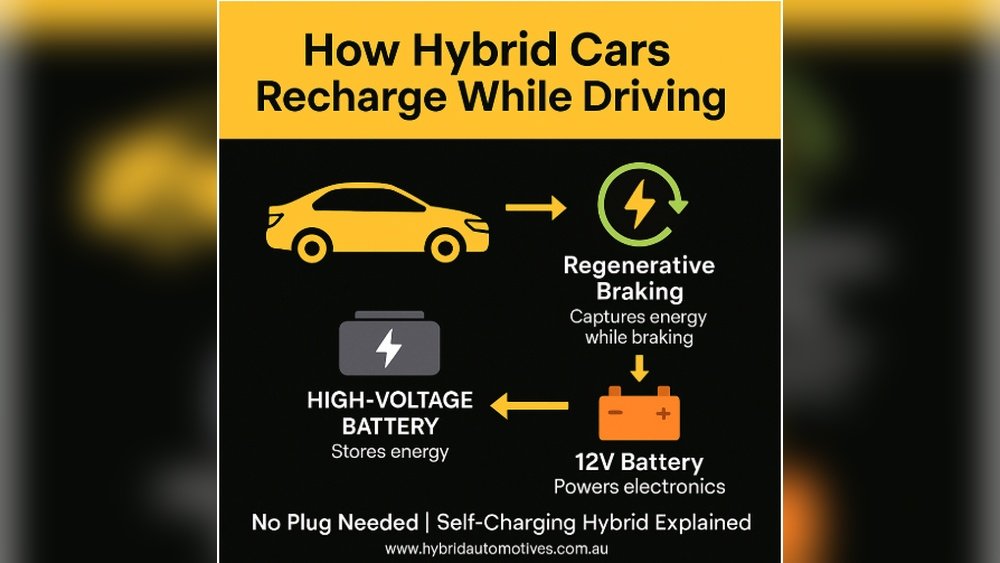
- Hybrid cars have a small 12V battery and a large high-voltage battery. The high-voltage battery charges through regenerative braking and the engine. The 12V battery is still charged by a DC-DC converter.
- Electric vehicles (EVs) use large lithium-ion batteries. These are charged by plugging in, not by the car itself.
In both cases, the 12V system works a bit like a normal car, but with different charging methods.
Comparing Battery Charging: Alternator Vs. External Charger
Which is better for your battery—driving or using an external charger? Here’s a direct comparison:
| Charging Method | Speed | Battery Health Impact | Ease of Use |
|---|---|---|---|
| Alternator (while driving) | Fast for small charges | Good for regular use | Automatic |
| External Battery Charger | Slower (overnight) | Best for deep charge | Requires manual connection |
If your battery is only a little low, driving is enough. For deeply discharged batteries, an external charger is safer and more effective.
Two Insights Most Drivers Miss
- Alternators are not battery chargers. They’re designed to maintain a healthy battery, not to recharge a dead one. Using the alternator to charge a dead battery can overheat the alternator and shorten its life.
- Battery age matters more than most people think. Even with perfect charging, all batteries degrade. An old battery may “look” fine but can’t hold a charge well. Testing and timely replacement are key.
Avoiding Common Mistakes
Here are mistakes drivers often make:
- Relying on short trips to keep the battery charged.
- Ignoring battery warning lights or slow starts.
- Letting a car sit unused for weeks without charging the battery.
- Adding high-power accessories without upgrading the alternator.
- Jump-starting frequently instead of fixing the real problem.
Taking action early can save you from being stranded at the worst moment.
What To Do If Your Battery Keeps Dying
If your battery keeps going flat, try these steps:
- Test the battery (many auto shops offer free checks).
- Test the alternator output (should be 13.8–14.4V).
- Check for parasitic drains with a mechanic.
- Replace the battery if it’s more than 3-5 years old or fails a test.
- Use a battery maintainer if you drive infrequently.
For more on battery health and maintenance, you can read additional details at the Automotive Battery Wikipedia page.

Frequently Asked Questions
Can A Car Battery Recharge Itself If The Car Is Just Parked?
No, a car battery cannot recharge itself while the car is parked. It needs the engine running (and the alternator working) or an external charger to gain charge.
How Long Should I Drive To Recharge My Battery After A Jump-start?
Usually, 30 minutes to an hour of highway driving is needed to restore enough charge for the next start. For a fully dead battery, use an external charger for a complete recharge.
What Drains A Car Battery When The Car Is Off?
Small devices like clocks, alarms, and computers use a little power. Faulty wiring or accessories can cause larger “parasitic drains” and kill the battery faster.
Is It Bad To Keep Jump-starting A Weak Battery?
Yes. Repeated jump-starting strains the alternator and can damage electrical systems. It’s better to find and fix the problem or replace the battery.
Will Idling My Car Recharge The Battery?
Idling produces less alternator output. It can help a little but is less effective than driving at higher speeds. For deeply discharged batteries, idling is not enough.
Proper understanding of your car’s battery and charging system can prevent many headaches. Remember, a battery cannot recharge itself—it always needs help from the alternator or an external charger. Regular maintenance and smart driving habits will keep your car starting smoothly, no matter the season.