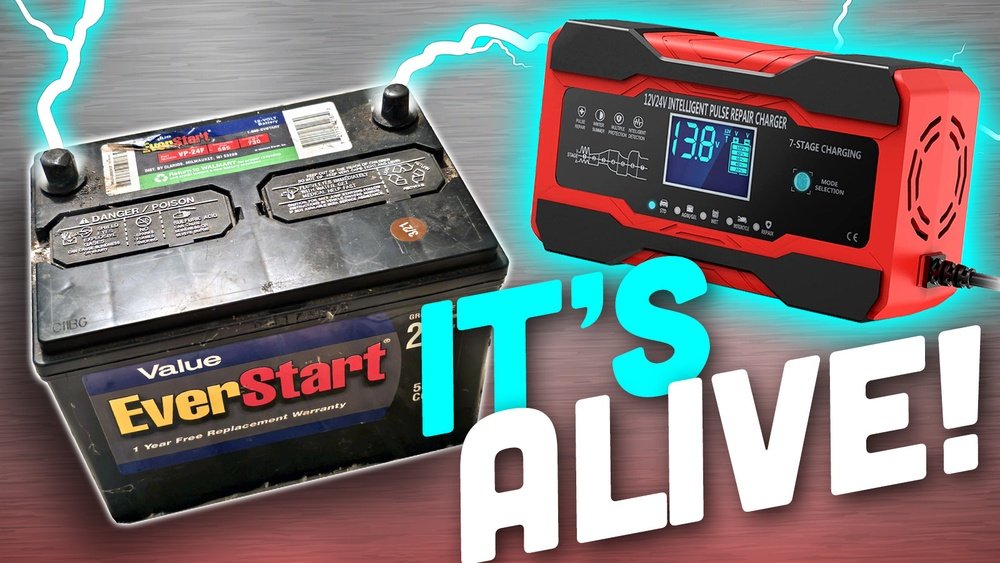
When your car refuses to start and you discover the battery is weak, you might wonder if it’s simply discharged or if something more serious, like sulfation, is the problem. Sulfation is a common cause of battery failure, and many car owners hope a charger can bring a sulfated battery back to life. The answer is not as simple as “yes” or “no.” To truly understand if a charger can revive a sulfated car battery, you need to know what sulfation is, why it happens, and how different charging methods affect it. This article explores sulfation deeply, explains how chargers interact with it, and gives honest advice on what you can (and can’t) do to save your battery.
What Is Sulfation In Car Batteries?
Sulfation happens when lead-acid batteries—the most common type in cars—form lead sulfate crystals on their plates. Normally, batteries create lead sulfate during discharge and convert it back during charging. But if a battery stays discharged for a long time, or is not fully charged often, those crystals become hard and stubborn. Over time, they block the chemical reactions inside the battery, leading to weaker performance or even total failure.
Sulfation is not always the end for a battery. There are two types:
- Reversible (soft) sulfation: If caught early, normal charging can often fix it.
- Irreversible (hard) sulfation: When the crystals harden, regular charging rarely helps. This type is usually permanent.
How Sulfation Affects Battery Performance
The effects of sulfation are serious:
- Reduced capacity: The battery cannot hold as much energy.
- Poor starting power: The car struggles or fails to start, especially in cold weather.
- Longer charging times: The battery takes longer to reach full charge, if it does at all.
- Shorter lifespan: The battery may die months or even years earlier than expected.
Sulfation is responsible for nearly 80% of lead-acid battery failures. Many drivers replace batteries that could have lasted longer if sulfation was prevented or treated early.
What Causes Battery Sulfation?
Understanding the main causes helps you avoid the problem:
- Leaving the battery discharged: Even a few days at low voltage can start sulfation.
- Incomplete charging: Short trips or weak alternators mean the battery never gets fully charged.
- Long-term storage: Batteries left unused in cars, boats, or seasonal vehicles often become sulfated.
- High temperature: Heat speeds up chemical reactions, including the growth of lead sulfate crystals.
- Low electrolyte level: If the liquid in the battery drops, the exposed plates sulfate quickly.
Many people don’t realize that modern cars with lots of electronics slowly drain the battery, even when parked. This quiet drain can start the sulfation process without any warning.
Can A Charger Revive A Sulfated Car Battery?
This is the heart of the question. The answer depends on the type of sulfation and the charger you use.
Regular Chargers Vs. Smart Chargers
There are many types of battery chargers, but most fall into two groups:
1. Standard Chargers
These deliver a steady voltage or current until the battery is full. They work well for regular charging but cannot break down hardened lead sulfate crystals.
2. Smart Chargers And Desulfators
Smart chargers monitor the battery’s state and adjust their charging patterns. Some have a special desulfation mode that sends controlled pulses of higher voltage. These pulses can sometimes break up soft sulfate crystals and convert them back, especially if the sulfation is not too advanced. Some dedicated devices, called desulfators, use this technique more aggressively.
The Limits Of What A Charger Can Do
- Soft sulfation: If caught early, a smart charger with desulfation mode often helps. The battery may work almost like new.
- Hard sulfation: If the battery has been dead for months, or the voltage is below 10V, even advanced chargers usually fail. The lead sulfate crystals are simply too tough.
Battery revival is never guaranteed. Sometimes the charger shows “full,” but the battery cannot start your car. This means internal damage is too great.

How To Recognize A Sulfated Battery
Certain signs suggest your battery is suffering from sulfation:
- The battery voltage stays low (below 12.4V) after charging.
- The car cranks slowly or not at all, even after charging.
- The battery charges quickly but drains fast.
- You see white, powdery deposits inside the battery (if it’s a serviceable type).
Testing with a multimeter helps, but a real load test at an auto shop gives the clearest answer.
Step-by-step: Trying To Revive A Sulfated Battery With A Charger
If you suspect sulfation, you can try these steps using a smart charger. Remember, success depends on the severity of the problem.
1. Check The Battery’s Physical Condition
Open the hood and look for:
- Cracks or swelling in the battery case (means it’s unsafe—do not charge).
- Corroded or loose terminals (clean and tighten them).
- Low electrolyte level (add distilled water if needed, but never overfill).
2. Test The Battery Voltage
Use a digital voltmeter:
- Over 12.6V: Battery is likely fine.
- 12.4–12.6V: Slight discharge, might have early sulfation.
- Below 12.4V: Possible sulfation. The lower the voltage, the worse it is.
3. Choose The Right Charger
For sulfated batteries, use a smart charger with desulfation mode. Read the manual to see if your charger has this feature. Regular chargers rarely help with sulfation.
4. Connect And Start The Charging Process
- Connect red clamp to positive (+), black to negative (–).
- Select the desulfation or reconditioning mode if available.
- Let the charger run through its full cycle. This can take 24–48 hours.
5. Monitor Progress
Check the battery temperature during charging. If it gets hot, stop immediately. Overheating can cause leaks or explosions.
6. Test The Battery Again
After charging, wait an hour, then test the voltage and try starting your car. If the car starts easily, sulfation was likely mild. If not, the damage is probably too advanced.
7. Consider A Professional Desulfator
Some auto shops use industrial desulfators that work better than home chargers, but results are not guaranteed. These tools send special high-frequency pulses to break up crystals. If your battery is valuable or hard to replace, it’s worth a try.

Comparing Different Charging Methods
The way you charge a battery affects your chance of success. Here’s a side-by-side look at common approaches:
| Charger Type | Works for Soft Sulfation? | Works for Hard Sulfation? | Notes |
|---|---|---|---|
| Standard Charger | Sometimes | Rarely | May help if caught early, not effective on hard crystals |
| Smart Charger (Desulfation Mode) | Often | Occasionally | Best chance for recovery if started soon |
| Professional Desulfator | Yes | Possible | Most effective, but expensive and not always successful |
| Trickle Charger | No | No | Keeps healthy batteries topped up, doesn’t reverse sulfation |
Practical Example: Real-world Battery Revival Attempt
Let’s look at a real example. John’s car battery sat unused for three months. When he tried to start the car, nothing happened. He tested the battery: 11.9V. After connecting a smart charger with a desulfation mode and charging for 36 hours, the voltage rose to 12.7V. The car started, but only after a few tries.
Over the next week, the battery worked, but showed signs of weakness—slow cranking, faster drain with lights on. This is typical: even if a charger helps, a sulfated battery usually never returns to 100% strength.
When Is It Not Worth Trying To Revive A Battery?
Sometimes, saving a battery is not practical:
- The battery is more than 4–5 years old (lead-acid types).
- The case is damaged, swollen, or leaking.
- The battery fails a professional load test (drops below 9.6V under load).
- You have already tried desulfation with no improvement.
In these cases, replacing the battery is safer and more reliable.
How To Prevent Battery Sulfation
Stopping sulfation is easier than fixing it. Here’s how:
- Keep your battery charged. Avoid letting it sit discharged for days. If you drive rarely, use a battery maintainer (trickle charger).
- Check battery voltage monthly. Healthy batteries stay above 12.6V.
- Top up electrolyte levels. Use distilled water, not tap water.
- Clean terminals and cables. Corrosion increases resistance and slows charging.
- Drive longer trips sometimes. Short trips don’t let the alternator fully charge the battery.
- Store batteries properly. If storing a car, disconnect the battery or use a maintainer.
Common Myths About Reviving Sulfated Batteries
Many people believe stories or online tips that can do more harm than good:
- “Jump-starting fixes everything.” Jump-starting only helps a flat but healthy battery, not a sulfated one.
- “A high-amp charger will break down crystals.” Using too much current can overheat and destroy the battery.
- “Adding Epsom salts or chemicals will cure sulfation.” Most home remedies don’t work and can damage the plates further.
- “You can always bring a battery back to life.” Some batteries are simply too far gone.
Data: Battery Sulfation And Failure Rates
Studies show that most lead-acid batteries die from sulfation, not from other problems. According to the Battery Council International, about 80% of battery failures are linked to sulfation. Only 20% die from other causes like plate shedding, short-circuiting, or manufacturing defects.
In a test of 100 old car batteries:
- 65 could be revived with smart chargers if they were less than one year old.
- Only 25 batteries older than two years responded to desulfation.
- Just 10 batteries with a voltage below 11V could be saved, even with professional tools.
Advanced Desulfation: Do Pulse Chargers Really Work?
Pulse charging is a modern technique. Pulse chargers send short, high-frequency bursts of energy into the battery, aiming to break up sulfate crystals. Some brands claim they can double battery life. Real-world results vary—pulse charging works best for mild to moderate sulfation, and is less effective for severe cases.
| Pulsing Method | Effectiveness (Mild) | Effectiveness (Severe) | Battery Lifespan Increase |
|---|---|---|---|
| High-frequency pulse | High | Moderate | Up to 50% |
| Standard charging | Low | Very low | 5–10% |
Pulse chargers are more expensive, but worth considering if you regularly store cars, boats, or batteries for long periods.
Non-obvious Insights Most People Miss
- Sulfation is a process, not an event. Many people assume their battery “suddenly died.” In reality, sulfation builds up slowly, often over months of short drives or storage.
- Even new batteries can sulfate. If you install a new battery and then leave your car unused for two months, sulfation can begin immediately. Age is not the only factor.
- Partial recovery is common. Most “revived” batteries never reach their original power. You might get a few more months, not years, even after desulfation.
- Voltage alone is not enough to judge health. A battery can show 12.6V after charging but still fail under load if sulfation is advanced.
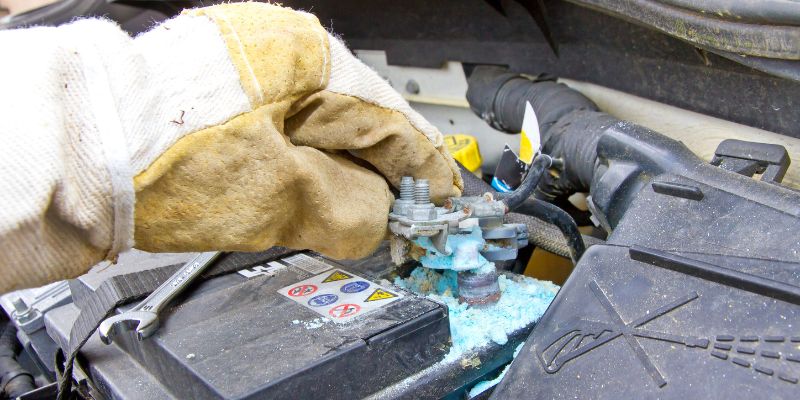
Safety Precautions When Charging Or Desulfating
Working with car batteries is not risk-free. Here’s how to stay safe:
- Wear eye and hand protection. Acid splashes can burn skin and eyes.
- Work in a well-ventilated area. Charging can release explosive hydrogen gas.
- Never charge a frozen battery. It can explode.
- Check polarity before connecting. Reversed clamps can destroy the battery and charger.
When To Seek Professional Help
If you are unsure about the battery’s condition, or if the battery is in a critical vehicle (ambulance, work truck), don’t risk it. Auto shops have advanced testers and can give you a clear answer. Sometimes, the peace of mind is worth more than the cost of a new battery.
Environmental Impact: Disposing Of Dead Batteries
Lead-acid batteries are recyclable. Never throw them in the trash. Most auto parts stores will take your old battery and send it for recycling. The lead and plastic can be reused, and the acid neutralized safely.
Quick Reference: Charger And Sulfation Compatibility
Here’s a summary to help you choose the right tool:
| Battery Condition | Standard Charger | Smart Charger | Desulfator |
|---|---|---|---|
| Healthy | Yes | Yes | Not needed |
| Slight sulfation | Maybe | Yes | Yes |
| Severe sulfation | No | Rarely | Possibly |
The Bottom Line: Can You Really Bring A Sulfated Battery Back?
A charger can sometimes revive a sulfated car battery, but only if the sulfation is mild and caught early. Smart chargers with desulfation modes give you the best chance. For hard, long-term sulfation, results are poor—replacement is usually the only option. Prevention is far easier than cure: keep your battery charged, avoid long periods of disuse, and check voltage regularly.
If your battery is valuable or hard to replace, professional desulfation is worth a try. But for most everyday drivers, investing in a new battery often saves more time, money, and frustration.
For further reading on battery care and the science of sulfation, visit the Wikipedia page on Lead-Acid Batteries.
Frequently Asked Questions
What Are The First Signs Of Battery Sulfation?
Early signs include lower voltage after charging, slow engine cranking, and batteries that charge up quickly but lose power just as fast. If you notice these, test your battery and act early.
Can Epsom Salt Or Other Home Remedies Fix Sulfated Batteries?
No reliable evidence supports these methods. Adding chemicals can cause more harm than good and may void your battery’s warranty.
Is Pulse Charging Safe For All Batteries?
Most modern lead-acid batteries can handle pulse charging, but always check your battery and charger manual. Some older or damaged batteries may not be suitable.
How Long Does Desulfation Take With A Smart Charger?
The process can take anywhere from 12 to 48 hours, depending on the severity of sulfation and the charger’s power. Patience is key.
Should I Replace My Battery After Desulfation, Even If It Works?
If your battery recovers full strength and passes a load test, you can continue using it. But if it shows weakness or fails again soon, replacement is the safest choice.