Can A Faulty Alternator Ruin A Car Battery?
When your car doesn’t start, most people think the battery is dead. But sometimes, the real problem hides under the hood: the alternator. This small device is the heart of your car’s electrical system. It does much more than just charge the battery. But can a faulty alternator actually ruin a car battery? Many drivers don’t realize how closely these two parts work together. Ignoring alternator problems can lead to surprising and expensive issues—not only with the battery but with the car’s entire electrical system.
In this guide, you’ll discover how the alternator and battery are linked, what happens when the alternator fails, and how to avoid major repairs. You’ll also get real examples, practical advice, and simple explanations. By the end, you’ll know how to protect your car battery from alternator trouble and spot warning signs before they become costly.
What Does An Alternator Do?
The alternator is a generator. When your engine runs, the alternator produces electricity. This electricity does two things:
- Charges the battery so it’s ready to start your car again.
- Powers all electrical devices in the car. This includes headlights, radio, air conditioning, power windows, and even the engine’s control systems.
Without a working alternator, your battery drains quickly. This is because the car relies on battery power alone if the alternator can’t supply enough energy.
Why The Alternator-battery Relationship Matters
Think of the battery as a storage tank and the alternator as a water pump. The pump fills the tank, and the tank gives out water when needed. If the pump breaks, the tank empties fast. The same happens in your car: a weak alternator makes the battery do all the work until it’s empty.
How A Faulty Alternator Affects The Battery
A bad alternator can harm a car battery in several ways. The damage may be slow and hard to notice at first. Here’s how the process works:
Undercharging: The Silent Killer
A weak alternator might not make enough power. This is called undercharging. When this happens:
- The battery never gets fully charged.
- Each time you start the car, the battery loses a little more power.
- Eventually, the battery can’t start the car at all.
If you jump-start the car, it might run for a while, but the battery will keep getting weaker.
Non-obvious insight: Undercharging can cause the battery to “sulfate.” This means hard crystals form inside, making it harder to hold a charge—even if you fix or replace the alternator later.
Overcharging: Too Much Of A Good Thing
Sometimes, a faulty alternator gives too much power. This is called overcharging. You might think extra charging is good, but it’s not:
- Overcharging heats the battery.
- Battery fluid can boil away.
- The battery case may swell or crack.
- Internal parts corrode faster.
Repeated overcharging can make a new battery fail in weeks.
Unstable Voltage: Spikes And Drops
A failing alternator may cause voltage spikes or sudden drops. This confuses the battery and all the car’s electronics. You might see:
- Flickering headlights
- Strange warning lights
- Random stalling
Non-obvious insight: Voltage spikes can damage not just the battery, but also sensitive systems like the engine computer and sensors.
Signs Your Alternator Is Hurting The Battery
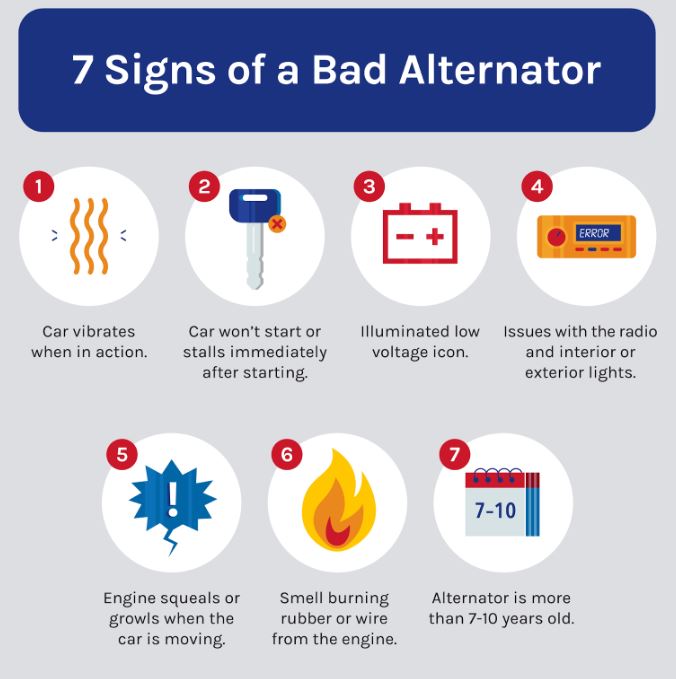
It’s not always easy to tell if the battery or the alternator is the problem. But some signs suggest alternator trouble:
- Dim or flickering headlights
- Battery warning light on the dashboard
- Electronics (radio, windows) stop working or act strange
- Burning smell under the hood
- Battery needs frequent jump-starts
- Engine stalls suddenly
If you see these, check the alternator before replacing the battery.
How Alternator Problems Ruin Different Types Of Batteries
Not all car batteries are the same. The type of battery can change how quickly alternator problems cause damage.
Lead-acid Batteries
Most cars use lead-acid batteries. They are tough but sensitive to overcharging and undercharging.
- Undercharging causes sulfation (hard crystals), making the battery weak.
- Overcharging causes heat, swelling, and leaks.
Agm (absorbent Glass Mat) Batteries
These are used in some newer cars. They are more resistant to vibration and last longer, but:
- Sensitive to both overcharging and undercharging
- Repairs are harder if damaged
Gel Batteries
These are rare in cars but found in some special vehicles.
- Gel batteries can be destroyed quickly by overcharging.
- Even a small alternator fault can ruin them.
Real-world Examples And Data
Let’s look at how alternator problems affect real drivers. A 2022 survey by AAA found that battery-related failures are the leading cause of roadside breakdowns in North America. However, in over 30% of these cases, alternator faults were the hidden cause.
Here’s a comparison of how long a healthy battery lasts with and without a working alternator:
| Scenario | Battery Lifespan | Common Problems |
|---|---|---|
| Healthy alternator | 3-5 years | Normal wear |
| Faulty alternator (undercharging) | 6 months – 1 year | Sulfation, weak starts |
| Faulty alternator (overcharging) | Weeks – 6 months | Swelling, leaks, failure |
Key takeaway: The same battery can last five times longer with a healthy alternator.
What Really Happens Inside The Battery
When an alternator doesn’t work right, chemical changes happen inside the battery. Here’s what goes on:
During Undercharging
- The battery stays in a partially charged state.
- Lead sulfate crystals build up on the plates.
- These crystals block normal reactions.
- The battery holds less and less charge.
During Overcharging
- Extra voltage splits water inside the battery.
- This releases hydrogen and oxygen gases.
- Fluid levels drop, and the plates dry out.
- The battery gets hot, and the case may bulge.
Why These Changes Matter
Once a battery is damaged this way, it’s hard or impossible to fix. Even if you install a new alternator, the battery might never recover.
How To Diagnose Alternator Vs. Battery Problems
Many people replace the battery first, only to find the real problem was the alternator. Here’s how to tell the difference:
Simple At-home Tests
- Check the dashboard: If the battery or alternator light is on, suspect the alternator.
- Jump-start the car: If it starts but dies soon after, the alternator is likely bad.
- Test voltage: Use a multimeter. A healthy alternator should show 13.7 to 14.7 volts with the engine running.
Professional Testing
A mechanic can use more advanced tools to test:
- Alternator output
- Battery health
- Voltage ripple (shows unstable alternator)
Cost Comparison
Here’s how the costs stack up for common fixes:
| Repair | Average Cost (USD) | Time Needed |
|---|---|---|
| Replace battery | $100 – $200 | 30 minutes |
| Replace alternator | $400 – $800 | 1-3 hours |
| Both battery & alternator | $500 – $1000+ | 2-4 hours |
Tip: Replacing only the battery when the alternator is bad means you’ll buy another battery soon.
How To Prevent Alternator Damage To The Battery
Regular checks and smart habits can prevent alternator problems from destroying your battery.
Pay Attention To Warning Signs
If you notice:
- Dim lights
- Weird smells
- Warning lights
Check the alternator right away.
Get Regular Electrical System Checks
Ask your mechanic to test the charging system at least once a year, or before long trips.
Use The Right Battery
Install only the correct type and size for your car. Don’t use a battery that’s too small or too powerful.
Keep Battery Terminals Clean
Dirty or corroded terminals can make alternator problems worse. Clean them every few months.
Avoid Aftermarket Electrical Add-ons
Extra lights, big stereo systems, or other gadgets put extra strain on the alternator. If you add devices, upgrade your alternator as well.
Common Myths About Alternators And Batteries
Many drivers believe things that aren’t true about alternators and batteries. Here are some common myths:
Myth 1: A New Battery Will Fix Everything
If the alternator is bad, a new battery will not solve your problem for long. The new battery will also fail quickly.
Myth 2: Alternators Only Charge The Battery
Alternators also power every electrical system in your car while the engine runs. Without it, many systems stop working—even with a full battery.
Myth 3: Jump-starting A Car Can Fix Alternator Problems
A jump start only gives a temporary boost. If the alternator is weak, the battery will die again soon.
Myth 4: All Batteries Are The Same
Different batteries react differently to alternator faults. Some types are more sensitive and can be ruined faster.
Myth 5: Alternators Last Forever
Alternators wear out, especially after 5-8 years or 80,000-150,000 miles.
What To Do If You Suspect Alternator Problems
If you think your alternator is failing, take these steps:
- Turn off unnecessary electronics (radio, AC, heated seats) to save battery power.
- Drive to a repair shop as soon as possible.
- Don’t rely on jump-starts—this is a short-term fix only.
- Get a full charging system test. This checks both the alternator and the battery.
Expert advice: If your battery is more than three years old and you have alternator trouble, replace both at the same time. This prevents one from damaging the other.
What Happens If You Ignore Alternator Problems?
Ignoring alternator issues can cause serious damage beyond just the battery. Here’s what can happen:
Electrical System Failure
All electronics may stop working, including headlights, dashboard, and engine controls. This can leave you stranded, even in dangerous places.
Expensive Repairs
Voltage spikes from a bad alternator can damage:
- Engine control unit (ECU)
- Sensors and relays
- Infotainment systems
These repairs can cost thousands of dollars.
Shortened Battery Life
A battery that should last 5 years may fail in less than 1 year if the alternator is faulty.
Safety Risks
If your car stalls in traffic or at night, it can be dangerous. Good alternator health is important for safe driving.
How Alternator Problems Affect Hybrid And Electric Cars
Most hybrids and electric vehicles (EVs) use different systems, but alternator-like components are still present.
- Hybrids have high-voltage batteries and also use a smaller 12V battery for electronics.
- A faulty charging system can ruin the 12V battery, affecting startup and accessories.
- EVs use DC-DC converters instead of alternators, but similar problems can occur if these fail.
Important: If you drive a hybrid or EV, always use a shop familiar with your car’s technology.

Real Mechanic Advice: What Professionals Wish Drivers Knew
Professional mechanics see alternator-related battery failures every week. Here’s what they want you to know:
- Don’t wait until the car won’t start. Early signs like dim lights or slow cranking save money if fixed soon.
- Always test both battery and alternator together. Many shops offer a free or low-cost check.
- Don’t buy the cheapest battery. Quality matters, especially if your alternator is older.
- Save your receipts. Good batteries and alternators often have warranties.
How To Choose A Good Replacement Alternator
If you need a new alternator, consider these factors:
- OEM (Original Equipment Manufacturer) vs. aftermarket: OEM parts fit better and last longer, but may cost more.
- Output rating: Make sure the alternator matches your car’s needs, especially if you have extra electronics.
- Warranty: Choose parts with at least a one-year warranty.
- Rebuilt vs. new: Rebuilt alternators are cheaper, but new ones last longer.
Here’s a quick comparison:
| Type | Cost | Expected Life | Warranty |
|---|---|---|---|
| OEM New | High | 5-8 years | 1-3 years |
| Aftermarket New | Medium | 3-6 years | 6-24 months |
| Rebuilt | Low | 1-3 years | 3-12 months |
Tip: If you drive a newer or high-performance car, invest in a quality alternator to avoid future problems.
When To Replace Both Battery And Alternator
If you’ve had alternator trouble for more than a few weeks, it’s often best to replace both the alternator and battery at the same time. Here’s why:
- A damaged battery can overload a new alternator, causing it to fail early.
- A weak alternator can ruin a brand new battery.
- Replacing both at once saves on labor costs.
Example: If your car is more than 5 years old and you’ve never replaced these parts, ask your mechanic for a full system check.
Environmental Impact: Don’t Ignore Battery Disposal
A ruined battery is hazardous waste. Always recycle dead batteries at an auto parts store or recycling center. Never throw them in regular trash. Old alternators can also be rebuilt or recycled.
For more info on battery recycling and safe disposal, see the EPA’s battery recycling page.
Frequently Asked Questions
Can A Faulty Alternator Permanently Damage A New Car Battery?
Yes, if an alternator overcharges or undercharges, it can quickly cause permanent battery damage. Overcharging boils away fluid; undercharging leads to sulfation. In both cases, the battery may not fully recover, even if the alternator is fixed.
How Do I Know If The Problem Is My Battery Or Alternator?
If your car starts after a jump but dies soon, the alternator is likely the cause. A battery test shows the charge level, while a charging system test checks alternator output. Mechanics usually test both together for a clear answer.
Will Replacing The Alternator Fix My Battery Problems?
If the battery is not yet badly damaged, a new alternator may solve the problem. However, if the battery is old or was deeply discharged, it may already be ruined and need replacement as well.
Is It Safe To Drive With A Bad Alternator?
It’s risky. You may lose power to critical systems—like steering, brakes, or lights—especially at night or in traffic. Try to reach a repair shop soon and avoid long trips until the problem is fixed.
How Often Should I Check My Alternator And Battery?
Check the charging system at least once a year, or before long trips. If your car is over five years old, or you notice warning signs, have both tested more often.
—
A faulty alternator can absolutely ruin a car battery, and sometimes much more. Paying attention to early signs, getting regular checks, and understanding how your car’s electrical system works will save you money, time, and stress. If you suspect alternator problems, act quickly—your battery, wallet, and peace of mind will thank you.