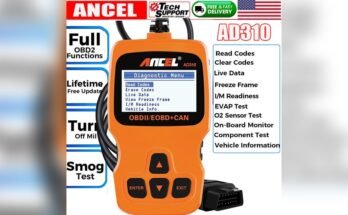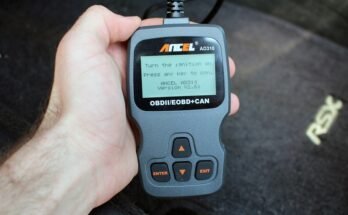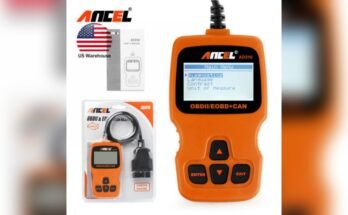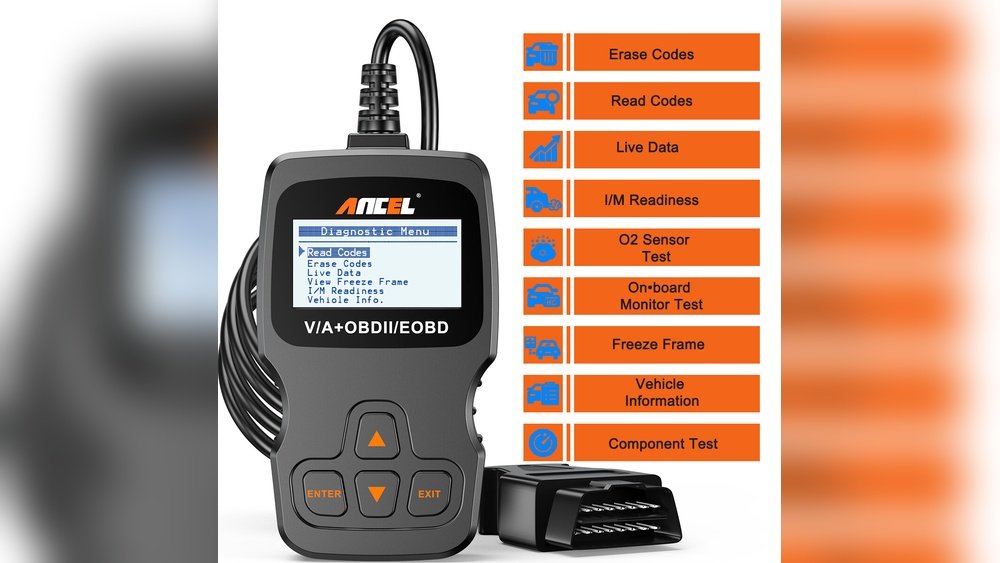
If you’re thinking about buying the Ancel AD310 or already own one, you probably want to know: *Will this OBD2 scanner work with my car?* Choosing the right diagnostic tool can save you time, money, and stress. But with so many car models and years out there, compatibility isn’t always obvious. This guide will help you confidently answer, “How do I know if my car is compatible with the Ancel AD310?” We’ll break down what really matters, show you how to check your vehicle, and clear up common misunderstandings. Even if you’re new to OBD2 tools or not a car expert, you’ll find clear steps and useful tips here.
What Is The Ancel Ad310 And Why Does Compatibility Matter?
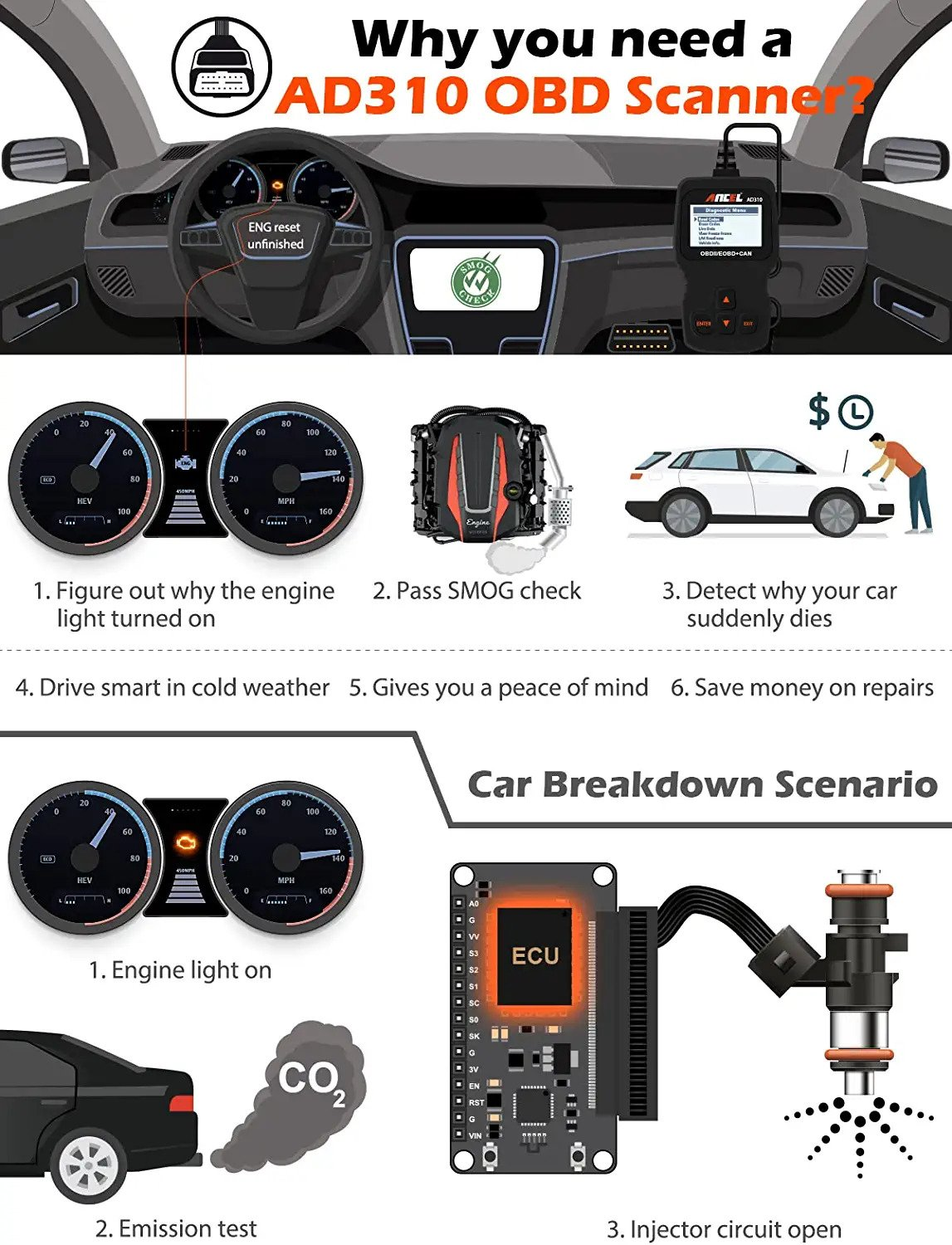
The Ancel AD310 is a popular, affordable OBD2 scan tool. It helps car owners and mechanics read error codes, clear them, and see live engine data. Many people choose it because it’s simple and works without an app or complicated setup.
But not every car uses the same diagnostic system. If you connect the AD310 to an incompatible car, it won’t work—or worse, you might get confusing results. Understanding compatibility is key before you buy or use any OBD2 scanner.
How Obd2 Systems Work
OBD2 stands for On-Board Diagnostics, version 2. This is a standard system that lets you access your car’s computer using a small port, usually under the dashboard. OBD2 became a requirement for all cars sold in the United States starting in 1996. In other parts of the world, the timeline is different.
The AD310 only works with cars that support the OBD2 standard. It does not work with cars using older systems (like OBD1), heavy trucks, motorcycles, or some diesels.
Why Not All Cars Are Supported
- Older cars (before OBD2 adoption) may use different protocols.
- Regional differences: Some countries adopted OBD2 later than the U.S.
- Heavy-duty vehicles: Trucks and buses often use special systems.
- Electric and hybrid cars sometimes have unique setups.
So, checking compatibility is not just a detail—it’s essential.
Which Cars Are Compatible With The Ancel Ad310?
Let’s get right to the point. The AD310 is designed for OBD2-compliant vehicles. Here’s what that means for different regions.
United States
- All cars and light trucks sold in the U.S. from 1996 onward are OBD2 compliant.
- This includes most gasoline and many diesel vehicles.
- Typical brands: Ford, Chevrolet, Toyota, Honda, Nissan, Volkswagen, Hyundai, Kia, BMW, Mercedes-Benz, and more.
Europe
- Gasoline cars: OBD2 required from 2001 onward.
- Diesel cars: OBD2 required from 2004 onward.
- Before these years, support is mixed—check your specific model.
Asia (japan, Korea, China)
- Japan: OBD2 started around 2002.
- Korea: Most cars after 2003–2005 are OBD2.
- China: Rules vary, but most cars from 2008 onward are compliant.
Australia And Other Regions
- OBD2 became common from 2006 onward.
- Always check your vehicle’s manual or the OBD2 port for details.
Quick Compatibility Reference
Here is a handy comparison of the main regions and years:
| Region | Gasoline Models | Diesel Models |
|---|---|---|
| United States | 1996+ | 1996+ |
| Europe | 2001+ | 2004+ |
| Japan | 2002+ | 2008+ |
| Australia | 2006+ | 2007+ |
Note: These are general rules. Some car makers adopted OBD2 earlier, and some models may be exceptions.
How To Check If Your Car Is Obd2 Compliant
Even with the guidelines above, you may want to be sure before buying or using the AD310. Here’s how to check.
1. Look For The Obd2 Port
Find the OBD2 port in your car. It’s a 16-pin connector shaped like a rectangle with corners cut off. Most cars have it under the dashboard, near the driver’s seat. Sometimes it’s behind a cover.
- If you see this port, that’s a good sign your car uses OBD2.
- No port? Your car is likely not OBD2 compatible.
2. Check Your Owner’s Manual
Your vehicle manual should mention OBD2 compatibility, especially in the specifications or diagnostics section. Look for phrases like:
- “OBDII compliant”
- “OBD2 diagnostics”
- “EOBD” (European version of OBD2)
3. Look For A Sticker Or Label
Some cars have a label in the engine bay or near the hood latch that says OBD II Certified or similar wording. This is an easy way to confirm.
4. Use Online Vin Checkers
Your Vehicle Identification Number (VIN) can be entered into online databases to check compatibility. Official government or manufacturer websites often offer this service.
5. Contact The Dealer Or Manufacturer
If you’re unsure, contact a dealer or the carmaker’s customer service. Give them your car’s year, make, and model, and ask, “Is my car OBD2 compliant? ”
6. Check The Emissions Sticker
In the U.S., the emissions label (often under the hood) will state if the car meets OBD2 standards.
Example: Checking A 2000 Toyota Corolla
- Look under the dashboard for the OBD2 port. Found? Good.
- Check the owner’s manual for “OBD II” mention.
- Find the emissions sticker—it says “OBD II Certified.”
- All signs point to compatibility.
Common Exceptions And Special Cases
While most cars after the dates above are compatible, there are exceptions. Here’s what to watch out for.
1. Non-u.s. Imports
Some cars imported from other countries, even if newer, might not support OBD2. For example, a 2003 Nissan Skyline imported from Japan may use a different protocol.
2. Heavy-duty Vehicles And Trucks
Large trucks, buses, or commercial vehicles often use special systems (like J1939 or J1708). The AD310 won’t work on these.
3. Motorcycles, Atvs, And Off-road Vehicles
Most of these don’t use OBD2. Only a few modern, fuel-injected motorcycles might have a compatible port.
4. Electric And Hybrid Cars
Some hybrid and electric cars have OBD2 ports but may not support all diagnostic functions. The AD310 can often read basic codes but may miss hybrid-specific or battery codes.
5. Early Diesel Cars
European diesels made between 2001 and 2004 sometimes have OBD2 ports but may not be fully compliant. These might connect but won’t give complete data.
6. Cars With Proprietary Protocols
Some brands (especially in the late 90s and early 2000s) used their own protocols before switching to OBD2. These cars might have a port but won’t communicate properly with the AD310.
Pro tip: If your car is from the “transition years” (like 1996–2001 in Europe), always double-check.

How To Test Compatibility In Minutes
If you’re standing next to your car and have the Ancel AD310, you can test compatibility directly.
- Plug the AD310 into the OBD2 port (ignition off).
- Turn on the car’s ignition (don’t start the engine yet).
- The AD310 should light up and show its menu.
- Try reading codes or live data.
- If it connects and reads codes, your car is compatible.
- If it says “Link Error” or doesn’t power up, your car is not OBD2.
Warning: If the scanner powers up but cannot read data, your car may use a different protocol.
What If It Only Partially Works?
Sometimes, the scanner connects but only reads a few codes or shows strange data. This often means:
- The car uses a rare protocol.
- The port is damaged.
- There’s a blown fuse for the OBD2 port (check your car’s fuse box).
Understanding Obd2 Protocols And The Ancel Ad310
Not all OBD2 systems are exactly the same. They use different “protocols” to talk to the scanner.
Main Obd2 Protocols
- SAE J1850 PWM (Ford)
- SAE J1850 VPW (GM)
- ISO 9141-2 (Chrysler, European, Asian)
- ISO 14230-4 (KWP2000) (Asian)
- ISO 15765-4/SAE J2480 (CAN bus) (Most cars since 2008)
The Ancel AD310 supports these common protocols. Most cars from 1996+ (US) and 2001+/2004+ (Europe) use one of them.
Protocol Compatibility Table
Here’s a look at common brands and the protocols they use:
| Brand | Years | Common Protocol |
|---|---|---|
| Ford (US) | 1996–2003 | J1850 PWM |
| GM (Chevy, etc.) | 1996–2003 | J1850 VPW |
| Chrysler | 1996–2003 | ISO 9141-2 |
| Honda, Toyota | 2001–present | ISO 9141-2, KWP2000, CAN |
| European (VW, BMW, etc.) | 2001–present | ISO 9141-2, CAN |
Non-obvious insight: Some cars made before 2008 may support only one or two protocols. If the AD310 cannot connect, your car may use a rare protocol not supported by the scanner.
What About Enhanced Features Or Manufacturer-specific Codes?
The Ancel AD310 is a basic OBD2 scanner. It reads general engine and emissions codes (known as “P0” codes) and can clear them. However, it does *not* read manufacturer-specific codes for airbags, ABS, transmission, or advanced systems. Some cars store these codes in a separate computer.
- For example, a Toyota might show a “Check Engine” light for an emissions problem, which the AD310 can read.
- But if there’s an airbag warning light, the AD310 probably cannot read the code.
If you need advanced diagnostics, you’ll need a more advanced scanner. The AD310 is great for most engine-related issues but not for every problem.
Real-world Examples: Popular Car Models
Let’s look at specific car models and their compatibility with the Ancel AD310.
1. 2012 Honda Accord (us)
- OBD2 compliant, uses CAN protocol.
- Fully compatible. Reads engine codes and live data.
2. 1999 Bmw 3-series (europe)
- May be compatible if sold after 2001 (gasoline).
- Some early models use a round 20-pin port under the hood, not the standard OBD2 port. You’d need an adapter.
3. 2005 Toyota Camry (us)
- OBD2 compliant (since 1996 in US).
- Compatible with all basic functions.
4. 2003 Volkswagen Golf (europe, Gasoline)
- If sold after 2001, likely OBD2.
- If diesel, check for 2004+ model.
5. 2014 Ford Focus (global)
- OBD2 compliant, CAN protocol.
- Fully compatible.
6. 2010 Hyundai Elantra (asia)
- Likely OBD2, but check port and manual.
- Most Korean cars after 2005 are compatible.
Non-obvious insight: Some European cars have both an OBD2 port and a manufacturer-specific port. Plugging the AD310 into the OBD2 port will only give you generic codes.
What To Do If Your Car Is Not Compatible
If you check and find your car isn’t OBD2 compatible, here are your options:
- Older Car: Look for an OBD1 scanner or a tool specific to your car’s make and model.
- Heavy-Duty Truck: Find a commercial or “HD” scanner.
- Motorcycle or ATV: Check for a scanner made for powersports vehicles.
- Advanced Diagnostics Needed: If you want to read ABS, SRS, or other advanced codes, look for a “bidirectional” or “professional” scanner.
The Ancel AD310 is best for basic engine diagnostics on OBD2-compliant cars.
Tips For Using The Ancel Ad310 Effectively
- Turn on the ignition (key to “On” position) before connecting.
- Wait for the menu to appear—sometimes it takes a few seconds.
- Read the codes and write them down.
- Clear codes only after fixing the problem. Don’t just erase them to turn off the light.
- Disconnect safely—unplug the scanner after turning off the car.
Pro tip: Always check your car’s battery health. Low voltage can cause the scanner to lose connection or show errors.

Mistakes To Avoid When Checking Compatibility
- Assuming all cars have OBD2—always check the port and your manual.
- Not checking the model year—a 2000 car in Europe may not be OBD2.
- Ignoring diesel/gasoline differences—diesels often adopted OBD2 later.
- Trying to use it on trucks or motorcycles—the AD310 is for cars and light trucks only.
- Thinking it reads all codes—it only covers engine and emissions.
Additional Resources For Checking Compatibility
If you’re still unsure, these resources can help:
- The official EPA site explains OBD2 rules for the U.S. market.
- Many car forums have user experiences with different scan tools.
- The Ancel website and user manual list compatible protocols and vehicles.
- Trusted car repair sites, like AA UK, offer good guides.
Frequently Asked Questions
How Do I Find The Obd2 Port In My Car?
The OBD2 port is usually under the dashboard, near the driver’s knees. Sometimes it’s behind a small plastic cover or panel. If you can’t find it, check your car’s manual or look up your model online.
Can The Ancel Ad310 Damage My Car’s Computer?
No, the AD310 is designed to be safe for OBD2 systems. It only reads data or clears codes. If you use it correctly and avoid forcing connections, it won’t harm your vehicle.
Will The Ad310 Work On Diesel Cars?
It works with many diesel cars, especially those made after 1996 (U. S. ) or 2004 (Europe). However, some diesels use special protocols or are not fully OBD2 compliant, so always double-check.
What If My Car Has A Port But The Scanner Won’t Connect?
This could mean your car uses a different protocol, the port fuse is blown, or there is a wiring issue. Try another scanner to confirm, or check your car’s fuse box.
Does The Ancel Ad310 Read Abs, Airbag, Or Transmission Codes?
No, it only reads engine and emissions codes (P0xxx). For ABS, airbag, or transmission diagnostics, you’ll need a more advanced scanner.
The Ancel AD310 is a solid tool if your car is OBD2 compliant, but it’s important to check before you buy or use it. With the steps and advice in this guide, you’ll know exactly how to confirm compatibility—and avoid surprises in the garage.