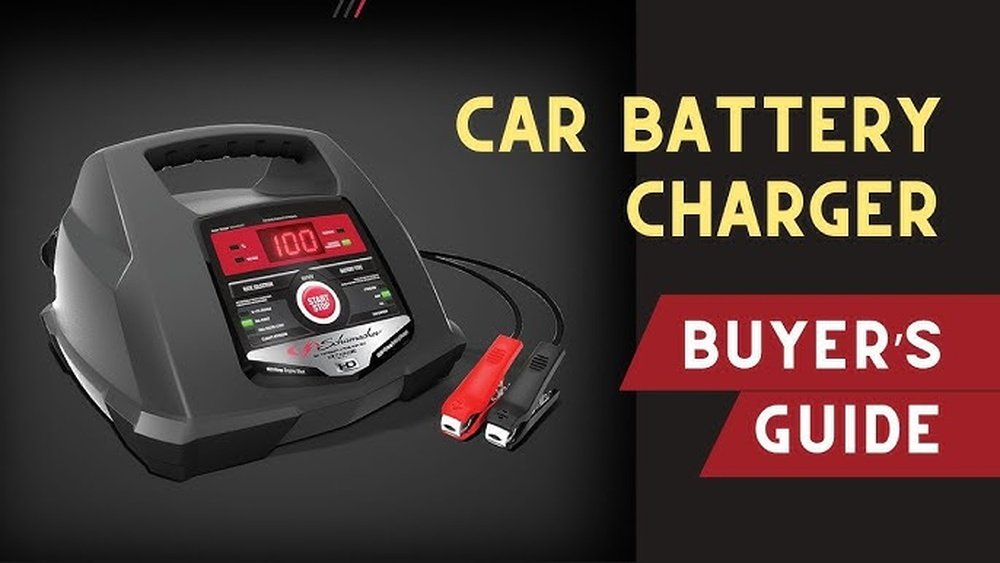
Choosing the right car battery charger is not as simple as picking the first one you see on a store shelf or online. If you buy the wrong type, you could damage your car battery, waste money, or even put yourself at risk.
Many car owners feel confused by technical terms like amps, volts, trickle charge, or smart charger. If you want to keep your battery healthy and your car ready to go, understanding how to choose the right charger is essential. In this article, you’ll learn exactly what matters when buying a car battery charger, how different features affect charging, and practical advice to help you make the best choice for your needs and budget.
Understanding Car Battery Chargers
Car battery chargers are devices that restore power to a dead or weak battery. They work by sending an electric current into the battery, helping it regain enough charge to start your vehicle or keep it running smoothly. There are different types of chargers, each with unique benefits and limitations. Knowing how they function and what their specifications mean is the first step toward a smart purchase.
Basic Types Of Car Battery Chargers
1. Manual Chargers
These chargers provide a steady current and require you to monitor the charging process. You must disconnect the charger once the battery is full, or you risk overcharging and damaging the battery.
2. Automatic (smart) Chargers
Smart chargers automatically adjust the charge rate and shut off when the battery is full. They help prevent overcharging and are safer for most modern car batteries.
3. Trickle Chargers
Trickle chargers deliver a low, constant current, keeping the battery topped up over long periods. They are ideal for vehicles that are stored for months at a time.
4. Jump Starters
While not technically chargers, jump starters deliver a burst of power to help start a dead battery. Some models also have a built-in charger function.
Common Battery Types And Compatibility
Car batteries are not all the same. The most common types are:
- Lead-Acid (Flooded) Batteries
- AGM (Absorbent Glass Mat) Batteries
- Gel Cell Batteries
- Lithium-Ion Batteries
Always check that the charger is compatible with your battery type. Using the wrong charger can reduce battery life or even cause safety hazards.
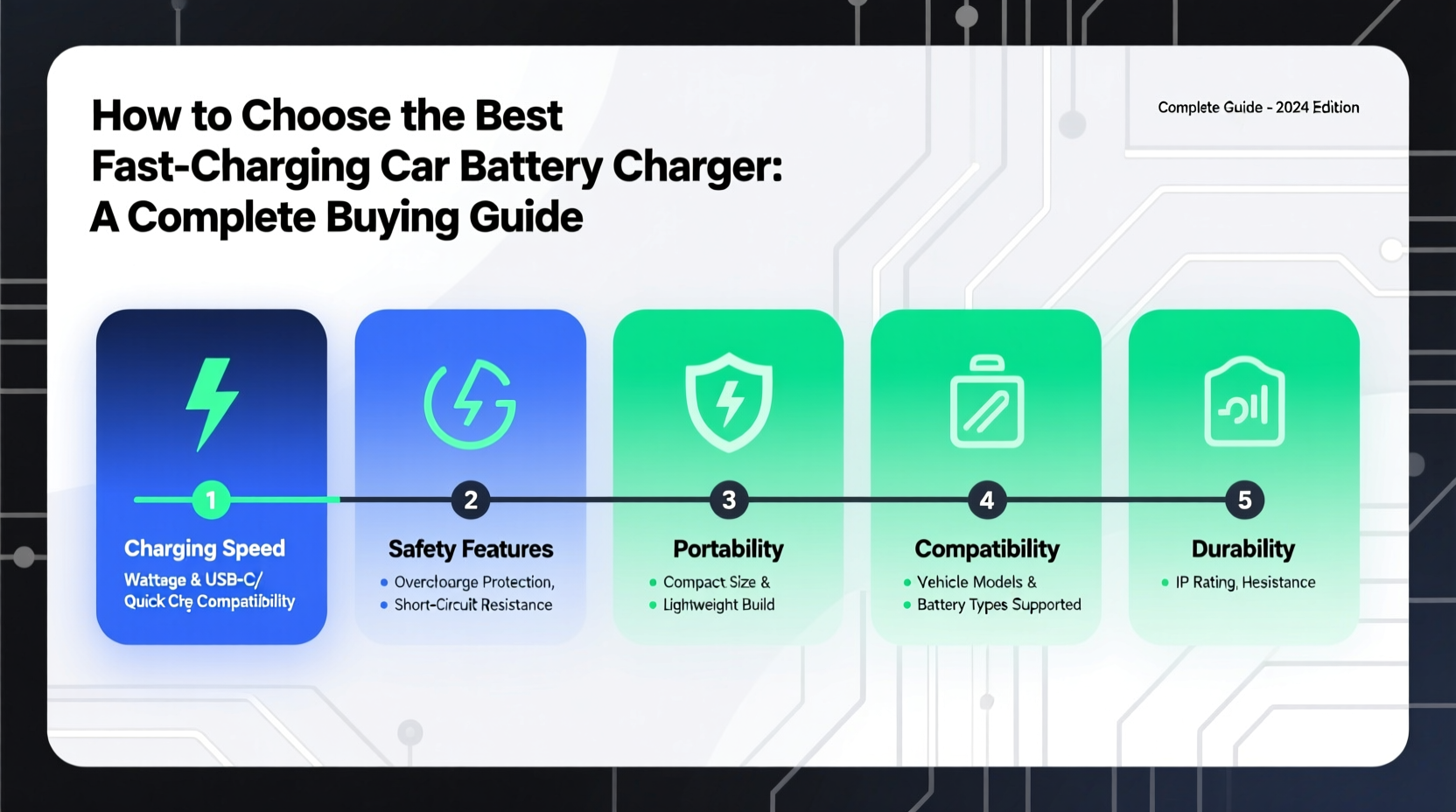
Key Factors To Consider When Choosing A Car Battery Charger
Buying the right charger is about matching your car and usage needs with the charger’s features. Here are the most important factors:
1. Battery Voltage
Most cars use 12-volt batteries, but some older vehicles and motorcycles may use 6-volt batteries. Heavy vehicles like trucks or RVs might have 24-volt systems. Always match the charger’s voltage to your battery’s voltage.
2. Charger Amperage (current Output)
Amperage means how fast the charger can deliver power. Higher amps charge batteries faster, but fast charging can sometimes damage the battery if not managed properly.
- 2-10 amps: Safe for slow charging, good for battery maintenance.
- 10-20 amps: Faster charging, suitable for regular recharging.
- 40+ amps: Quick charging or boost features, mainly for emergencies.
Choose a charger with adjustable amperage if you want flexibility.
3. Automatic Vs. Manual
Manual chargers are usually cheaper but need you to watch the charging process closely. Automatic chargers are safer and more convenient, especially for beginners.
4. Smart Features
Modern chargers often include microprocessor control for smart charging. These features:
- Adjust current automatically
- Detect battery condition
- Prevent overcharging
- Sometimes offer battery reconditioning
If you want to keep things simple and safe, choose a smart charger.
5. Trickle Or Maintenance Mode
If your car sits unused for weeks or months, a trickle charger or maintenance mode will keep the battery topped up without overcharging. This is ideal for classic cars, motorcycles, or boats in storage.
6. Safety Features
Look for chargers with the following safety protections:
- Reverse polarity protection (prevents damage if you connect clamps wrong)
- Overcharge protection
- Spark-proof clamps
- Short-circuit protection
- Thermal overload shutoff
These features protect both you and your car’s electrical system.
7. Portability And Size
If you need to charge your battery away from home or want to keep the charger in your car, consider a compact, lightweight model. Some chargers are designed for garage use and can be heavy.
8. Price And Warranty
Prices range from $25 for basic models to $200+ for advanced smart chargers. Check the warranty—a longer warranty signals better quality and support.
9. Additional Functions
Some chargers also offer:
- Jump start features
- USB charging ports
- Battery testing
- Desulfation mode (helps extend battery life)
Decide which features you need, not just what’s nice to have.
Car Battery Charger Types: In-depth Comparison
Choosing between charger types can be confusing. Here’s a direct comparison to make things clearer:
| Charger Type | Main Use | Pros | Cons |
|---|---|---|---|
| Manual Charger | Older vehicles, budget users | Cheap, simple | Risk of overcharge, needs monitoring |
| Automatic (Smart) Charger | Modern vehicles, most users | Safe, convenient, no monitoring | More expensive |
| Trickle Charger | Long-term storage | Keeps battery charged, prevents drain | Slow charging, not for quick recovery |
| Jump Starter with Charger | Emergency starts | Instant power, portable | Not ideal for full charging |
Matching Charger To Your Vehicle And Usage
No charger is perfect for every situation. Think about your main needs:
- Daily car use: A basic smart charger is usually enough.
- Seasonal vehicles (boats, motorcycles): Trickle charger or maintenance mode is best.
- Older cars: Manual charger may be okay, but watch for overcharging.
- Emergencies: Jump starter with charging function is handy.
If you have more than one vehicle or battery type (for example, a car and a motorcycle), consider a charger with adjustable voltage and current.

How To Read Car Battery Charger Specifications
The specifications printed on the box or online listing can look like a foreign language. Here’s how to decode them:
Voltage
Always match the charger’s voltage to your battery. Most car chargers are for 12V batteries, but some offer 6V/12V/24V switchable modes.
Amperage
A charger labeled “10A” can deliver up to 10 amps per hour. A higher amp rating means faster charging, but can cause overheating if not controlled.
Charging Phases
Smart chargers use multiple phases (bulk, absorption, float) to charge safely. This helps extend battery life.
Supported Battery Types
Check if the charger supports AGM, gel, flooded, or lithium batteries. Some cheap chargers only work with standard lead-acid.
Special Modes
- Desulfation: Helps revive old batteries with sulfate buildup.
- Reconditioning: Restores lost battery capacity.
- Winter mode: Adjusts charging for cold temperatures.
Not all chargers have these, but they can be valuable if you often deal with dead or old batteries.
Practical Steps To Choose The Right Car Battery Charger
Let’s break down the actual steps you should follow:
- Identify Your Battery Type and Size
- Look for details on your battery label: Voltage, amp-hours, type (AGM, flooded, etc.)
- Decide How You’ll Use the Charger
- For quick recovery, get a higher amp charger.
- For maintenance, a low-amp smart charger or trickle charger is better.
- Check Compatibility
- Make sure the charger supports your battery type and voltage.
- Choose Safety Over Price
- Don’t save a few dollars by skipping safety features.
- Pick the Right Features
- Automatic shutoff, maintenance mode, jump start function—select what matters for your situation.
- Read Real Reviews
- See what other users say about reliability and ease of use.
- Consider Warranty and Support
- Longer warranty is usually worth the extra cost.

Mistakes To Avoid When Buying A Charger
Many buyers make the same errors, which can cost money and lead to frustration. Here are mistakes to watch out for:
Buying A Charger With The Wrong Voltage
Using a 24V charger on a 12V battery can destroy the battery. Always double-check before buying.
Overlooking Battery Type Compatibility
AGM and lithium batteries need special charging profiles. Using a basic charger may shorten their lifespan.
Ignoring Safety Features
Cheaper chargers may lack reverse polarity protection or overcharge prevention. These are essential for beginners.
Choosing Too High Amperage
It’s tempting to buy a high-amp charger for speed, but too much current can overheat and damage small batteries.
Not Considering Portability
Heavy garage chargers are powerful but hard to move or store in your vehicle.
Skipping The Warranty
A short warranty can signal poor quality. It’s better to pay a bit more for peace of mind.
Real-world Examples And Scenarios
Let’s look at some practical situations:
- Weekend Driver: If you drive your car only on weekends, a smart charger with a maintenance mode is perfect. It will keep your battery healthy during the week without overcharging.
- Classic Car Collector: For cars that sit for months, a trickle charger ensures your battery is ready when you want to drive.
- Daily Commuter with No Garage: A compact smart charger or even a portable jump starter is handy for emergencies.
- Motorcycle Owner: Choose a charger with low amperage and compatibility for small batteries to avoid overcharging.
How To Use A Car Battery Charger Safely
Once you’ve picked the right charger, using it correctly is just as important. Follow these steps for safety:
1. Read The Manual
Every charger is a bit different. Check the instructions before use.
2. Park In A Safe Location
Work in a dry, well-ventilated area, away from flammable materials.
3. Check Battery Condition
Don’t charge a cracked or leaking battery.
- Connect Clamps Properly
- Red clamp to battery positive (+)
- Black clamp to battery negative (–) or a metal ground away from the battery
- Plug in the Charger
Set voltage and amperage if needed. Switch on the charger.
6. Monitor Charging
For manual chargers, check battery voltage every hour. For automatic chargers, you can relax.
7. Finish Charging
Turn off the charger before removing clamps, starting with the black (negative) one.
8. Store Safely
Keep the charger dry and out of reach of children.
Features Comparison: What Really Matters
To help you compare, here’s a quick look at some common features:
| Feature | Must-Have | Nice-to-Have | Optional |
|---|---|---|---|
| Automatic shutoff | ✔️ | ||
| Reverse polarity protection | ✔️ | ||
| Multiple battery type support | ✔️ | ||
| Jump starter function | ✔️ | ||
| Desulfation/Reconditioning mode | ✔️ | ||
| Digital display | ✔️ | ||
| USB charging | ✔️ |
Non-obvious Insights About Car Battery Chargers
Even experienced drivers often miss a few key points:
- Ambient temperature affects charging speed. Batteries charge more slowly in cold weather. Some chargers have a winter mode to adjust for this, but most people overlook it.
- Battery age matters. Older batteries may not accept a full charge, even with a top-quality charger. If your battery is more than four years old and struggles to hold a charge, replacement is often a smarter investment than buying a fancy charger.
- Charger maintenance is important. Clean the clamps and check for cable wear regularly. A dirty or corroded clamp can cause poor charging or even a fire risk.
- Not all “fast chargers” are good for all batteries. Fast charging is convenient, but can reduce battery life if used too often. Use high-amp modes only for emergencies.
Cost Vs. Value: Is An Expensive Charger Worth It?
Many buyers hesitate to pay extra for a premium charger. Here’s what you get for more money:
- Better safety features
- Longer warranty
- More battery compatibility
- Advanced modes (desulfation, reconditioning, winter mode)
- Stronger build quality
If you only need to charge a battery once a year, a basic model may be fine. But for regular use, the extra investment usually pays off in longer battery life and fewer problems.
Where To Buy And What To Watch For
Buy chargers from reputable auto parts stores, major online retailers, or directly from trusted brands. Avoid unknown brands or extremely cheap chargers with no reviews. Look for UL, CE, or other safety certifications.
For more information on battery charging technology and safety, check out the Wikipedia page on battery chargers.
Frequently Asked Questions
What Size Car Battery Charger Do I Need?
The best size depends on your battery’s amp-hour rating and how fast you want to charge. For most cars, a 10-amp smart charger is a good balance between speed and safety. Small batteries (like motorcycles) need 2-4 amps. For emergencies, a jump starter with high amp output is useful, but not for regular charging.
Can I Use Any Charger For Agm Or Gel Batteries?
No. AGM and gel batteries need a charger with a specific charging profile to prevent damage. Always check if the charger manual lists AGM or gel compatibility. Using a standard lead-acid charger can shorten battery life or cause leaks.
How Long Does It Take To Charge A Car Battery?
Charging time depends on battery size, level of discharge, and charger amperage. As a rough rule, divide the battery’s amp-hour rating by the charger’s amps. For example, a 48Ah battery with a 10A charger will take about 5 hours if fully discharged.
Smart chargers may adjust the rate for safety, so real times can vary.
Is A Trickle Charger Safe To Leave On All Winter?
Yes, if it has an automatic shutoff or maintenance mode. Modern trickle chargers are designed to maintain battery charge without overcharging. Old-style manual trickle chargers can damage batteries if left connected for months.
What Is The Difference Between A Charger And A Jump Starter?
A charger restores battery capacity slowly and safely, while a jump starter gives a quick burst of energy to start the car instantly. Some devices combine both, but regular chargers are better for battery health in the long term.
—
Choosing the right car battery charger is a smart investment in your vehicle’s reliability and safety. By understanding battery types, charger features, and how they match your needs, you can avoid common mistakes and keep your car ready to go whenever you need it.
Take your time, compare features, and always put safety first—your car (and your wallet) will thank you.