Jump-starting a car is one of those real-life skills that can turn a stressful day around in just a few minutes. You turn the key, and nothing happens—no lights, no engine sound. Your car’s battery is dead, and you’re stuck. But with the right steps, a set of jumper cables, and a bit of caution, you can get back on the road quickly. Whether you drive every day or only occasionally, knowing how to jump-start a car with a dead battery is essential. This guide will help you understand not just the “how-to,” but also the “why” behind each step, safety tips, and common mistakes to avoid. Let’s make sure you never feel helpless in a parking lot again.
Why Car Batteries Die
Before you grab jumper cables, it helps to know why car batteries fail. Most car batteries last 3 to 5 years. But sometimes, they die sooner. Here are common reasons:
- Headlights or interior lights left on: Even a small dome light can drain a battery overnight.
- Cold weather: Batteries lose power in low temperatures.
- Short trips: Repeated short drives don’t give the alternator enough time to recharge the battery.
- Faulty charging system: If your alternator isn’t working, your battery won’t recharge.
- Old battery: Over time, batteries lose their ability to hold a charge.
- Loose or corroded connections: Poor connections can stop the battery from delivering power.
Non-obvious insight: Sometimes, a battery that seems dead is actually suffering from loose terminal clamps or corrosion. Always check and clean the connections before assuming the battery needs a jump.
What You Need To Jump-start A Car
You don’t need many tools, but you do need the right ones. Here’s what you need:
- Jumper cables: These should be at least 10 feet long, with thick, heavy-duty wires.
- A working vehicle: This car will provide the power to start your dead car.
- Gloves and eye protection: Not required, but a good idea for safety.
- Owner’s manual: Sometimes, manufacturers have special instructions for jump-starting.
Some newer vehicles have sensitive electronics or batteries in unusual places. Always check your owner’s manual if you’re not sure.
Safety Precautions Before Jump-starting
Jump-starting a car is safe if you follow the rules, but mistakes can cause sparks, burns, or damage to electronics. Here’s how to stay safe:
- Make sure both vehicles are in park (automatic) or neutral (manual) with parking brakes engaged.
- Turn off all accessories: Radios, lights, air conditioning.
- Remove loose clothing, jewelry, or anything that could touch the battery.
- Never lean directly over the battery while connecting cables.
- Avoid touching the metal parts of the clamps together or to the car body.
Non-obvious insight: Some hybrid or electric vehicles should never be used to jump-start another car, and sometimes they can’t be jump-started at all. Always check your manual if you have a hybrid.
Step-by-step: How To Jump-start A Car
Let’s get into the step-by-step process. Read through all steps before starting, and take your time.
1. Position The Cars
- Park the working car close to the dead car, but not touching. The batteries should be within reach of the jumper cables.
- Both cars should be turned off, with keys out of the ignition.
- Open the hoods and secure them.
2. Find The Batteries And Terminals
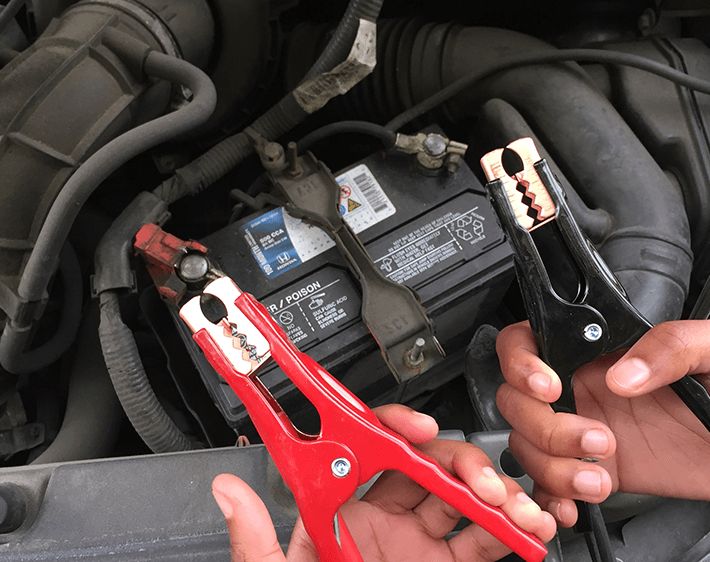
- Locate the battery terminals: Positive (+) is usually red, negative (–) is black.
- Remove any terminal covers.
- Check for corrosion (white or blue powder). If present, gently clean with a wire brush or cloth.
3. Attach The Jumper Cables
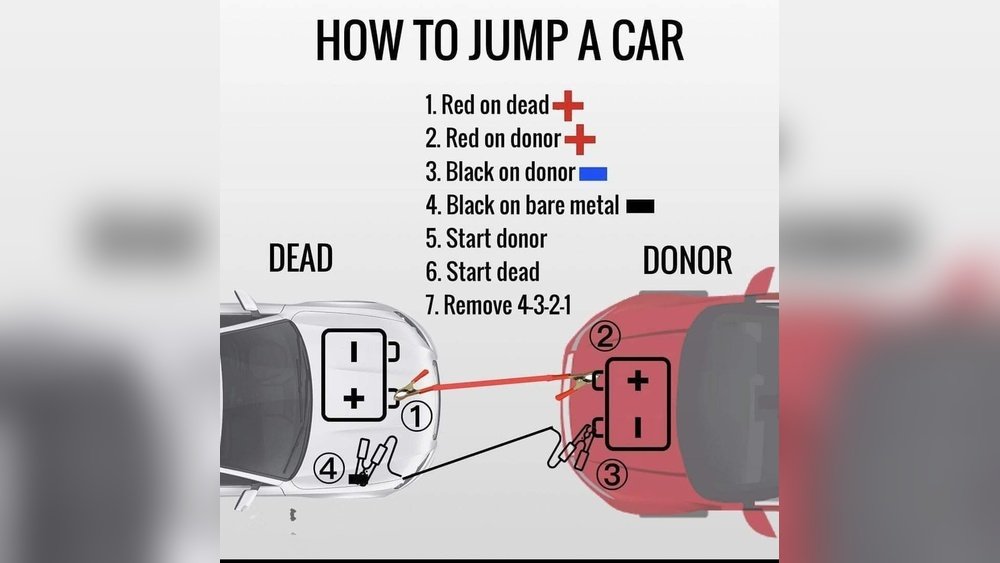
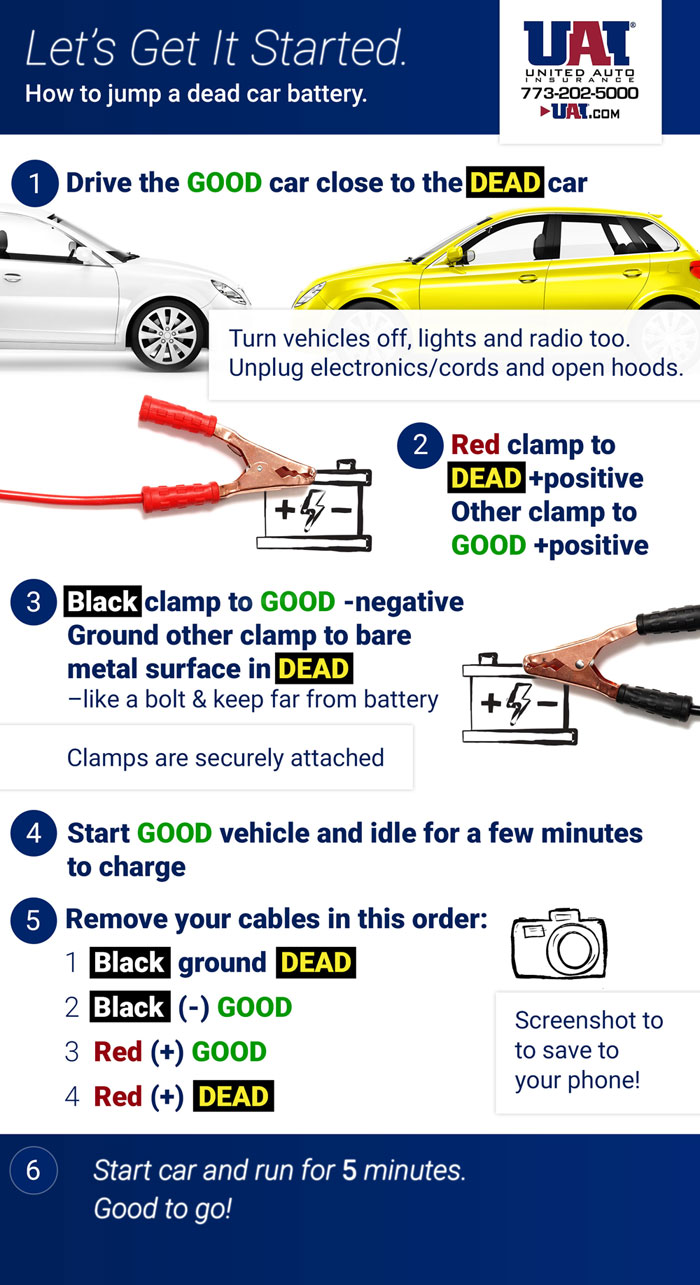
The order matters. Here’s how to connect the cables safely:
- Connect one red (positive) clamp to the positive terminal on the dead battery.
- Connect the other red (positive) clamp to the positive terminal on the good battery.
- Connect one black (negative) clamp to the negative terminal on the good battery.
- Connect the other black (negative) clamp to an unpainted metal part on the engine block or car frame of the dead car—not the battery. This grounds the circuit and reduces risk of sparks.
Example: The engine’s lifting bracket or a sturdy bolt works well. Avoid moving parts like belts or fans.
4. Double-check Everything
Make sure all clamps are secure and not touching each other. If anything looks wrong, start over.
5. Start The Working Car
- Start the engine of the good car and let it run for 2-3 minutes.
- This gives a small charge to the dead battery.
6. Start The Dead Car
- Try to start the dead car. If it doesn’t start after a few tries, wait another 2-3 minutes and try again.
- If it still won’t start, the battery may be beyond saving, or there may be another issue.
7. Remove The Cables In Reverse Order
Take the cables off in the reverse order you put them on:
- Remove the black clamp from the grounded metal on the dead car.
- Remove the black clamp from the good battery.
- Remove the red clamp from the good battery.
- Remove the red clamp from the previously dead battery.
Caution: Don’t let the clamps touch each other or any metal part while removing.
8. Let The Jumped Car Run
- Keep the engine running for at least 15–30 minutes, or drive around. This lets the alternator recharge the battery.
- If the car dies again soon, the battery may need replacing, or the charging system could be faulty.
What To Do If Jump-starting Fails
Sometimes a car won’t start even after a jump. Here’s what to check:
- Are the cables connected properly? Double-check the order and connections.
- Is the battery corroded or leaking? If so, do not proceed.
- Is the donor car’s battery strong enough? Small or weak batteries may not help.
- Does the car make a clicking sound? This usually means the starter is getting power, but the battery is too weak.
- No sound at all? The battery may be completely dead, or there may be a different problem.
If you still can’t start the car, it’s time to call for roadside assistance or a mechanic.
Common Mistakes And How To Avoid Them
Even experienced drivers make mistakes when jump-starting. Here are the most frequent errors:
- Reversing the cables: Connecting positive to negative can destroy electronics and cause sparks.
- Letting clamps touch: This can cause dangerous arcing.
- Jump-starting a frozen battery: In very cold weather, batteries can freeze. Never try to jump-start a frozen battery—it can explode.
- Not grounding the negative cable: Always connect the last negative clamp to metal on the car, not the battery.
- Jump-starting damaged or leaking batteries: If you see cracks, bulges, or leaking fluid, do not attempt to jump.
Tip: Modern cars have sensitive electronics. Power surges from jump-starting can damage them if cables are connected incorrectly.
Alternatives To Jumper Cables
You’re not always near another car. Here are other options:
- Portable jump-starters: Small battery packs you can keep in your trunk. Many have built-in safety features and are easy to use.
- Push starting (for manual transmissions): If you have a stick shift, you can sometimes start the car by pushing it and popping the clutch.
- Roadside assistance: Many insurance policies or credit cards offer free jump-start service.
Note: Portable jump-starters must be kept charged. Check them every few months.
When To Replace Your Car Battery
A jump-start will get you going, but it may not fix the real problem. Here’s when to replace the battery:
- The battery is more than 4-5 years old.
- You need frequent jump-starts.
- The engine cranks slowly, even after charging.
- Headlights are dim, or accessories work poorly.
- The battery case is swollen or leaking.
Many auto parts stores will test your battery for free.
How Battery Health Affects Jump-starting
Not all dead batteries are the same. Here’s a quick comparison:
| Battery Condition | Can It Be Jump-Started? | Long-Term Solution |
|---|---|---|
| Drained (lights left on) | Yes | Recharge by driving or battery charger |
| Old (4+ years) | Maybe | Replace battery |
| Corroded terminals | Maybe | Clean terminals |
| Leaking or cracked | No | Replace battery |
| Frozen (very cold climate) | No | Thaw, then replace if damaged |
How To Choose Jumper Cables Or A Jump-starter
Not all jumper cables are the same. Here’s what matters:
- Gauge (thickness): Lower numbers are better. 4-gauge or 6-gauge cables are best for most cars.
- Length: At least 10 feet. Longer is more flexible but can lose some power.
- Clamp quality: Look for strong, copper-plated clamps.
- Insulation: Thick, flexible coating prevents shocks and makes cables last longer.
Let’s compare cables and portable jump-starters:
| Feature | Jumper Cables | Portable Jump-Starter |
|---|---|---|
| Requires another vehicle | Yes | No |
| Works if alone | No | Yes |
| Needs charging | No | Yes (keep charged) |
| Price | Low | Medium to high |
| Size | Bulky | Compact |
| Skill required | Medium | Low |
The Science Behind Jump-starting
A car battery delivers a burst of electrical current to the starter motor, which turns the engine. When the battery is dead, it can’t deliver enough power. By using jumper cables, you connect a healthy battery to the dead one, letting current flow and provide the energy needed to start the engine.
The alternator, once the car is running, recharges the battery. If your car dies again after a jump, the battery or alternator may be faulty.
Example: If your car keeps dying after every jump-start, it’s a sign the battery can no longer hold a charge, or the alternator isn’t working.
Jump-starting In Different Conditions
Jump-starting isn’t always the same. Weather, car type, and battery location all matter.
Cold Weather
Batteries lose power when cold. In winter, you may need to let the donor car run longer before trying to start. Never try to jump a frozen battery.
Modern Cars
Some cars have batteries in the trunk or under seats. Use the jump-start posts under the hood if provided.
Diesel Engines
Diesel engines use more power to start. You may need heavier cables and a stronger donor vehicle.
| Condition | Special Advice |
|---|---|
| Extreme cold | Let donor car run longer, check for frozen battery |
| Hybrid car | Consult the manual, may need special steps |
| Battery in trunk | Use jump-start posts under hood if available |
| Diesel engine | Use thicker cables, larger battery |

After Jump-starting: What To Do Next
Once your car is running, your battery needs time to recharge. Here’s what to do:
- Drive for at least 20-30 minutes. Highway driving is best, since it keeps the alternator charging.
- Avoid stopping the engine until you reach your destination.
- If your car won’t start again after being turned off, the battery probably needs replacing.
Tip: If your battery dies again soon, check the charging system or look for parasitic drains (devices that keep using power when the car is off).
Preventing Dead Batteries
Prevention saves time and money. Here’s how to avoid dead batteries:
- Turn off all lights and accessories when leaving the car.
- Replace old batteries before they fail. Check the date code on the battery case.
- Clean terminals with a wire brush every 6 months.
- Drive your car regularly, especially in winter.
- Have your battery and charging system tested once a year.
Non-obvious insight: Some cars have features like automatic lights that don’t always turn off if a door is open. Always double-check before leaving your car.
Environmental And Safety Concerns
Batteries contain acid and heavy metals. If you need to replace a battery:
- Wear gloves and eye protection when handling.
- Always recycle old batteries at an auto parts store or recycling center.
- Never throw batteries in the trash.
Improper handling can harm you and the environment.
Real-world Example
Imagine you’re leaving work late at night. Your headlights are dim, and your car doesn’t start. Using your jumper cables, you follow the steps above. After jump-starting, you drive home without further trouble. The next day, you get your battery checked and find it’s more than five years old.
You replace it, and you’re back to reliable starts every morning.
When To Call For Help
Sometimes, doing it yourself isn’t safe or possible:
- You’re in an unsafe area, or it’s dark and you don’t feel comfortable.
- You’re unsure about the process and don’t want to risk damage.
- The battery is damaged or leaking.
- You don’t have the right tools.
There’s no shame in calling roadside assistance or a professional.
Resources For Further Learning
If you want to know more about car batteries and maintenance, the AAA guide to jump-starting offers more detailed tips and safety advice.
Frequently Asked Questions
What If My Car Still Won’t Start After A Jump?
If your car doesn’t start after several tries, check the connections and make sure the donor car’s battery is strong. If everything seems right, your battery may be too old, or there may be another issue (like a bad alternator or starter).
Consider getting your car checked by a mechanic.
Can Jump-starting Damage My Car?
If done correctly, jump-starting is safe. However, connecting the cables backward or to the wrong place can damage electronics, blow fuses, or even cause sparks and fire. Always follow the correct order and never force connections.
How Long Should I Let My Car Run After A Jump-start?
Let your car run for at least 20–30 minutes to recharge the battery. Highway driving is best. If you shut off the engine too soon, the battery may not have enough charge to start again.
Can I Jump-start A Hybrid Or Electric Car?
Most hybrid and electric vehicles have special instructions for jump-starting. Some can jump-start their 12V system, but others cannot. Always check the owner’s manual before trying.
Are Portable Jump-starters Safe?
Yes, most modern portable jump-starters have built-in protections against sparks, reverse polarity, and overcharging. Make sure you use a device rated for your vehicle’s engine size and keep it charged.
Jump-starting a car is a skill every driver should know. With the right tools, a careful approach, and some basic knowledge, you can handle most dead battery situations safely and confidently. By practicing good battery care, you can reduce the chance of being stranded.
And if you ever feel unsure, professional help is just a call away.