Anyone who drives a car knows the frustration of a dead battery. But how do you actually know when a car battery is fully charged? Many people guess based on how the car starts or how the headlights look, but these are not always reliable signs. If you want to avoid getting stranded or damaging your battery, it’s important to understand how to check its charge accurately. Whether you’re a new car owner or someone who just wants to get the most from your vehicle, knowing when your battery is truly ready can save you time, money, and trouble.
In this article, you’ll learn the clear signs of a fully charged car battery, how to test it with and without special tools, and what numbers you should see. You will also discover common mistakes people make and get tips for keeping your battery healthy longer.
By the end, you’ll be able to confidently check your car battery and avoid the guesswork.
Why Car Battery Charge Matters
A fully charged car battery is not just about starting your car. It powers everything electrical in your vehicle, from the starter motor to the radio and lights. If the charge drops too low, your car might not start, or you could damage expensive electronics. Overcharging or undercharging can shorten battery life, leading to costly replacements.
Car batteries lose charge naturally, especially in cold weather or if you don’t drive often. Short trips also don’t give the alternator enough time to recharge the battery fully. Understanding when your battery is fully charged helps you spot problems early, improve performance, and avoid being stuck with a dead battery.
Main Signs Of A Fully Charged Car Battery
You don’t have to be a mechanic to know when your battery is fully charged. Here are the main signs you can look for:
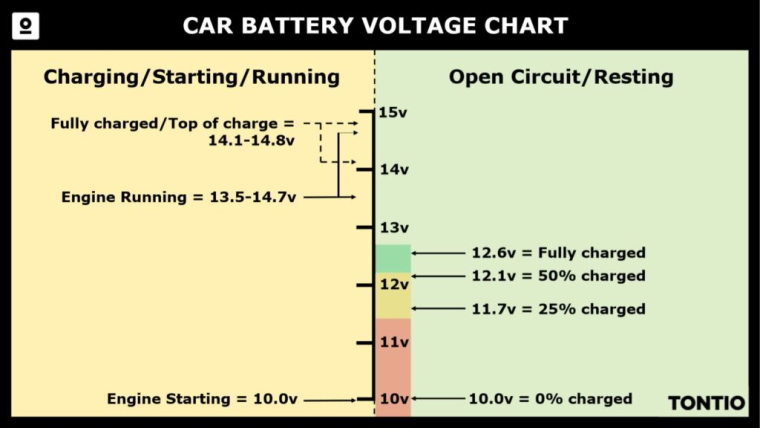
- Voltage Reading: A fully charged 12-volt battery should read between 12.6 and 12.8 volts when the engine is off. If you see less, the battery is not completely charged.
- Quick Engine Start: When you turn the key, the engine starts quickly and smoothly.
- Bright Headlights: Headlights are bright and steady, not dim or flickering.
- No Warning Lights: The battery or charging system warning lights on your dashboard stay off.
- Normal Electrical Function: All electrical systems (radio, windows, lights) work without issues.
These signs are useful, but they do not always tell the full story. For a more accurate reading, you’ll need to test the battery with a tool.
How To Test A Car Battery’s Charge
1. Using A Multimeter
A multimeter is a small tool that measures voltage. You can buy one at any auto parts store, and it’s simple to use:
- Turn off your car completely.
- Set the multimeter to DC volts (20V range if manual).
- Touch the red probe to the battery’s positive terminal (+), and the black probe to the negative terminal (–).
- Read the number on the display.
Interpreting Results:
- 12.6 – 12.8 volts: Fully charged
- 12.4 – 12.6 volts: About 75% charged
- 12.2 – 12.4 volts: About 50% charged
- 12.0 – 12.2 volts: About 25% charged
- Below 12.0 volts: Discharged or faulty
A common mistake is to test the battery right after driving or charging. Wait at least one hour after turning off your engine for the battery to settle, otherwise you may get a false high reading.
2. Using A Battery Charger With An Indicator
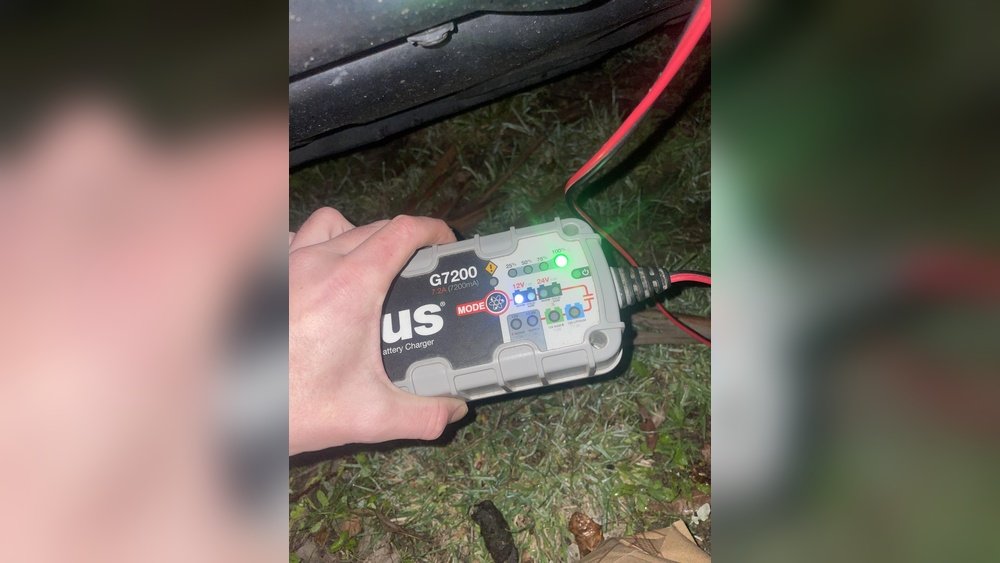
Some battery chargers have built-in indicators that show the charge level. These often use lights or a small display. When the indicator shows “full” or “100%,” the battery should be fully charged. However, always check the voltage with a multimeter to confirm, as chargers can sometimes give incorrect readings, especially with older batteries.
3. Using A Battery Tester
A dedicated battery tester (also called a load tester) can measure both the voltage and the battery’s ability to provide power under load. This gives a more complete picture, especially for older or suspect batteries.
- Connect the tester as you would a multimeter.
- Follow the device instructions to apply a short load.
- A fully charged, healthy battery will stay above 12.4 volts even under load.
4. Without Tools: Observing Car Behavior
If you don’t have any tools, pay attention to these:
- Does the car start easily, even after sitting overnight?
- Are all interior and dashboard lights bright when you turn the key?
- Does the horn sound strong?
While these signs are helpful, they are less reliable than actual voltage measurements.
Car Battery Voltage Table (typical Readings)
Here’s a quick reference for what different voltage readings mean for a 12V car battery:
| Voltage (V) | Charge Level | Action Needed |
|---|---|---|
| 12.6 – 12.8 | 100% (Fully Charged) | None |
| 12.4 – 12.6 | 75% Charged | Recharge Soon |
| 12.2 – 12.4 | 50% Charged | Recharge |
| 12.0 – 12.2 | 25% Charged | Recharge Immediately |
| Below 12.0 | Discharged/Flat | Recharge or Replace |
How Battery Charging Works
A car battery stores chemical energy and converts it to electrical energy when needed. When you start the car, the battery sends power to the starter motor. Once the engine runs, the alternator takes over and charges the battery as you drive.
- Charging is automatic when the engine runs.
- Short trips may not recharge the battery fully.
- Leaving lights on or electronics running drains the battery.
- Extreme cold or heat can slow charging and reduce battery life.
If your battery is often low, check for electrical problems or a failing alternator.
How Long Does It Take To Fully Charge A Car Battery?
Charging time depends on the battery’s size, how low it is, and the charger’s power.
- Using a standard charger (4-8 amps): 6–12 hours for a full charge from flat.
- Fast chargers (10–20 amps): 2–4 hours, but these can shorten battery life if used often.
- Trickle chargers (1–2 amps): 24–48 hours, safer for long-term charging.
Example: If your battery is at 50% and you use a 6-amp charger, it may take around 4–6 hours to reach full charge.
Never rush the charging process. Overcharging can damage the battery, cause leaks, or even make it explode in rare cases.
Comparing Different Testing Tools
Choosing the right tool makes checking your battery easier. Here’s how popular tools compare:
| Tool | Accuracy | Ease of Use | Cost | Extra Features |
|---|---|---|---|---|
| Multimeter | High | Medium | Low | Measures volts, ohms, amps |
| Battery Tester | Very High | Medium | Medium | Load test, sometimes prints result |
| Charger Indicator | Medium | Easy | Varies | Shows only charging status |
If you want a quick, simple answer, a multimeter is usually best for most people.
Common Mistakes When Checking Battery Charge
Many car owners make these mistakes:
- Testing Right After Driving: The voltage may show higher than normal. Always wait at least an hour.
- Confusing Cranking Power with Charge: A battery can start a car but still be low on charge.
- Ignoring Corroded Terminals: Dirty connections can give false readings. Clean the battery posts first.
- Not Checking Under Load: Some batteries look fine at rest but fail under stress.
- Trusting Dashboard Alone: The battery light may not come on until it’s almost too late.
Don’t guess—use a meter for the best results.
Factors That Affect Battery Charging
Several things can change how and when your car battery charges:
- Temperature: Cold weather slows charging and lowers battery capacity. In hot weather, batteries can overcharge or dry out.
- Battery Age: Older batteries hold less charge and may never reach 100% again.
- Driving Habits: Short trips or lots of idling keep the battery from charging fully.
- Electrical Load: Using lights, AC, or radio while the car is off drains the battery faster.
- Charger Type: Some chargers stop automatically at full charge; older ones do not.
Understanding these factors helps you adjust your charging and maintenance habits.
How To Keep Your Battery Fully Charged Longer
Getting the most life from your car battery is not difficult if you follow a few rules:
- Drive Regularly: Take your car for a longer drive at least once a week to let the alternator recharge the battery.
- Turn Off Accessories: Don’t leave lights, radio, or chargers running when the engine is off.
- Clean Battery Terminals: Check for white or green corrosion and clean it with a wire brush and baking soda.
- Check the Alternator: If your battery is often low, have your alternator tested at a garage.
- Use the Right Charger: Avoid fast charging unless necessary. Use a smart charger that stops when full.
- Keep It Warm: In cold climates, park in a garage or use a battery blanket.
What To Do If The Battery Never Seems Fully Charged
If your battery never reaches full charge, consider these possibilities:
- Battery is Old: Most car batteries last 3–5 years. After that, they lose capacity.
- Alternator Problem: If the alternator is weak, the battery won’t charge well.
- Parasitic Drain: Some devices may keep draining power even when the car is off.
- Faulty Charger: Some cheap chargers don’t work well or stop charging too soon.
- Internal Battery Damage: Broken plates or short circuits inside can make charging impossible.
In these cases, it’s best to visit a mechanic or battery shop for a full test.
Battery Health Vs. Battery Charge
It’s important to know the difference between a fully charged battery and a healthy battery. A battery can be fully charged but still weak or faulty. For example, a battery with a dead cell may show 12.6 volts but fail to start your car reliably.
- Charge tells you how much energy is stored right now.
- Health tells you if the battery can hold and deliver that energy over time.
A load test or professional battery test is best for checking health.
Advanced Tips For Accurate Testing
If you want to go beyond the basics, here are some advanced tips:
- Test the battery first thing in the morning before driving. This shows the “resting” voltage.
- Compare your readings over several days to see trends.
- If you have a smart charger, check the amp reading as charging slows. When amps drop to near zero, the battery is full.
- For sealed or maintenance-free batteries, look for an “eye” indicator on top. Green usually means charged, but always confirm with a meter.
Real-world Example: Testing And Charging At Home
Let’s walk through a typical situation:
You try to start your car after a week and the engine is slow to turn. You suspect the battery is low.
- You open the hood and check the battery. It looks clean, but you notice the headlights are dim.
- Using a multimeter, you measure 12.1 volts. This means the battery is about 25% charged.
- You connect a 6-amp charger and let it run for 6 hours.
- After charging, you wait one hour, then retest. Now you see 12.7 volts—fully charged.
- The car starts instantly, and all lights are bright.
This simple process can save you a tow truck call and an expensive battery replacement.
How Modern Cars Affect Battery Charging
New cars have more electronics (computers, sensors, entertainment systems) that draw power even when the car is off. This can make batteries drain faster and makes it more important to check charge regularly. Some luxury cars even have a “battery maintenance mode” to help manage charge.
If you drive a newer vehicle, ask your dealer or check the manual for special battery care advice.
When To Replace Your Battery
Even with perfect care, all batteries wear out. Signs it’s time for a new one:
- Battery is more than 4–5 years old.
- Car is slow to start, even after charging.
- Battery case is swollen, cracked, or leaking.
- Repeatedly loses charge for no clear reason.
- You see a battery warning light on your dashboard.
Don’t wait for total failure—replace a weak battery before it leaves you stranded.
Environmental Factors And Battery Life
Where you live can also affect your battery:
- Hot climates: Batteries dry out and fail sooner.
- Cold climates: Batteries lose power and are harder to charge.
- Humid areas: More corrosion on terminals.
Choose a battery designed for your climate and check it more often if you live in extreme conditions.
How To Store A Car Battery
If you store your car for weeks or months:
- Disconnect the battery or use a “trickle charger” to keep it topped up.
- Store in a cool, dry place, away from direct sunlight.
- Check voltage every month and recharge if it drops below 12.4 volts.
This helps prevent deep discharge and extends battery life.

Comparing Different Battery Types
Modern cars use several battery types. Here’s a quick overview:
| Type | Typical Voltage | Maintenance | Lifespan |
|---|---|---|---|
| Lead-Acid (Flooded) | 12.6 – 12.8V | Check water, clean posts | 3–5 years |
| AGM (Absorbed Glass Mat) | 12.7 – 12.9V | Maintenance-free | 4–7 years |
| Gel Cell | 12.7 – 12.9V | Maintenance-free | 4–6 years |
| Lithium-Ion | 13.0 – 13.2V | Maintenance-free | 5–10 years |
Always use the correct type for your vehicle. Lithium batteries, for example, charge to a higher voltage and require special chargers.
Non-obvious Insights For Beginners
- A battery can hold a “surface charge” right after charging, giving a false high reading. Always let the battery rest before testing.
- Modern smart chargers and car computers may limit charging to protect the battery. Don’t be surprised if a new battery doesn’t always reach exactly 12.8 volts.
- Even a “fully charged” battery can fail if it’s internally damaged. That’s why checking voltage alone is only part of the story.
Getting Professional Help
If you’re ever unsure, most auto parts stores will test your battery for free. They use advanced tools that check both charge and health. It’s a smart move before buying a new battery.
For more technical information, see this Wikipedia article on automotive batteries.
Frequently Asked Questions
What Voltage Means A Car Battery Is Fully Charged?
A fully charged 12V car battery should show 12.6 to 12.8 volts with the engine off. Anything less means it’s not at 100%.
Can A Car Battery Be Overcharged?
Yes. Overcharging can damage the battery, cause leaks, and shorten its life. Use a smart charger that stops automatically to prevent this.
How Often Should I Check My Car Battery’s Charge?
Check your battery every few months, or before long trips and after the car has been unused for a while. In extreme weather, check more often.
Is It Safe To Test A Car Battery Myself?
Yes, if you follow safety rules. Wear gloves and safety glasses. Don’t touch both terminals at once. If you see cracks or leaks, don’t test—replace the battery.
What’s The Best Way To Keep My Battery Fully Charged In Winter?
Drive your car regularly, keep it parked in a garage, and use a trickle charger if you don’t drive often. Cold weather drains batteries faster.
Knowing when your car battery is fully charged gives you more control and confidence as a driver. With these tips and tools, you’ll never have to guess again. Stay prepared, and your car will always be ready when you need it.