
A car battery charger is a simple tool, but it can save you from big problems. Imagine you’re late for work, you turn the key, and nothing happens—your car battery is dead. But what’s really happening inside that charger? How does it bring your battery back to life?
Many people use these devices without knowing how they work. Understanding the process can help you charge your battery safely, keep it healthy for longer, and avoid costly mistakes.
This article explains every part of how a car battery charger works. You’ll learn what happens when you plug it in, why different chargers work in different ways, and what features matter most. We’ll also cover how modern chargers protect your car and your battery, common mistakes to avoid, and the science behind charging.
By the end, you’ll know exactly how to use a charger wisely and get the best results.
What Is A Car Battery Charger?
A car battery charger is a device that supplies electrical energy to a car battery. Its main job is to reverse the chemical reaction that happens when your car uses the battery. When you use your car’s lights, radio, or starter, the battery releases electricity by changing chemicals inside. A charger pushes electricity back in, restoring the battery’s power.
Chargers come in many shapes and sizes. Some are small and portable, while others are heavy and designed for workshops. They all do the same basic job, but some are smarter than others. Smart chargers adjust the power they give, while older chargers use a fixed current.
The Basic Science Behind Charging
To understand how a charger works, you need to know a little about batteries. Most car batteries are lead-acid batteries. Inside, there are plates made of lead and lead dioxide, floating in a liquid called electrolyte (a mix of water and sulfuric acid). When you use the battery, the chemicals react and make electricity.
Charging is the opposite reaction. The charger supplies direct current (DC) electricity, which pushes the chemical reaction back. This restores the plates and fills the battery with energy again. The charger must give just the right amount of current—too little and it takes forever, too much and you can damage the battery.
Main Parts Of A Car Battery Charger
Every charger has a few main parts:
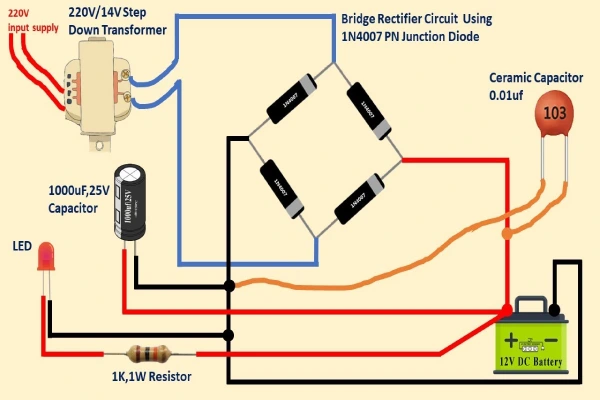
- Power supply – Connects to your home’s AC outlet and brings in electricity.
- Transformer – Steps down the high voltage from the outlet to a safe level.
- Rectifier – Changes the AC electricity into DC, which the battery needs.
- Control circuit – Regulates the flow of electricity to prevent overcharging.
- Safety features – Protect against sparks, overheating, or connecting the wrong way.
Modern chargers might add extra parts, like microchips and sensors, to make charging safer and faster.
How A Car Battery Charger Works: Step By Step
When you connect a charger to your battery and plug it in, here’s what happens:
- AC power enters – The charger gets electricity from your wall outlet (usually 110V or 220V AC).
- Voltage is reduced – The transformer lowers the voltage to about 12–15 volts, matching your battery.
- AC is converted to DC – The rectifier turns the AC power into DC, which the battery can use.
- Charging current flows – The charger sends current into the battery, reversing the discharge reaction.
- Control circuits monitor progress – Modern chargers watch the battery’s voltage and temperature to avoid overcharging or overheating.
- Charging slows down at the end – As the battery fills, the charger may reduce the current or stop automatically.
Older chargers keep pushing current no matter what. Newer “smart” chargers can sense when the battery is full and shut off or switch to a “trickle” mode.
Types Of Car Battery Chargers
Not all chargers are the same. Here are the main types you’ll find:
1. Manual Chargers
A manual charger is simple. It sends a steady flow of current until you unplug it or turn it off. There is no automatic shut-off, so you must watch the process and stop charging before the battery is overfilled.
2. Automatic (smart) Chargers
Smart chargers use sensors and microcontrollers. They automatically adjust the current and voltage as the battery charges. When the battery is full, they stop charging or switch to a low-maintenance mode.
3. Trickle Chargers
A trickle charger delivers a very low current (about 1–2 amps) over a long period. This keeps a battery topped up without overcharging. It’s useful for vehicles that aren’t used often, like classic cars or motorcycles.
4. Float Chargers
A float charger is a type of smart charger. It senses when the battery needs more power and only charges when necessary. It’s designed for long-term connection.
5. Multi-stage Chargers
These chargers use several stages: bulk charging, absorption, and float. Each stage uses different voltages and currents for the best results. This is the safest and fastest way to charge most modern batteries.
Comparing Charger Types
Here’s a comparison to help you see the differences:
| Charger Type | Current Control | Automatic Shut-off | Best For |
|---|---|---|---|
| Manual | Fixed | No | Simple charging, experienced users |
| Smart/Automatic | Variable | Yes | Everyday drivers, safety |
| Trickle | Low, steady | No/Yes | Long-term storage |
| Float | Very low | Yes | Seasonal vehicles |
| Multi-stage | Variable, staged | Yes | Modern batteries, quick and safe charging |
Understanding Charging Stages
Many modern chargers use a three-stage charging process. This keeps your battery healthy and fully charged without harm.
Stage 1: Bulk Charging
The charger sends a large current (often 10–15 amps) to fill the battery quickly. This stage brings the battery up to about 80% charge.
Stage 2: Absorption
As the battery gets close to full, the charger reduces the current but keeps the voltage steady. This protects the battery as it reaches 100% charge.
Stage 3: Float
When the battery is full, the charger switches to a very low current. This keeps the battery topped up without overcharging.
Insight: Many people think a charger should always push as much current as possible, but this can damage the battery. The absorption and float stages are vital for battery health.
How Chargers Protect You And Your Battery
Charging a car battery can be dangerous if not done correctly. Modern chargers include several safety features:
- Reverse polarity protection – Prevents damage if you connect the clamps backwards.
- Short circuit protection – Stops current flow if there’s a wiring problem.
- Thermal overload protection – Shuts off if the charger gets too hot.
- Spark prevention – Reduces the risk of explosions near flammable battery gases.
Older chargers may not have these features, so you must be extra careful.
How To Use A Car Battery Charger Safely
Even with safety features, you must use a charger correctly. Here’s a step-by-step guide:
- Read the manual – Every charger is different. Check the instructions before you start.
- Turn off your car – The engine should be off and the keys removed.
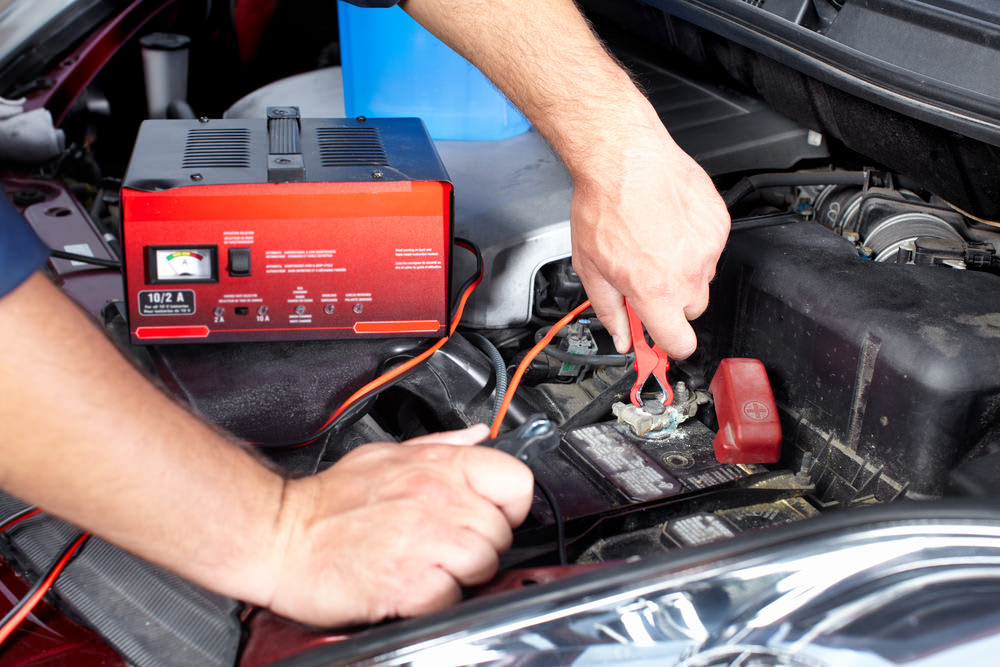
- Connect the clamps – Attach the positive (red) clamp to the battery’s positive terminal, and the negative (black) clamp to the negative terminal. For extra safety, connect the negative clamp to a metal part of the car’s frame, away from the battery.
- Set the charger – Choose the correct voltage and charging rate for your battery.
- Plug in the charger – Only after the clamps are connected.
- Monitor charging – For manual chargers, watch the time to avoid overcharging. Smart chargers handle this automatically.
- Unplug and disconnect – When finished, unplug the charger first, then remove the clamps (negative first, then positive).
Practical tip: Always charge in a well-ventilated area. Charging batteries release hydrogen gas, which is flammable.
Common Mistakes When Using Car Battery Chargers
Even experienced drivers make mistakes. Here are some common errors and how to avoid them:
- Overcharging – Leaving a manual charger on too long can damage the battery, cause leaks, or even start a fire.
- Wrong charger type – Using a charger that’s too powerful or not compatible with your battery can shorten its life.
- Reverse polarity – Connecting the clamps backwards can fry both the charger and your car’s electronics.
- Charging a frozen battery – If the battery’s liquid is frozen, charging can cause it to explode.
- Ignoring battery condition – Charging a battery with a cracked case or leaking acid is dangerous.
- Charging in a closed space – Hydrogen gas can build up and cause explosions.
- Using old, worn-out cables – Damaged charger cables are a fire risk.
Non-obvious insight: Even small differences in charger voltage can impact battery health. Using a 15V charger on a 12V battery can boil the electrolyte and cause permanent damage.
How To Choose The Right Car Battery Charger
Picking the right charger matters. Here’s what to consider:
1. Battery Type
Most cars use lead-acid batteries, but some use AGM, gel, or lithium-ion batteries. Not all chargers work with every type. Always check your battery’s label.
2. Charger Amperage
Higher amperage means faster charging, but it’s not always better. For regular top-ups, a 2–4 amp charger is safe. For emergencies, a 10–15 amp charger is faster but riskier for long-term use.
3. Automatic Features
Smart chargers are safer and easier. If you’re not experienced, always choose a charger with automatic shut-off.
4. Safety Protections
Look for reverse polarity and overcharge protection as a minimum.
5. Size And Portability
If you need to carry the charger in your car, choose a compact model. For home garages, a larger, more powerful charger may be better.
6. Price Vs. Features
Expensive chargers have more features, but you may not need all of them. Decide what’s most important for your use.
Here’s a quick comparison of some common charger features:
| Feature | Manual Charger | Smart Charger |
|---|---|---|
| Automatic shut-off | No | Yes |
| Battery type selection | No | Yes |
| Reverse polarity protection | Rare | Standard |
| Charging speed | Medium/Fast | Medium |
| User monitoring needed | Yes | No |
Pro tip: If you store your car for months, a smart charger with float mode is worth the extra cost.

Charging Different Types Of Batteries
Most cars use flooded lead-acid batteries, but new cars may use AGM or lithium batteries. Here’s how charging differs:
- Flooded lead-acid – Most chargers are compatible. Avoid overcharging.
- AGM (Absorbent Glass Mat) – Needs a smart charger. Sensitive to high voltage.
- Gel batteries – Must use a charger with gel mode. High voltage can cause bubbles inside.
- Lithium-ion – Requires a special charger. Never use a lead-acid charger on lithium batteries.
Using the wrong charger type can ruin your battery or even start a fire.
Charging Time: How Long Does It Take?
Charging time depends on the battery size and charger output. Here’s a simple formula:
Charging time (hours) = Battery capacity (Ah) / Charger current (A)
Example: A 48Ah battery with a 4A charger = 48 / 4 = 12 hours.
But in real life, the final 10–20% takes longer due to the absorption stage.
Quick Reference Table
| Battery Size (Ah) | Charger Current (A) | Approx. Time (hours) |
|---|---|---|
| 40 | 2 | 20 |
| 40 | 4 | 10 |
| 60 | 10 | 6 |
| 60 | 2 | 30 |
Non-obvious insight: Charging a battery too fast can heat it up and cause “gassing”—the release of hydrogen and oxygen. This shortens battery life.
Modern Charger Features Worth Knowing
Modern chargers do more than just charge. Here are some advanced features:
- Desulfation mode – Breaks down lead sulfate crystals on battery plates, restoring old batteries.
- Temperature compensation – Adjusts voltage based on temperature for safer charging in hot or cold weather.
- Battery tester – Checks battery health before and after charging.
- Jump start mode – Some chargers can boost a car with a dead battery instantly.
These features can make a big difference in battery life and safety, especially in extreme climates.
Car Battery Maintenance Tips
A charger keeps your battery full, but maintenance is just as important. Here’s how to get the most from your battery:
- Check fluid levels – For non-sealed batteries, top up with distilled water as needed.
- Clean terminals – Corrosion blocks current. Use a wire brush and baking soda solution.
- Test battery voltage – Use a voltmeter. A healthy, fully charged battery should read about 12.6 volts.
- Keep it charged – Short trips and long storage drain batteries. Use a charger regularly if you don’t drive often.
- Avoid deep discharges – Running the battery flat weakens it over time.
Experience-based tip: Many batteries fail in winter because cold slows chemical reactions. Keep your battery charged and warm if possible.
Environmental And Energy Considerations
Charging uses electricity, but it’s a small amount compared to driving. Still, using the right charger and not overcharging saves both power and battery life.
Disposing of old batteries is also important. Lead-acid batteries are 99% recyclable. Always take dead batteries to a recycling center.
For more details on battery recycling, visit the EPA’s official site.
Frequently Asked Questions
How Do I Know When My Battery Is Fully Charged?
Most smart chargers have a light or display that tells you. For manual chargers, check the battery voltage with a voltmeter. A fully charged 12V battery should read 12.6–12.8 volts.
Can I Leave A Car Battery Charger On Overnight?
If you use a smart charger with automatic shut-off, yes. For manual chargers, it’s not safe—overcharging can damage the battery or cause a fire.
Is It Safe To Charge A Battery While It’s Still Connected To The Car?
Usually, yes—especially with modern cars and smart chargers. But always check your car and charger manual. For older vehicles, disconnect the battery to avoid electrical damage.
What Should I Do If The Battery Gets Hot During Charging?
Stop charging immediately. A hot battery can leak or explode. Let it cool down, check for damage, and charge at a lower rate next time.
What’s The Difference Between A Battery Charger And A Jump Starter?
A battery charger slowly fills the battery over hours. A jump starter gives a quick, powerful burst to start the car but doesn’t charge the battery fully.
Understanding how a car battery charger works helps you avoid mistakes and keeps your car running reliably. The right charger, used properly, can add years to your battery’s life and save you money. With this knowledge, you’ll be ready for any dead battery situation—no more surprises when you turn the key.