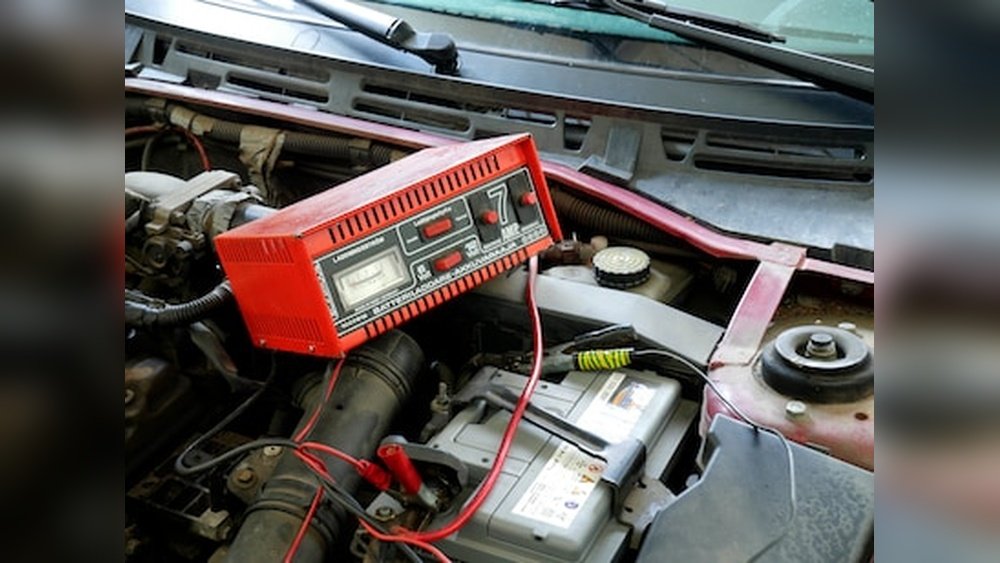
Charging your car battery with a charger is a task that almost every car owner faces at some point. Whether your battery is drained because you left the headlights on, or it’s just old and weak, knowing how long it will take to recharge is important.
Many people feel unsure about the process, and this can lead to mistakes like overcharging, undercharging, or damaging the battery. In this guide, you’ll find clear answers to how long it takes to charge a car battery with a charger, what factors affect charging time, and practical advice for safe and effective charging.
By the end, you’ll have a strong understanding of the process and be ready to handle battery charging confidently.
What Determines Car Battery Charging Time?
The time needed to charge a car battery depends on several key factors. Some are related to the charger, some to the battery, and others to the environment. Understanding these makes it easier to predict how long charging will take in your specific situation.
Charger Amperage
The charger’s output is usually measured in amps. Higher amp chargers deliver more current, charging the battery faster. For example, a 2-amp charger is slow and gentle, while a 10-amp or 15-amp charger is much faster.
Battery Capacity
Every car battery has a capacity, measured in amp-hours (Ah). A typical car battery is about 48 Ah. The higher the capacity, the longer it takes to charge.
Battery State Of Charge
The current charge level matters. Charging from completely dead (0%) takes longer than topping up from 50%.
Battery Type
Different batteries (like lead-acid, AGM, or lithium-ion) have different charging needs. Some handle fast charging better, while others need a slower, more controlled charge.
Temperature
Batteries charge more slowly in cold conditions. Extreme heat can also affect charging speed and battery health.
Battery Age And Health
Old or damaged batteries may take longer to charge, or may not reach full charge at all.
Practical Example
Suppose you have a 48 Ah battery that is completely dead, and you use a 10-amp charger. In theory, it would take about 4. 8 hours (48 Ah ÷ 10 A) to charge. But in reality, charging slows down near the end, so actual time might be 6 hours or more.
Types Of Car Battery Chargers
Before you estimate charging time, you need to know what kind of charger you are using. Not all chargers work the same way, and the type you pick affects speed and safety.
Manual Chargers
Manual chargers provide a constant current. You need to monitor charging and disconnect when the battery is full. They are often cheaper but require more attention.
Smart (automatic) Chargers
Smart chargers adjust the current based on the battery’s needs. They slow down as the battery fills, preventing overcharging. These are safer and more convenient for most people.
Trickle Chargers
A trickle charger delivers a very low current (usually 1-2 amps). It’s used to keep a battery charged over a long period, not to recharge it quickly.
Fast Chargers
Fast chargers deliver a high current (sometimes 20 amps or more). They can recharge a battery quickly but may reduce battery life if used too often.
Jump Starters
Jump starters do not actually charge the battery. They provide a quick burst of power to start the car, but the alternator then charges the battery as you drive.
Typical Charging Times By Charger Type
Different chargers mean different charging times. To help you compare, here is a quick overview for a fully dead 48 Ah battery:
| Charger Type | Typical Output (Amps) | Estimated Charge Time (0-100%) |
|---|---|---|
| Manual Charger | 6-10 | 5-8 hours |
| Smart Charger | 4-10 | 6-10 hours |
| Trickle Charger | 1-2 | 24-48 hours |
| Fast Charger | 15-20 | 2-3 hours |
This table shows the difference between charger types. Most home users will use a smart or manual charger in the 6-10 amp range.
Step-by-step: How To Charge A Car Battery
Knowing the steps for safe and effective charging saves time and protects your battery. Here’s a clear process:
- Check the battery: Look for cracks, leaks, or corrosion. If damaged, do not charge—replace the battery.
- Read the manual: Always check the battery and charger manuals for special instructions.
- Turn off the car: Make sure the ignition is off and keys are removed.
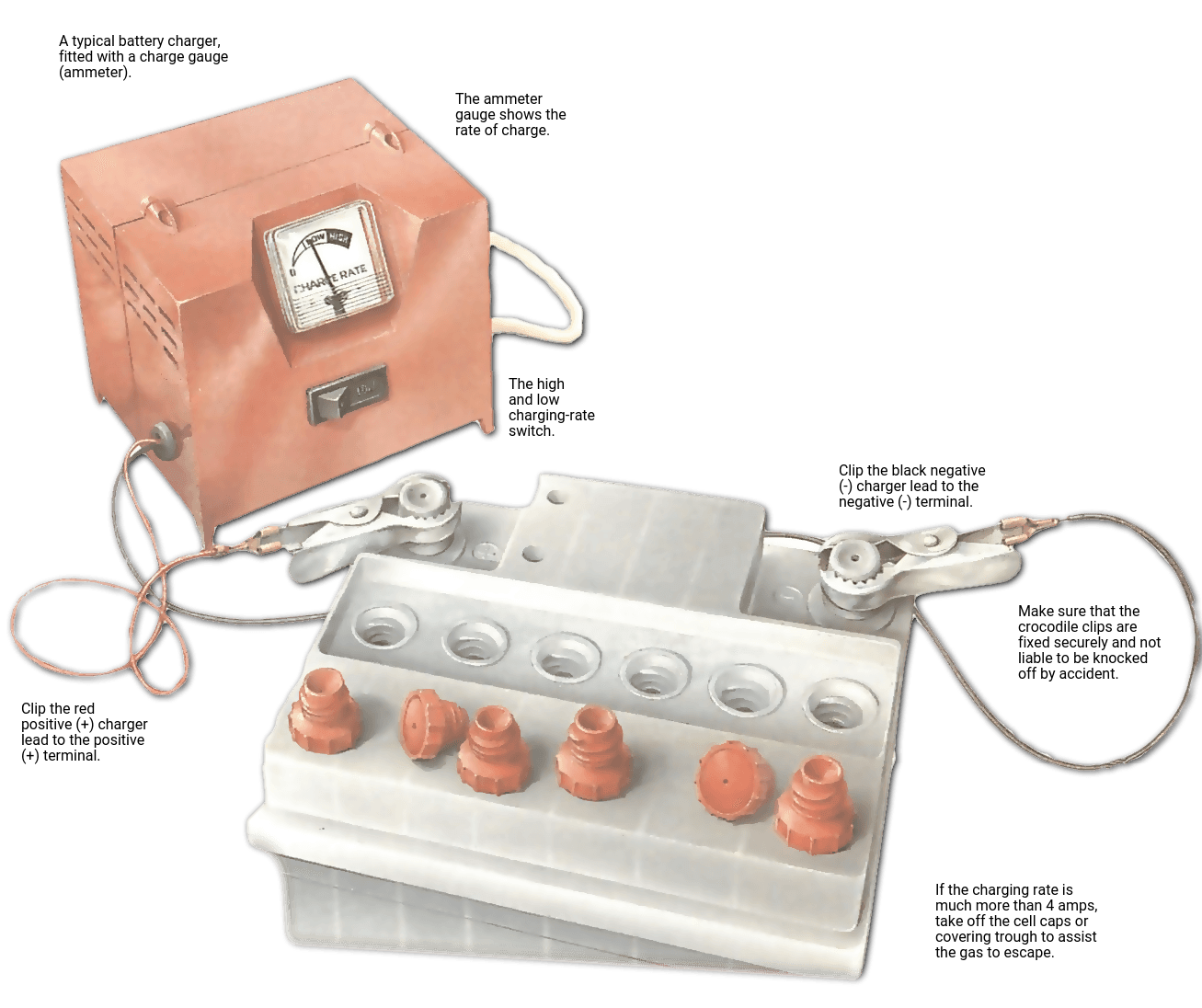
- Connect the charger: Attach the positive (red) clamp to the battery’s positive terminal, and the negative (black) clamp to the negative terminal. Some vehicles require connecting the negative to a metal part of the car instead, for safety.
- Set charger output: Choose the correct amp setting. Lower amps are safer for overnight charging.
- Plug in and turn on: Start the charger. Manual chargers need you to monitor progress, smart chargers will adjust automatically.
- Monitor charging: Keep an eye on the battery and charger. Watch for signs of overheating or swelling.
- Finish and disconnect: When charging is done, turn off the charger and remove the clamps (negative first, then positive).
- Check battery voltage: Use a multimeter to confirm the battery is fully charged (usually 12.6 volts or higher for a 12V battery).
- Start the car: If it starts easily, you’re done. If not, the battery may need replacing.

How To Estimate Charging Time
If you want to estimate how long it will take to charge a car battery, use this simple formula:
Charging Time (hours) = Battery Capacity (Ah) ÷ Charger Output (A)
But remember, charging slows down near the end. Multiply by 1. 2 to get a more realistic time.
Example Calculation
If you have a 60 Ah battery and use a 10 A charger:
Charging Time = 60 ÷ 10 = 6 Hours
Realistic Time = 6 × 1.2 = 7.2 Hours
For a quick reference, here’s a charging time calculator for common setups:
| Battery Capacity (Ah) | Charger Output (A) | Estimated Full Charge Time (hours) |
|---|---|---|
| 40 | 4 | 12 |
| 50 | 10 | 6 |
| 60 | 6 | 12 |
| 70 | 2 | 42 |
| 80 | 8 | 12 |
This table assumes the battery is fully dead. If your battery is only half empty, divide the time by two.
Factors That Change Charging Time
Many people are surprised to find charging time is not always the same. Several factors can make charging faster or slower.
1. Battery Condition
A healthy battery charges faster. A battery with sulfation or internal damage may take much longer, and sometimes never reach a full charge.
2. Temperature
Charging slows down in cold weather. For example, at 0°C (32°F), charging can take twice as long as at room temperature.
3. Charger Quality
Cheap or old chargers may not deliver the stated current, leading to longer charging times.
4. State Of Charge
Charging from 80% to 100% is much slower than from 0% to 80%. Smart chargers slow down near the end to prevent overcharging.
5. Parasitic Loads
If you leave lights, radios, or alarms on during charging, they draw current and slow the charging process.
6. Battery Type
AGM and gel batteries often need slower charging to avoid damage. Always check your battery’s requirements.
Charging Different Battery Types
Car batteries are not all the same. The type of battery you have changes the best way to charge, and how long charging takes.
Lead-acid Batteries
Most cars use flooded lead-acid batteries. These can handle a range of charger types and are fairly forgiving. They typically take 6-12 hours with a 10-amp charger.
Agm (absorbed Glass Mat) Batteries
AGM batteries are common in modern vehicles. They charge faster than regular lead-acid, but require careful voltage control. Fast charging can damage them. Use a smart charger and expect 4-8 hours for a full charge with a 10-amp charger.
Gel Cell Batteries
Gel batteries are less common in cars, but they need slow, gentle charging. Overcharging can ruin them. Use a charger designed for gel cells, and expect 10-20 hours for a full charge.
Lithium-ion Batteries
Some new vehicles use lithium-ion batteries. These charge quickly and need chargers with special safety features. A full charge can take 1-4 hours, depending on the charger.
Charging A Battery Without Removing It
You can charge most car batteries without taking them out of the vehicle. This is more convenient, but there are a few things to remember:
- Check the manual: Some cars, especially luxury models, need the battery removed to avoid electrical problems.
- Connect clamps correctly: Always connect the negative clamp to a metal part of the car’s frame, not directly to the negative terminal, to avoid sparks.
- Watch for electronics: Some car systems may be sensitive to charging. Use a smart charger to avoid damage.
Common Mistakes When Charging A Car Battery
Even experienced drivers make mistakes when charging a battery. Avoiding these problems will save you time and money.
- Using the wrong charger: Never use a high-amp fast charger on a battery not designed for it.
- Overcharging: Manual chargers can overcharge if you forget to turn them off, which damages the battery.
- Ignoring battery damage: Charging a cracked or leaking battery is dangerous.
- Wrong connection order: Always connect positive first, negative second. When disconnecting, remove negative first.
- Charging in poor ventilation: Charging batteries can release hydrogen gas. Always charge in a well-ventilated area.
- Charging a frozen battery: Never charge a frozen battery—it can explode. Warm it up first.
- Not monitoring temperature: Batteries can overheat during charging. Stop charging if the battery feels hot.
How To Tell When Your Battery Is Fully Charged
You can check if your battery is fully charged in a few ways:
- Smart charger indicator: Most smart chargers have a light or display that shows when charging is complete.
- Voltage test: Use a digital multimeter. A fully charged 12V battery should read 12.6-12.8 volts.
- Hydrometer test: For lead-acid batteries, a hydrometer can check the state of charge by measuring acid density.
- Cranking test: If your car starts easily and all electronics work, the battery is likely full.
Charging In An Emergency
If you’re in a hurry, here’s what you can do:
- Use a jump starter to get the car running. Drive for at least 30 minutes to let the alternator recharge the battery.
- Use a fast charger for 30-60 minutes to get enough charge to start the car, but fully charge it as soon as possible.
How Long Should You Drive After Jump Starting?
Jump starting only gets the car running. Afterward, the alternator recharges the battery. You should drive at least 30 minutes at highway speed to give the battery a good charge. Short trips may not be enough, and you could end up with a dead battery again.
When To Replace Instead Of Recharge
Sometimes, charging is not enough. If your battery:
- Needs frequent recharging
- Loses charge overnight
- Shows physical damage (bulging, leaking, cracks)
- Is more than 4-5 years old
…it’s time to replace it.
Charging Time Vs. Battery Life
Faster charging is convenient, but it can wear out your battery sooner. For the best battery life:
- Use slow, steady charging (4-10 amps) for regular maintenance.
- Reserve fast charging for emergencies only.
- Avoid deep discharges (below 11.8 volts).
Real-world Scenarios
Here are a few real-life examples to make the concepts clearer:
Scenario 1: Winter Morning
You find your battery dead after a cold night. The battery is 60 Ah, and you use a 10-amp smart charger in your garage. Because it’s cold (0°C), charging might take 10-12 hours instead of 6-8.
Scenario 2: Forgotten Headlights
You left the headlights on, draining a 48 Ah battery to 20%. Using a 4-amp trickle charger, it could take about 10 hours to recharge (since you only need to refill 80% of the battery).
Scenario 3: After A Long Trip
Your battery is healthy, but you want to top it off. It’s 80% charged. With a 6-amp smart charger, you only need about 2 hours to reach full charge.
Quick Reference: Charging Time For Common Setups
For fast answers, here’s a summary table:
| Situation | Charger Type | Battery Size | Estimated Time |
|---|---|---|---|
| Completely dead | Manual (10A) | 48 Ah | 6 hours |
| Partially discharged | Smart (6A) | 60 Ah (50%) | 5 hours |
| Maintenance charge | Trickle (2A) | 70 Ah | 18-24 hours |
| Emergency boost | Fast (20A) | 50 Ah | 1.5 hours |

Safety Tips For Charging Car Batteries
Battery charging is usually safe, but mistakes can be dangerous. Here are some key tips:
- Always wear eye protection and gloves.
- Charge in a well-ventilated area to avoid gas buildup.
- Never smoke or use open flames near charging batteries.
- Double-check clamp connections before turning on the charger.
- Keep children and pets away from charging batteries.
- Stop charging if you see swelling, leaking, or smoke.
Maintaining Your Car Battery For Faster Charging
A well-maintained battery charges faster and lasts longer. Here’s how to keep yours in top shape:
- Clean the terminals regularly to prevent corrosion.
- Check water levels in lead-acid batteries every few months.
- Avoid deep discharges—try not to let the battery go completely flat.
- Test your battery twice a year with a multimeter or at an auto shop.
- Park in a garage or use a battery blanket in cold weather.
Non-obvious Insights About Battery Charging
Many people believe that faster charging is always better, but this is not true. Fast charging increases heat and can cause internal damage to the battery plates, shortening battery life. Also, leaving a battery on a manual charger overnight often leads to overcharging, which can boil the battery acid and destroy the battery.
Another insight is that alternators are not designed to recharge a dead battery from zero. Doing this puts extra strain on the alternator and can shorten its life. It’s better to use a charger for deep discharges.
Where To Find More Information
If you want to learn more about battery technology and safety, you can check the detailed guides at the Wikipedia page on Car Batteries.
Frequently Asked Questions
How Long Does It Take To Charge A Car Battery With A 10-amp Charger?
With a 10-amp charger, most standard car batteries (40-70 Ah) will charge in 4 to 8 hours if completely dead. The exact time depends on the battery’s size, condition, and how empty it is. Always add 20% to your calculation to allow for slower charging near full charge.
Can I Leave My Car Battery Charging Overnight?
You can leave a battery charging overnight if you use a smart charger that automatically stops or switches to maintenance mode. Manual chargers should not be left unattended, as overcharging can damage the battery or even cause safety problems.
Is It Safe To Use A Fast Charger For My Car Battery?
Fast chargers (15-20 amps or more) are safe for short, emergency boosts, but regular use can shorten battery life. For best results, use a charger with a lower output (4-10 amps) for routine charging and only use fast charging when necessary.
How Do I Know If My Battery Is Too Old To Charge?
If your battery is more than 4-5 years old, loses charge quickly, or shows signs of damage (like bulging or leaks), it may not hold a charge well. In this case, replacement is usually the best option.
Does Driving Recharge The Battery Fully After A Jump Start?
Driving does recharge the battery, but it usually takes at least 30 minutes at highway speeds to restore most of the lost charge. Short trips or idling may not be enough. For a deeply discharged battery, use a charger to ensure a full, safe charge.
Keeping your car battery healthy and knowing how long it takes to charge puts you in control. With the right charger, a bit of knowledge, and careful attention, you can avoid most battery problems and keep your vehicle ready to go whenever you need it.