When you turn the key in your car and hear nothing—or maybe just a weak click—it’s easy to blame the starter or the weather. But often, the real problem is your car battery. Many drivers ignore the early warnings of a failing battery, which can leave them stranded at the worst moment. Understanding the signs of a bad car battery is essential for anyone who depends on their vehicle, especially if you want to avoid unexpected breakdowns and costly repairs.
A car battery is more than just a box under your hood; it’s the heart of your vehicle’s electrical system. It powers everything from the starter motor to the headlights and even the radio. Like all parts, it wears out over time.
But how do you know if your battery is going bad? The answer isn’t always obvious. Some symptoms appear slowly, while others might seem to happen overnight. By learning to spot these signs early, you can save money, prevent bigger problems, and keep your car running smoothly.
This article will guide you through all the key indicators of a failing car battery. We’ll look at what you should watch for, explain why these problems happen, and offer real-world examples. Whether you’re a new driver or someone with years of experience, you’ll find practical advice to help you stay ahead of battery trouble.
Why Car Batteries Fail
Before diving into the signs, it helps to know why car batteries fail in the first place. Understanding the causes can make it easier to spot trouble early—and even prevent some issues.
Most car batteries last between 3 and 5 years, but their lifespan depends on several factors:
- Temperature extremes: Very hot or cold weather puts stress on the battery’s internal chemistry.
- Short trips: If you only drive short distances, your battery doesn’t have time to recharge fully.
- Vibration: Loose mounting can cause the battery to vibrate, damaging internal components.
- Electrical drains: Leaving lights or accessories on when the car is off can quickly drain the battery.
- Age: Like all parts, batteries degrade with time, even if you take care of them.
Sometimes, a battery dies suddenly, but most of the time, there are warning signs. Recognizing these can help you act before you’re left stranded.
Key Signs Of A Bad Car Battery
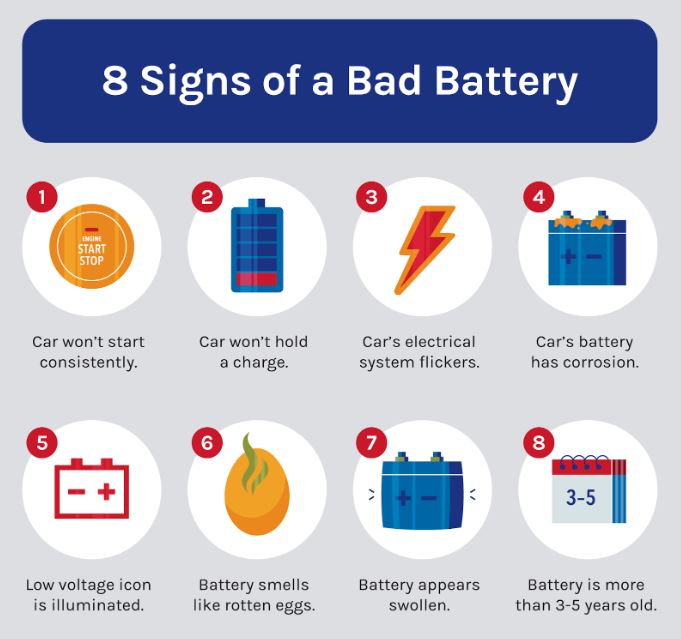
Spotting a failing battery isn’t always simple. Some signs are obvious, while others are subtle and easy to miss. Here’s what you should watch out for.
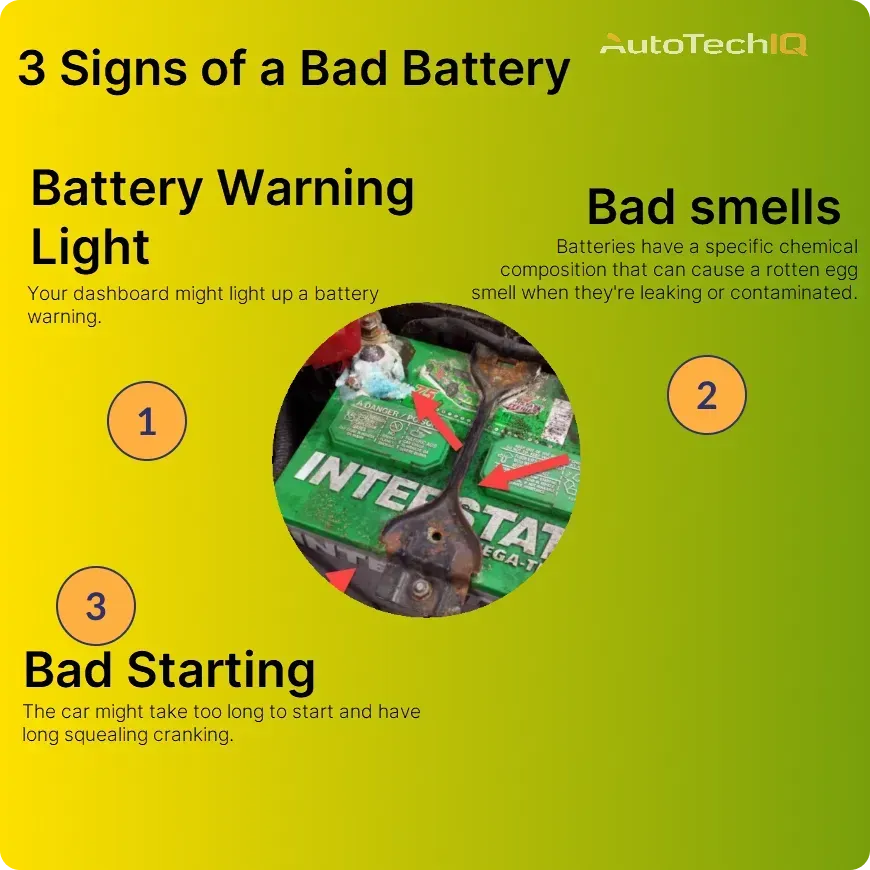
1. Slow Engine Crank
One of the most common symptoms is a slow engine crank. When you turn the key, the engine turns over slowly, or you hear a sluggish “rrr-rrr-rrr” sound before the car starts.
This happens because the battery doesn’t have enough power to spin the starter motor quickly. Sometimes, your car may still start, but it will sound weaker than usual. If you notice this problem more often in the morning or after the car sits for a while, your battery might be losing its charge overnight.
A slow crank doesn’t always mean the battery is dead—it could also be a starter or alternator problem. But the battery is the most common cause, especially if it’s older than three years.
2. Clicking Sound When Trying To Start
If you turn the key and only hear a clicking sound, your battery may not have enough power to start the engine at all. The click comes from the starter solenoid, which tries to engage the starter but can’t get enough electricity.
This symptom often happens when a battery is almost completely dead. Sometimes, you might get a few clicks, or just one. Jump-starting the car can get you moving again, but the battery probably needs to be replaced soon.
3. Dim Headlights And Electrical Problems
A weak battery can’t supply enough voltage for all of your car’s electrical needs. The most visible sign is dim headlights, especially when you start the car or when the engine is idling.
Other electrical problems may include:
- Dashboard lights flickering
- Power windows or locks moving slowly
- The radio cutting out or resetting
These problems can also be caused by a failing alternator, but if they happen along with other battery symptoms, the battery is likely at fault.
4. Needing To Press The Gas Pedal To Start
Normally, modern cars should start without touching the gas pedal. If you find yourself needing to press the pedal to get the engine going, it could mean your battery isn’t supplying enough power for a smooth start.
This symptom is easy to overlook, but it’s a clue that your battery is struggling—especially in cold weather when engines need more energy to start.
5. Battery Warning Light
Most cars have a battery warning light (often shaped like a battery) on the dashboard. If this light stays on after you start the car, it means the charging system isn’t working correctly.
This warning doesn’t always mean the battery itself is bad. Sometimes, it points to a problem with the alternator or wiring. But if you see this light along with other symptoms, it’s smart to have your battery checked as soon as possible.
6. Swollen Or Bloated Battery Case
A healthy car battery should have flat sides. If you notice the battery case is swollen or bloated, it’s a sign of serious trouble.
This usually happens if the battery has overheated, often due to overcharging or exposure to high temperatures. The swelling is caused by the buildup of gas inside the battery, which can be dangerous. A bloated battery should be replaced immediately—not only because it may fail soon, but also because it can leak acid or even explode.
7. Corroded Or Dirty Battery Terminals
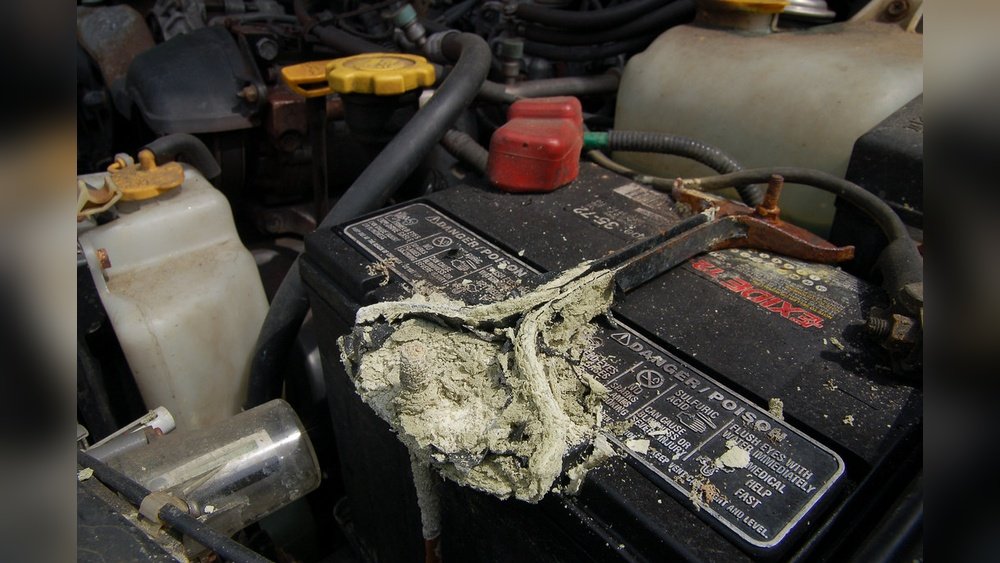
Look at the battery’s terminals (the metal posts where the cables connect). If you see white, ashy, or greenish powder around the terminals, it’s corrosion.
Corrosion interrupts the flow of electricity between the battery and the car. This can cause all kinds of problems, from starting issues to random electrical glitches. While cleaning the terminals can help, heavy or repeated corrosion is often a sign the battery is leaking or failing internally.
Example: Terminal Corrosion’s Effect
Suppose your car starts fine some days but not others. You notice white powder on the battery terminals. After cleaning the posts, the car starts better. If the corrosion returns quickly, though, it’s time to test or replace the battery—it may be leaking acid or nearing the end of its life.
8. Bad Smell From Battery
If you notice a rotten egg smell under the hood, your battery may be leaking sulfuric acid. This is a sign of a failing or damaged battery.
The smell comes from hydrogen sulfide gas, which is produced when the battery’s internal chemicals break down. This can happen if the battery is overcharged, damaged, or simply worn out. Besides being unpleasant, battery acid is dangerous and can damage other car parts.
9. Old Age
Most car batteries last between three and five years. If your battery is older than this—even if it seems to work fine—it’s at high risk of failure.
To check your battery’s age, look for a sticker or code on the case. It usually shows the month and year the battery was made. If you’re not sure, a mechanic can check for you.
Replacing an old battery before it fails can save you from being stranded. Many drivers wait too long, hoping to get a few more months out of an old battery, but this often leads to more inconvenience or even damage to other electrical parts.
10. Needing Frequent Jump Starts
If your car needs a jump start more than once every few months, that’s a major warning sign. Healthy batteries should hold a charge for weeks, even in cold weather.
Frequent jump starts might mean:
- The battery can’t hold a charge
- There’s a drain somewhere in the car’s electrical system
- The alternator isn’t recharging the battery
If you’re using jumper cables regularly, it’s time to have your battery tested and replaced if necessary.
11. Interior Lights Don’t Turn On
When you open the car door and the interior lights don’t come on, it’s a classic sign of a weak or dead battery.
Sometimes, the lights may be very dim or flicker. If the battery is completely dead, nothing will happen when you open the door or turn the key—no lights, no sounds, nothing.
12. Problems With Power Accessories
Modern cars use the battery to power many accessories—windows, locks, seats, and infotainment systems. If you notice:
- Power windows moving slowly or stopping
- Power seats not adjusting
- The infotainment system restarting or going blank
These could be signs of a battery that can’t supply enough power, especially if the problems happen with the engine off.
13. Battery Case Leaking
A battery in good condition should never leak fluid. If you notice wetness, moisture, or acid around the battery case, it’s a serious problem.
Leaking acid can damage other parts, cause corrosion, and is dangerous to touch. Leaks are usually a sign of a cracked or damaged battery, which must be replaced right away.
14. Engine Backfiring
A bad battery can cause engine backfiring in rare cases. This happens because a weak battery causes inconsistent sparks, which can lead to unburned fuel entering the exhaust system. When this fuel ignites, it causes a loud bang—known as backfiring.
While there are many causes of backfiring, if you notice it along with other battery symptoms, check the battery first.
15. Unusual Electrical Problems
Sometimes, a failing battery causes strange electrical problems that seem unrelated. For example:
- Dashboard warning lights coming on and off for no reason
- The radio losing presets
- The clock resetting
These problems can be hard to trace, but if they happen together with other signs, suspect the battery.
16. Battery Won’t Hold Charge Overnight
If you drive the car, park it, and return the next morning to find the battery dead, it may not be holding a charge. This is called self-discharge and is a clear sign the battery is failing.
Sometimes, a “parasitic drain” (like a light staying on) can cause this, but a battery near the end of its life often loses charge overnight even with everything off.
17. Battery Fails Load Test
A load test is a simple way to check battery health. Mechanics use a special device to see if the battery can provide enough power under stress. If your battery fails this test, it’s time for a replacement—even if it seems to work most days.
Many auto parts stores offer free battery testing. It’s a quick way to confirm if your battery is strong or weak.
18. Battery Is Hot To The Touch
After driving, your battery should be warm, not hot. If you touch the battery case and it’s very hot, it may be overcharging or failing internally.
A hot battery can lose water and break down quickly. Overcharging can also damage other electrical parts.
19. Warning Messages On Dashboard
Many newer cars show battery or charging system warnings on digital displays. These messages might say “Check Battery,” “Charging System Fault,” or “Service Battery System.”
Don’t ignore these warnings. Even if the car still starts, the battery could fail soon.
20. Dashboard Lights Stay On After Car Is Off
If you turn off the engine and notice dashboard lights stay on, it could mean your battery is not providing consistent voltage. Sometimes, this is caused by a failing alternator or a short circuit, but a weak battery is often to blame.
Unusual dashboard light behavior is a sign you should check the battery and the charging system.

Visual Comparison: Symptoms And Causes
Below is a comparison of common symptoms and their likely causes.
| Symptom | Possible Cause | Urgency |
|---|---|---|
| Slow engine crank | Weak battery or poor connections | High |
| Clicking sound on start | Dead battery | High |
| Dim headlights | Weak battery or alternator | Medium |
| Corroded terminals | Leaking battery | Medium |
| Rotten egg smell | Leaking battery acid | Very High |
How To Confirm Your Battery Is Bad
Not all battery problems are obvious. Here are steps to confirm if your battery is the real issue:
- Visual inspection: Check for swelling, leaks, or corrosion.
- Test voltage: A healthy battery should read around 12.6 volts with the engine off.
- Load test: Have a mechanic or auto parts store test the battery under load.
- Check charging system: Test the alternator to be sure it’s working.
- Check for parasitic drains: Make sure no lights or electronics stay on after the car is off.
If the battery fails any of these checks, it’s likely time for a replacement.
What To Do If You Suspect A Bad Battery
If you notice one or more of the signs above, take these steps:
- Don’t ignore the problem: A weak battery can fail at any time.
- Test the battery: Many auto parts stores offer free battery testing.
- Check your warranty: Some batteries have a pro-rated warranty for up to 5 years.
- Replace as needed: If your battery is old or fails a test, replace it before it leaves you stranded.
- Check the charging system: If a new battery fails quickly, your alternator might be faulty.
Remember, replacing your battery early is usually cheaper than dealing with a breakdown or towing.
Battery Replacement: What To Look For
When buying a new battery, consider these factors:
- Correct size and type: Use your owner’s manual to find the right fit.
- Cold Cranking Amps (CCA): This measures how well the battery works in cold weather.
- Warranty: Longer warranties often mean better quality.
- Date code: Buy the freshest battery possible—look for recent manufacturing dates.
Here’s a brief comparison of battery types:
| Battery Type | Pros | Cons |
|---|---|---|
| Lead-acid (flooded) | Affordable, widely available | Shorter life, needs maintenance |
| AGM (Absorbent Glass Mat) | Longer life, vibration resistant | More expensive |
| Gel cell | Spill-proof, works in any position | Very expensive, special charger needed |
Common Mistakes When Dealing With Battery Trouble
Many drivers make the same mistakes when they suspect a bad battery. Here are a few to avoid:
- Ignoring early signs: Waiting until the car won’t start often leads to bigger problems.
- Replacing the battery without testing: Sometimes, the alternator or another part is the real issue.
- Buying the wrong battery: Always match the battery type and size to your car’s requirements.
- Not cleaning terminals: Dirty terminals can cause symptoms similar to a bad battery.
- Overlooking age: Even a battery that “seems fine” can fail suddenly after five years.
How To Extend Battery Life
You can’t make a car battery last forever, but these tips will help you get the most out of it:
- Drive longer trips: Short trips don’t recharge the battery fully.
- Keep terminals clean: Check for corrosion every few months.
- Secure the battery: Make sure it’s mounted tightly to avoid vibration.
- Turn off electronics when parked: Don’t leave lights or accessories on.
- Check charging system regularly: A weak alternator can kill even a new battery.
When To Call A Professional
While many battery problems are easy to spot, some require expert help. Call a professional if:
- The battery keeps dying, even after replacement
- You notice electrical problems after installing a new battery
- There’s a strong smell or visible leaks
- You’re unsure how to test or replace the battery safely
A trained mechanic has tools and experience to diagnose deeper problems, such as faulty alternators or wiring issues. For more details on battery maintenance, visit the Wikipedia car battery page.
Real-world Example: Two Cars, Same Battery Problem
Let’s compare two common scenarios:
| Car A | Car B |
|---|---|
| Starts slow in the morning, needs jump starts every week, battery is 4 years old | Headlights flicker, dashboard lights reset, battery shows corrosion |
| Battery test shows low voltage, replacement solves problem | Cleaning terminals helps, but battery still fails load test |
| Real cause: old, worn-out battery | Real cause: corroded terminals and failing battery |
Both cases show how battery symptoms can overlap, but the right tests and actions lead to a reliable fix.
Frequently Asked Questions
What Is The Average Life Of A Car Battery?
Most car batteries last 3 to 5 years. Factors like extreme weather, short trips, and poor maintenance can shorten this lifespan. Checking the battery’s age and replacing it before it fails is the best way to avoid trouble.
Can A Bad Alternator Cause Battery Symptoms?
Yes, a bad alternator can make your battery look weak. If the alternator isn’t charging the battery, you’ll see many of the same symptoms—dim lights, slow cranking, and warning lights. Always check the charging system if you suspect battery problems.
Is It Safe To Drive With A Bad Battery?
Driving with a failing battery is risky. The car may start, but you could end up stranded if the battery dies suddenly. Also, a leaking or swollen battery is dangerous and should be replaced immediately.
How Can I Test My Car Battery At Home?
You can use a multimeter to measure voltage—a healthy battery should read 12.6 volts or higher with the engine off. For a more accurate check, have the battery load-tested at an auto parts store or mechanic.
What Should I Do If My Battery Keeps Dying?
If your battery keeps dying, check for these common causes:
- Old or failing battery
- Parasitic electrical drain (like a light staying on)
- Faulty alternator
Have a mechanic test the entire charging system to find the real problem.
Knowing the signs of a bad car battery can save you time, money, and frustration. By watching for these symptoms and taking action early, you’ll keep your car reliable and ready for the road ahead.