When your car won’t start, the battery is often the problem. Many people turn to chargers to fix the issue, but not all chargers are the same. Two common types you’ll hear about are the trickle charger and the battery charger. At first glance, they might seem similar, but their roles, how they work, and what they’re best for are very different. Understanding these differences can help you choose the right tool, make your battery last longer, and avoid costly mistakes.
Car batteries, motorcycle batteries, and even boat batteries need the right care. Choosing the wrong charger can mean wasted money, damaged batteries, or even safety risks. Many new users mix up these two chargers, not knowing the impact on their vehicles and equipment.
This guide will clarify what each charger does, how they work, when to use them, and the pros and cons of each. By the end, you’ll have the confidence to choose the right charger for your needs.
What Is A Battery Charger?
A battery charger is a device designed to supply electric energy to a battery. The main goal is to restore the battery’s energy so it can power your car, bike, or device. Battery chargers come in different types, sizes, and levels of complexity.
Most standard battery chargers plug into a wall socket. They deliver a set voltage and current to the battery until it reaches a full charge. Some advanced chargers use electronics to adjust the charge based on battery needs, temperature, and battery type.
There are several types of battery chargers:
- Manual battery chargers: These require you to monitor the charging and turn off the device when finished.
- Automatic battery chargers: These detect when the battery is full and shut off or switch to maintenance mode.
- Smart chargers: These use sensors and microprocessors to adjust charge speed and prevent overcharging.
Battery chargers can charge a dead or nearly dead battery quickly, often within a few hours. They work for many battery types, such as lead-acid (common in cars), AGM, and gel batteries. Most have options to set the voltage (6V, 12V, 24V) and charging rates (slow, medium, fast).
Typical Uses Of Battery Chargers
- Jump-starting a dead car battery
- Bringing a deeply discharged battery back to life
- Charging batteries for power tools, boats, motorcycles, and other vehicles
- Garage or workshop use for regular battery maintenance
How Battery Chargers Work
Battery chargers work by forcing current into the battery at a higher voltage than the battery’s own voltage. For example, a 12V battery charger will send 12 to 14 volts into a 12V battery. This causes a chemical reaction inside the battery, restoring its charge.
Some chargers use a constant current, meaning they always send the same amount of electricity. Others use constant voltage, where the charger maintains a set voltage but allows the current to drop as the battery fills up. The most advanced chargers use multiple stages—bulk, absorption, and float—to charge safely and efficiently.
Strengths Of Battery Chargers
- Fast charging: Can quickly bring a battery back to life.
- Versatile: Suitable for many battery types and sizes.
- Powerful: Can handle deeply discharged or large-capacity batteries.
Weaknesses Of Battery Chargers
- Risk of overcharging: Manual chargers can damage batteries if left on too long.
- Not always for long-term maintenance: Some can “cook” the battery if not managed well.
- Heavier and larger: Standard chargers can be bulky.
What Is A Trickle Charger?
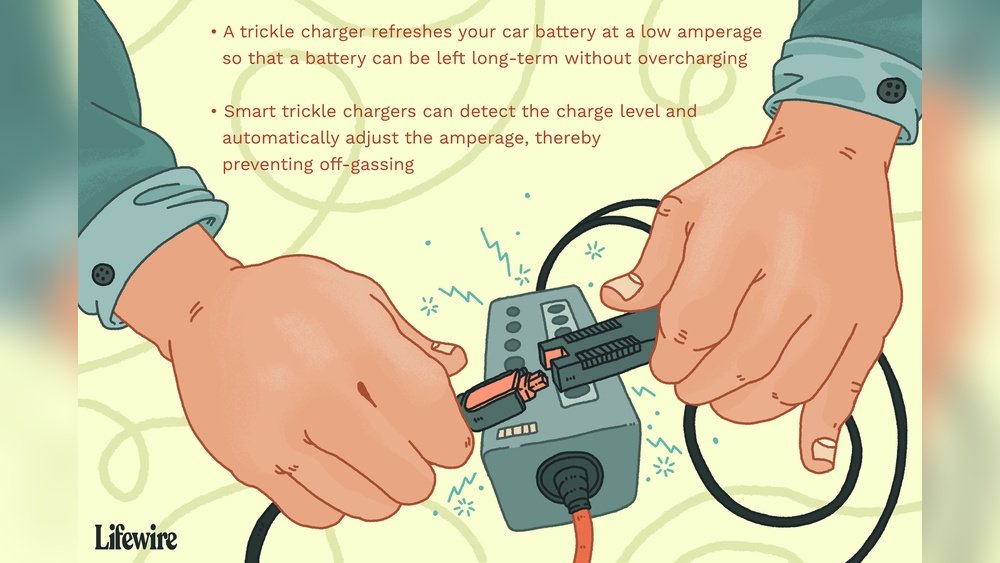
A trickle charger is a type of battery charger, but it works differently. Instead of quickly charging a dead battery, a trickle charger provides a very small, steady current over a long time. The purpose is to keep a battery fully charged, not to recharge a flat battery.
Trickle chargers are designed for maintenance charging. They are ideal for batteries that are not used every day, like those in classic cars, motorcycles, boats, or lawn equipment. These chargers prevent the battery from self-discharging when not in use.
A standard trickle charger might provide 0. 5 to 2 amps—much less than a regular charger. Some models are “smart” and automatically adjust the flow or turn off when the battery is full. Others are basic, providing a constant low current.
Typical Uses Of Trickle Chargers
- Storing vehicles for winter or long periods
- Keeping motorcycle or boat batteries topped off
- Maintaining backup power systems (like UPS or emergency lights)
- Protecting classic cars and collector vehicles from battery drain
How Trickle Chargers Work
Trickle chargers supply a low, constant charge to offset the natural self-discharge of a battery. Lead-acid batteries, for example, lose about 3–5% of their charge each month just sitting unused. A trickle charger prevents this loss.
Some trickle chargers are “automatic. ” These monitor the battery’s voltage and turn on or off as needed. Others are “manual,” and require you to disconnect them when the battery is fully charged. Most modern trickle chargers include safety features to avoid overcharging.
Strengths Of Trickle Chargers
- Long-term battery maintenance: Keeps batteries healthy during storage.
- Reduces battery replacement costs: Extends battery life.
- Safer for unattended charging: Low, slow charging minimizes risk.
Weaknesses Of Trickle Chargers
- Slow charging: Not suitable for dead or heavily discharged batteries.
- Can overcharge if not automatic: Manual models risk damaging the battery.
- Limited use: Not designed for rapid charging or jump-starting.
Key Differences Between A Trickle Charger And A Battery Charger
It’s easy to confuse these devices, but the differences are important. Here’s a side-by-side look at the main distinctions.
| Feature | Battery Charger | Trickle Charger |
|---|---|---|
| Purpose | Recharge dead or weak batteries | Maintain full charge in stored batteries |
| Charge Rate | Fast (2–20+ amps) | Slow (0.5–2 amps) |
| Charging Time | Few hours to a day | Several days or indefinitely |
| Automatic Shutoff | Some models | Common, especially in smart chargers |
| Main Use Case | Quick charge, emergency recovery | Storage, long-term maintenance |
| Risk of Overcharge | High (manual models) | Low (with automatic models) |
Charging Speed
Battery chargers send more current, so they charge batteries faster. For example, a 10-amp charger might charge a flat car battery in 4–8 hours. A trickle charger, at 1 amp, could take over 24 hours to do the same—or may not be able to charge it at all if it’s deeply discharged.
Main Function
A battery charger is for charging. A trickle charger is for maintaining. If your battery is dead, use a battery charger. If your battery is healthy but unused, use a trickle charger.
Safety Features
Modern battery chargers often include automatic shutoff or switch to maintenance mode when done. Trickle chargers, especially “smart” models, almost always include this feature, making them safe for long-term use.
Battery Health
A trickle charger is gentle on the battery, extending its life. A manual battery charger, if left on too long, can “boil” the battery, damaging the plates and reducing lifespan.
Practical Example
Imagine you have a classic car that you only drive in summer. During winter, you store it in the garage. A trickle charger keeps its battery ready, so it starts easily in spring. If you find the battery dead, you use a battery charger to revive it.
When To Use A Trickle Charger
Not all situations call for a trickle charger, but some do.
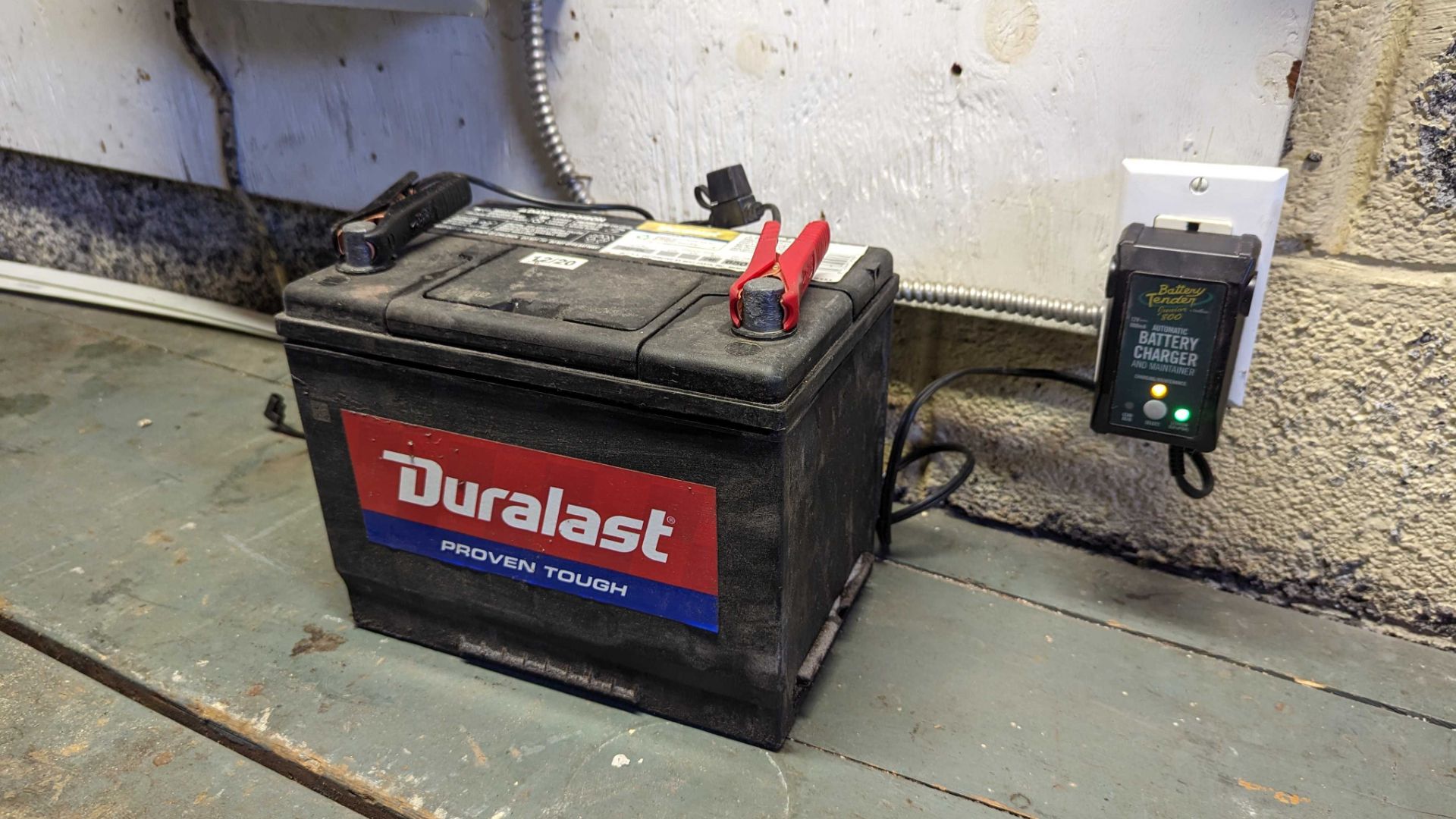
- Vehicle in Storage: If your car, motorcycle, or boat will sit unused for weeks or months, a trickle charger is ideal. It keeps the battery healthy and ready to go.
- Seasonal Equipment: Lawn mowers, ATVs, and snowmobiles often sit for months. A trickle charger prevents battery drain and sulfation.
- Classic and Collector Cars: Protects expensive, hard-to-replace batteries from damage during long storage.
- Backup Power Systems: Emergency lights and uninterruptible power supplies (UPS) rely on batteries that must always be charged. Trickle chargers keep them ready.
- Preventing Jump Starts: Keeps batteries topped off, so you don’t need to jump-start after storage.
Non-obvious insight: Trickle chargers can also help with batteries in security systems, gate openers, or backup sump pumps—anywhere a battery must be ready but is not used daily.
When To Use A Battery Charger
A battery charger is the right choice when you need to restore power quickly.
- Dead Battery Recovery: If your car won’t start and the battery is flat, a charger is your tool.
- After Leaving Lights On: Quickly restores a drained battery from accidental use.
- Heavy Use Batteries: Power tools, golf carts, and electric scooters often need full charges after deep use.
- Workshop or Fleet Maintenance: If you maintain multiple vehicles, a charger lets you rotate and refresh batteries.
- Testing and Conditioning: Advanced chargers can sometimes help with battery “reconditioning” to extend life.
Non-obvious insight: Some smart battery chargers can double as trickle chargers, offering both functions. But always check the specs—using a fast charger in place of a trickle charger can harm a battery over time.
Types Of Trickle Chargers And Battery Chargers
Both trickle chargers and battery chargers come in different types. The differences can help you decide which model fits your needs.
Trickle Charger Types
- Manual trickle chargers: Constant low current, must be disconnected manually.
- Automatic (smart) trickle chargers: Monitor battery, turn on/off as needed.
- Solar trickle chargers: Use sunlight to deliver a slow charge. Useful for outdoor storage.
Battery Charger Types
- Linear chargers: Simple, constant voltage or current.
- Multi-stage (smart) chargers: Adjust charge process for safety and battery health.
- High-amperage chargers: Used for quick recovery or jump-starting.
- Portable chargers: Small, light, easy to carry.
- Jump-starters with charging function: Combine charging and emergency boost.
Some chargers include “maintenance” or “float” modes—blurring the line between a battery charger and a trickle charger.
Common Myths And Mistakes
Many people misunderstand how these chargers work. Here are some common myths and mistakes to avoid:
- Myth: Any charger can be left connected all the time.
- Fact: Only automatic or smart trickle chargers are safe for long-term use. Manual chargers can overcharge and damage batteries.
- Myth: A trickle charger can recharge a dead battery quickly.
- Fact: Trickle chargers are too slow for dead batteries and may not work at all if the battery voltage is too low.
- Mistake: Using a high-amp battery charger on a small battery (like a motorcycle or lawnmower).
- Fact: Too much current can overheat and ruin small batteries. Always match charger output to battery size.
- Mistake: Storing a battery all winter with no charger.
- Fact: Batteries naturally lose charge. Months of sitting can lead to deep discharge and sulfation, reducing battery life.
- Myth: All trickle chargers are “smart.”
- Fact: Some older or cheaper models are not automatic and can overcharge if left connected too long.
Practical Comparison: Real-world Scenarios
To help you decide, let’s look at three real-world scenarios.
Scenario 1: Classic Car Storage
You own a classic car and only drive it on weekends in summer. In winter, it sits in your garage for months. You want to avoid a dead battery in spring.
- Best choice: Automatic trickle charger. It will keep your battery healthy without overcharging. You can leave it connected all winter.
Scenario 2: Daily Driver With A Dead Battery
You left your headlights on overnight. In the morning, your car won’t start. You need to recharge quickly and get to work.
- Best choice: Battery charger with a medium to high amp setting. It will restore your battery in a few hours. Do not use a trickle charger—it’s too slow.
Scenario 3: Motorcycle In Off-season
Your motorcycle is parked for three months during winter. You want the battery to be ready when riding season starts.
- Best choice: A small automatic trickle charger (or “battery maintainer”) designed for motorcycles. It prevents battery drain and extends life.
Technical Details: Charging Stages
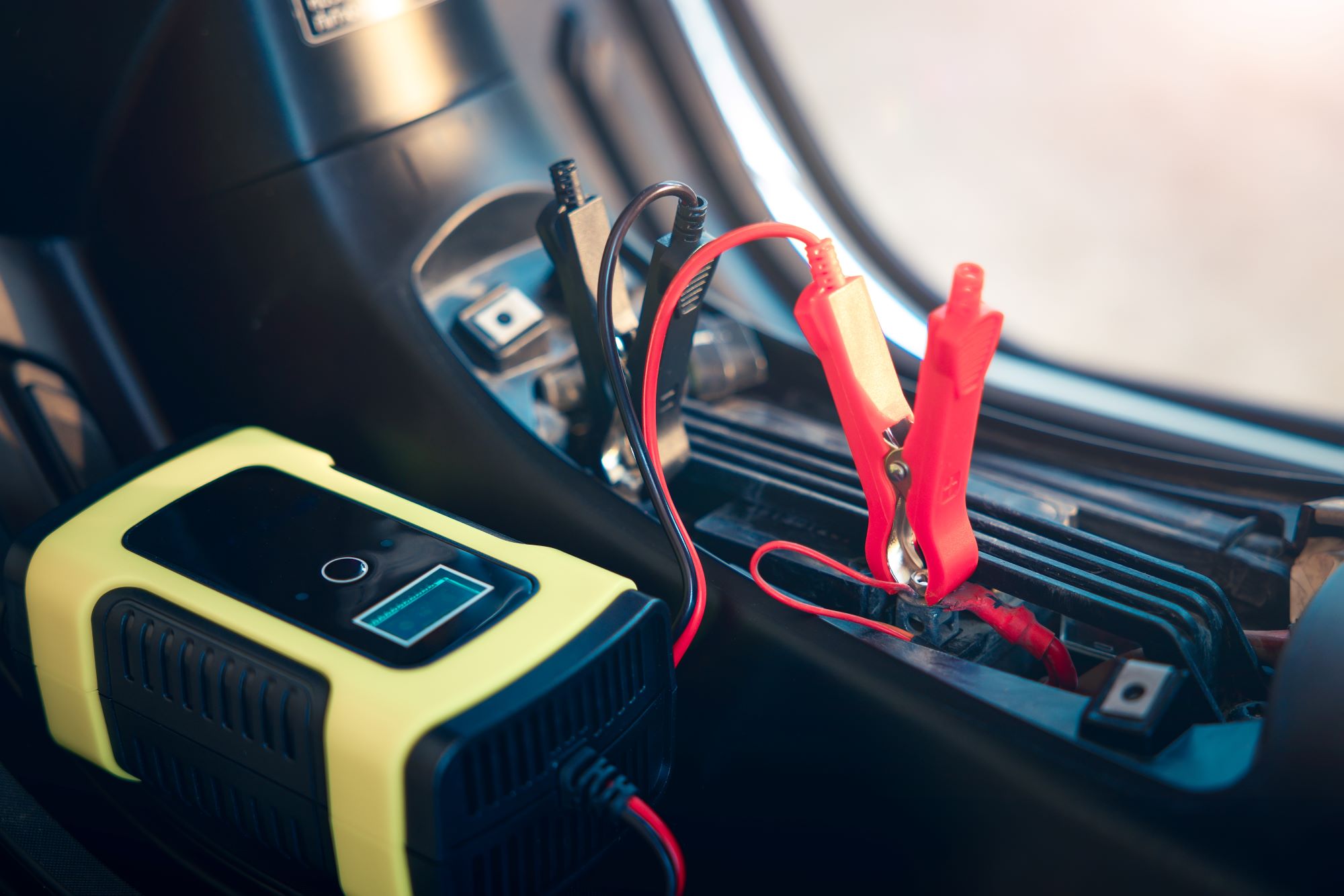
Modern chargers (including some trickle chargers) use a multi-stage process:
- Bulk charging: High current charges the battery quickly up to about 80%.
- Absorption: Current decreases, voltage stays steady, battery charges to full.
- Float or maintenance: Very low current keeps the battery topped off.
Trickle chargers operate mostly in the “float” stage, delivering just enough to replace what the battery loses naturally.
Data On Battery Life And Charging Methods
Studies show that proper charging extends battery life. Overcharging or undercharging shortens it.
- Average car battery life: 3–5 years with normal use.
- Improper charging (overcharge/undercharge): Can cut life in half.
- Vehicles stored with trickle chargers: Batteries often last 1–2 years longer.
A 2020 study found that batteries left at low charge for weeks lost 10–20% of their capacity permanently, while those kept at full charge with a maintainer stayed healthy.
Cost Comparison
Both devices are affordable, but prices and value differ.
| Device Type | Price Range (USD) | Average Lifespan | Best For |
|---|---|---|---|
| Manual Battery Charger | 20–50 | 5–10 years | Occasional fast charging |
| Automatic Battery Charger | 40–120 | 7–12 years | Frequent use, safety |
| Trickle Charger (Manual) | 15–40 | 5–8 years | Long-term storage, must monitor |
| Trickle Charger (Automatic/Smart) | 25–70 | 7–12 years | Safe, unattended maintenance |
Safety Tips For Charging Batteries
Charging batteries isn’t dangerous if you follow some basic rules.
- Read the manual: Every charger is different.
- Match voltage and amperage: Use the right settings for your battery.
- Ventilation: Charge in a well-ventilated area. Batteries give off gas.
- Check connections: Attach clamps securely. Red to positive (+), black to negative (−).
- Avoid sparks and flames: Batteries can emit flammable gas.
- Don’t leave manual chargers unattended: Overcharging can cause leaks or explosions.
Insider tip: Always check for corrosion on the battery terminals before charging. Clean with a wire brush if needed.
How To Choose: Trickle Charger Vs Battery Charger
When deciding which to buy, consider:
- How will you use it? If you need to revive dead batteries, get a battery charger. For maintenance during storage, choose a trickle charger.
- Automatic or manual? Automatic chargers are safer and require less attention.
- Battery size and type: Make sure the charger matches your battery (voltage, chemistry).
- Budget: Higher-priced smart chargers offer more features, but basic models work well for occasional use.
- Portability: If you travel or move the charger between vehicles, pick a lightweight, portable model.
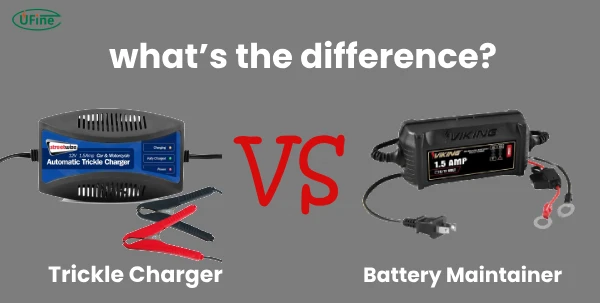
Pro tip: Some “battery maintainers” are hybrid devices, combining features of both chargers and trickle chargers.
The Environmental Impact
Batteries contain chemicals that can harm the environment if disposed of poorly. Proper charging helps batteries last longer, reducing waste. By using the right charger, you:
- Extend battery life, reducing landfill waste
- Save money by replacing batteries less often
- Minimize the risk of leaks and spills from overcharged batteries
According to the U. S. Environmental Protection Agency, battery recycling rates are rising, but keeping batteries healthy reduces the number that must be recycled or landfilled.
Real-world Examples And Brand Names
Many popular brands make both battery chargers and trickle chargers, including:
- NOCO Genius
- Battery Tender
- Schumacher
- Black+Decker
- CTEK
For example, the Battery Tender Junior is a famous automatic trickle charger for motorcycles and cars. The NOCO Genius10 is a smart charger that can act as both a fast charger and a maintainer.
If you want to compare technical specs and safety standards, you can check out more details on the Wikipedia Battery Charger page.
Frequently Asked Questions
What Happens If I Leave A Battery Charger On Too Long?
Leaving a manual battery charger connected after the battery is full can lead to overcharging. Overcharging heats up the battery, causes it to lose water, and can damage internal plates. Many modern automatic chargers prevent this by switching off or entering maintenance mode, but always check your charger’s instructions.
Can I Use A Trickle Charger On Any Battery?
Trickle chargers work best with lead-acid, AGM, and gel batteries. Some models are not safe for lithium-ion batteries unless they specifically say so. Always check your battery type before connecting a trickle charger.
Is A Battery Maintainer The Same As A Trickle Charger?
A battery maintainer is similar to a trickle charger but usually smarter. Maintainers monitor the battery’s voltage and only charge when needed, preventing overcharge. Some people use the terms interchangeably, but maintainers are typically safer for long-term use.
How Long Does It Take To Charge A Car Battery With A Trickle Charger?
Trickle chargers are slow. Charging a flat car battery from zero can take 24–48 hours, if it works at all. They are not designed for quick charging, but for keeping a battery full over weeks or months.
Can A Trickle Charger Damage My Battery?
A manual trickle charger can damage your battery if left on too long, causing overcharge and shortening battery life. Automatic or “smart” trickle chargers are safe for long-term use, as they turn off or reduce current when the battery is full.
Choosing between a trickle charger and a battery charger comes down to your needs. If you want quick recovery for dead batteries, a battery charger is best. For maintaining batteries during long storage, a trickle charger is the smart choice.
Always follow safety tips, match the right charger to your battery, and invest in automatic models for peace of mind. Taking care of your batteries not only saves money but also prevents headaches and keeps your vehicles ready when you need them.