What really makes one battery different from another? If you have ever looked for a battery for your car, boat, solar system, or even your home backup, you probably saw two common types: AGM batteries and lead-acid batteries. Both are called “lead-acid,” but there are some important differences that most people do not know. Choosing the right battery can save money, reduce maintenance, and even prevent damage to your devices.
In this article, you will learn exactly how AGM batteries and traditional lead-acid batteries compare. We will break down their structure, uses, advantages, disadvantages, costs, and other key points. You will also find real-world examples and a few surprising facts that many beginners miss. By the end, you will clearly understand which battery fits your needs and why.
What Are Lead-acid Batteries?
Lead-acid batteries are the oldest type of rechargeable battery, invented in 1859. They have powered cars, trucks, and backup systems for over 150 years. Their design is simple but effective.
A typical lead-acid battery uses lead plates and dilute sulfuric acid as an electrolyte. These two materials react chemically to store and release electrical energy. When you connect a device, the battery produces electricity by converting chemical energy to electrical energy.
Types Of Lead-acid Batteries
There are two main types:
- Flooded Lead-Acid (FLA) Batteries
- Sealed Lead-Acid (SLA) Batteries
Flooded lead-acid batteries have liquid electrolytes that need regular maintenance. Sealed lead-acid batteries are more compact and do not need as much attention.
What Are Agm Batteries?
AGM stands for Absorbent Glass Mat. AGM batteries are a special type of sealed lead-acid battery. They use a fiberglass mat to hold the electrolyte in place, instead of letting it flow freely as a liquid. This mat is placed tightly between the lead plates.
AGM technology appeared in the 1980s and quickly became popular for vehicles and backup systems that need high power and reliability.
Key Construction Differences
The main difference between AGM and traditional lead-acid batteries is how they handle the electrolyte.
- Flooded Lead-Acid: Uses liquid sulfuric acid that moves freely inside the battery. The plates are fully submerged in the liquid.
- AGM: The electrolyte is soaked into a thin fiberglass mat. The mat keeps the acid in close contact with the lead plates but prevents it from moving around.
This construction difference leads to several important effects, as you will see in the following sections.
Visual Comparison
Here’s a side-by-side look at their inner structure:
| Feature | Flooded Lead-Acid | AGM Battery |
|---|---|---|
| Electrolyte | Liquid | Absorbed in glass mat |
| Plates | Lead plates submerged | Lead plates with glass mat separators |
| Case Sealing | Vents for gas escape | Sealed, with pressure valves |
| Position | Upright only | Any position |
Maintenance Needs
One of the biggest differences is maintenance. Flooded lead-acid batteries need regular care, while AGM batteries are almost maintenance-free.
Flooded Lead-acid Maintenance
- Check water levels every few months. If the liquid drops too low, add distilled water.
- Clean corrosion around battery terminals.
- Make sure the battery is upright to avoid leaks.
Agm Battery Maintenance
- No need to add water.
- Just keep the terminals clean.
- Can be installed in almost any position, even on the side.
Beginners often miss: Not all sealed batteries are AGM. Some are “gel” types, which have other unique needs.
Performance And Efficiency
How do AGM and lead-acid batteries perform in real life? Here are the main points:
Power Output
AGM batteries can deliver higher bursts of power. This is useful for starting engines or running high-drain devices. The glass mat design reduces internal resistance, so energy moves more efficiently.
Traditional lead-acid batteries give steady power but may struggle with very high current draws, especially as they age.
Charging Speed
AGM batteries can accept charge faster. For example, a car alternator or a solar charger can refill an AGM battery in less time compared to a flooded lead-acid battery of the same size.
Discharge And Recharge Cycles
Every battery has a limited number of cycles—how many times it can be used and recharged before it wears out.
- AGM batteries usually survive 2x–3x more cycles than flooded lead-acid batteries, especially if not deeply discharged every time.
- Flooded batteries wear down faster if used heavily or discharged deeply.
Self-discharge Rate
When not used, batteries slowly lose charge. AGM batteries self-discharge at a rate of about 1–3% per month. Flooded lead-acid batteries lose 5–10% per month, meaning they go flat faster if left unused.
Durability And Safety
Battery safety and durability are critical, especially in vehicles and off-grid power systems.
Shock And Vibration Resistance
The glass mat in AGM batteries holds everything tightly. This makes them much more resistant to shock and vibration. Flooded lead-acid batteries can be damaged if shaken or dropped.
Leak And Spill Risk
Flooded batteries contain free liquid, so they can leak acid if tipped over, cracked, or overfilled. Acid leaks can cause burns and corrosion.
AGM batteries do not leak unless the case is broken, because the acid is locked in the mat.
Gas Release
All lead-acid batteries can release small amounts of hydrogen gas during charging. Flooded batteries vent gas easily, which is why they must be used in well-ventilated spaces.
AGM batteries are sealed and only vent gas if seriously overcharged.
Temperature Tolerance
AGM batteries perform better in cold weather. They start engines more reliably when temperatures drop. Flooded batteries may freeze if not kept fully charged.
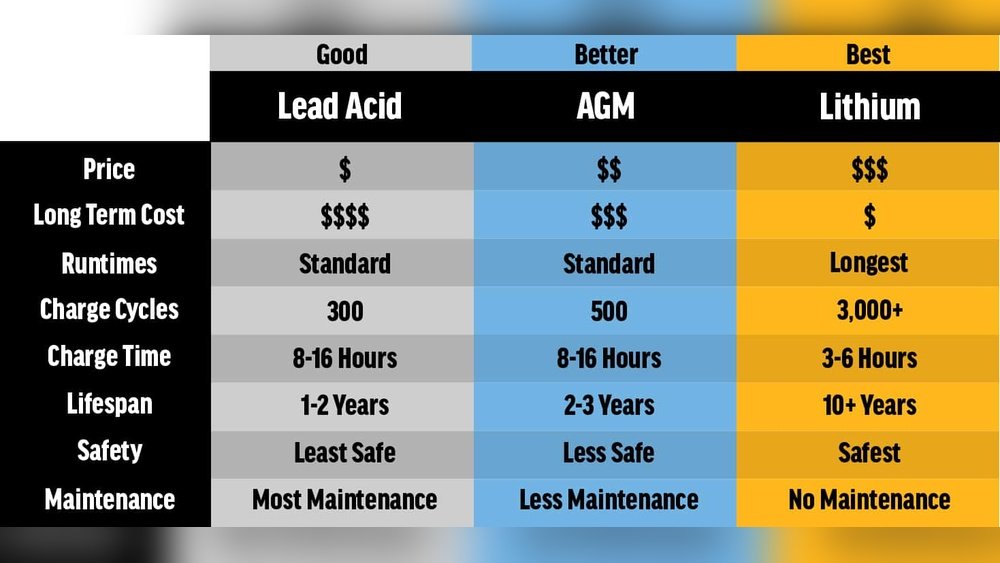
Cost Differences
Cost is often the first thing people compare. Here are the main points:
- Flooded lead-acid batteries are usually the cheapest option. A typical car battery can cost $60–$90 USD.
- AGM batteries cost more, often $120–$250 or higher for a similar size.
Why the price gap? AGM batteries are more expensive to make, and their longer lifespan adds to the cost. However, if you consider the number of replacements needed over years, the price difference shrinks.
Real-world example: A golf cart using AGM batteries may not need a replacement for 5–7 years, while flooded batteries might need to be changed every 2–4 years.
Applications: Where Each Battery Works Best
Not all batteries fit every job. Here’s where each type is best used:
Flooded Lead-acid Batteries
- Older cars and trucks
- Home backup systems (where cost matters most)
- Solar power storage (if regular maintenance is no issue)
- Forklifts and industrial machines
Agm Batteries
- Modern cars with start-stop systems
- Motorcycles, ATVs, and boats
- RVs and campers
- Off-grid solar and wind systems (low maintenance sites)
- Uninterruptible Power Supplies (UPS) for computers and medical equipment
- Backup for telecom and emergency systems
Non-obvious insight: Many luxury cars now require AGM batteries due to their high electrical demand and stop-start technology. Using a regular flooded battery could damage the car’s computer system.
Charging Methods And Requirements
Charging is not the same for both types.
Flooded Lead-acid Charging
- Can use most standard car battery chargers.
- Must avoid overcharging, as it can boil off water and damage plates.
Agm Battery Charging
- Needs a charger with an AGM/VRLA setting.
- Overcharging can damage the glass mat and shorten battery life.
- Smart chargers are best, as they adjust voltage and current automatically.
Beginner mistake: Using a regular charger on an AGM battery at too high a voltage can quickly ruin it.
Lifespan And Reliability
How Long Will Each Battery Type Last?
- Flooded lead-acid: 2–4 years, sometimes more with perfect maintenance.
- AGM: 4–7 years, often longer if not deeply discharged.
Lifespan depends on temperature, charging habits, and how deeply the battery is discharged each time. Shallower cycles (not draining the battery completely) always give longer life.
Battery Failure Causes
Flooded batteries often fail from:
- Plate sulfation (white crystals on plates)
- Low electrolyte level
- Plate corrosion
AGM batteries usually fail from:
- Overcharging
- Deep discharges below 50%
- Physical damage to the case
Environmental Impact And Recycling
Both battery types use lead, which is toxic, but both are over 95% recyclable. Proper recycling prevents pollution and saves resources.
- Flooded batteries may spill acid and cause soil or water contamination if not disposed of correctly.
- AGM batteries are safer to handle and transport for recycling.
Extra tip: Always return old batteries to a recycling center or store; never throw them in household trash.
Weight And Size
AGM batteries are often lighter and smaller for the same power output. This matters in vehicles and portable systems.
| Battery Type | Average Weight (Car battery, 12V) | Size |
|---|---|---|
| Flooded Lead-Acid | 15–18 kg | Large |
| AGM | 12–15 kg | Compact |
This weight difference may seem small, but in motorcycles, race cars, or aircraft, every kilogram counts.

Deep Cycle Vs. Starter Use
Batteries have two main jobs: starting engines (high power, short burst) or deep cycling (long, steady power draw).
- Flooded batteries are usually starter batteries—best for short, strong bursts.
- AGM batteries can be made for starting or deep cycle use. Many AGM models are “dual-purpose,” handling both jobs.
Non-obvious insight: Using a starter battery for deep cycling will quickly destroy it. Always match the battery type to the job.
Pros And Cons At A Glance
Here is a quick summary to help you compare:
| Feature | Flooded Lead-Acid | AGM Battery |
|---|---|---|
| Cost | Low | Medium to High |
| Maintenance | High | Low |
| Power Output | Medium | High |
| Durability | Low to Medium | High |
| Spill Risk | High | Low |
| Position Flexibility | Upright only | Any position |
| Lifespan | 2–4 years | 4–7 years |
| Temperature Resistance | Medium | High |
| Recycling | Easy | Easy |
Common Myths And Mistakes
Many people make simple mistakes when choosing or using batteries. Here are a few to watch for:
- “All sealed batteries are AGM.” Not true—some are “gel” type and need different chargers.
- “You can install any battery in any position.” Only AGM (and gel) batteries can be installed sideways or upside down.
- “AGM batteries last forever.” They last longer but still need replacement after several years.
- “Any charger works for any battery.” Using the wrong charger can ruin your AGM battery quickly.
- “Flooded batteries are always better for solar.” AGMs are often better for remote or hard-to-reach places.
Which One Should You Choose?
The decision depends on your budget, time, and the device you want to power.
- If low price is your top priority and you do not mind regular maintenance, choose a flooded lead-acid battery.
- If you want low maintenance, longer life, and better performance (for vehicles, boats, or solar systems), an AGM battery is the better choice.
- For tough environments (vibration, cold, or movement), AGM will outperform flooded types every time.
Remember, the wrong battery can damage your equipment or cost more in the long run.
Real-world Examples
Car Use
Modern cars with lots of electronics (navigation, sensors, stop-start) often need AGM batteries. Installing a regular lead-acid battery can cause warning lights and even electrical problems.
Solar Power
A remote solar cabin used to have flooded batteries but switched to AGM. The reason? No need to check water levels every month, and the batteries survive cold winters much better.
Marine Use
Boats that tilt or move benefit from AGM batteries. Flooded batteries can spill acid if the boat tips too much.
How To Tell Which Battery You Have
If you are unsure, look for labels:
- “AGM” or “Absorbent Glass Mat” will be marked on the case.
- Flooded batteries usually have removable caps for adding water.
- AGM batteries are fully sealed, often with “maintenance-free” on the label.
If in doubt, check the battery’s manual or ask the seller.
Future Trends
AGM technology keeps improving, and prices slowly drop as demand rises. However, new battery types like lithium-ion are also growing popular, especially for solar and electric vehicles. Still, for many people, lead-acid and AGM batteries remain the best value.
For more technical information, you can check Wikipedia’s AGM battery article.
Frequently Asked Questions
What Is The Main Advantage Of Agm Over Flooded Lead-acid Batteries?
AGM batteries need little or no maintenance, last longer, do not leak, and handle higher power demands. They are safer and more reliable for many modern uses.
Can I Replace A Flooded Lead-acid Battery With An Agm Battery?
Yes, in most cases. Make sure your charger is AGM-compatible and your device allows sealed batteries. AGM batteries are often a direct upgrade.
Why Are Agm Batteries More Expensive?
They use advanced materials, are more complex to build, and offer better performance and durability. Over time, their longer lifespan often makes them a better value.
How Do I Care For My Agm Battery?
Keep the terminals clean and check that your charger uses the right settings. Avoid deep discharges and do not overcharge. AGM batteries need almost no other care.
Are All Sealed Batteries Agm Type?
No. Some sealed batteries are “gel” types, which use a different system. Always check the label or ask the seller to be sure.
—
Choosing between AGM and lead-acid batteries is much easier when you know what really matters. Think about your needs, compare the features, and you will find the right battery for your situation. Whether you want low cost, easy maintenance, or high performance, you now have the facts to make a smart choice.