Every car owner faces a weak or dead battery at some point. When that happens, a car battery charger becomes your best friend. But if you want to charge safely and efficiently, you need to know one critical detail: What voltage should a car battery charger output? This question is not as simple as it seems. The right voltage depends on several factors, such as your battery type, the charger’s design, and the charging stage. Using the wrong voltage can damage your battery, shorten its life, or even cause dangerous accidents. In this guide, you’ll learn exactly what voltage you need, why it matters, and how to make the best choice for your car.
Why Voltage Matters In Car Battery Charging
Voltage is the electrical pressure that pushes energy into your battery. Each car battery is designed for a specific voltage. If you use too much voltage, you risk overheating, boiling the battery acid, and permanently damaging the battery plates. Too little voltage, and the battery won’t charge fully or quickly. Understanding the right voltage is essential for safety, battery health, and long-term performance.
Modern batteries, especially lead-acid types, are sensitive to charging voltage. Even a small mistake can reduce your battery’s lifespan by months or years. For example, charging a standard 12-volt battery with 16 volts can cause excessive gassing and warping inside the battery. On the other hand, charging with 10 volts may never restore the battery’s full capacity. That’s why every responsible car owner should know the voltage basics before connecting any charger.
Common Car Battery Types And Their Ideal Voltages
Not all car batteries are the same. The most common types are Flooded Lead-Acid, AGM (Absorbent Glass Mat), Gel, and Lithium-Ion. Each has unique voltage requirements. Here’s how they compare:
| Battery Type | Normal Voltage | Charging Voltage (Bulk) | Charging Voltage (Float) |
|---|---|---|---|
| Flooded Lead-Acid | 12.6V – 12.8V | 14.4V – 14.7V | 13.2V – 13.8V |
| AGM | 12.8V – 13.0V | 14.4V – 14.6V | 13.2V – 13.8V |
| Gel | 12.8V – 13.0V | 14.0V – 14.2V | 13.5V – 13.8V |
| Lithium-Ion (LiFePO4) | 12.8V – 13.3V | 14.2V – 14.6V | 13.6V – 13.8V |
These numbers are more than just suggestions—they are the safe operating limits recommended by battery manufacturers. Charging outside these limits can cause problems such as overcharging, undercharging, and thermal runaway (especially with lithium batteries).
Standard Output Voltages For Car Battery Chargers
Most car battery chargers are designed for 12-volt batteries, which are standard in cars, motorcycles, and small trucks. However, there are also 6-volt systems (older vehicles, some motorcycles), 24-volt systems (trucks, buses), and even 48-volt systems in electric cars or hybrid support batteries.
The typical output voltage for a car battery charger is:
- 14.4V to 14.7V for 12V batteries during the bulk charging phase
- 13.2V to 13.8V for float/maintenance charging
- 7.2V to 7.4V for 6V batteries (bulk phase)
- 28.8V to 29.4V for 24V batteries (bulk phase)
Modern smart chargers automatically adjust voltage based on the battery’s state and chemistry. Older or manual chargers may need you to select the voltage. Always check your battery label or user manual before starting the charging process.
How Charging Stages Affect Voltage Needs
Many people do not realize that batteries need different voltages at different charging stages. These stages include:
- Bulk Charge: Fastest charging, voltage is highest (up to 14.7V for 12V batteries).
- Absorption Charge: Voltage is held steady, current decreases.
- Float Charge: Voltage is reduced to maintain full charge without overcharging.
Each stage serves a purpose:
- Bulk quickly restores most of the battery’s energy.
- Absorption finishes charging gently.
- Float keeps the battery topped up for long-term storage.
Here’s a clear overview:
| Charging Stage | Typical Voltage (12V Battery) | Purpose |
|---|---|---|
| Bulk | 14.4V – 14.7V | Fastest charge, 0% to ~80% |
| Absorption | 14.2V – 14.4V | Complete charge, 80% to 100% |
| Float | 13.2V – 13.8V | Long-term maintenance, prevents discharge |
If your charger is “dumb” (single-stage), it may only deliver one voltage. Smart chargers, on the other hand, change voltage automatically. That’s why smart chargers are safer and better for battery health.
How To Choose The Right Charger Output Voltage
When selecting a charger, always match its output voltage to your battery’s needs. Here’s how to do it:
- Check Battery Voltage: Look for a label on your battery. Most car batteries are 12V, but don’t assume—double-check.
- Read the Charger Specifications: The charger should clearly state its output voltage. For a 12V battery, the charger’s bulk voltage should be between 14.4V and 14.7V.
- Consider Battery Chemistry: AGM and Gel batteries may need slightly lower voltages than flooded lead-acid. Lithium batteries often have their own charging rules.
- Look for Automatic/Smart Features: A good charger adjusts voltage for different stages. This reduces the risk of overcharging.
- Avoid Universal Chargers Without Settings: Some cheap chargers say they fit “all batteries” but do not let you select voltage. Avoid these, as they can easily damage your battery.
Example: If you have a 12V AGM battery, choose a charger that provides 14.4V in bulk mode and drops to 13.2V-13.8V for maintenance.
The Dangers Of Incorrect Charger Voltage
Charging with the wrong voltage is risky. Here’s what can happen:
- Overcharging (Too High Voltage): The battery may get hot, lose water (for flooded types), or even explode. The plates inside can warp, and the battery will lose capacity quickly.
- Undercharging (Too Low Voltage): The battery never reaches full power. This leads to sulfation (hard lead sulfate crystals), which permanently damages the battery and reduces its lifespan.
- Thermal Runaway: With lithium batteries, too much voltage can cause overheating and fires.
One common mistake is using a 24V charger on a 12V battery. This can destroy the battery in minutes. Likewise, charging a 12V battery with a 6V charger does nothing.

Temperature And Charging Voltage
Temperature affects how batteries accept voltage. When it’s cold, batteries need a slightly higher charging voltage. In hot weather, they need less. Some smart chargers include a temperature sensor to adjust voltage automatically.
For example:
- At 0°C (32°F), a 12V battery may need about 15.0V for full charging.
- At 35°C (95°F), only 14.2V is safe.
If your charger or battery is in a garage or outdoors, check if your charger has a temperature compensation feature. If not, you may need to adjust the voltage manually or charge only in moderate weather.
Fast Charging Vs. Slow Charging: How Voltage Plays A Role
Many people want to charge their battery as quickly as possible. Fast chargers often use higher voltages (up to the safe limit) and higher currents. While this is convenient, it can stress the battery if used often.
- Slow charging (trickle or float) uses lower voltage and current. It takes longer but is much gentler on the battery.
- Fast charging can shorten battery life if done too frequently, especially with older batteries.
If you’re not in a hurry, use a charger that slowly brings the voltage up and then maintains it. This method, called taper charging, is best for most car batteries.
Smart Chargers: The Best Option For Most Car Owners
Smart chargers are designed to adjust their output voltage for each charging stage and battery type. They can:
- Detect the battery’s state of charge
- Choose the correct voltage for bulk, absorption, and float
- Prevent overcharging by switching off or reducing voltage automatically
Some models even “recondition” old batteries by applying special voltage pulses. While more expensive, smart chargers pay for themselves by extending your battery’s life and reducing the risk of accidents.
Two non-obvious insights for beginners:
- Charging with your car’s alternator is not the same as using a dedicated charger. Alternators are designed to maintain, not fully recharge, deeply discharged batteries. They usually provide 13.8V–14.4V, which is enough for topping up but not ideal for recovery charging.
- A battery can appear fully charged (12.7V at rest) but still be weak if it hasn’t received enough charging voltage for a long period. Surface charge can mask deep sulfation.
How To Measure Charger Output Voltage
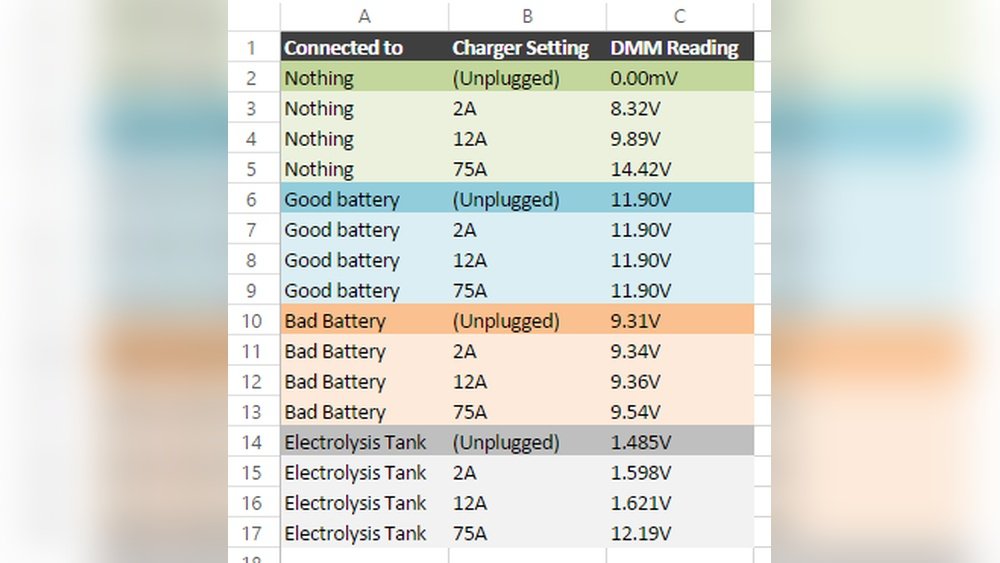
It’s smart to check your charger’s output voltage with a digital multimeter. Here’s how:
- Set your multimeter to DC volts.
- Connect the charger to the battery, turn it on.
- Place the multimeter leads on the charger’s output terminals.
- Read the voltage. For a 12V battery in bulk mode, it should show 14.4V to 14.7V.
If the voltage is too high or too low, do not use the charger. Some cheap chargers do not match their labeled voltage, so always verify.
How To Match Charger Voltage To Your Battery
Matching the charger voltage correctly is essential. Here’s a step-by-step example:
Suppose you have a 12V flooded lead-acid battery.
- Check the battery label: It says “12V, 70Ah, Flooded.”
- Look up the recommended charging voltage: 14.4V–14.7V bulk, 13.5V float.
- Choose a charger with these options. If it only offers 13.8V, it will undercharge. If it says 15.8V, it may overcharge.
- For AGM or Gel: Always check the manual. Some require lower voltage (e.g., 14.2V for gel).
- For lithium: Only use a charger approved for lithium batteries, as they have strict voltage limits.
Special Cases: Charging Deeply Discharged Or Sulfated Batteries
Sometimes, a battery is so discharged that a regular charger will not recognize it. In these cases:
- Some smart chargers have a “recovery” or “desulfation” mode, which uses high-voltage pulses (up to 15.5V–16V) for a short time to break up lead sulfate crystals.
- Use this feature only if your charger supports it, and always supervise the process.
Never try to “jump-start” a dead battery with a charger by setting it to a higher voltage than recommended. This can cause overheating and even explosions.
How Different Charger Types Handle Voltage
Car battery chargers are not all the same. Here’s a quick overview:
- Manual (Linear) Chargers: Fixed voltage, usually around 14.4V. Risk of overcharging if left unattended.
- Automatic (Smart) Chargers: Change voltage for each stage. Safest for most users.
- Trickle Chargers: Low voltage (13.2V–13.8V), safe for long-term maintenance but slow for recharging.
- Jump Starters: High current, deliver short bursts. Not designed for regular charging, but can help start a car.
If you want to leave your battery connected for weeks or months, a smart charger with float mode is the best choice.
How Car Battery Age Affects Charging Voltage Needs
Older batteries behave differently. As batteries age, they become less efficient at accepting charge. Sometimes, they may require a slightly higher voltage to become fully charged. However, too much voltage can accelerate aging.
If your battery is over 3–4 years old and struggles to hold a charge, it’s better to replace it rather than try to “force” more voltage through it. Forcing voltage can damage both the battery and your vehicle’s electrical system.
Practical Tips For Safe Car Battery Charging
Here are some essential tips to help you avoid mistakes:
- Always use a charger with overcharge protection or smart controls.
- Connect the charger’s positive lead to the battery’s positive terminal, negative to negative.
- If the battery is installed in the car, connect the charger’s negative lead to a clean, unpainted metal part of the car body away from the battery to avoid sparks.
- Never charge a frozen or visibly damaged battery.
- Monitor the battery during charging, especially with older or manual chargers.
- If the battery feels hot or swells, stop charging immediately.
Real-world Example: Selecting A Charger For A Family Car
Let’s walk through a scenario. You drive a family sedan with a standard 12V flooded lead-acid battery. You want to buy a charger for emergencies and maintenance. What should you look for?
- Charger Output: 14.4V–14.7V bulk, 13.2V–13.8V float
- Automatic/Smart Charging: Yes, for safety and battery health
- Current: 4–10 amps for a typical car battery (higher for faster charging, lower for maintenance)
- Temperature Compensation: Nice to have, especially if charging in a cold garage
- Battery Type Compatibility: Make sure the charger supports flooded, AGM, and gel batteries
A charger with these features will keep your battery healthy, prevent overcharging, and be safe for long-term use.
Key Differences Between Charger Voltage And Amperage
It’s common to confuse voltage and amperage (current). Voltage is the “pressure,” while amperage is the “flow” of electricity. For safe charging:
- Voltage must match your battery’s needs (as explained in detail above).
- Amperage affects how fast the battery charges. Higher amps = faster, but can stress the battery if not controlled.
A 10A charger at 14. 4V charges faster than a 2A charger at 14. 4V, but both will reach the same voltage. Always prioritize correct voltage, then choose amperage based on your needs.
How To Safely Store Your Battery With A Charger
If you’re storing your car for winter or a long trip:
- Use a charger with float mode (13.2V–13.8V).
- Leave it connected—smart chargers will keep the battery healthy.
- Check water levels in flooded batteries every few months (if possible).
This prevents “self-discharge,” which can leave you with a dead battery when you need your car again.

What To Do If Your Charger Does Not Match Your Battery Voltage
If you already own a charger and find its voltage does not match your battery’s needs:
- Do not use it. It’s safer to buy a new charger than risk damaging your battery or car.
- Some chargers have a “voltage selection” switch—make sure it’s set correctly before charging.
- If you’re unsure, consult your car or battery manufacturer or visit a professional.
For more detailed manufacturer guidelines and safety notes, you can visit the Wikipedia page on car battery chargers.
Frequently Asked Questions
What Is The Best Voltage To Charge A 12v Car Battery?
The best voltage for charging a 12V car battery is 14.4V to 14.7V during the bulk charging phase, then 13.2V to 13.8V for maintenance (float) charging. Always check your battery’s manual for specific recommendations.
Can I Use A 24v Charger On A 12v Battery?
No, you should never use a 24V charger on a 12V battery. It will overcharge and likely destroy the battery, and can be very dangerous.
Is It Safe To Leave A Car Battery On A Charger Overnight?
If you use a smart charger with automatic shutoff or float mode, it is safe to leave it overnight. Manual chargers should not be left unattended, as they can overcharge and damage the battery.
Why Does My Charger Voltage Read Higher Than My Battery’s Rating?
Chargers must deliver a higher voltage than the battery’s resting voltage to push energy in. For a 12V battery, a charging voltage of 14. 4V–14. 7V is normal during bulk charging.
Do All Batteries Require The Same Charging Voltage?
No, different battery chemistries (flooded, AGM, gel, lithium) require different charging voltages. Always match the charger’s output to your battery’s needs.
Choosing the right charger voltage is not just a matter of convenience—it’s essential for safety, reliability, and maximizing your car battery’s life. With the right information and a bit of care, you’ll never be stranded by a dead battery again.