When your car struggles to start, or the dashboard lights flicker, the battery is often the first suspect. But how do you know if your car battery is actually healthy? The answer often comes down to voltage. Understanding what voltage a healthy car battery should read can save you time, money, and frustration—especially if you rely on your car every day.
Too many drivers guess or trust their gut, but a precise voltage reading gives you real information about your battery’s state. This article will guide you through everything you need to know about car battery voltage—from the ideal numbers, factors that affect readings, and common mistakes, to how to test, interpret, and act on those results.
The Basics: What Is Car Battery Voltage?
Voltage is a measure of electrical potential. In simple terms, it’s the “pressure” that pushes electricity through your car’s circuits. Car batteries are almost always 12-volt units, but the actual voltage can be higher or lower depending on their condition and what’s happening in the car.
A fully charged, healthy car battery will read higher than 12 volts. This surprises many people who expect exactly 12. 0V. When your battery’s voltage drops too low, the starter motor may not turn over, and the electronics may fail.
Ideal Voltage For A Healthy Car Battery
A healthy car battery should read:
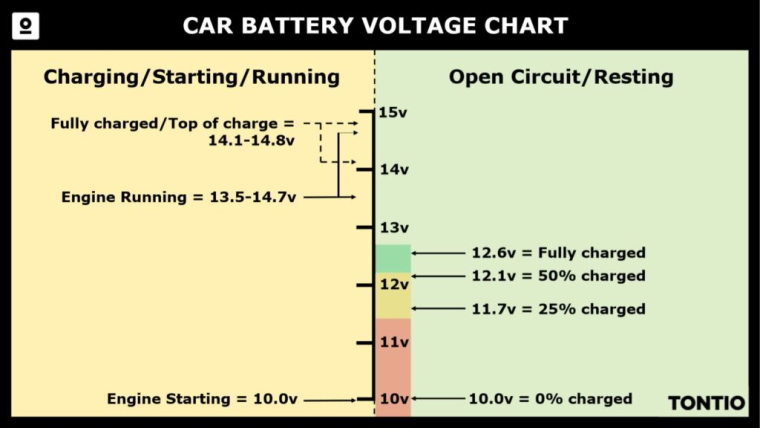
- 12.6 to 12.8 volts when the engine is off and the battery is fully charged
- About 13.7 to 14.7 volts when the engine is running (charging system engaged)
Let’s break this down:
Resting Voltage
When the car has been off for several hours (no charging or discharging), the battery’s voltage should settle at about 12.6 to 12.8 volts. This is called the resting voltage or open-circuit voltage.
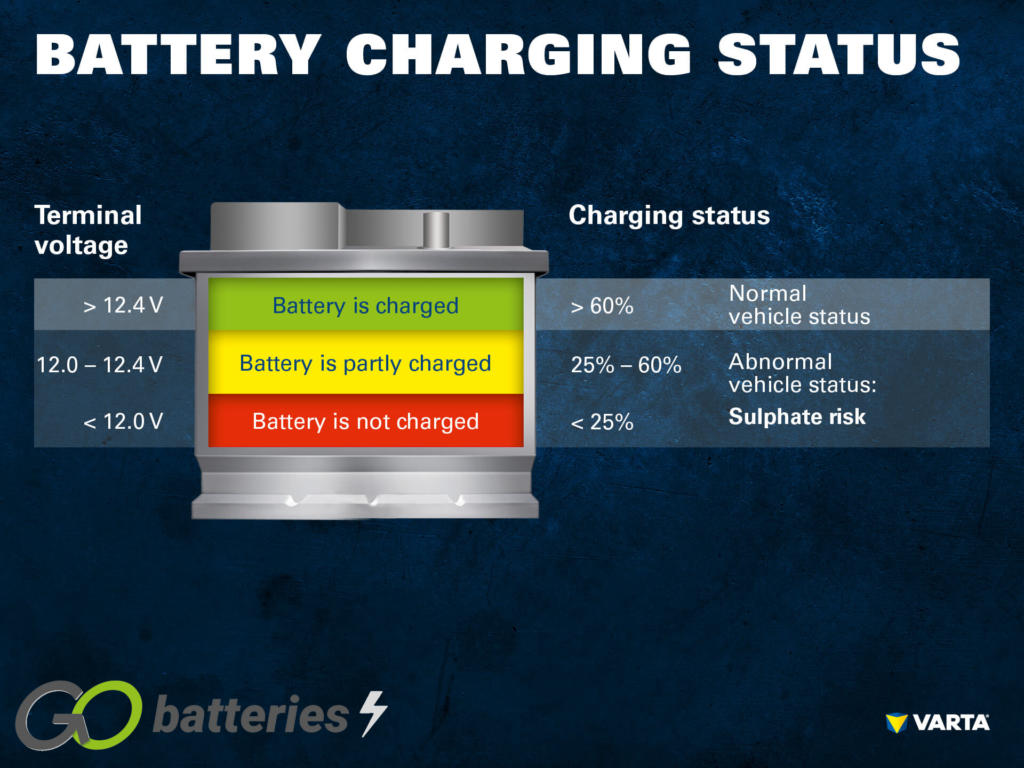
If your battery consistently reads under 12. 4 volts at rest, it may be undercharged or failing.
Cranking Voltage
When you turn the key to start your car, the battery experiences a sudden, heavy load. During this brief moment, voltage will drop, but it should stay above 10. 0 volts. If it falls much lower, the battery is likely weak.
Charging Voltage
With the engine running, the alternator charges the battery. You should see between 13. 7 and 14. 7 volts at the battery terminals. If the voltage is lower, the charging system may have problems; if much higher, there might be an overcharging issue.
Here’s a quick overview:
| Battery State | Expected Voltage |
|---|---|
| Fully Charged (engine off) | 12.6–12.8V |
| 50% Charged (engine off) | 12.2V |
| Engine Running | 13.7–14.7V |
| Engine Starting (cranking) | >10.0V |

Factors That Affect Car Battery Voltage
Car battery voltage isn’t a fixed number. Several factors can change the voltage reading, even if your battery is in good condition.
Temperature
Cold weather can reduce battery voltage because chemical reactions slow down. In very cold climates, a battery might read 12.4 volts even if it’s healthy. In hot weather, readings may be slightly higher.
Recent Charging Or Discharge
If you’ve just driven your car or used a battery charger, the voltage may temporarily be higher due to surface charge. Wait at least an hour after charging or driving before measuring resting voltage for an accurate reading.
Battery Age And Condition
A new battery will usually hold a higher voltage. As batteries age (typically after 3–5 years), they lose the ability to hold a full charge, and voltage may drop even when fully charged.
Parasitic Draw
Some electronics draw power even when the car is off—alarm systems, clocks, and ECUs. If these draws are excessive, the battery may read lower voltage after sitting for a while.
Dirty Or Loose Connections
Corroded battery terminals or loose clamps can cause voltage drop, leading to low readings even if the battery is fine.
Non-obvious insight: Always check and clean battery terminals before testing. Many people replace batteries when the real problem is just a bad connection.
How To Test Your Car Battery Voltage
Testing your car battery’s voltage is simple and requires only a digital multimeter. Here’s a step-by-step guide:
- Turn off the car. Wait at least one hour after driving or charging.
- Set the multimeter to DC volts. Choose a range that covers at least 0–20 volts.
- Connect the probes: Red to the battery’s positive (+) terminal, black to negative (–).
- Read the display. Note the voltage.
If you want to test the charging system, repeat the test with the engine running. For cranking voltage, have someone start the car while you watch the meter.
Practical Example
Suppose your battery reads 12.1 volts. According to most charts, this means your battery is only about 50% charged. If you don’t drive much or make a lot of short trips, this is common.
Understanding State Of Charge Vs. Voltage
Many people think a “12-volt battery” should always read 12 volts. In reality, voltage tells you a lot about the state of charge. Here’s a deeper look:
| State of Charge (%) | Voltage (12V battery) |
|---|---|
| 100% | 12.7–12.8V |
| 75% | 12.4V |
| 50% | 12.2V |
| 25% | 12.0V |
| 0% | 11.8V or less |
If your battery is below 12. 4 volts at rest, it’s not fully charged. Below 12. 0 volts, it’s deeply discharged and may be damaged if left like this for long.
Why Voltage Drops: Common Causes
Several issues cause car battery voltage to drop below healthy levels. Some are easy to fix, while others need more attention.
Parasitic Battery Drain
Some devices (like interior lights or GPS trackers) can drain the battery even when the car is off. If you measure your battery and see it’s low after sitting overnight, a parasitic draw might be the cause.
Old Or Failing Battery
Over time, batteries lose their capacity. If your battery is more than four years old and can’t hold a charge above 12.4 volts, it’s probably time to replace it.
Faulty Charging System
If your battery reads normal at rest but doesn’t go above 13.7 volts when the engine runs, the alternator or voltage regulator may be bad.
Short Drives
Frequent short trips don’t give your alternator enough time to recharge the battery fully, especially in winter.
Extreme Temperatures
Both hot and cold weather stress batteries. In cold, voltage drops; in heat, batteries can dry out and lose capacity.
Non-obvious insight: If your car sits unused for long periods, use a battery maintainer to keep voltage in the healthy range.
How To Fix Low Car Battery Voltage
If you test your battery and see low voltage, don’t panic. There are steps you can take before buying a new battery.
- Check and clean connections. Corrosion is a common cause of voltage drop.
- Charge the battery. Use a smart charger and avoid “jump starting” unless necessary.
- Test again. If the battery holds a charge, it may be fine. If it drops quickly, it’s likely failing.
- Check for parasitic drain. Remove fuses one by one while measuring current to find the culprit.
- Inspect the charging system. If the voltage is low with the engine running, visit a mechanic.
Experience-based tip: Never let a battery sit discharged for weeks. Sulfation can set in, permanently reducing capacity.
When To Replace Your Car Battery
No battery lasts forever. Here are clear signs it’s time for a new one:
- Voltage stays below 12.4 volts after charging and resting
- Cranking voltage drops under 10 volts when starting
- Battery is more than 4–5 years old
- Visible swelling, leaks, or corrosion
- Car electronics behave oddly (random resets, flickering lights)
Don’t wait for a complete failure. A weak battery can leave you stranded at the worst time.
Differences Between Car Battery Types
Not all car batteries are the same. The most common type is the lead-acid flooded battery, but you may also find AGM (Absorbed Glass Mat) or gel batteries.
Lead-acid
Standard in most cars, these are reliable but need to be kept upright and can leak acid if damaged.
Agm
AGM batteries hold voltage longer and are more resistant to vibration. They cost more but last longer—often used in cars with start-stop systems.
Gel
Gel batteries have a thickened electrolyte. They’re good for deep cycling (frequent full discharges) but cost more and require special chargers.
Key fact: The healthy voltage ranges are nearly the same for all types—about 12.6–12.8 volts when fully charged.
How To Maintain A Healthy Car Battery
Keeping your battery at the right voltage is easier with a few simple habits:
- Drive at least 20 minutes regularly to let the alternator recharge the battery.
- Turn off all lights and accessories when parking.
- Check battery terminals for corrosion every few months.
- In cold climates, consider a battery blanket or heater.
- Use a trickle charger if the car is parked for more than two weeks.
Common Mistakes When Measuring Car Battery Voltage
Getting an accurate reading isn’t hard, but many car owners make these mistakes:
Measuring Too Soon After Driving
The battery will show a higher “surface charge” right after use. Wait at least an hour before testing for a true reading.
Testing Only Once
A one-time reading doesn’t tell the whole story. Test at rest, during cranking, and with the engine running for a complete picture.
Ignoring Connections
Dirty terminals can cause false low readings. Always clean clamps before measuring.
Forgetting Temperature Effects
If it’s very cold, voltage will be lower. Don’t condemn a battery immediately—consider the weather.
Overlooking Parasitic Drains
A slow drain from electronics or a glove box light can drain even a new battery. Always check for current draw if your battery keeps dying.
How To Interpret Battery Test Results
Once you have your voltage numbers, what do they mean? Here’s a guide:
- Above 12.6V: Healthy and fully charged
- 12.4–12.6V: Partially charged, but likely fine for starting
- 12.2–12.4V: Needs charging soon
- Below 12.2V: Weak or discharged—may fail to start the car
If the voltage drops below 10V during cranking, replace the battery.
Real-world Scenarios: Diagnosing Problems With Voltage
Let’s look at three common situations:
Scenario 1: Car Won’t Start, Battery Reads 12.0v
A voltage of 12. 0V means the battery is only about 25% charged. The starter may not have enough power, especially in cold weather. Try charging the battery overnight and retest.
Scenario 2: Battery Reads 12.7v At Rest, But Drops To 9v Cranking
This battery looks fine at rest but can’t deliver power under load—a classic sign the battery is failing internally. Replacement is the best option.
Scenario 3: Battery Reads 12.8v At Rest, 14.5v Running, But Dies Overnight
This points to a parasitic drain. Something in the car is drawing power when it shouldn’t. Check for interior lights, trunk lights, or aftermarket devices.
How Voltage Differs In Other Vehicles
Car batteries aren’t the only ones using 12 volts. Motorcycles, boats, and RVs often use similar batteries, but the voltage guidelines are almost identical.
- Motorcycles: 12.6–12.8V fully charged
- Boats/RVs: Same as cars, but batteries may be larger or connected in parallel
Important: Hybrid and electric cars use high-voltage batteries for propulsion, but they also have a 12V battery for accessories. The guidelines above apply only to the 12V system.
The Role Of The Alternator
Many people think the battery powers everything, but the alternator is just as important. When the engine runs, the alternator charges the battery and provides power for lights, stereo, and more.
If your battery’s voltage doesn’t rise above 13. 7V when running, the alternator or its regulator may be at fault.
Tip: Don’t replace your battery if it keeps dying—test the alternator first.
Tools For Measuring Car Battery Voltage
You don’t need expensive tools. A basic digital multimeter (costs $10–$30) is enough for most people. Some battery testers also show cold cranking amps (CCA), but voltage alone tells most of the story.
- Set your meter to DC volts
- Touch probes to battery terminals (red to +, black to –)
- Read the number—simple and accurate
For more details about battery testing, check this Wikipedia guide.
How To Prolong Car Battery Life
A healthy voltage isn’t just luck—good habits matter.
- Keep batteries clean and dry
- Avoid short trips if possible
- Use a battery maintainer for long-term storage
- Check battery water (if serviceable type)
- Fix electrical problems early
Surprising fact: Heat kills more batteries than cold. Park in the shade during summer to extend battery life.
Comparison: Healthy Vs. Weak Battery Voltage
To help visualize, here’s how healthy and weak batteries compare:
| Battery Condition | Resting Voltage | Cranking Voltage | Charging Voltage |
|---|---|---|---|
| Healthy | 12.6–12.8V | >10V | 13.7–14.7V |
| Weak/Failing | 12.2V or less | <10V | Variable |
Frequently Asked Questions
What Is The Best Voltage For A Healthy Car Battery?
The best voltage for a healthy car battery is 12.6 to 12.8 volts at rest (engine off and fully charged). This indicates the battery is fully charged and in good condition.
Can A Car Battery Be “bad” Even If Voltage Is Normal?
Yes. A battery can have normal voltage at rest but still fail under load, especially if it can’t provide enough current during starting. Always test cranking voltage and look for signs like slow cranking or dim lights.
How Long Does It Take To Recharge A Car Battery?
With a standard charger (4–6 amps), a deeply discharged battery takes about 8–12 hours to recharge fully. “Jump starting” gets you going, but does not fully recharge the battery.
Will A Car Start With 12 Volts?
Not always. A reading of exactly 12.0 volts means the battery is nearly empty (about 25% charged). Most cars need at least 12.2–12.4 volts to start reliably, especially in cold weather.
Should You Test Battery Voltage After Driving?
No. After driving or charging, the battery may show a “surface charge,” giving a falsely high reading. Wait at least one hour before testing for the true resting voltage.
A car battery’s voltage tells you a lot about its health, but knowing the right numbers—and how to interpret them—makes all the difference. With a basic understanding and a simple tool like a multimeter, you can avoid breakdowns, save money, and keep your car running smoothly.
Take care of your battery, and it will take care of you every time you turn the key.