Why Is My Car Battery Charger Not Charging?
You plug your car battery charger in, expecting it to bring life back to your vehicle. But nothing happens. The lights on the charger stay off, or maybe you hear a faint click and then silence. If you’ve faced this situation, you are not alone.
Many car owners struggle with battery charging problems, especially during cold mornings or after a battery sits unused for a while. Understanding why your car battery charger is not charging is key to solving the issue quickly—before you’re stranded with a dead battery.
This guide will walk you through every possible reason, from simple user mistakes to deeper electrical issues. You’ll learn how to spot the cause, what to do, and how to avoid common traps that waste time and money. Even if you’re not a car expert, you’ll find practical advice, real-world examples, and troubleshooting steps that make sense.
Let’s uncover the real reasons why your car battery charger may not be working and how to fix them.
Understanding How Car Battery Chargers Work
Before you dive into problems, it helps to know how car battery chargers operate. A typical charger converts household AC power into DC power suitable for your car’s battery. It then sends a controlled electrical current to the battery, gradually restoring the charge.
There are two main types:
- Manual chargers require you to turn them off when charging is complete.
- Automatic chargers monitor the battery and switch off or go into maintenance mode when charging is done.
Modern smart chargers use microprocessors to check the battery’s health, adjust the charging rate, and prevent overcharging. Older chargers may not have these safety features.
When your charger is not working, the issue can be with the charger itself, the battery, the connections, or even your technique. Let’s break down each area to find the real problem.
Common User Errors That Stop Charging
Sometimes the problem is not with the charger or battery, but with how you use them. Even experienced drivers can make small mistakes that lead to big headaches.
1. Incorrect Charger Settings
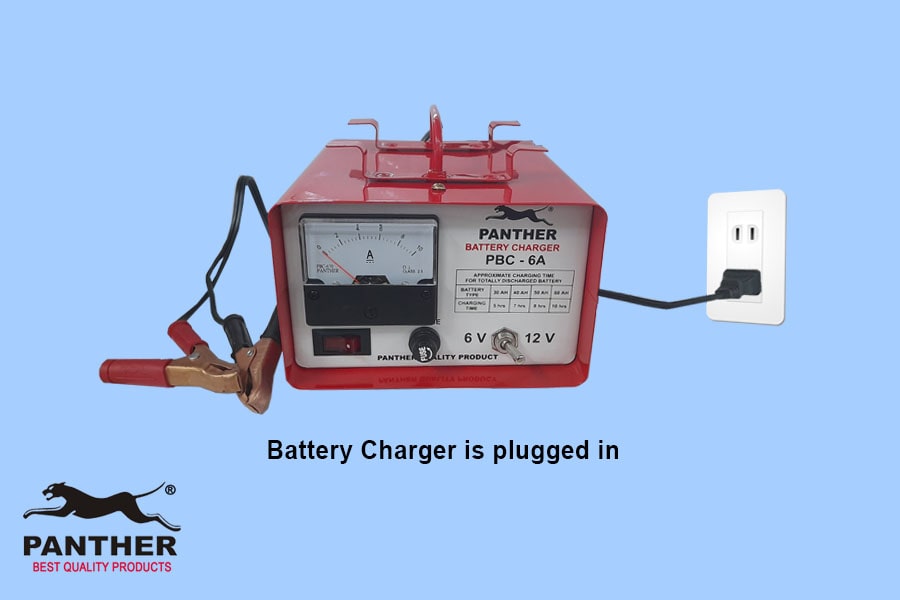
Manual chargers often have several settings: voltage (6V, 12V), charge rate (slow/fast), and sometimes battery type (lead-acid, AGM, gel). If you select the wrong setting, the charger might not work or could damage the battery.
- Example: Using a 6V setting on a 12V battery will do nothing.
- Tip: Always check your battery’s label for the correct voltage and type before plugging in.
2. Poor Cable Connections
Loose or dirty clamps are a common reason for charging problems. Even a small amount of corrosion or dirt can block the flow of electricity.
- Make sure clamps are tight and clean.
- Remove rust or white powder from terminals with a wire brush.
- Wiggle the clamps gently to test for a good connection.
3. Not Plugging In Properly
It sounds simple, but double-check that the charger is plugged into a live electrical outlet and that all switches (if any) are on. Sometimes outlets have their own switches or are controlled by a wall switch elsewhere.
4. Reversed Polarity
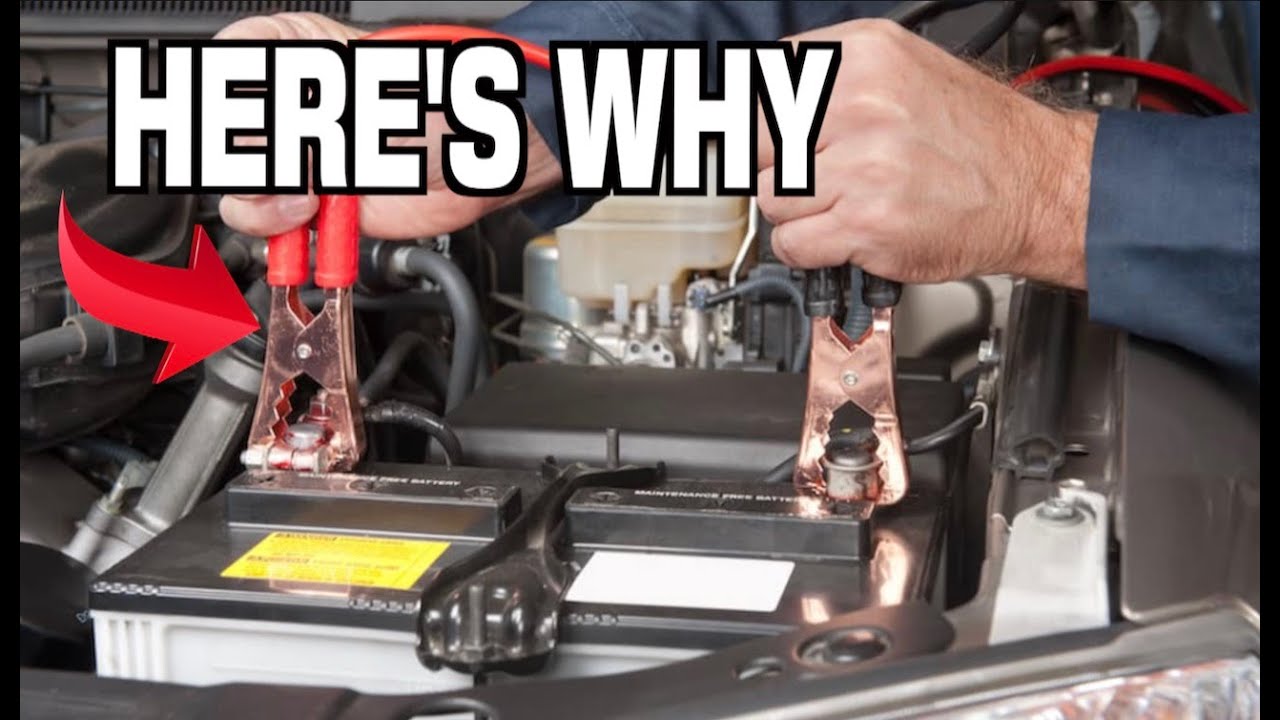
Car batteries have positive (+) and negative (–) terminals. If you accidentally connect the charger clamps backwards, many modern chargers will not start to protect themselves. Some older chargers may cause sparks or damage.
- Red clamp = Positive terminal
- Black clamp = Negative terminal
If your charger has a polarity warning light, check it before starting.
Non-obvious insight: Even if the clamps “look” connected, paint, grease, or battery corrosion can act as insulation. Clean metal-to-metal contact is critical.
Problems With The Car Battery Itself
If your charger is not the problem, your battery might be the culprit. Car batteries are not all the same, and certain conditions can make charging impossible or unsafe.
1. Severely Discharged Or “dead” Battery
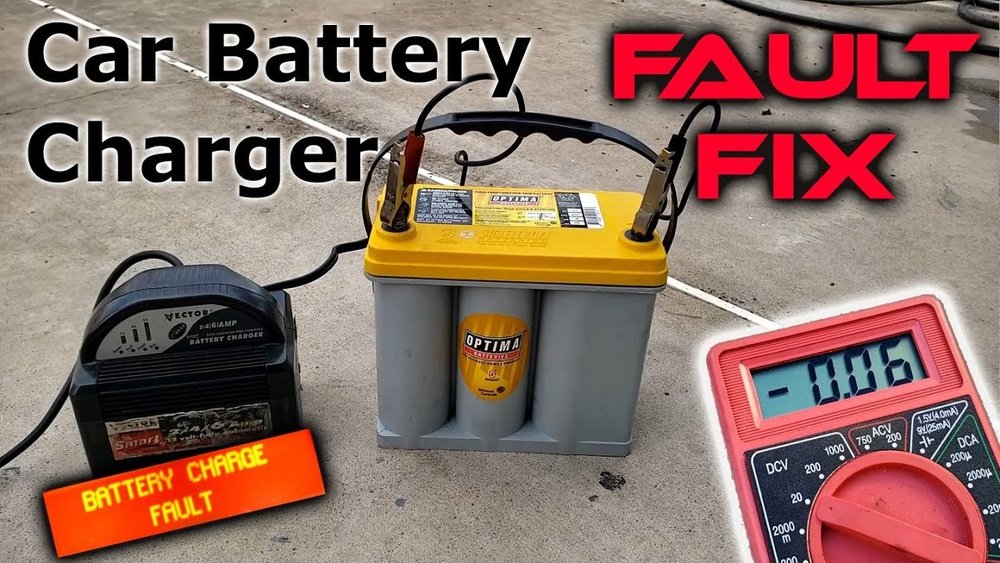
If a battery is deeply discharged (below 10. 5 volts), many smart chargers will not detect it. They may show a fault light or act as if no battery is connected.
- Why: Smart chargers look for a minimum voltage to “see” the battery. If voltage is too low, they assume the battery is defective.
- Fix: Try using a manual charger for a few minutes to raise the voltage. Once above 10.5V, switch to a smart charger.
2. Sulfation Or Internal Damage
Lead-acid batteries can develop sulfation—hard crystals that form on the plates if the battery sits uncharged for weeks or months. This blocks current flow and prevents charging.
- Signs: Battery will not hold a charge, or charger shuts off quickly.
- Advanced chargers may have a “desulfation” mode, but severe cases are usually permanent.
Non-obvious insight: Sulfation increases as batteries are left partially charged. Always recharge after deep use to prevent this.
3. Shorted Or Open Cells
Car batteries have six internal cells. If one is shorted (internal plates touch) or open (broken connection), the battery cannot charge properly. The charger may overheat, shut down, or show an error.
- If you hear bubbling, smell rotten eggs, or see swelling, disconnect the charger immediately—this is dangerous.
4. Frozen Battery
In cold climates, a discharged battery can freeze. A frozen battery will not accept charge and may crack or leak acid if you try to charge it.
- Move the battery to a warm room and let it thaw before attempting to charge.
5. Battery At End Of Life
Most car batteries last 3–5 years. As they age, they lose the ability to accept and hold a charge. Even if your charger works fine, an old battery may not come back to life.
- Signs: Car struggles to start, battery drains quickly, charger runs much longer than normal.
Tip: Test your battery at an auto parts store if you’re unsure. Most offer free checks.
Charger Problems: Faults And Failures
If your battery is fine, the charger may be at fault. Chargers can fail in several ways, and some issues are easier to spot than others.
1. Blown Fuse Or Circuit Breaker
Most chargers have a fuse or breaker inside to protect from power surges. If you hear a click but nothing happens, or all lights stay off, check the fuse.
- Replace with the correct rating from the manual. Do not bypass the fuse—it protects you from fire or electric shock.
2. Faulty Power Cord
A damaged or frayed power cord can stop your charger from working. Look for cuts, kinks, or scorch marks.
- Try plugging another device into the same outlet to rule out problems with the power source.
3. Internal Component Failure
Chargers use transformers, diodes, and circuit boards. Over time, heat or moisture can cause these parts to fail. If the charger hums but does not charge, or shows an error, internal damage may be the cause.
- Some repairs are possible, but often it’s cheaper and safer to replace the charger.
4. Overheating Protection
Many chargers have a thermal safety switch that shuts them down if they get too hot. If your charger runs for a few minutes and stops, let it cool and try again.
5. Outdated Or Incompatible Charger
Some older chargers are not compatible with modern AGM, gel, or lithium batteries. They may not start or could damage the battery.
- Always use a charger designed for your battery type. Check the manual or manufacturer’s website for compatibility.
Practical tip: If your charger is more than 10 years old, consider upgrading. Newer models are safer and work with more battery types.

Comparing Charger Types And Their Common Issues
To understand your problem faster, compare how different charger types fail and what to check first.
| Charger Type | Common Issues | Best For |
|---|---|---|
| Manual Charger | Overcharging, user error, no automatic shutoff | Older batteries, simple tasks |
| Automatic Charger | Won’t start on dead batteries, complex error codes | Modern vehicles, daily use |
| Smart/Microprocessor Charger | Compatibility issues, needs minimum voltage | AGM, gel, advanced batteries |
Issues With Connections And Accessories
Charging problems often come from the cables, clamps, and even extension cords you use. These small things are easy to miss but can make a big difference.
1. Damaged Charging Cables
Charger cables can wear out over time. If you see cracks, exposed wires, or melted insulation, the cable may not carry enough current.
- Replace damaged cables or the entire charger if parts are not available.
2. Bad Extension Cords
Using a long or thin extension cord can reduce the power reaching your charger. This can slow charging or prevent it from starting.
- Use a short, heavy-duty extension cord (14 gauge or thicker) if you must use one.
3. Dirty Or Corroded Terminals
If your battery posts or charger clamps are corroded, electricity cannot flow well. This is one of the most common and fixable problems.
- Clean both terminals and clamps with a mixture of baking soda and water, then rinse and dry.
4. Loose Connections
A connection that “looks” tight may still be loose. Try wiggling the clamps gently. If they move, tighten or reposition them.
Non-obvious insight: Even a small amount of movement can interrupt charging. Do not assume a clamp is tight just because it stays in place.
Environmental Factors That Affect Charging
The environment around your car and charger can also impact how well charging works.
1. Extreme Temperatures
Batteries charge slower in cold weather and faster in warm weather. Chargers can also overheat in hot conditions.
- In winter, bring the battery indoors to charge it faster.
- In summer, keep the charger out of direct sunlight.
2. Humidity And Moisture
Charging in damp or wet conditions can cause rust and short circuits. Always charge in a dry, well-ventilated space.
3. Voltage Drops
If your home wiring is old or overloaded, the voltage at the outlet may be lower than expected. This reduces charger effectiveness.
- Try plugging into a different outlet or circuit if you suspect a problem.
Diagnosing The Problem: Step-by-step Troubleshooting
If your charger is not charging, follow these steps to find the real reason:
- Check the outlet – Plug a lamp or phone charger into the same outlet. If it works, the outlet is fine.
- Inspect charger lights and sounds – Does the charger show any lights or make a humming sound? If not, check the fuse and power cord.
- Examine the battery – Use a voltmeter to check battery voltage. If below 10.5V, many chargers will not start.
- Clean and tighten connections – Remove all corrosion and ensure clamps are tight.
- Try a different charger – If possible, test another charger on your battery. If it works, your original charger is likely faulty.
- Test the battery elsewhere – Take the battery to an auto parts store for a free test. If it fails, replace the battery.
- Review charger settings – Make sure you have selected the correct voltage and battery type.
If you follow these steps, you can usually find the problem without guesswork.
Data: Common Causes Of Charging Failure
According to a survey by the Battery Council International, the leading causes of car battery charging failure are:
| Cause | Percentage of Cases |
|---|---|
| Dead Battery (Below 10.5V) | 37% |
| Bad Connections/Corrosion | 28% |
| Charger Failure | 18% |
| User Error (Settings, Polarity) | 11% |
| Other (Environmental, Accessories) | 6% |
This shows that most problems are with the battery or connections—not the charger itself.
Preventing Charging Problems In The Future
Many charging problems are avoidable. Here’s how to keep your charger and battery working well:
- Charge regularly if your car is not driven often. Batteries lose charge over time even when not used.
- Store the charger in a cool, dry place to protect it from moisture.
- Clean battery terminals every few months to prevent corrosion.
- Check cables and clamps for damage before every use.
- Use the right charger for your battery type, especially with AGM, gel, or lithium batteries.
- Avoid deep discharges—try to recharge before the battery falls below 50% charge.
When To Replace The Charger Or Battery
Sometimes, repair is not possible or safe. Here’s how to know when to replace:
- Replace the charger if it no longer powers on, shows error codes, or has physical damage.
- Replace the battery if it fails a load test, will not hold a charge, or is more than 5 years old.
Do not try to repair a charger or battery if you are unsure. Damaged batteries and chargers can cause fire, burns, or acid leaks.
Example Scenarios And Solutions
To make things clearer, let’s look at a few real-world scenarios:
Scenario 1: Your smart charger will not start, and the battery voltage reads 8V.
- Solution: Use a manual charger for 10–15 minutes to boost voltage, then switch back to the smart charger.
Scenario 2: The charger clicks on but then shuts off after a few seconds.
- Solution: Check for loose clamps, corroded terminals, or a shorted cell in the battery.
Scenario 3: The charger works on another car’s battery but not yours.
- Solution: Your battery is likely at the end of its life or internally damaged.
Scenario 4: All charger lights are dead, but the outlet works for other devices.
- Solution: Inspect the charger’s fuse and power cord; replace if blown or damaged.
When To Seek Professional Help
If you have tried all troubleshooting steps and the charger still does not work, it may be time to see a professional. Auto electricians have special tools to test batteries, chargers, and vehicle electrical systems.
- Warning: Never open a charger or battery unless you know what you are doing. There is risk of electric shock, explosion, and chemical burns.
If your car has a start-stop system or hybrid battery, always consult a trained mechanic. These systems use special charging methods and can be expensive to repair if damaged.
For more technical information on car batteries and charging systems, check the Wikipedia car battery page.
Frequently Asked Questions
Why Does My Car Battery Charger Show “fully Charged” But The Battery Is Dead?
This often happens if the battery is sulfated or has an internal fault. The charger “sees” voltage but there is not enough power to start the car. Replace the battery if it cannot hold a charge.
Can I Use Any Charger For Any Car Battery?
No. Always use a charger compatible with your battery type and voltage. Using the wrong charger can damage the battery or even cause a fire.
How Long Does It Take To Charge A Car Battery?
Charging time depends on the battery size and charger output. A typical 10-amp charger takes 4–6 hours for a normal car battery. Smart chargers may adjust the rate, so check your manual.
Is It Safe To Leave A Charger Connected Overnight?
Modern automatic chargers can be left connected, as they switch to maintenance mode when finished. Manual chargers should be turned off after charging to prevent overcharging.
What Should I Do If My Charger Smells Like Burning?
Unplug it immediately. A burning smell means internal damage or a short circuit. Do not use the charger again—replace it to avoid fire or electric shock.
A working car battery charger is essential for reliable starts and peace of mind. By understanding the reasons why your charger may not be charging and following the tips above, you can fix most problems yourself and avoid being stranded.
Always use proper safety precautions and consult a professional if you are unsure. With a little care, both your battery and charger can give you years of dependable service.