Car batteries are essential for starting your vehicle and keeping its electronics running. But when a car battery dies or becomes old, you can’t just throw it in the trash. Old car batteries contain hazardous materials like lead and sulfuric acid, which can harm people, animals, and the environment if not handled properly.
In many places, improper disposal is even illegal. So, how do you safely dispose of a car battery? Let’s look at all the steps, risks, and best practices to make sure you stay safe and protect the planet.
49% off Today's Exclusive Deals
Limited-time Exclusive Deals. Check current discount on Amazon.
Check Price on Amazon As an Amazon Associate I earn from qualifying purchases.Why Safe Disposal Of Car Batteries Matters
Car batteries are not like regular household batteries. They are usually lead-acid batteries, which means they contain heavy metals and corrosive liquids. Here’s why safe disposal is so important:
- Toxic chemicals: The lead and acid inside a battery can leak and contaminate soil, water, or air.
- Legal requirements: Most countries and states have strict laws about battery disposal.
- Fire hazard: Old or damaged batteries can spark and cause fires.
- Recycling value: Almost all parts of a car battery can be recycled and reused, reducing the need for new materials.
Improper disposal can lead to fines, health problems, and environmental disasters. For example, the U. S. Environmental Protection Agency (EPA) reports that lead-acid batteries are the largest source of lead in municipal solid waste. Just one car battery can pollute thousands of liters of water if thrown away incorrectly.
Understanding What’s Inside A Car Battery
Knowing what’s in a car battery helps explain why safe disposal is so important.
49% off Today's Exclusive Deals
Limited-time Exclusive Deals. Check current discount on Amazon.
Check Price on Amazon As an Amazon Associate I earn from qualifying purchases.| Component | Material | Hazard | Recyclable? |
|---|---|---|---|
| Plates | Lead | Highly toxic | Yes |
| Electrolyte | Sulfuric Acid | Corrosive, harmful to skin and eyes | Yes (neutralized) |
| Case | Plastic (Polypropylene) | Non-biodegradable | Yes |
| Terminals | Lead/Alloy | Toxic | Yes |
Lead is especially dangerous because it does not break down in the environment. Sulfuric acid can cause burns and destroy living tissue. Because of these risks, you should never open a battery or try to drain it yourself.
When To Dispose Of A Car Battery
Recognizing when your car battery needs disposal is the first step to safe handling. Some signs that your battery is at the end of its life include:
- Engine struggles to start or won’t start at all
- Battery warning light appears on your dashboard
- Corrosion around battery terminals
- Swollen or bloated case
- Old age (most car batteries last 3-5 years)
If you see leaks, cracks, or odd smells, handle the battery with extreme care. Damaged batteries are even more hazardous.
Safe Handling Before Disposal
Before you remove or move a car battery, protect yourself:
49% off Today's Exclusive Deals
Limited-time Exclusive Deals. Check current discount on Amazon.
Check Price on Amazon As an Amazon Associate I earn from qualifying purchases.- Wear gloves: Use chemical-resistant gloves to avoid contact with acid or lead dust.
- Wear eye protection: Goggles or safety glasses can prevent acid splashes from reaching your eyes.
- Work in a ventilated area: Acid fumes are harmful if inhaled.
- Keep away from children and pets: Store old batteries out of reach.
- Use proper lifting technique: Car batteries are heavy, usually 30-50 pounds (13-23 kg).
If you notice acid leaks, do not touch the liquid directly. Place the battery in a plastic-lined box or tray to prevent spills during transport.
How To Remove A Car Battery Safely
If you are comfortable working on your car, you can remove the battery yourself. Here’s how to do it safely:
- Turn off the engine and remove the keys.
- Locate the battery (usually under the hood, sometimes in the trunk).
- Disconnect the negative terminal first (usually marked “–” or black).
- Disconnect the positive terminal (marked “+” or red).
- Loosen the clamp or bracket holding the battery in place.
- Lift the battery out using both hands.
Always keep the battery upright to avoid leaks, and never tip it on its side.
Where To Dispose Of A Car Battery
You cannot put a car battery in your regular trash or recycling bin. Instead, choose one of these safe options:
1. Automotive Retail Stores
Many auto parts stores (like AutoZone, Advance Auto Parts, or O’Reilly Auto Parts) accept old batteries for free, even if you didn’t buy your battery from them. Some stores offer a core charge refund—a small amount of money back when you return your old battery after buying a new one.
2. Battery Recycling Centers
Dedicated recycling centers are set up to handle hazardous materials. They break down batteries and safely extract the lead and plastic for reuse. You can find a local center through online directories or by searching “car battery recycling near me.
”
3. Municipal Hazardous Waste Programs
Cities and towns often have hazardous waste drop-off events or facilities. These programs collect batteries, electronics, paint, and other dangerous materials. Some operate year-round; others are only open on certain days.
4. Automotive Service Centers Or Garages
Mechanics and service centers usually replace and dispose of car batteries as part of their services. Ask if they participate in a recycling program.
5. Scrap Yards
Licensed scrap yards and metal recyclers accept old batteries for their lead content. Some even pay you a small amount for each battery.
6. Manufacturer Take-back Programs
Some battery or car manufacturers offer take-back programs. This means you can return your old battery to the company for safe recycling.
7. Retail Collection Events
Large retailers or community groups sometimes hold special collection events for batteries and electronics. These are usually advertised in local newspapers or online.
What Happens To A Battery After Recycling?
Wondering what happens after you drop off your battery? Here is how the recycling process works:
- Collection: Batteries are gathered at collection sites and sent to recycling plants.
- Breaking: Batteries are broken apart in machines called hammer mills.
- Separation: Lead, plastic, and acid are separated.
- Processing: Lead is melted and purified for new batteries, plastic is washed and remolded, acid is neutralized and turned into water or fertilizer.
Recycling is efficient. According to industry estimates, up to 99% of a car battery’s materials can be recycled. The lead from old batteries is used to make new batteries, creating a closed loop. This reduces the need for mining new lead, which is dangerous and expensive.
Dangers Of Improper Disposal
Throwing a car battery in the trash or abandoning it outside is never safe. Here are some real risks:
- Soil and water pollution: Lead and acid can seep into the ground and water supplies.
- Health hazards: Lead exposure can cause brain damage, especially in children.
- Wildlife harm: Animals can be poisoned if they touch or drink battery fluids.
- Fines and legal problems: Improper disposal is illegal in many areas.
A single car battery can leak enough lead to poison an entire backyard garden. That’s why it’s vital to follow safe disposal rules.
Legal Requirements For Car Battery Disposal
Laws about car battery disposal vary by country and state, but most places have strict rules. Here’s a comparison of battery disposal laws in three regions:
| Region | Disposal Allowed in Trash? | Recycling Mandatory? | Penalties for Violation |
|---|---|---|---|
| United States | No | Yes | Fines, possible jail time |
| European Union | No | Yes | Fines, business penalties |
| Australia | No | Yes | Fines, cleanup costs |
Check with your local government to find out the exact rules in your area. Many places require stores to accept used batteries if they sell new ones.
How To Store An Old Battery Before Disposal
If you can’t take your old battery to a recycling center right away, store it safely:
- Keep it upright: This prevents acid spills.
- Store on a non-metal surface: Use wood or plastic, never metal, to prevent sparks.
- Keep dry: Avoid rain or moisture.
- Separate from flammable items: Store away from gasoline, oil, or other chemicals.
- Label clearly: Mark the battery as “Used” or “For Recycling.”
It’s best not to store old batteries for long. The longer they sit, the higher the risk of leaks.
Common Mistakes To Avoid
Many people make simple but dangerous mistakes when disposing of car batteries. Here’s what to avoid:
- Throwing batteries in the trash: This is illegal and unsafe in most places.
- Pouring out the acid: Never try to empty a battery yourself—acid is highly dangerous.
- Breaking the battery open: This releases toxic dust and acid.
- Leaving batteries outside: Weather can cause leaks and spread toxins.
- Mixing with other recyclables: Car batteries need special handling, not curbside bins.
- Ignoring local laws: Rules vary, so always check first.
The Environmental Impact Of Battery Recycling
Proper recycling is not just about avoiding fines—it’s about protecting nature. Here’s how recycling helps:
- Reduces mining: Each recycled battery saves about 10 kg of lead from needing to be mined.
- Saves energy: Recycling lead uses 35% less energy than producing new lead.
- Cuts pollution: Prevents toxic spills into soil and water.
- Supports the circular economy: Old batteries become new ones, reducing waste.
In the U. S. , over 95% of all lead-acid batteries are recycled, making it one of the most successful recycling programs in the world.
What To Do If A Battery Leaks Or Is Damaged
Sometimes, an old battery may be cracked or leaking. Here’s what to do:
- Do not touch the liquid or powder directly.
- Wear gloves and goggles for protection.
- Place the battery in a plastic container or tray.
- Avoid inhaling fumes—work in a ventilated area.
- Clean up spills with baking soda (for acid), then collect the residue for hazardous waste disposal.
- Take the battery to a hazardous waste center as soon as possible.
Never wash battery acid down the drain or into the soil. It must be handled as hazardous waste.
How To Find A Local Battery Disposal Site
Finding a recycling location is easier than you might think. Here’s how:
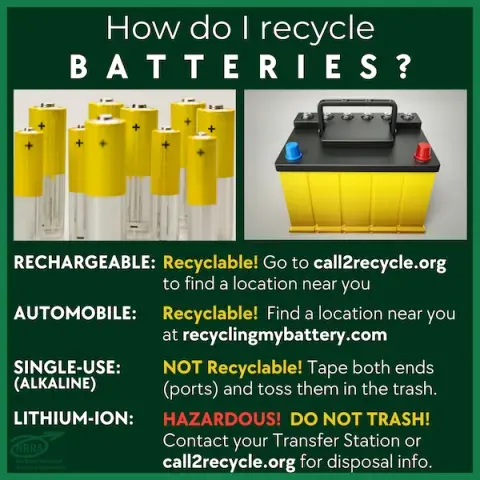
- Use online directories: Search for “car battery recycling” or use websites like Earth911.
- Ask your mechanic: Most garages know where to dispose of batteries.
- Check with your city: Local government websites list hazardous waste programs.
- Call auto parts stores: Ask if they accept old batteries.
- Look for special events: Some towns hold “hazardous waste collection days.”
For more information, the EPA’s battery recycling page offers excellent resources.
Special Cases: Hybrid And Electric Vehicle Batteries
Electric and hybrid cars use different types of batteries—usually lithium-ion or nickel-metal hydride. These batteries are even more complex and dangerous than regular lead-acid types.
- Do not attempt to remove or open these batteries yourself.
- Contact your car dealer or manufacturer for take-back programs.
- Never put these in regular recycling.
Special recycling centers are needed for high-voltage batteries because of fire risks and rare metals.
How Much Does Car Battery Disposal Cost?
In most cases, disposing of an old car battery is free. Many stores and recycling centers accept them at no charge. Some may even pay you a small amount, usually $5–$15, for the lead content.
However, there can be charges if:
- You need pickup service from home
- You are disposing of commercial quantities
- The battery is badly damaged or leaking
Check with your disposal site for details.
Tips For Safe Battery Disposal
Here are some practical tips for safe and responsible battery disposal:
- Plan ahead: Know where you’ll take your battery before removing it.
- Save your receipt: If buying a new battery, keep proof for the core refund.
- Transport upright: Always keep the battery upright in your car.
- Use a box or tray: Prevent spills with a plastic-lined box.
- Don’t delay: Dispose of old batteries as soon as possible.
Recycling Myths And Facts
Many people believe myths about battery disposal. Let’s clear up the most common ones:
| Myth | Fact |
|---|---|
| You can throw car batteries in the trash. | This is illegal and dangerous in most places. |
| Battery acid is not harmful if diluted. | Even diluted acid can burn skin, harm wildlife, and pollute water. |
| All battery recycling centers are the same. | Some handle only household batteries, not car batteries. Always check first. |
| Only new batteries can be recycled. | Used and even damaged batteries are valuable for recycling. |
| Battery recycling isn’t important. | It’s one of the most successful recycling efforts worldwide. |
Two Insights Most People Miss
First, car battery recycling is almost a closed loop. The lead from your old battery will likely become part of a new battery, not a different product. This makes it one of the most efficient recycling systems anywhere.
Second, transporting car batteries is risky if you don’t take precautions. Even a small spill can cause injury or damage your car’s interior. Always use gloves, keep the battery upright, and secure it so it doesn’t tip over during transport.
Frequently Asked Questions

How Do I Know If My Car Battery Needs To Be Replaced?
Most car batteries last 3 to 5 years. Common signs you need a new battery are slow engine start, dim headlights, a battery warning light, or visible corrosion or swelling. If you’re unsure, have a mechanic test your battery.
Can I Dispose Of A Car Battery In My Regular Recycling Bin?
No. Car batteries are hazardous waste and cannot go in household recycling bins. They require special handling and must go to a recycling center, auto parts store, or hazardous waste facility.
Is It Safe To Keep An Old Car Battery In My Garage?
It’s best to dispose of old batteries quickly. If you must store one, keep it upright, dry, and away from children, pets, and flammable materials. Make sure it can’t tip over or leak.
Will I Get Money For Recycling A Car Battery?
Some recycling centers and auto parts stores offer a core refund or pay $5–$15 for old batteries. This depends on the location and current demand for recycled lead.
What Should I Do If I Spill Battery Acid?
If you spill battery acid, wear gloves and goggles, and use baking soda to neutralize the acid. Carefully clean up the residue and take it, along with the battery, to a hazardous waste facility. Never wash acid down the drain or into soil.
Proper car battery disposal may take a little extra effort, but it’s essential for your safety and the environment. By following these steps, you help protect your community, avoid legal trouble, and support one of the world’s most effective recycling programs.
Safe disposal is a simple way to make a big difference.