If you love the freedom of open-air driving, few things compare to cruising in a Jeep Wrangler with the soft top down. For many Jeep owners, switching from a hardtop to a soft top brings a whole new level of adventure and flexibility.
But installing a soft top on a Jeep Wrangler 4 Door isn’t always as simple as it sounds—especially if you’ve never done it before. The process involves several important steps, specialized parts, and some patience. Skip a step or rush things, and you might end up with leaks, flapping noise, or a top that doesn’t look or perform right.

49% off Today's Exclusive Deals
Limited-time Exclusive Deals. Check current discount on Amazon.
Check Price on Amazon As an Amazon Associate I earn from qualifying purchases.This guide walks you through the complete installation process for a Jeep Wrangler 4 Door soft top. You’ll find detailed explanations for each part, practical examples, and tips even experienced DIYers sometimes miss. You’ll also see clear comparisons between the main types of soft tops, plus answers to common questions new owners have. Whether you’re upgrading your Jeep for summer fun or just want to know how to do it right, this article will set you up for success—step by step.
Understanding The Jeep Wrangler 4 Door Soft Top
Before you start the installation, it’s helpful to understand what a Jeep Wrangler 4 Door soft top actually is and why choosing the right one matters. Not all soft tops are the same, and knowing what you’re installing will help prevent mistakes.
Most 4 Door Wranglers (also known as the Jeep Wrangler Unlimited) use a soft top designed for the longer wheelbase. This means the fabric, hardware, and frame all need to match your exact model year. There are two main types: factory-style (OEM) soft tops and aftermarket soft tops. Factory-style tops usually have the best fit and finish, while aftermarket options may offer different colors, window styles, or features like fastback styling.
49% off Today's Exclusive Deals
Limited-time Exclusive Deals. Check current discount on Amazon.
Check Price on Amazon As an Amazon Associate I earn from qualifying purchases.Key Parts Included In A Soft Top Kit
A typical Jeep soft top kit for a 4 Door model includes:
- Soft top fabric (main top and windows)
- Door surrounds
- Bow assemblies (metal frames)
- Tailgate bar
- Mounting brackets and hardware
If you’re missing any of these, the installation will be impossible or unsafe. Always check the parts list before you begin.
Types Of Soft Tops: Comparison
To help you choose, here’s a quick comparison of the main soft top styles for Jeep Wrangler 4 Door models:
| Type | Main Features | Pros | Cons |
|---|---|---|---|
| Factory-Style (OEM) | Standard fabric, clear windows | Best fit, easy to install, durable | Usually more expensive |
| Fastback/Slope-Back | Angled rear window, sporty look | Modern style, quick opening | Less cargo space access |
| Twill Fabric | Premium material, quieter ride | Long-lasting, upscale appearance | Higher price |
| Mesh Sunshade | Partial cover, UV protection | Easy to install, great for summer | Not weatherproof |
Non-obvious insight: Some aftermarket tops have zipperless windows or sunrider-style front panels that flip back for quick open-air driving. These features can make everyday use much easier but may need extra steps during installation.
49% off Today's Exclusive Deals
Limited-time Exclusive Deals. Check current discount on Amazon.
Check Price on Amazon As an Amazon Associate I earn from qualifying purchases.Preparing For Installation
Many installation mistakes happen before the first bolt is turned. Proper preparation will save you hours and prevent costly errors.
Gather The Right Tools And Materials
You’ll need more than just the kit. Here’s what to have ready:
- Soft top kit (with all parts)
- Screwdrivers (Phillips and flathead)
- Socket wrench set
- Torx bits (Jeep uses Torx screws for many parts)
- Soft cloths or towels (protects paint)
- Mild soap and water (for cleaning surfaces)
- Silicone spray (for seals and zippers)
If your Jeep had a hardtop, you’ll also need to remove it before starting. This usually requires help from another person, as hardtops are heavy and awkward to lift.
Practical tip: Always lay out all hardware and parts on a clean surface. Check each piece against the instruction manual before you begin. Missing hardware is a common headache.
Clean And Inspect Your Jeep
Dirt, sand, or old adhesive can ruin the seal of your new soft top. Take the time to:
- Wash the top edges of the doors and tub where the soft top will seal.
- Remove any old weatherstripping, glue, or debris.
- Check for rust or damage on mounting points.
Non-obvious insight: If you see rust or corrosion on any mounting holes or brackets, treat it now. Small rust spots grow quickly under a soft top, leading to leaks or hardware failure.
Remove The Old Top (if Any)
If you’re replacing an old soft top or switching from a hardtop, carefully remove all the old hardware. Save any screws or brackets in case you need them later. Store the hardtop in a safe, dry place—these are valuable and easy to damage.
Step 1: Installing Door Surrounds
The door surrounds are plastic or metal frames that attach to the Jeep’s body at each door opening. They provide the structure for the soft top to seal against and help prevent wind and water leaks.
How To Install Door Surrounds
- Position the surrounds at the front doors, lining up the mounting holes.
- Use the supplied screws or bolts to attach each surround to the Jeep’s body. Most Wranglers use Torx screws.
- Repeat for the rear door surrounds.
- Double-check that each surround is fully seated and not pinching any wiring or weatherstripping.
Practical tip: Don’t overtighten the screws. Too much force can crack the plastic or strip the threads, leading to rattles or leaks.
Common Problems To Avoid
- Incorrect alignment can cause the doors to not close properly.
- Skipping the surround installation often leads to wind noise and water leaks.
Step 2: Assembling And Installing The Bow System
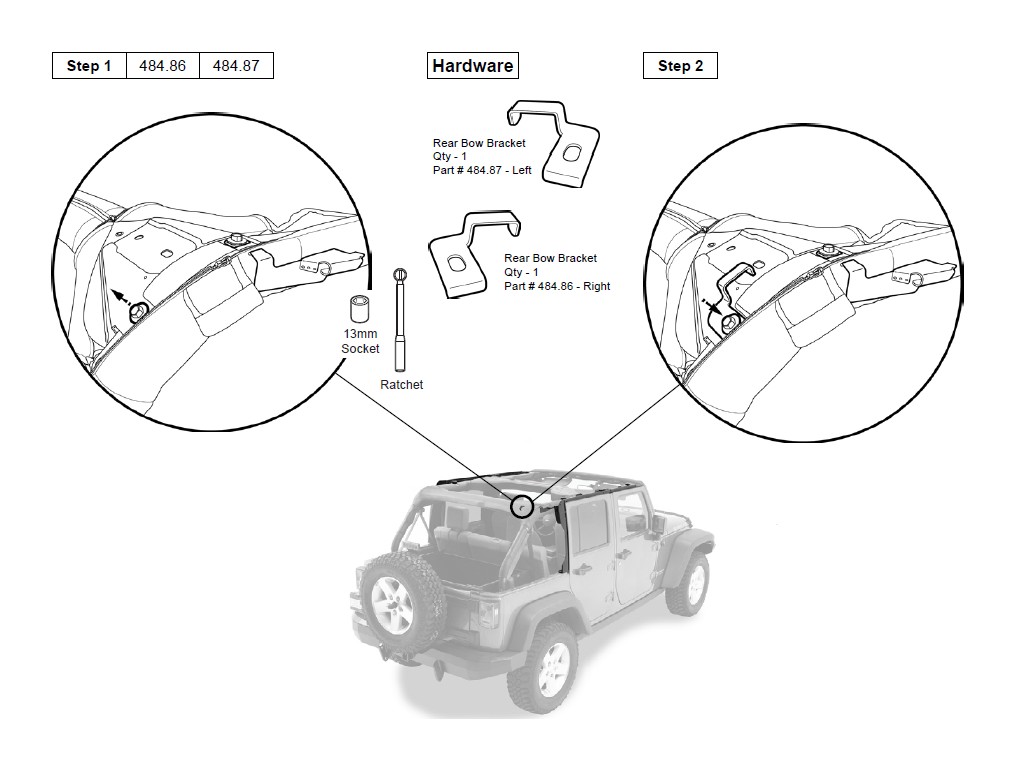
The bow system is the metal frame that supports the soft top fabric. It includes several hinged “bows” or hoops that give the top its shape and allow it to fold back.
How To Assemble The Bow System
- Lay out all bow parts on a clean surface, following the diagram in your kit.
- Connect each section using the included bolts or pins. Most kits have front, middle, and rear bows.
- Attach mounting brackets to the roll bars as shown in the instructions.
Installing The Bow System On The Jeep
- With help, lift the bow assembly onto the Jeep. Align the feet of the frame with the mounting points near the rear seat.
- Secure the feet with the supplied bolts.
- Attach the side arms or header latches to the windshield frame, but don’t fully tighten yet.
- Make sure the frame moves smoothly and folds back without binding.
Non-obvious insight: On some models, the bow system includes tension cables that must be installed under the soft top fabric. Skipping these or installing them backwards can prevent the top from sealing and make it almost impossible to latch.
Comparison: Bow System Vs. Frameless Tops
| Feature | Bow System | Frameless Soft Top |
|---|---|---|
| Support Structure | Metal bows and arms | Relies on roll cage shape |
| Ease of Folding | Smoother, more controlled | Requires more effort |
| Noise Level | Usually quieter | Can flap at high speeds |
| Looks | Factory appearance | Lower profile, custom style |

Step 3: Attaching The Soft Top Fabric
This is the most delicate part of the installation. The soft top fabric stretches over the bow frame and secures to the Jeep’s body with zippers, Velcro, and channels.
How To Attach The Fabric
- Unfold the fabric and identify the front and rear sections.
- With help, drape the fabric over the bow assembly, making sure all corners are aligned.
- Attach the front edge to the windshield header using the built-in latch or channel system.
- Pull the fabric over the bows, smoothing out wrinkles as you go.
Practical tip: Warm fabric is more flexible. If possible, install the soft top in a warm garage or leave the fabric in the sun for an hour before starting. Cold, stiff fabric is much harder to stretch and fit.
Securing The Fabric
- Fasten all Velcro straps around the bows and roll bars.
- Zip in the side and rear window panels. Make sure the zippers are fully closed and the fabric is not pinched.
- Slide the tailgate bar into the bottom edge of the rear window and lock it into the tailgate brackets.
Non-obvious insight: Many first-time installers forget to properly seat the tailgate bar. If it’s not clicked into place, you’ll have a gap that lets in water and dust.
Checking For Proper Fit
- The top should be taut, with no major wrinkles.
- Zippers should move smoothly, with no binding.
- All seals should contact the Jeep’s body evenly.
If you see sagging or loose areas, double-check the bow assembly and fabric orientation.
Step 4: Final Adjustments And Sealing
With the soft top in place, a few final adjustments ensure a weatherproof, quiet, and long-lasting installation.
Latching And Tensioning
- Close the front header latches at the windshield. These pull the top tight and lock it into place.
- Check that all Velcro straps, snaps, and zippers are fully fastened.
- If your top has tension cables, make sure they’re installed correctly and not twisted.
Sealing The Edges
- Run your hand along all door surrounds and window seals. Press any loose edges into place.
- Use a silicone spray on zippers to keep them moving smoothly and prevent sticking.
- If you see a gap at a door or window, gently adjust the door surround or frame.
Testing For Leaks
A simple garden hose test is often enough:
- With all doors and windows closed, spray water along the seams and edges.
- Check inside for any drips or dampness.
- If you find a leak, adjust the top or add weatherstripping as needed.
Non-obvious insight: It’s common for a new soft top to need “break-in” time. After a few days in the sun, the fabric will stretch slightly, and you may need to retighten zippers or latches for the best seal.
Maintenance Tips For Your New Soft Top
A Jeep soft top is tough, but it needs regular care to stay in top shape. Here’s how to keep yours looking and working great:
- Clean regularly with mild soap and water. Avoid harsh chemicals that can damage the fabric or windows.
- Lubricate zippers every few weeks with silicone spray or zipper lube.
- Protect plastic windows by using only soft microfiber towels. Paper towels or rough cloths can scratch them.
- Check mounting hardware every few months. Tighten any loose bolts or screws.
- Store windows flat when removed to prevent creases or cracks.
Practical tip: Invest in a soft top cleaner and protectant. These products help repel water, prevent fading, and keep the fabric supple.
Common Mistakes To Avoid
Even experienced Jeep owners make mistakes when installing a soft top. Here are some pitfalls to watch for:
- Forgetting to warm the fabric—Cold fabric won’t stretch, making installation much harder.
- Skipping alignment checks—A misaligned frame leads to leaks and poor fit.
- Not tightening latches—Loose latches allow wind and rain to get in.
- Using power tools on plastic parts—Hand tools give you more control and prevent over-tightening.
- Ignoring rust—Treat any rust before installing the new top to avoid long-term damage.
Comparing Soft Top Vs. Hardtop For Jeep Wrangler 4 Door
Many Jeep owners wonder how a soft top stacks up against the factory hardtop. Here’s a head-to-head comparison to help you decide which is best for your needs:
| Feature | Soft Top | Hardtop |
|---|---|---|
| Weight | Lightweight, easy to remove | Heavy, needs 2 people to remove |
| Weatherproofing | Good, but may leak over time | Excellent, very secure |
| Noise Level | More wind noise | Quieter inside |
| Flexibility | Quick to open/close | Harder to remove quickly |
| Cost | Usually less expensive | More expensive |
Experience-based tip: Many Jeep owners keep both tops and switch with the seasons—soft top for spring and summer, hardtop for fall and winter.
Troubleshooting Soft Top Installation Issues
If your soft top doesn’t fit right or shows problems after installation, don’t panic. Most issues can be fixed with a few adjustments.
Common Issues And Solutions
- Fabric won’t stretch over frame: Warm the top in the sun, then try again. You may need a second person to pull evenly.
- Zippers are hard to close: Lubricate with silicone spray or check for misalignment.
- Leaks at doors or windows: Recheck that surrounds are properly installed and all seals are touching the Jeep’s body.
- Wind noise: Look for gaps at the windshield header or door surrounds. Adjust the frame as needed.
Practical tip: If you can’t solve a problem, check online forums or the manufacturer’s instructions. Sometimes, a small spacer or adjustment is all that’s needed.
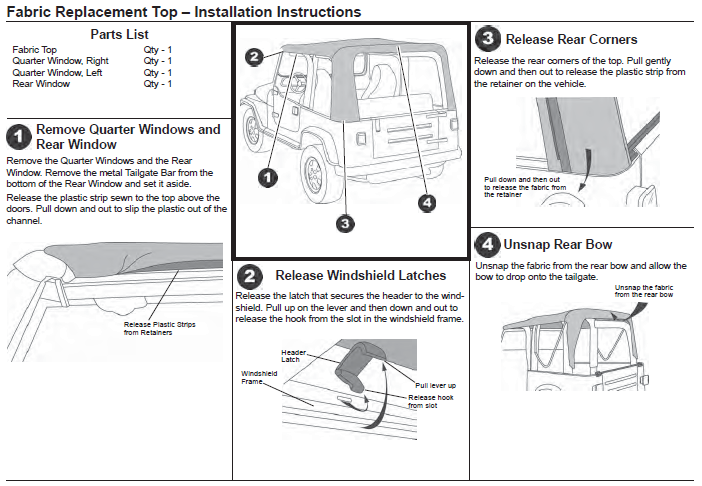
Extra Tips For A Smooth Installation
- Read the instructions first—even if you’ve done this before, each kit can be slightly different.
- Have a friend help—most steps, especially fitting the fabric, are easier with two people.
- Work in warm weather—soft tops are much easier to stretch and fit when warm.
- Be patient—rushing leads to mistakes and frustration.
Non-obvious insight: Store your hardtop bolts and hardware in a labeled bag. Many Jeep owners lose these and struggle to reinstall the hardtop months later.
Frequently Asked Questions
How Long Does It Take To Install A Soft Top On A Jeep Wrangler 4 Door?
For most people, installation takes about 2 to 3 hours the first time. With practice, you can do it in under an hour. If you’re switching from a hardtop, add extra time to remove and store it safely.
Can I Install A Jeep Soft Top By Myself?
It’s possible, but much easier with two people. Lifting and stretching the fabric, especially over the rear frame, can be difficult alone. Having help reduces the risk of damage and speeds up the process.
Will A 2 Door Soft Top Fit My 4 Door Wrangler?
No. The wheelbase and body length are different between 2 Door and 4 Door Wranglers. Always buy a soft top specifically designed for your Jeep model and year for the best fit.
How Do I Keep My Soft Top From Leaking?
Make sure all door surrounds, seals, and latches are installed correctly and tightly. Regularly check for signs of wear or damaged weatherstripping. Use a water-resistant fabric protectant to help repel rain.
Where Can I Find Official Installation Instructions?
Most manufacturers include instructions in the box or on their website. The Jeep official site and forums are also helpful. For more technical details, visit the Jeep Official Accessories Page.
Switching to a soft top brings a unique Jeep experience, blending style, flexibility, and a closer connection to the outdoors. With the right tools, some patience, and this guide, you’ll install your new soft top with confidence. Enjoy the open road and don’t forget to wave at fellow Jeep owners—soft top up or down.