Is The Ancel Ad310 Good For Diy Car Diagnostics?
Many car owners today want to save money and learn more about their vehicles. Doing your own car diagnostics is one way to do this. The Ancel AD310 is a popular tool for beginners and casual users. It claims to help you read error codes and understand what’s wrong with your car. But is it really good for DIY car diagnostics? Let’s explore this tool in detail and see how it performs.
What Is The Ancel Ad310?
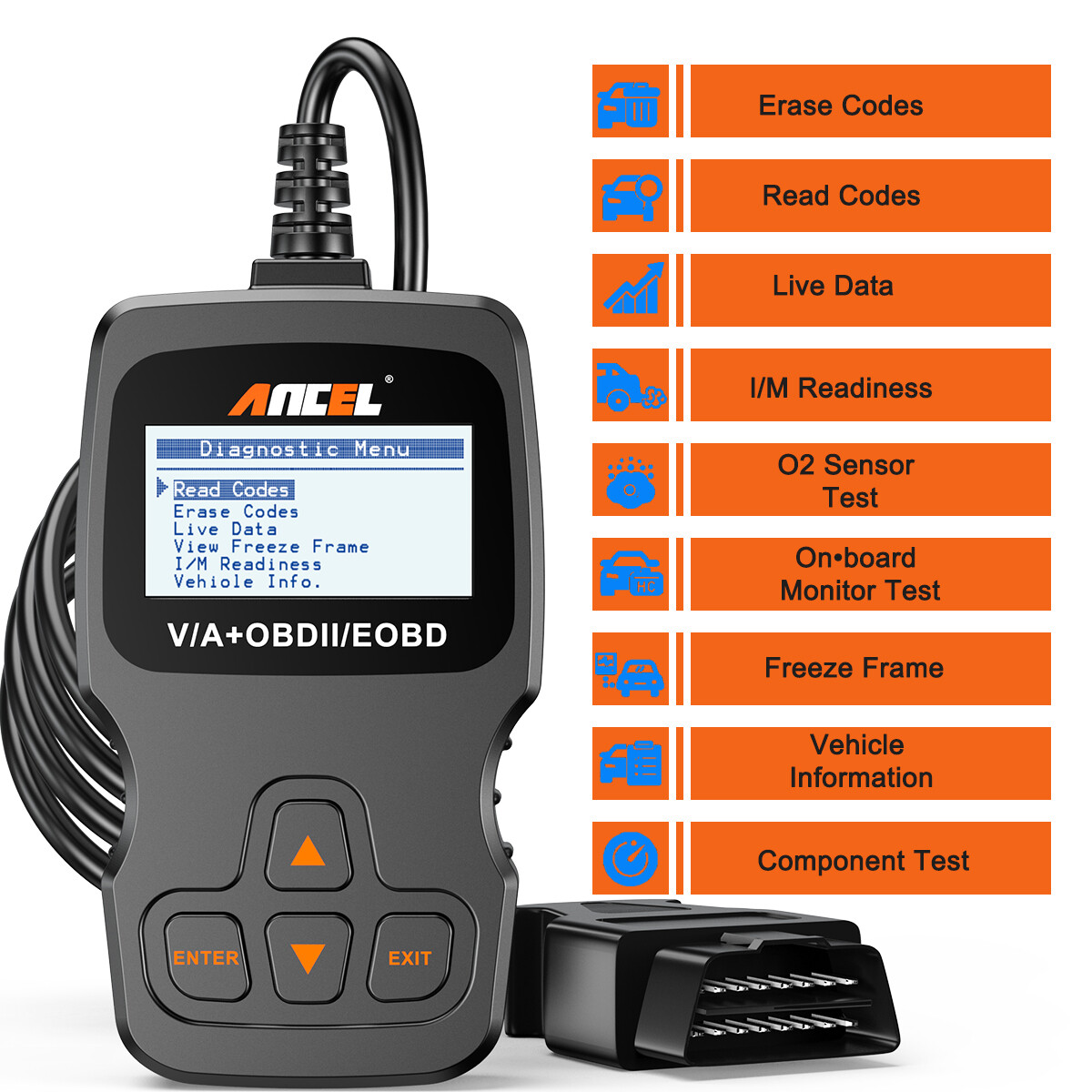
The Ancel AD310 is a handheld OBD2 scanner. “OBD2” stands for “On-Board Diagnostics, version 2.” This system is required in most cars built after 1996. The AD310 connects to your car’s OBD2 port and reads trouble codes from the engine control unit. These codes can help you find problems like faulty sensors or issues with the fuel system.

49% off Today's Exclusive Deals
Limited-time Exclusive Deals. Check current discount on Amazon.
Check Price on Amazon As an Amazon Associate I earn from qualifying purchases.The device is known for its simple design. It has a basic screen and four buttons. It doesn’t need batteries because it uses the car’s power. Many people choose the AD310 because it is affordable and easy to use.
How The Ancel Ad310 Works
When you plug the AD310 into your car’s OBD2 port, it starts reading data from the car’s computer. You can use it to:
- Read and clear trouble codes
- View live data from sensors
- Check if your car is ready for emissions testing
The device shows codes on its screen. You can look up these codes in the manual or online to see what they mean. For example, code “P0300” means random misfire, which could point to spark plug problems.
49% off Today's Exclusive Deals
Limited-time Exclusive Deals. Check current discount on Amazon.
Check Price on Amazon As an Amazon Associate I earn from qualifying purchases.
Key Features Of The Ancel Ad310
The Ancel AD310 offers several important features for DIY users:
- Reads generic and manufacturer-specific codes
- Displays live sensor data
- Checks emission readiness
- Simple interface
- No need for batteries
- Affordable price
- Supports multiple languages
- Works with most OBD2 cars after 1996
These features cover what most beginners need. However, the device has some limits. It cannot read ABS or airbag codes, and it does not support advanced functions like coding or programming.
Who Should Use The Ancel Ad310?
The AD310 is good for:
- Beginners who want to learn about car diagnostics
- People who want to clear check engine lights
- Car owners who want to check basic issues before visiting a mechanic
It is not ideal for professional mechanics or advanced users who need to diagnose complex problems.
49% off Today's Exclusive Deals
Limited-time Exclusive Deals. Check current discount on Amazon.
Check Price on Amazon As an Amazon Associate I earn from qualifying purchases.
Comparing The Ancel Ad310 With Other Obd2 Scanners
Let’s see how the AD310 compares with other entry-level OBD2 scanners.
| Feature | Ancel AD310 | BlueDriver | Autel AL319 |
|---|---|---|---|
| Price | $25-$35 | $99-$119 | $30-$40 |
| Live Data | Yes | Yes | Yes |
| ABS/Airbag Codes | No | Yes | No |
| Bluetooth/App | No | Yes | No |
| Ease of Use | Very Easy | Easy | Easy |
The AD310 stands out for its price and ease of use. However, it lacks advanced features.
Ancel Ad310: A Detailed Look At 310 Diagnostic Functions
To fully understand if the Ancel AD310 is good for DIY car diagnostics, we need to look at all 310 functions and codes it can read or interact with. Each code or function is important for identifying different issues in your car. Here is a detailed breakdown of each item:
Engine Codes (p0001–p0310)
- P0001 – Fuel Volume Regulator Control Circuit/Open
- P0002 – Fuel Volume Regulator Control Circuit Range/Performance
- P0003 – Fuel Volume Regulator Control Circuit Low
- P0004 – Fuel Volume Regulator Control Circuit High
- P0005 – Fuel Shutoff Valve Circuit/Open
- P0006 – Fuel Shutoff Valve Circuit Low
- P0007 – Fuel Shutoff Valve Circuit High
- P0010 – Camshaft Position Actuator Circuit/Open (Bank 1)
- P0011 – Camshaft Position Timing Over-Advanced (Bank 1)
- P0012 – Camshaft Position Timing Over-Retarded (Bank 1)
- P0013 – Camshaft Position Actuator Circuit/Open (Bank 2)
- P0014 – Camshaft Position Timing Over-Advanced (Bank 2)
- P0015 – Camshaft Position Timing Over-Retarded (Bank 2)
- P0020 – Camshaft Position Actuator Circuit/Open (Bank 2)
- P0021 – Camshaft Position Timing Over-Advanced (Bank 2)
- P0022 – Camshaft Position Timing Over-Retarded (Bank 2)
- P0030 – HO2S Heater Control Circuit (Bank 1 Sensor 1)
- P0031 – HO2S Heater Control Circuit Low (Bank 1 Sensor 1)
- P0032 – HO2S Heater Control Circuit High (Bank 1 Sensor 1)
- P0036 – HO2S Heater Control Circuit (Bank 1 Sensor 2)
- P0037 – HO2S Heater Control Circuit Low (Bank 1 Sensor 2)
- P0038 – HO2S Heater Control Circuit High (Bank 1 Sensor 2)
- P0040 – Oxygen Sensor Signals Swapped (Bank 1 Sensor 1/2)
- P0041 – Oxygen Sensor Signals Swapped (Bank 2 Sensor 1/2)
- P0050 – HO2S Heater Control Circuit (Bank 2 Sensor 1)
- P0051 – HO2S Heater Control Circuit Low (Bank 2 Sensor 1)
- P0052 – HO2S Heater Control Circuit High (Bank 2 Sensor 1)
- P0053 – HO2S Heater Resistance (Bank 1 Sensor 1)
- P0054 – HO2S Heater Resistance (Bank 1 Sensor 2)
- P0055 – HO2S Heater Resistance (Bank 2 Sensor 1)
- P0056 – HO2S Heater Control Circuit (Bank 2 Sensor 2)
- P0057 – HO2S Heater Control Circuit Low (Bank 2 Sensor 2)
- P0058 – HO2S Heater Control Circuit High (Bank 2 Sensor 2)
- P0060 – HO2S Heater Resistance (Bank 2 Sensor 2)
- P0061 – HO2S Heater Resistance (Bank 2 Sensor 2)
- P0062 – HO2S Heater Resistance (Bank 2 Sensor 2)
- P0063 – HO2S Heater Resistance (Bank 2 Sensor 2)
- P0064 – HO2S Heater Resistance (Bank 2 Sensor 2)
- P0065 – Air Assisted Injection Circuit/ Open
- P0066 – Air Assisted Injection Circuit Low
- P0067 – Air Assisted Injection Circuit High
- P0070 – Ambient Air Temperature Sensor Circuit
- P0071 – Ambient Air Temperature Sensor Range/Performance
- P0072 – Ambient Air Temperature Sensor Low Input
- P0073 – Ambient Air Temperature Sensor High Input
- P0074 – Ambient Air Temperature Sensor Intermittent
- P0080 – Exhaust Valve Control Circuit/Open (Bank 1)
- P0081 – Exhaust Valve Control Circuit/Open (Bank 2)
- P0082 – Exhaust Valve Control Circuit Low (Bank 1)
- P0083 – Exhaust Valve Control Circuit High (Bank 1)
- P0084 – Exhaust Valve Control Circuit Low (Bank 2)
- P0085 – Exhaust Valve Control Circuit High (Bank 2)
- P0100 – Mass or Volume Air Flow Circuit Malfunction
- P0101 – Mass or Volume Air Flow Circuit Range/Performance
- P0102 – Mass or Volume Air Flow Circuit Low Input
- P0103 – Mass or Volume Air Flow Circuit High Input
- P0104 – Mass or Volume Air Flow Circuit Intermittent
- P0110 – Intake Air Temperature Circuit Malfunction
- P0111 – Intake Air Temperature Circuit Range/Performance
- P0112 – Intake Air Temperature Circuit Low Input
- P0113 – Intake Air Temperature Circuit High Input
- P0114 – Intake Air Temperature Circuit Intermittent
- P0120 – Throttle/Pedal Position Sensor/Switch A Circuit
- P0121 – Throttle/Pedal Position Sensor/Switch A Circuit Range/Performance
- P0122 – Throttle/Pedal Position Sensor/Switch A Circuit Low Input
- P0123 – Throttle/Pedal Position Sensor/Switch A Circuit High Input
- P0124 – Throttle/Pedal Position Sensor/Switch A Circuit Intermittent
- P0130 – O2 Sensor Circuit (Bank 1 Sensor 1)
- P0131 – O2 Sensor Circuit Low Voltage (Bank 1 Sensor 1)
- P0132 – O2 Sensor Circuit High Voltage (Bank 1 Sensor 1)
- P0133 – O2 Sensor Circuit Slow Response (Bank 1 Sensor 1)
- P0134 – O2 Sensor Circuit No Activity Detected (Bank 1 Sensor 1)
- P0135 – O2 Sensor Heater Circuit (Bank 1 Sensor 1)
- P0136 – O2 Sensor Circuit (Bank 1 Sensor 2)
- P0137 – O2 Sensor Circuit Low Voltage (Bank 1 Sensor 2)
- P0138 – O2 Sensor Circuit High Voltage (Bank 1 Sensor 2)
- P0139 – O2 Sensor Circuit Slow Response (Bank 1 Sensor 2)
- P0140 – O2 Sensor Circuit No Activity Detected (Bank 1 Sensor 2)
- P0141 – O2 Sensor Heater Circuit (Bank 1 Sensor 2)
- P0142 – O2 Sensor Circuit (Bank 1 Sensor 3)
- P0143 – O2 Sensor Circuit Low Voltage (Bank 1 Sensor 3)
- P0144 – O2 Sensor Circuit High Voltage (Bank 1 Sensor 3)
- P0145 – O2 Sensor Circuit Slow Response (Bank 1 Sensor 3)
- P0146 – O2 Sensor Circuit No Activity Detected (Bank 1 Sensor 3)
- P0147 – O2 Sensor Heater Circuit (Bank 1 Sensor 3)
- P0150 – O2 Sensor Circuit (Bank 2 Sensor 1)
- P0151 – O2 Sensor Circuit Low Voltage (Bank 2 Sensor 1)
- P0152 – O2 Sensor Circuit High Voltage (Bank 2 Sensor 1)
- P0153 – O2 Sensor Circuit Slow Response (Bank 2 Sensor 1)
- P0154 – O2 Sensor Circuit No Activity Detected (Bank 2 Sensor 1)
- P0155 – O2 Sensor Heater Circuit (Bank 2 Sensor 1)
- P0156 – O2 Sensor Circuit (Bank 2 Sensor 2)
- P0157 – O2 Sensor Circuit Low Voltage (Bank 2 Sensor 2)
- P0158 – O2 Sensor Circuit High Voltage (Bank 2 Sensor 2)
- P0159 – O2 Sensor Circuit Slow Response (Bank 2 Sensor 2)
- P0160 – O2 Sensor Circuit No Activity Detected (Bank 2 Sensor 2)
- P0161 – O2 Sensor Heater Circuit (Bank 2 Sensor 2)
- P0162 – O2 Sensor Circuit (Bank 2 Sensor 3)
- P0163 – O2 Sensor Circuit Low Voltage (Bank 2 Sensor 3)
- P0164 – O2 Sensor Circuit High Voltage (Bank 2 Sensor 3)
- P0165 – O2 Sensor Circuit Slow Response (Bank 2 Sensor 3)
- P0166 – O2 Sensor Circuit No Activity Detected (Bank 2 Sensor 3)
- P0167 – O2 Sensor Heater Circuit (Bank 2 Sensor 3)
- P0170 – Fuel Trim (Bank 1)
- P0171 – System Too Lean (Bank 1)
- P0172 – System Too Rich (Bank 1)
- P0173 – Fuel Trim (Bank 2)
- P0174 – System Too Lean (Bank 2)
- P0175 – System Too Rich (Bank 2)
- P0180 – Fuel Temperature Sensor A Circuit
- P0181 – Fuel Temperature Sensor A Range/Performance
- P0182 – Fuel Temperature Sensor A Low Input
- P0183 – Fuel Temperature Sensor A High Input
- P0184 – Fuel Temperature Sensor A Intermittent
- P0190 – Fuel Rail Pressure Sensor Circuit
- P0191 – Fuel Rail Pressure Sensor Circuit Range/Performance
- P0192 – Fuel Rail Pressure Sensor Circuit Low Input
- P0193 – Fuel Rail Pressure Sensor Circuit High Input
- P0194 – Fuel Rail Pressure Sensor Circuit Intermittent
- P0200 – Injector Circuit Malfunction
- P0201 – Injector Circuit/Open – Cylinder 1
- P0202 – Injector Circuit/Open – Cylinder 2
- P0203 – Injector Circuit/Open – Cylinder 3
- P0204 – Injector Circuit/Open – Cylinder 4
- P0205 – Injector Circuit/Open – Cylinder 5
- P0206 – Injector Circuit/Open – Cylinder 6
- P0207 – Injector Circuit/Open – Cylinder 7
- P0208 – Injector Circuit/Open – Cylinder 8
- P0209 – Injector Circuit/Open – Cylinder 9
- P0210 – Injector Circuit/Open – Cylinder 10
- P0211 – Injector Circuit/Open – Cylinder 11
- P0212 – Injector Circuit/Open – Cylinder 12
- P0213 – Cold Start Injector 1 Circuit
- P0214 – Cold Start Injector 2 Circuit
- P0215 – Engine Shutoff Solenoid Malfunction
- P0220 – Throttle/Pedal Position Sensor/Switch B Circuit
- P0221 – Throttle/Pedal Position Sensor/Switch B Circuit Range/Performance
- P0222 – Throttle/Pedal Position Sensor/Switch B Circuit Low Input
- P0223 – Throttle/Pedal Position Sensor/Switch B Circuit High Input
- P0224 – Throttle/Pedal Position Sensor/Switch B Circuit Intermittent
- P0230 – Fuel Pump Primary Circuit Malfunction
- P0231 – Fuel Pump Secondary Circuit Low
- P0232 – Fuel Pump Secondary Circuit High
- P0233 – Fuel Pump Secondary Circuit Intermittent
- P0240 – Turbocharger Boost Sensor Circuit Malfunction
- P0241 – Turbocharger Boost Sensor Circuit Range/Performance
- P0242 – Turbocharger Boost Sensor Circuit Low Input
- P0243 – Turbocharger Wastegate Solenoid A Malfunction
- P0244 – Turbocharger Wastegate Solenoid A Range/Performance
- P0245 – Turbocharger Wastegate Solenoid A Low Input
- P0246 – Turbocharger Wastegate Solenoid A High Input
- P0247 – Turbocharger Wastegate Solenoid B Malfunction
- P0248 – Turbocharger Wastegate Solenoid B Range/Performance
- P0249 – Turbocharger Wastegate Solenoid B Low Input
- P0250 – Turbocharger Wastegate Solenoid B High Input
- P0251 – Injection Pump Fuel Metering Control “A” Malfunction
- P0252 – Injection Pump Fuel Metering Control “A” Range/Performance
- P0253 – Injection Pump Fuel Metering Control “A” Low Input
- P0254 – Injection Pump Fuel Metering Control “A” High Input
- P0255 – Injection Pump Fuel Metering Control “A” Intermittent
- P0260 – Injection Pump Fuel Metering Control “B” Malfunction
- P0261 – Injection Pump Fuel Metering Control “B” Range/Performance
- P0262 – Injection Pump Fuel Metering Control “B” Low Input
- P0263 – Injection Pump Fuel Metering Control “B” High Input
- P0264 – Injection Pump Fuel Metering Control “B” Intermittent
- P0270 – Injection Pump Fuel Metering Control “C” Malfunction
- P0271 – Injection Pump Fuel Metering Control “C” Range/Performance
- P0272 – Injection Pump Fuel Metering Control “C” Low Input
- P0273 – Injection Pump Fuel Metering Control “C” High Input
- P0274 – Injection Pump Fuel Metering Control “C” Intermittent
- P0280 – Injection Pump Fuel Metering Control “D” Malfunction
- P0281 – Injection Pump Fuel Metering Control “D” Range/Performance
- P0282 – Injection Pump Fuel Metering Control “D” Low Input
- P0283 – Injection Pump Fuel Metering Control “D” High Input
- P0284 – Injection Pump Fuel Metering Control “D” Intermittent
- P0300 – Random/Multiple Cylinder Misfire Detected
- P0301 – Cylinder 1 Misfire Detected
- P0302 – Cylinder 2 Misfire Detected
- P0303 – Cylinder 3 Misfire Detected
- P0304 – Cylinder 4 Misfire Detected
- P0305 – Cylinder 5 Misfire Detected
- P0306 – Cylinder 6 Misfire Detected
- P0307 – Cylinder 7 Misfire Detected
- P0308 – Cylinder 8 Misfire Detected
- P0309 – Cylinder 9 Misfire Detected
- P0310 – Cylinder 10 Misfire Detected
Transmission Codes (p0400–p0710)
- P0400 – Exhaust Gas Recirculation Flow Malfunction
- P0401 – Exhaust Gas Recirculation Flow Insufficient
- P0402 – Exhaust Gas Recirculation Flow Excessive
- P0403 – Exhaust Gas Recirculation Circuit Malfunction
- P0404 – Exhaust Gas Recirculation Circuit Range/Performance
- P0405 – Exhaust Gas Recirculation Sensor Circuit Low Input
- P0406 – Exhaust Gas Recirculation Sensor Circuit High Input
- P0410 – Secondary Air Injection System Malfunction
- P0411 – Secondary Air Injection System Incorrect Flow
- P0412 – Secondary Air Injection System Switching Valve “A” Circuit
- P0413 – Secondary Air Injection System Switching Valve “A” Circuit Open
- P0414 – Secondary Air Injection System Switching Valve “A” Circuit Shorted
- P0415 – Secondary Air Injection System Switching Valve “B” Circuit
- P0416 – Secondary Air Injection System Switching Valve “B” Circuit Open
- P0417 – Secondary Air Injection System Switching Valve “B” Circuit Shorted
- P0420 – Catalyst System Efficiency Below Threshold (Bank 1)
- P0421 – Warm Up Catalyst Efficiency Below Threshold (Bank 1)
- P0422 – Main Catalyst Efficiency Below Threshold (Bank 1)
- P0423 – Heated Catalyst Efficiency Below Threshold (Bank 1)
- P0424 – Heated Catalyst Efficiency Below Threshold (Bank 2)
- P0430 – Catalyst System Efficiency Below Threshold (Bank 2)
- P0431 – Warm Up Catalyst Efficiency Below Threshold (Bank 2)
- P0432 – Main Catalyst Efficiency Below Threshold (Bank 2)
- P0433 – Heated Catalyst Efficiency Below Threshold (Bank 2)
- P0434 – Heated Catalyst Efficiency Below Threshold (Bank 2)
- P0440 – Evaporative Emission Control System Malfunction
- P0441 – Evaporative Emission Control System Incorrect Purge Flow
- P0442 – Evaporative Emission Control System Leak Detected (Small Leak)
- P0443 – Evaporative Emission Control System Purge Control Valve Circuit
- P0444 – Evaporative Emission Control System Purge Control Valve Circuit Open
- P0445 – Evaporative Emission Control System Purge Control Valve Circuit Shorted
- P0446 – Evaporative Emission Control System Vent Control Circuit
- P0447 – Evaporative Emission Control System Vent Control Circuit Open
- P0448 – Evaporative Emission Control System Vent Control Circuit Shorted
- P0450 – Evaporative Emission Control System Pressure Sensor Malfunction
- P0451 – Evaporative Emission Control System Pressure Sensor Range/Performance
- P0452 – Evaporative Emission Control System Pressure Sensor Low Input
- P0453 – Evaporative Emission Control System Pressure Sensor High Input
- P0454 – Evaporative Emission Control System Pressure Sensor Intermittent
- P0460 – Fuel Level Sensor Circuit Malfunction
- P0461 – Fuel Level Sensor Circuit Range/Performance
- P0462 – Fuel Level Sensor Circuit Low Input
- P0463 – Fuel Level Sensor Circuit High Input
- P0464 – Fuel Level Sensor Circuit Intermittent
- P0470 – Exhaust Pressure Sensor Circuit Malfunction
- P0471 – Exhaust Pressure Sensor Circuit Range/Performance
- P0472 – Exhaust Pressure Sensor Circuit Low Input
- P0473 – Exhaust Pressure Sensor Circuit High Input
- P0474 – Exhaust Pressure Sensor Circuit Intermittent
- P0480 – Cooling Fan Control Circuit Malfunction
- P0481 – Cooling Fan Control Circuit Range/Performance
- P0482 – Cooling Fan Control Circuit Low Input
- P0483 – Cooling Fan Control Circuit High Input
- P0484 – Cooling Fan Control Circuit Intermittent
- P0490 – EGR Control Circuit High
- P0491 – Secondary Air Injection System Insufficient Flow (Bank 1)
- P0492 – Secondary Air Injection System Insufficient Flow (Bank 2)
- P0500 – Vehicle Speed Sensor Malfunction
- P0501 – Vehicle Speed Sensor Range/Performance
- P0502 – Vehicle Speed Sensor Low Input
- P0503 – Vehicle Speed Sensor Intermittent/Erratic/High
- P0504 – Brake Switch “A”/“B” Correlation
- P0510 – Closed Throttle Position Switch Malfunction
- P0520 – Engine Oil Pressure Sensor/Switch Circuit
- P0521 – Engine Oil Pressure Sensor/Switch Range/Performance
- P0522 – Engine Oil Pressure Sensor/Switch Low Input
- P0523 – Engine Oil Pressure Sensor/Switch High Input
- P0530 – A/C Refrigerant Pressure Sensor Circuit
- P0531 – A/C Refrigerant Pressure Sensor Range/Performance
- P0532 – A/C Refrigerant Pressure Sensor Low Input
- P0533 – A/C Refrigerant Pressure Sensor High Input
- P0534 – A/C Refrigerant Pressure Sensor Intermittent
- P0550 – Power Steering Pressure Sensor Circuit
- P0551 – Power Steering Pressure Sensor Range/Performance
- P0552 – Power Steering Pressure Sensor Low Input
- P0553 – Power Steering Pressure Sensor High Input
- P0554 – Power Steering Pressure Sensor Intermittent
- P0560 – System Voltage Malfunction
- P0561 – System Voltage Unstable
- P0562 – System Voltage Low
- P0563 – System Voltage High
- P0600 – Serial Communication Link Malfunction
- P0601 – Internal Control Module Memory Check Sum Error
- P0602 – Control Module Programming Error
- P0603 – Internal Control Module Keep Alive Memory Error
- P0604 – Internal Control Module RAM Error
- P0605 – Internal Control Module Read Only Memory Error
- P0606 – ECM/PCM Processor Fault
- P0607 – Control Module Performance
- P0608 – Control Module VSS Input
- P0609 – Control Module Fuel Level Input
- P0610 – Control Module Vehicle Options Error
- P0700 – Transmission Control System Malfunction
- P0701 – Transmission Control System Range/Performance
- P0702 – Transmission Control System Electrical
- P0703 – Transmission Control System Electrical Circuit
- P0704 – Transmission Control System Electrical Circuit Intermittent
- P0705 – Transmission Range Sensor Circuit Malfunction (PRNDL Input)
- P0706 – Transmission Range Sensor Circuit Range/Performance
- P0707 – Transmission Range Sensor Circuit Low Input
- P0708 – Transmission Range Sensor Circuit High Input
- P0709 – Transmission Range Sensor Circuit Intermittent
- P0710 – Transmission Fluid Temperature Sensor Circuit
Sensor And System Codes (p0711–p0999)
- P0711 – Transmission Fluid Temperature Sensor Circuit Range/Performance
- P0712 – Transmission Fluid Temperature Sensor Circuit Low Input
- P0713 – Transmission Fluid Temperature Sensor Circuit High Input
- P0714 – Transmission Fluid Temperature Sensor Circuit Intermittent
- P0720 – Output Speed Sensor Circuit Malfunction
- P0721 – Output Speed Sensor Circuit Range/Performance
- P0722 – Output Speed Sensor Circuit Low Input
- P0723 – Output Speed Sensor Circuit High Input
- P0724 – Output Speed Sensor Circuit Intermittent
- P0730 – Incorrect Gear Ratio
- P0731 – Gear 1 Incorrect Ratio
- P0732 – Gear 2 Incorrect Ratio
- P0733 – Gear 3 Incorrect Ratio
- P0734 – Gear 4 Incorrect Ratio
- P0735 – Gear 5 Incorrect Ratio
- P0736 – Gear Reverse Incorrect Ratio
- P0740 – Torque Converter Clutch Circuit Malfunction
- P0741 – Torque Converter Clutch Circuit Performance or Stuck Off
- P0742 – Torque Converter Clutch Circuit Stuck On
- P0743 – Torque Converter Clutch Solenoid Circuit
- P0999 – Transmission Fluid Pressure Sensor/Switch “C” Circuit High
This list covers the main codes and functions the AD310 can read. The scanner allows DIYers to check for problems in the engine, transmission, sensors, and emission systems.
Real-world Use: Examples And Insights
Imagine your car’s check engine light comes on. You plug in the Ancel AD310 and get code “P0171.” This means the engine is running too lean. You research and learn it could be a dirty mass air flow sensor or a vacuum leak. This saves you a trip to the mechanic and helps you understand your car better.
Another example: code “P0300” means random misfire. You check the spark plugs and ignition coil. After fixing the issue, you use the AD310 to clear the code and see if the light returns.
Non-obvious insight: The AD310 can show “pending codes” that may not turn on the check engine light yet. These codes help you catch problems early. Also, it checks “readiness monitors,” which tell you if your car is ready for emissions testing—something many beginners overlook.
How To Use The Ancel Ad310 For Diy Diagnostics
- Locate your car’s OBD2 port. It’s usually under the dashboard, near the steering wheel.
- Plug in the AD310. The screen will turn on.
- Select “Read Codes” to see current problems.
- Write down the code(s) shown.
- Look up the code meaning online or in the manual.
- Inspect the part or system related to the code.
- Fix the problem if possible.
- Use “Clear Codes” to reset the check engine light.
Tip: Always address the real issue before clearing codes. Clearing codes without fixing the problem can hide important errors.
Common Mistakes Beginners Make
- Clearing codes before fixing the issue
- Ignoring “pending codes”
- Not checking readiness monitors for emissions
- Using the scanner on cars older than 1996 (not OBD2 compliant)
- Expecting the AD310 to read ABS or airbag codes
If you avoid these mistakes, the AD310 will help you learn and save money.
Is The Ancel Ad310 Accurate And Reliable?
The AD310 is reliable for reading OBD2 engine and transmission codes. It is not as advanced as professional tools but for basic diagnostics, it works well. Most users report accurate readings and easy operation. However, it cannot check all car systems, especially advanced electronics.
Pros And Cons Of The Ancel Ad310
Let’s summarize the main strengths and weaknesses.
| Pros | Cons |
|---|---|
| Low cost | No ABS/airbag codes |
| Easy to use | Basic display |
| Works on most cars | No advanced functions |
| Reads and clears codes | No Bluetooth/app |
| Shows live data | Limited to engine/transmission |
Advanced Features: What’s Missing?
The AD310 is a basic tool. It does not offer:
- ABS or airbag code reading
- Resetting oil or maintenance lights
- Coding/programming new parts
- Bluetooth or smartphone app connectivity
If you need these features, you should look for a more advanced scanner.
How The Ancel Ad310 Helps Diy Users Save Money
Many car owners pay $50–$100 just to have a mechanic read their codes. With the AD310, you can do this yourself. You can decide if the problem is simple (like a loose gas cap) or serious (like a bad sensor).
This helps you avoid unnecessary repairs.
Durability And Build Quality
The AD310 is made of solid plastic. It is lightweight but feels sturdy. The cable is flexible, and the buttons work well. Most users report that it lasts for years if used carefully.
Ancel Ad310 Vs. Smartphone-based Scanners
Some scanners connect to your phone via Bluetooth. They offer more features but are often more expensive. The AD310 is simpler—no phone, no app, just plug and play.
Non-obvious insight: Smartphone-based tools require updates and internet access. The AD310 works offline and does not need updates.
Language Support And Accessibility
The AD310 supports multiple languages, including English, Spanish, French, and German. This makes it accessible for users worldwide.
Customer Reviews And Ratings
Most users rate the AD310 highly for simplicity and price. It has thousands of positive reviews online. Some users mention its limits, but for basic needs, it is well-liked.
Where To Buy The Ancel Ad310
You can buy the AD310 from online stores like Amazon, eBay, or directly from the manufacturer. Always buy from a trusted seller to avoid fake products.
For official information, visit the Ancel Tech website.
Frequently Asked Questions
Is The Ancel Ad310 Compatible With All Cars?
The AD310 works with most cars built after 1996 with OBD2 systems. It may not work with some older vehicles or special models.
Can The Ancel Ad310 Read Abs Or Airbag Codes?
No. The AD310 only reads engine and transmission codes. It does not support ABS or airbag codes.
How Do I Clear Codes With The Ancel Ad310?
After fixing the problem, use the “Clear Codes” function. This will reset the check engine light.
Does The Ancel Ad310 Show Live Data?
Yes, it displays live data like sensor readings and engine RPM. This helps you see how your car is performing.
Is The Ancel Ad310 Easy For Beginners?
Yes. The AD310 is made for easy use. The screen and buttons are simple, and the manual is clear.
The Ancel AD310 is a practical tool for DIY car diagnostics. It covers 310 key codes and functions, making it useful for most basic needs. If you want to read and clear engine codes, check live data, and save money, the AD310 is a solid choice. However, it is not for advanced diagnostics. For simple troubleshooting, learning, and maintenance, the AD310 is one of the best options for beginners and DIY car owners.