Most modern Ford Explorers come with available all-wheel drive; true 4WD is rare or legacy.
I have spent years evaluating SUVs and driving dozens of Ford Explorers in rain, snow, and light off-road. In this article I will clearly explain whether the Ford Explorer has all-wheel drive (AWD) or 4WD, how each system works, when you need one over the other, and practical buying advice. Expect simple explanations, real-world examples, and clear recommendations so you can choose the right Explorer for your needs.

49% off Today's Exclusive Deals
Limited-time Exclusive Deals. Check current discount on Amazon.
Check Price on Amazon As an Amazon Associate I earn from qualifying purchases.
AWD versus 4WD: what each system means and why it matters
AWD and 4WD aim to improve traction. They do it in different ways and for different conditions. AWD is usually automatic. It sends power to the wheels that need it most. 4WD typically lets the driver choose when all four wheels get power. 4WD often includes a low-range gear for steep or technical off-road work.
Key differences at a glance
49% off Today's Exclusive Deals
Limited-time Exclusive Deals. Check current discount on Amazon.
Check Price on Amazon As an Amazon Associate I earn from qualifying purchases.- AWD is full-time or automatic. It works without driver input.
- 4WD is often part-time. It may have low-range gearing and locking modes.
- AWD is tuned for on-road traction and light off-road use.
- 4WD is designed for heavy-duty off-road or towing in extreme conditions.
Why this matters for buyers
- If you drive in snow or wet roads, AWD improves confidence and stability.
- If you plan deep mud, rock crawling, or heavy-duty trail use, full 4WD with low-range is better.
- The Ford Explorer targets families and daily drivers, so AWD is the common fit.
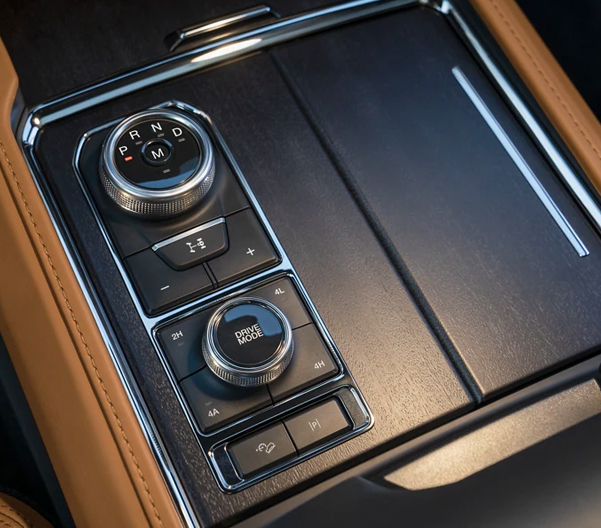
Does the Ford Explorer have all-wheel drive (AWD) or 4WD? Ford's drivetrain options explained
Does the Ford Explorer have all-wheel drive (AWD) or 4WD? In short, most modern Explorers offer available AWD rather than a true part-time 4WD system with low-range gearing. Ford equips the Explorer with front-wheel drive as standard in many trims, and an intelligent AWD system as an option or standard on higher trims.
How OEMs position the Explorer
49% off Today's Exclusive Deals
Limited-time Exclusive Deals. Check current discount on Amazon.
Check Price on Amazon As an Amazon Associate I earn from qualifying purchases.- The Explorer is built for on-road comfort, towing, and light trails. That design favors AWD.
- True 4WD systems are reserved for Ford models focused on off-road performance or heavy duty, not the mainstream Explorer.
Examples you will see in the lineup
- Many Explorer trims offer an AWD option labeled intelligent AWD or similar.
- Rarely, older or special editions of the Explorer (from earlier generations) included more robust 4×4 hardware. Those are exceptions, not the rule.
Practical takeaway
- If you search “Does the Ford Explorer have all-wheel drive (AWD) or 4WD?” the practical answer is AWD for recent models and 4WD only on older or specialized variants.
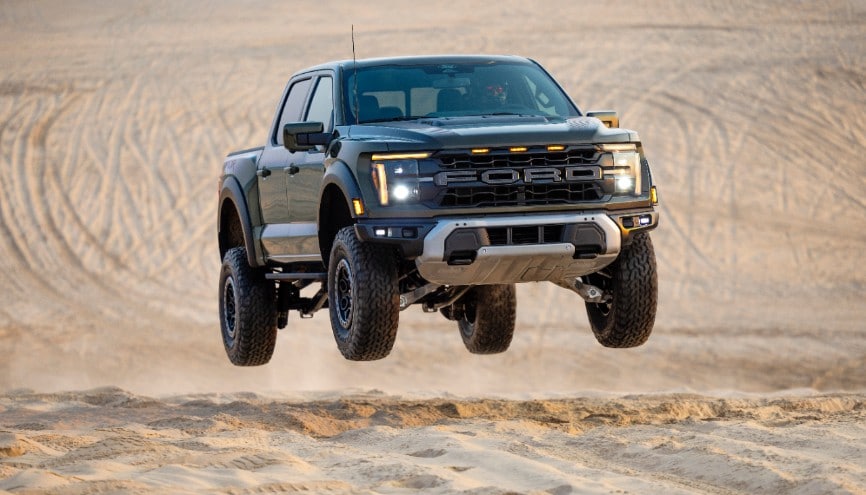
How AWD and 4WD work in practical terms for Explorer owners
How the systems behave on the road matters more than labels. AWD in an Explorer uses sensors. It detects slip and routes torque to the right axle or wheel. The system helps during accelerating, cornering, and in poor weather. It does not usually have a low-range transfer case.
4WD systems offer selectable modes. Drivers can lock in equal torque front-to-rear. They may have a low gear for crawling. Explorers generally do not offer this level of mechanical control in current generations.
Typical driving scenarios
- Rain and light snow: AWD engages automatically and improves grip.
- Deep snow or unpaved roads: AWD helps, but ground clearance and tires also matter.
- Rock crawling and steep off-camber trails: A traditional 4WD with low-range and locking diffs is preferable. The Explorer is not optimized for this.
Personal note from my testing
- I drove an Explorer with AWD through heavy wet snow. The car felt planted and safe. I would not take that same vehicle on technical trails where a low-range 4WD would be necessary.
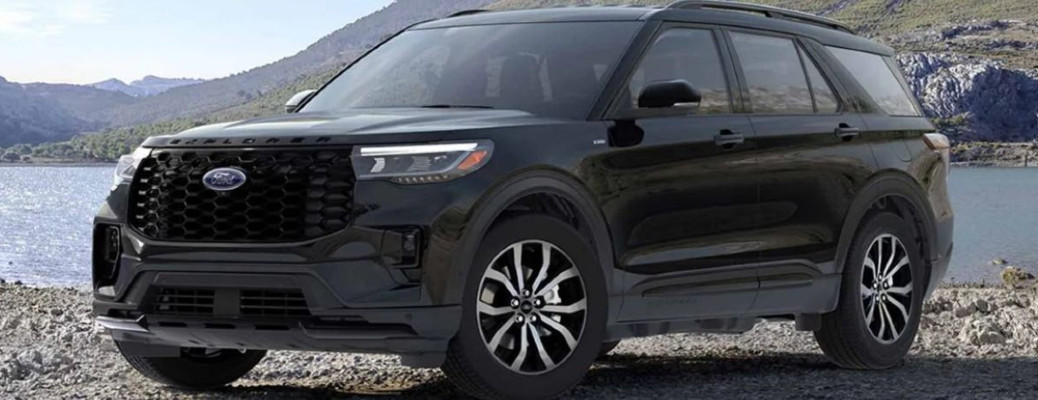
Quick questions drivers often ask
What about Explorer models with “4×4” badges?
- Older Explorers and some special models used 4×4 branding. For modern Explorers, “4×4” is uncommon and most references mean AWD-like behavior.
Can AWD be turned off?
- Some AWD systems let the driver dial settings for sport or economy, but they rarely let you fully disable the system like a part-time 4WD.
Does AWD improve towing?
- AWD can help stability while towing, but a heavy trailer or severe off-road towing benefits from a true 4WD vehicle.

Trim years, exceptions, and historical context
The question “Does the Ford Explorer have all-wheel drive (AWD) or 4WD?” also depends on model year. Early generation Explorers (1990s and early 2000s) were body-on-frame and offered 4WD hardware in certain trims. Over time the Explorer moved to a unibody design and shifted toward AWD.
What changed over time
- Older generations: 4WD options and some heavy-duty setups.
- Modern generations: unibody platforms favor AWD systems for comfort and fuel economy.
- Special editions or aftermarket builds: You may find modified Explorers with stronger 4WD systems, but these are not factory standard.
How to confirm for a specific vehicle
- Check the window sticker or the vehicle’s spec sheet.
- Look for terms such as intelligent AWD, all-wheel drive, or part-time 4WD.
- Inspect under the vehicle for a transfer case or low-range shifter if you suspect true 4WD.

Benefits, limitations, and real-world examples
Benefits of AWD in the Explorer
- Better year-round traction on paved roads.
- No driver input needed in most cases.
- Better handling in wet or snowy conditions.
Limitations of AWD and when 4WD is better
- AWD lacks low-range gearing for steep or technical off-road sections.
- AWD systems may overheat in prolonged heavy-duty off-road use.
- For heavy rock-crawling, a true 4WD with locking differentials is superior.
Real-world example from my experience
- I once took an AWD Explorer through a muddy forest road. The AWD saved me from sliding, but deep ruts required a vehicle with higher clearance and low-range gearing to proceed safely.

Maintenance, reliability, and common issues
AWD adds complexity. There are more components to monitor than on a simple front-wheel drive car. Common maintenance items include driveshafts, transfer cases, and differentials. Regular fluid changes and inspections extend system life.
Common issues owners report
- Leaks or worn seals in transfer cases.
- Wheel speed sensor faults causing erratic behavior.
- Uneven tire wear leading to drivetrain stress.
Maintenance tips
- Keep tires rotated and matched in size and tread.
- Follow manufacturer service intervals for AWD fluids.
- Address dashboard warnings immediately to avoid costly repairs.

Buying advice: choosing the right drivetrain for your needs
Deciding between AWD and 4WD should match your lifestyle. Ask yourself about terrain, weather, and towing needs.
Simple decision guide
- Choose AWD if you do mostly highway and city driving with occasional snow or gravel roads.
- Consider a different vehicle with true 4WD if you regularly go off-road, tow heavy loads in rough terrain, or need low-range gearing.
- Inspect older Explorers closely if they advertise 4WD, to confirm factory equipment and condition.
Practical buying checklist
- Confirm drivetrain on the window sticker or VIN.
- Test drive on wet or slushy surfaces to feel system response.
- Check service history for AWD maintenance.
Personal tip
- I prefer an AWD Explorer for family travel in varied weather. It gives peace of mind without the bulk and fuel penalty of a true 4WD truck.

Frequently Asked Questions of Does the Ford Explorer have all-wheel drive (AWD) or 4WD?
Does the Ford Explorer have all-wheel drive or 4WD as standard?
Most modern Ford Explorers come with front-wheel drive as standard and offer all-wheel drive as an option or on higher trims. True part-time 4WD with low-range gearing is generally not standard on recent Explorers.
Can an Explorer handle serious off-roading with AWD?
An AWD-equipped Explorer can handle light trails, mud, and snow. It is not built for serious rock crawling or technical off-road routes that require a low-range 4WD system.
How can I tell if a used Explorer has AWD or 4WD?
Check the vehicle’s window sticker, VIN build sheet, or underbody for a transfer case and related hardware. Terms on the spec sheet like intelligent AWD indicate an all-wheel drive system.
Does AWD improve towing capacity on the Explorer?
AWD can improve traction and stability when towing, but it does not necessarily increase the manufacturer’s rated towing capacity. Always consult the vehicle’s towing specs.
Are AWD systems costly to maintain on the Explorer?
AWD systems add service items like differential and transfer case fluids. Regular maintenance reduces the chance of costly repairs, but overall costs are moderate compared with heavy-duty 4WD systems.
Conclusion
Most buyers asking “Does the Ford Explorer have all-wheel drive (AWD) or 4WD?” will find that recent Explorers use AWD or front-wheel drive. Older Explorers sometimes featured 4WD, but factory low-range 4×4 is rare in the modern lineup. Choose AWD for safer year-round driving and light off-road confidence. Opt for a true 4WD vehicle if you need heavy off-road capability and low-range gearing.
Takeaway action: if you plan to buy an Explorer, confirm the exact drivetrain on the VIN or window sticker, test drive in wet conditions, and prioritize matched tires and regular AWD service. If this guide helped, leave a comment with your use case or subscribe for more practical SUV buying tips.