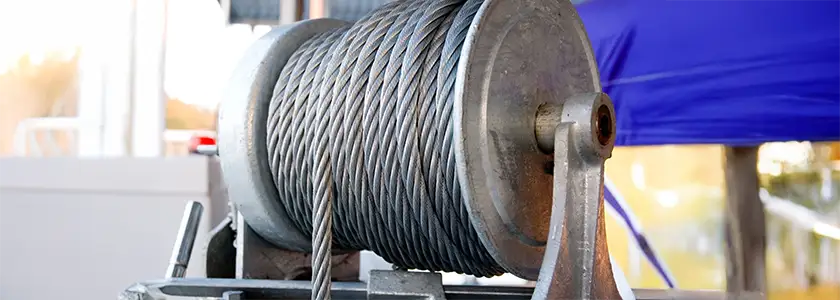
Winches are everywhere—on construction sites, on boats, in off-road vehicles, and even in theaters. These devices pull, lift, or move heavy loads by winding a rope, cable, or chain around a drum. They seem simple, but the range of winch types is huge. Each type serves a unique purpose, with different mechanics and power sources. If you want to choose the right winch, or just understand their uses, it’s important to know the main types, their features, and how they compare.
Understanding Winches: What Makes Them Different?
A winch isn’t just a spool with a handle. It’s a tool designed for specific tasks, and its type determines how it works and what it can handle. The main differences come from:
49% off Today's Exclusive Deals
Limited-time Exclusive Deals. Check current discount on Amazon.
Check Price on Amazon As an Amazon Associate I earn from qualifying purchases.- Power source: Manual, electric, hydraulic, pneumatic, or mechanical.
- Application: Lifting, pulling, towing, positioning.
- Capacity: How much weight it can move.
- Drum design: Single or double drum, planetary or worm gear.
You’ll find winches in everything from rescue operations to manufacturing. Before diving into the types, let’s look at the basic parts most winches share:
- Drum: The cylinder that holds the cable or rope.
- Cable/Rope/Chain: The line used to move the load.
- Gear system: Transfers force from the handle or motor to the drum.
- Brake: Prevents unwanted movement.
- Power source: Human, electric, hydraulic, pneumatic.
Now, let’s explore the main types of winches, their features, and where each excels.
Manual Winches
Manual winches are the most basic type. They use human power—usually a hand crank or lever—to turn the drum and move the load. These winches are common in small-scale jobs where power isn’t available.
49% off Today's Exclusive Deals
Limited-time Exclusive Deals. Check current discount on Amazon.
Check Price on Amazon As an Amazon Associate I earn from qualifying purchases.Key Features
- Simple design
- Low cost
- Portable
- Limited capacity (usually under 1 ton)
- Easy to repair
Where You’ll Find Them
- Boat trailers
- Small vehicles (ATVs)
- Garages
- Stage rigging
- Farm equipment
Manual winches are best for lighter tasks. For example, a typical boat trailer winch can pull a 2,000-pound boat using a strong steel cable. The lack of reliance on electricity or hydraulics means they’re reliable in remote locations.
Non-obvious Insights
Beginners often underestimate how tiring manual winching can be, especially with loads near the device’s limit. Also, the gear ratio in manual winches affects how fast you move the load—a higher ratio means less effort but slower movement.
Electric Winches
Electric winches use a motor powered by a battery or mains electricity. They’re popular in automotive, marine, and industrial settings because they’re powerful and easy to use.
Key Features
- High pulling capacity (up to 12,000+ lbs)
- Fast operation
- Remote controls available
- Automatic braking systems
- Requires reliable power source
Common Applications
- Off-road recovery (trucks, SUVs)
- Industrial lifting
- Vehicle towing
- Boat launching
For example, a 12V electric winch on a Jeep can pull the vehicle out of deep mud, often within minutes. Industrial electric winches can lift loads weighing several tons.
49% off Today's Exclusive Deals
Limited-time Exclusive Deals. Check current discount on Amazon.
Check Price on Amazon As an Amazon Associate I earn from qualifying purchases.Data Table: Manual Vs. Electric Winch
| Feature | Manual Winch | Electric Winch |
|---|---|---|
| Capacity | Up to 2,000 lbs | Up to 12,000 lbs+ |
| Speed | Slow | Fast |
| Power Source | Human | Battery/Electricity |
| Portability | High | Medium |
| Common Use | Small boats, ATVs | Off-road, industrial |
Non-obvious Insights
Most electric winches draw a lot of current. If your battery is weak or undersized, the winch may fail during critical moments. Also, overheating can be a risk during heavy or prolonged use; always check the motor specs and duty cycle.
Hydraulic Winches
Hydraulic winches use pressurized fluid to drive the drum. They are found where constant heavy-duty work is needed, like on large ships, oil rigs, and construction cranes.
Key Features
- Extremely high capacity (20,000 lbs+)
- Continuous operation (no overheating)
- Reliable in harsh environments
- Requires hydraulic pump/system
Typical Uses
- Marine anchor handling
- Oil field operations
- Heavy construction
- Industrial towing
Hydraulic winches are often installed permanently. Their power comes from the vehicle or equipment’s hydraulic system, making them ideal for tasks that demand strength and reliability.
Data Table: Electric Vs. Hydraulic Winch
| Feature | Electric Winch | Hydraulic Winch |
|---|---|---|
| Capacity | Up to 12,000 lbs | 20,000 lbs+ |
| Continuous Use | Limited (motor can overheat) | Unlimited |
| Maintenance | Low | Medium/High |
| Power Source | Battery/Electric | Hydraulic system |
| Environment | General | Marine, industrial |
Non-obvious Insights
Hydraulic winches are less affected by weather and can operate underwater. However, beginners often overlook the complexity of the hydraulic system—leaks or air pockets can reduce power and require skilled maintenance.
Pneumatic Winches
Pneumatic winches use compressed air. They’re common in industries where electricity and hydraulics may be risky, such as mining or chemical plants.
Key Features
- Safe for explosive environments
- Medium to high capacity
- Fast operation
- Needs compressed air supply
Typical Applications
- Mining
- Oil and gas extraction
- Factory assembly lines
- Hazardous material handling
Pneumatic winches are often chosen for their safety. They don’t produce sparks, making them suitable where flammable gases are present.
Non-obvious Insights
Compressed air systems need regular checks for moisture and pressure loss. Beginners may forget that air leaks can reduce winch efficiency, so a well-maintained compressor is essential.
Mechanical Winches
Mechanical winches are powered by engines or machinery, usually via a drive shaft or PTO (Power Take-Off). They’re rare in small-scale use but vital in heavy industry.
Key Features
- High torque
- Powered by vehicle engine or machinery
- Continuous operation
- Complex installation
Where They’re Used
- Logging trucks
- Shipyards
- Railways
- Large construction vehicles
Mechanical winches provide unmatched power. For example, logging trucks use PTO winches to haul massive logs, often weighing several tons.
Non-obvious Insights
Installation is complex and often permanent. Beginners sometimes assume they can move these winches easily, but most require custom mounts and safety systems.
Specialty Winches
Some winches are designed for unique tasks or environments. These specialty winches include:
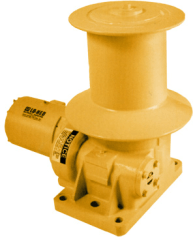
- Capstan winch: Uses a rotating drum with a smooth surface. Great for continuous rope feed—used in ships and theaters.
- Snubbing winch: Has a vertical drum and is used for quick stops and starts, mainly on boats.
- Mooring winch: Designed for securing ships in port. Handles heavy loads with multiple drums.
- Recovery winch: Used in rescue operations for vehicles and people.
- Self-tailing winch: Found on sailboats, automatically winds the rope so the user doesn’t have to hold it.
Examples
- Capstan winches are used on fishing boats to haul nets.
- Mooring winches manage huge ships, with lines weighing thousands of pounds.
Non-obvious Insights
Specialty winches may require custom cables or ropes. For example, a self-tailing winch works only with specific rope diameters, and using the wrong size can cause slippage.
Winch Drum And Gear Types
The drum and gear design affect how the winch works. The most common are:
- Single drum winch: One drum, simple operation.
- Double drum winch: Two drums for handling two lines.
- Planetary gear winch: Uses gears to multiply force—found in electric winches.
- Worm gear winch: Uses a worm screw for smooth, controlled movement—good for precise lifting.
Data Table: Planetary Vs. Worm Gear Winch
| Feature | Planetary Gear | Worm Gear |
|---|---|---|
| Speed | Fast | Slow |
| Control | Less precise | Very precise |
| Efficiency | High | Medium |
| Safety | Needs brake | Self-locking |
| Common Use | Automotive | Cranes, lifts |
Non-obvious Insights
Planetary gear winches are fast but require good brakes. Worm gear winches are self-locking, making them safer for holding loads without constant supervision.

Rope, Cable, And Chain Types
The material used on the winch drum matters as much as the winch itself. The main types are:
- Steel cable: Strong, durable, can fray if damaged. Used in heavy-duty winches.
- Synthetic rope: Lightweight, easy to handle, floats on water. Popular in off-road winches.
- Chain: Used for lifting and securing loads. Less flexible, but very strong.
Comparison Table: Steel Cable Vs. Synthetic Rope
| Feature | Steel Cable | Synthetic Rope |
|---|---|---|
| Weight | Heavy | Light |
| Strength | Very high | High |
| Safety | Can snap dangerously | Safer, less recoil |
| Maintenance | Rusts, needs oil | Easy, wash clean |
| Common Use | Industrial | Off-road, marine |
Non-obvious Insights
Steel cable needs gloves for handling—it can cut your hands. Synthetic rope is easier to repair and floats, making it better for water rescue. However, synthetic rope can degrade in sunlight and chemicals.
Choosing The Right Winch
When selecting a winch, consider these factors:
- Load capacity: Always choose a winch rated for at least 1.5 times the weight you plan to move.
- Power source: If you lack reliable electricity, manual or hydraulic may be better.
- Speed vs. control: Fast winches can be dangerous if you need precise movement.
- Environment: For wet, dirty, or explosive environments, pneumatic or hydraulic winches are safer.
- Cable type: Match the cable to your task—synthetic for light weight, steel for heavy loads.
- Duty cycle: How long can the winch run before cooling down?
Common Mistakes
- Picking a winch that’s too weak for the job.
- Ignoring duty cycle—electric winches can overheat.
- Using the wrong cable or rope for the load.
- Forgetting about mounting requirements and space.
Practical Example
If you want a winch for off-road recovery, choose a 12V electric winch with synthetic rope, rated for at least 1. 5 times your vehicle’s weight. For marine use, hydraulic winches with steel cable are safer and more reliable.
Maintenance And Safety Tips
Winches need regular care. Here’s how to keep them working safely:
- Inspect cables/ropes often for fraying or damage.
- Lubricate steel cables and moving parts.
- Check brakes and gear systems for wear.
- Clean synthetic rope with water—avoid chemicals.
- Test the winch before each use.
Always wear gloves and eye protection. Never stand near a taut cable, especially steel—it can snap with force. For more on winch safety, visit the Wikipedia Winch Article.
Frequently Asked Questions
What Is The Difference Between Electric And Hydraulic Winches?
Electric winches use a motor powered by batteries or electrical mains. They are easy to install and operate, but can overheat during heavy use. Hydraulic winches use fluid power, handle larger loads, and can run continuously without overheating. Hydraulic systems are more complex and require specialized maintenance.
Can I Use A Manual Winch For Heavy Loads?
Manual winches are best for lighter tasks, usually under 2,000 pounds. For heavier loads, you need electric, hydraulic, or mechanical winches. Using a manual winch for heavy loads can cause fatigue and may damage the device or lead to accidents.
Which Is Safer: Steel Cable Or Synthetic Rope?
Synthetic rope is generally safer because it’s lighter and has less recoil if it snaps. Steel cable is stronger, but can be dangerous if damaged or improperly handled. Always inspect your cable or rope before use and wear protective equipment.
How Do I Calculate The Winch Size I Need?
Multiply your vehicle or load weight by 1. 5. For example, if your vehicle weighs 4,000 pounds, choose a winch rated for at least 6,000 pounds. This safety margin accounts for friction, angles, and extra resistance.
What Maintenance Does A Winch Need?
Regular maintenance includes checking cables or ropes for damage, lubricating moving parts, testing the brake, and ensuring the power source is reliable. Clean synthetic ropes with water, and oil steel cables to prevent rust. Always follow the manufacturer’s guidelines.
Choosing the right winch is about understanding your task, the environment, and the available power. Each winch type has unique strengths. Whether you’re pulling a boat, rescuing a vehicle, or lifting heavy loads in industry, knowing the types of winches and their features can save you time, money, and trouble. Proper care and choosing the right cable or rope will keep your winch working safely for years.