When you watch a car race, what you see on the track is more than just fast machines. Race cars are engineered for specific types of competition, each with unique features, strengths, and rules. Some are built for speed on smooth roads, others for rough terrain.
The world of race cars is much bigger than Formula 1 or NASCAR. Understanding the different types can help you appreciate the skill, technology, and drama behind each race.

49% off Today's Exclusive Deals
Limited-time Exclusive Deals. Check current discount on Amazon.
Check Price on Amazon As an Amazon Associate I earn from qualifying purchases.Many people think all race cars are similar, but they vary greatly in design, performance, and the racing environment. There are cars made for oval tracks, endurance runs, sprints, and even uphill climbs. This article will guide you through the main types of race cars, explain what makes each special, and show you why racing is such a diverse sport.
Along the way, you’ll find comparisons, examples, and facts that go beyond the basics.
Formula Cars
Formula cars are some of the most famous race cars in the world. They are built for speed, agility, and precision. The term “formula” refers to the set of rules (the “formula”) that govern their design.
49% off Today's Exclusive Deals
Limited-time Exclusive Deals. Check current discount on Amazon.
Check Price on Amazon As an Amazon Associate I earn from qualifying purchases.Formula 1
Formula 1 cars are the top level of open-wheel racing. They are known for their advanced aerodynamics and lightweight materials like carbon fiber. These cars can reach speeds over 220 mph (350 km/h). Each team designs its own car within strict rules, making F1 a technology race as much as a driver’s challenge.
- Engine: Turbocharged V6 hybrid (since 2014)
- Weight: About 1,752 lbs (795 kg) with driver
- Downforce: Massive, keeping the car glued to the track
- Example: Mercedes-AMG F1 W14 E Performance
One thing many beginners miss: F1 cars are not just fast in straight lines. Their cornering speed is often much higher than other types, thanks to their aerodynamic design.
Formula 2 And Formula 3
These are feeder series for Formula 1. The cars are similar but less powerful and use standardized designs. Formula 2 cars reach about 200 mph (322 km/h), while Formula 3 cars top out around 180 mph (290 km/h).
Indycar
IndyCar racing is popular in the United States. The cars look similar to F1 but are designed for both oval and road tracks. IndyCars are heavier and less focused on aerodynamics. Speeds can exceed 230 mph (370 km/h) on ovals.
49% off Today's Exclusive Deals
Limited-time Exclusive Deals. Check current discount on Amazon.
Check Price on Amazon As an Amazon Associate I earn from qualifying purchases.- Engine: 2.2-liter twin-turbo V6
- Weight: About 1,600 lbs (726 kg)
- Example: Dallara IR-18
IndyCars have a unique feature: they race at the famous Indianapolis 500, which tests both speed and endurance.
Formula E
Formula E cars are built for electric racing. They are quiet, fast, and focus on energy efficiency. Races are usually in city centers.
- Engine: Electric motor (about 250 kW)
- Weight: About 2,000 lbs (900 kg)
- Example: Gen3 Formula E car
Many don’t realize Formula E is leading in battery technology, which influences electric road cars.
Touring Cars
Touring cars look more like everyday vehicles but are modified for racing. These races are exciting because the cars are closer in performance, leading to tight battles.
Dtm (deutsche Tourenwagen Masters)
DTM is a German touring car series. The cars are based on production models but heavily modified.
- Engine: 2.0-liter turbocharged
- Weight: About 2,425 lbs (1,100 kg)
- Example: Audi RS5 DTM
DTM cars often have advanced aerodynamics and big brakes, but still keep some factory features.
British Touring Car Championship (btcc)
BTCC cars are based on standard UK models. They use less extreme modifications compared to DTM.
- Engine: 2.0-liter four-cylinder
- Weight: Around 2,800 lbs (1,270 kg)
- Example: Honda Civic Type R BTCC
BTCC races are known for close contact and frequent overtakes.
Supercars Championship (australia)
Australian Supercars are based on V8 sedans. They are famous for long-distance races like the Bathurst 1000.
- Engine: 5.0-liter V8
- Weight: About 3,000 lbs (1,355 kg)
- Example: Ford Mustang GT Supercar
One practical insight: Touring cars are heavier than formula cars, which affects handling and tire wear.

Credit: www.youtube.com
Sports Cars
Sports cars are built for endurance and speed. They race in events like the 24 Hours of Le Mans, where reliability is as important as speed.
Gt (grand Touring) Cars
GT cars are divided into classes like GT3 and GT4. They are based on luxury sports cars, modified for racing.
- GT3: About 500–600 hp, 2,645 lbs (1,200 kg)
- GT4: About 400–500 hp, 2,976 lbs (1,350 kg)
- Example: Porsche 911 GT3 R, Aston Martin Vantage GT4
GT3 cars are faster and more complex, while GT4 are closer to the road models.
Lmp (le Mans Prototype)
LMP cars are built only for racing, not based on production cars. They are the fastest sports cars at Le Mans.
- LMP1: Hybrid, up to 1,000 hp, 2,160 lbs (980 kg)
- LMP2: Non-hybrid, about 600 hp, 2,425 lbs (1,100 kg)
- Example: Toyota GR010 Hybrid (LMP1), Oreca 07 (LMP2)
LMP cars are a showcase for new technology. Many innovations in hybrid systems start here.
Imsa Sportscar
In North America, the IMSA series uses both prototypes and GT cars. The races mix different classes on the same track, adding to the excitement.
- Example: Cadillac DPi-V.R, Corvette C8.R
Sports car racing is unique because you see different types of cars battling together.
| Type | Horsepower | Weight (lbs) | Top Speed (mph) |
|---|---|---|---|
| GT3 | 500–600 | 2,645 | 190 |
| LMP1 | Up to 1,000 | 2,160 | 210 |
| IMSA Prototype | 600–700 | 2,205 | 200 |
Stock Cars
Stock cars are famous in the United States, especially in NASCAR. They started as modified street cars but now are purpose-built for racing.
Nascar Cup Series
NASCAR cars have a steel tube frame and a simple aerodynamic design. They race mainly on oval tracks, sometimes on road courses.
- Engine: 5.8-liter V8, about 670 hp
- Weight: 3,400 lbs (1,542 kg)
- Top speed: About 200 mph (322 km/h)
- Example: Chevrolet Camaro ZL1 NASCAR
NASCAR races are often decided by drafting and strategy, not just outright speed.
Arca And Xfinity Series
These series use similar cars but with less power and slightly different rules. They are stepping stones to the top NASCAR series.
One insight: Stock cars are heavier and less agile than formula cars, but their strong frames make them safe in crashes.
Rally Cars
Rally cars are built for racing on rough surfaces like gravel, dirt, and snow. They must be tough, fast, and good at handling jumps and bumps.
World Rally Championship (wrc)
WRC cars are based on production models but fitted with advanced suspension and safety features.
- Engine: 1.6-liter turbocharged, about 380 hp
- Weight: 2,645 lbs (1,200 kg)
- Example: Toyota GR Yaris WRC
They race on closed roads, not tracks, with changing conditions.
Rallycross Cars
Rallycross cars are similar to WRC but shorter races and mixed surfaces (dirt and tarmac).
- Engine: 2.0-liter turbocharged, about 600 hp
- Weight: 2,645 lbs (1,200 kg)
- Example: Ford Fiesta Rallycross
Rallycross cars accelerate faster than almost any other race car, reaching 60 mph in under 2 seconds.
| Car Type | Surface | Power (hp) | Acceleration (0–60 mph) |
|---|---|---|---|
| WRC | Gravel, snow, tarmac | 380 | 3.7 s |
| Rallycross | Mixed | 600 | 1.9 s |
Drag Cars
Drag racing is all about straight-line speed over a short distance, usually a quarter-mile (400 meters).
Top Fuel Dragsters
Top Fuel Dragsters are the fastest accelerating race cars. They burn nitromethane fuel and reach over 330 mph (530 km/h) in under 4 seconds.
- Engine: Supercharged V8, over 11,000 hp
- Weight: 2,340 lbs (1,061 kg)
- Example: Don Schumacher Racing Top Fuel Dragster
A common mistake is thinking these cars are easy to drive. In reality, they require fast reflexes and precise control.
Funny Cars
Funny Cars have a similar engine but with a fiberglass body that resembles a production car. They are slightly slower but still reach 330 mph.
- Engine: Supercharged V8, over 10,000 hp
- Weight: 2,645 lbs (1,200 kg)
- Example: John Force Racing Funny Car
Pro Stock
Pro Stock cars use gasoline and look like regular cars. They reach around 210 mph (338 km/h).
- Engine: Naturally aspirated V8, about 1,300 hp
- Weight: 2,350 lbs (1,066 kg)
- Example: Chevrolet Camaro Pro Stock
| Type | Horsepower | Top Speed (mph) | Quarter-Mile Time |
|---|---|---|---|
| Top Fuel | 11,000+ | 330+ | 3.7 s |
| Funny Car | 10,000+ | 330 | 3.9 s |
| Pro Stock | 1,300 | 210 | 6.5 s |
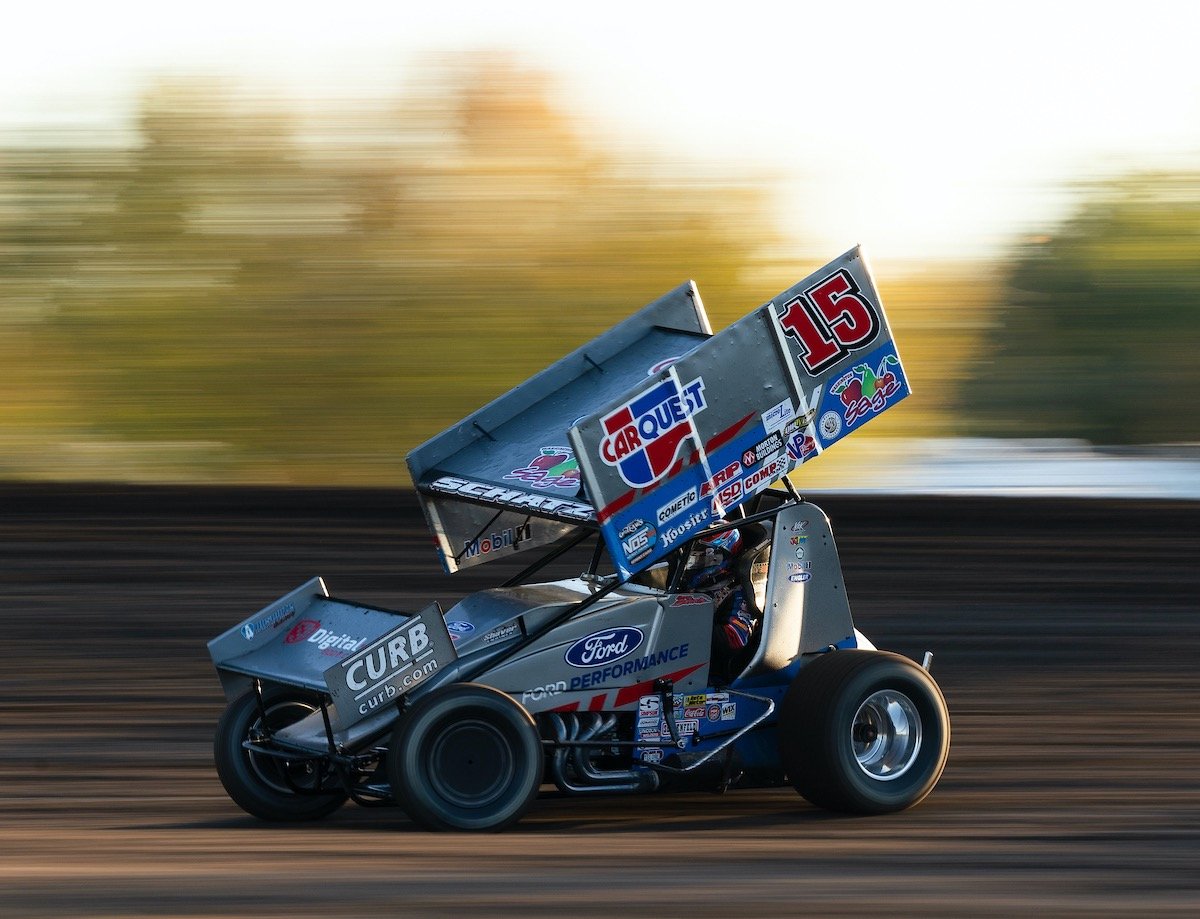
Credit: about.dirtcar.com
Off-road Race Cars
Off-road race cars are built for rough terrain, from deserts to forests. Their main feature is durability and suspension travel.
Baja Trucks
Baja trucks, or Trophy Trucks, are made for races like the Baja 1000. They handle rocks, sand, and jumps.
- Engine: 7.0-liter V8, about 850 hp
- Weight: 5,500 lbs (2,495 kg)
- Example: Ford F-150 Trophy Truck
Trophy Trucks have over 24 inches (60 cm) of suspension travel, letting them land safely after big jumps.
Dakar Rally Cars
Dakar cars are built for endurance. They race across deserts, mountains, and mud for thousands of miles.
- Engine: Diesel or gasoline, 300–400 hp
- Weight: Varies, usually 4,000 lbs (1,800 kg)
- Example: Peugeot 3008 DKR
Dakar cars often have four-wheel drive and must carry supplies for days.
Off-road Buggies
Buggies are lighter and more agile. They are used in short off-road races and sometimes in the Dakar Rally.
- Engine: 2.0–3.5-liter, about 300 hp
- Weight: 1,800 lbs (820 kg)
- Example: Polaris RZR XP Turbo
Many new fans don’t realize: Off-road races test not just speed, but endurance, navigation, and repair skills.
Hill Climb Cars
Hill climb races are short but intense. The goal is to go uphill as fast as possible, often on twisty roads.
Pikes Peak Cars
The Pikes Peak International Hill Climb uses many types of cars, but the fastest are purpose-built.
- Engine: Varies, from turbocharged V6 to electric
- Weight: 2,000–2,500 lbs (900–1,130 kg)
- Example: Volkswagen I.D. R (electric), Peugeot 208 T16 Pikes Peak
The fastest time at Pikes Peak is under 8 minutes for 12. 42 miles (19. 99 km).
European Hill Climb Cars
In Europe, hill climb cars are often single-seaters with big wings and high power.
- Engine: 3.0–4.0-liter, up to 700 hp
- Weight: 1,500–2,000 lbs (680–900 kg)
- Example: Osella FA30
Hill climb cars have extreme acceleration and grip, but they must also be light for quick direction changes.
Single-make Race Cars
Single-make racing uses identical cars, focusing on driver skill. These series are often used to train new racers.
Porsche Carrera Cup
The Porsche Carrera Cup uses the Porsche 911 GT3 Cup. All cars are the same model, with strict rules.
- Engine: 4.0-liter flat-six, 510 hp
- Weight: 2,645 lbs (1,200 kg)
Ferrari Challenge
Ferrari Challenge cars are based on the Ferrari 488 Challenge Evo.
- Engine: 3.9-liter twin-turbo V8, 670 hp
- Weight: 2,900 lbs (1,315 kg)
Mazda Mx-5 Cup
Mazda MX-5 Cup cars are based on the MX-5 Miata, with racing modifications.
- Engine: 2.0-liter four-cylinder, 181 hp
- Weight: About 2,300 lbs (1,043 kg)
Single-make series are popular because they reduce costs and highlight racing skills.
Open-wheel Vs. Closed-wheel Cars
A common question is the difference between open-wheel and closed-wheel race cars.
- Open-wheel: Wheels are outside the car body. Examples: Formula 1, IndyCar.
- Closed-wheel: Wheels are covered by the car body. Examples: NASCAR, GT cars.
Open-wheel cars are lighter and have more downforce, while closed-wheel cars are safer in crashes.
| Type | Wheel Design | Weight (lbs) | Main Use |
|---|---|---|---|
| Formula 1 | Open-wheel | 1,752 | Road circuits |
| NASCAR | Closed-wheel | 3,400 | Oval tracks |
| GT3 | Closed-wheel | 2,645 | Endurance |

Credit: www.themanual.com
Race Car Safety Features
Safety is a key part of race car design. Modern race cars use advanced materials and systems to protect drivers.
- Roll cages: Strong metal frames inside the car
- Fire suppression: Automatic systems to stop fires
- Safety harnesses: Multi-point seat belts
- Crash structures: Absorb impact energy
Formula 1 cars, for example, use the Halo device to protect drivers’ heads. Rally cars have extra padding and reinforced doors.
One insight: Safety features are often tested in real crashes, not just simulations. Improvements come quickly after accidents.
Race Car Technology
Race car technology is always changing. Engineers use wind tunnels, computer modeling, and sensors to make cars faster and safer.
- Aerodynamics: Shaping the car for less drag and more downforce
- Materials: Using carbon fiber, titanium, and other light, strong materials
- Telemetry: Real-time data collection during races
- Hybrid systems: Combining electric and gasoline power
Formula E and Le Mans prototypes lead in battery technology and energy recovery systems. NASCAR is starting to use more advanced aerodynamics, while rally cars focus on suspension and durability.
Common Race Car Mistakes And Misconceptions
Many beginners believe that more horsepower always means faster lap times. In reality, handling, weight, and aerodynamics often matter more. Another mistake is thinking that all race cars are uncomfortable or dangerous. Modern race cars have climate control and advanced safety, making them safer than ever.
Some fans confuse single-make racing with “cheap” or “boring. ” But these races are often the closest and most exciting, since driver skill is the main factor.
Race Car Comparison: Key Differences
Let’s look at a quick comparison of main race car types:
| Type | Speed (mph) | Handling | Endurance | Surface |
|---|---|---|---|---|
| Formula 1 | 220+ | Excellent | Medium | Road |
| NASCAR | 200 | Good | High | Oval |
| GT3 | 190 | Very Good | High | Road |
| WRC | 120 | Excellent | High | Mixed |
| Baja Truck | 140 | Good | High | Off-road |
| Top Fuel | 330+ | Poor | Low | Straight |
This shows that every race car is built for its own environment and challenge.
Why Race Car Types Matter
Each type of race car creates its own racing style. Formula cars focus on precision and technology, while stock cars are about strategy and endurance. Sports cars test reliability, rally cars tackle changing conditions, and dragsters push acceleration to the limit.
For fans, knowing these differences helps you understand what makes each race unique. For drivers and teams, choosing the right type is the first step to victory.
If you want to learn more about technical details and rules for each car type, the official Wikipedia Racing Car page is a great resource.
Frequently Asked Questions
What Is The Fastest Type Of Race Car?
Top Fuel Dragsters are the fastest in acceleration, reaching over 330 mph in less than 4 seconds. For lap speed, Formula 1 and Le Mans prototypes are among the fastest on road circuits.
Why Are Some Race Cars Open-wheel And Others Closed-wheel?
Open-wheel cars are lighter and designed for high-speed road circuits. Closed-wheel cars are safer in crashes and used in endurance or oval racing. The choice depends on the racing environment and rules.
How Do Race Car Engines Differ From Regular Cars?
Race car engines are built for high power, quick acceleration, and reliability under stress. They use special materials, tuning, and sometimes hybrid systems. Many race car engines are much more powerful than production car engines.
Are Race Cars Street Legal?
Most race cars are not street legal because they lack safety equipment for public roads (like lights, emissions systems, and bumpers). Some touring cars or GT4 cars are close to street versions but still need changes to drive legally.
How Do Drivers Train For Different Types Of Race Cars?
Drivers train with simulators, practice sessions, and physical workouts. They learn the specific handling, braking, and acceleration of each car type. Experience in one type doesn’t always transfer to another—rally drivers need different skills than formula drivers.
Race cars are a world of innovation and excitement. Knowing the types helps you see beyond the speed and enjoy the art and science of racing. Whether you follow Formula 1, NASCAR, Le Mans, or rally, every car brings its own story to the track.


