The Bugatti Chiron uses an 8.0‑liter, quad‑turbocharged W16 engine built for extreme power and torque.
I’ve studied and covered high‑performance engines for years, and the Bugatti Chiron’s powerplant is one of the most extreme production engines ever built. This article explains exactly what engine the Bugatti Chiron uses, how it works, why Bugatti chose a W16 layout, what the specs mean in real life, and what owners should expect for maintenance, performance, and daily use. Read on for a clear, expert look at the Bugatti Chiron engine and the engineering behind it.

49% off Today's Exclusive Deals
Limited-time Exclusive Deals. Check current discount on Amazon.
Check Price on Amazon As an Amazon Associate I earn from qualifying purchases.
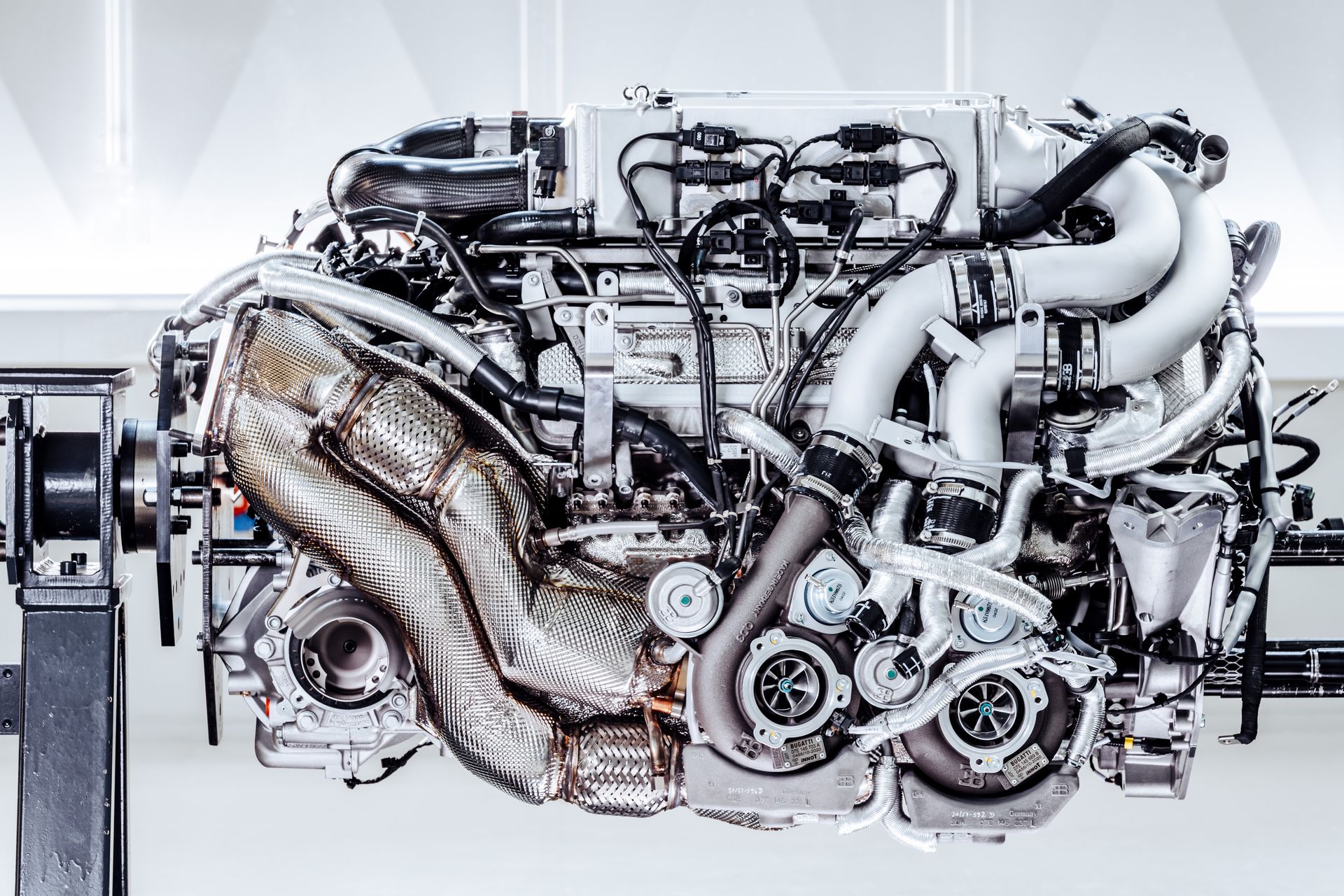
Overview of the Bugatti Chiron engine
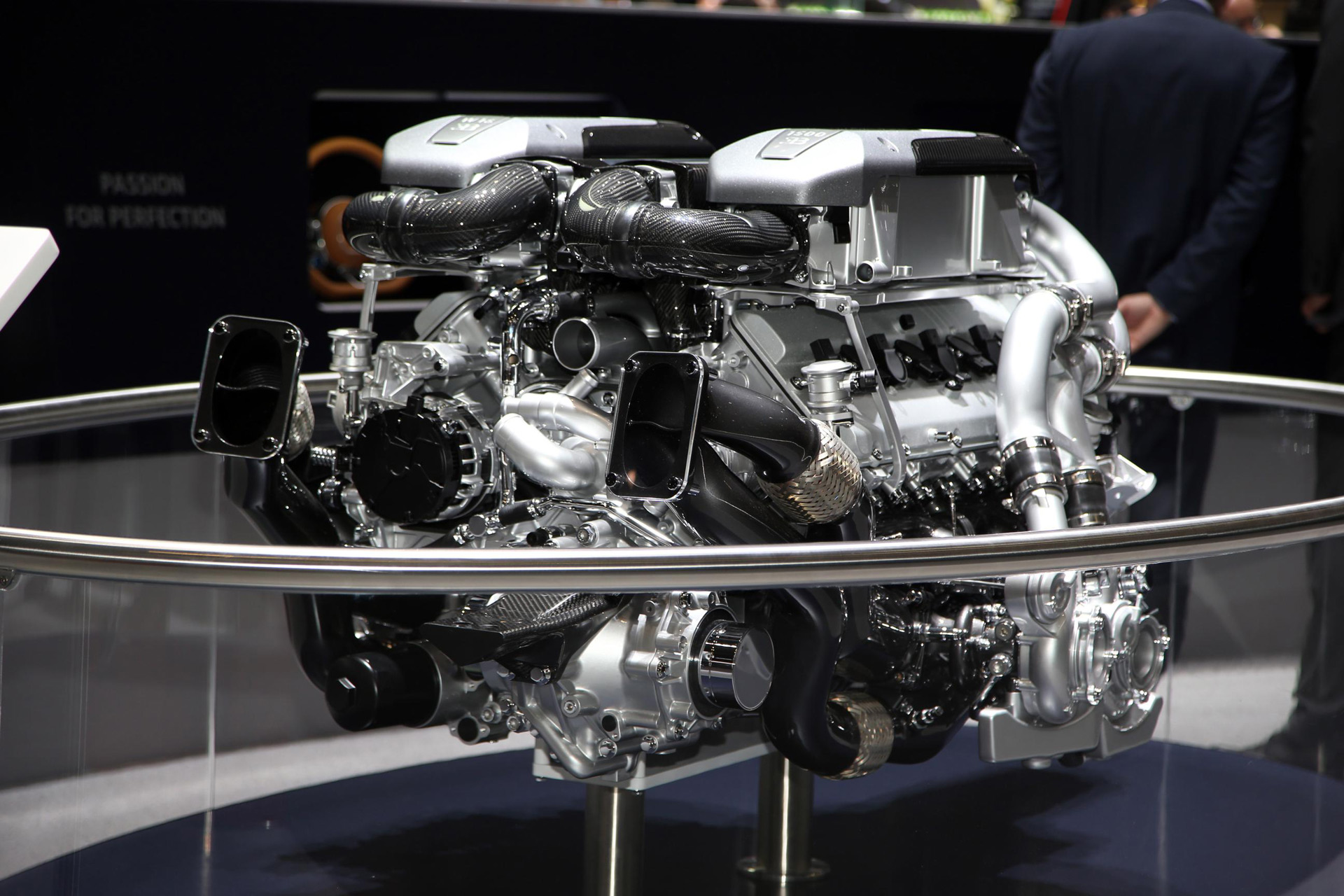
The Bugatti Chiron engine is an 8.0‑liter W16 with four turbochargers. This compact but complex layout pairs two narrow‑angle V8s on a single crankshaft to form 16 cylinders. The W16 layout lets Bugatti pack huge displacement into a shorter block than an inline or conventional V16.
Power and torque depend on the model. The standard Chiron family engines commonly produce around 1,500 PS (about 1,479 horsepower) and up to roughly 1,600 Nm (about 1,180 lb‑ft) of torque in higher‑spec variants. That output is routed through a seven‑speed dual‑clutch gearbox to all four wheels, giving enormous acceleration and top‑speed capability.
49% off Today's Exclusive Deals
Limited-time Exclusive Deals. Check current discount on Amazon.
Check Price on Amazon As an Amazon Associate I earn from qualifying purchases.Why this matters: the Bugatti Chiron engine is a purpose‑built hypercar motor. It’s not optimized for fuel economy or simplicity. Instead, it targets raw performance and a unique driving experience.
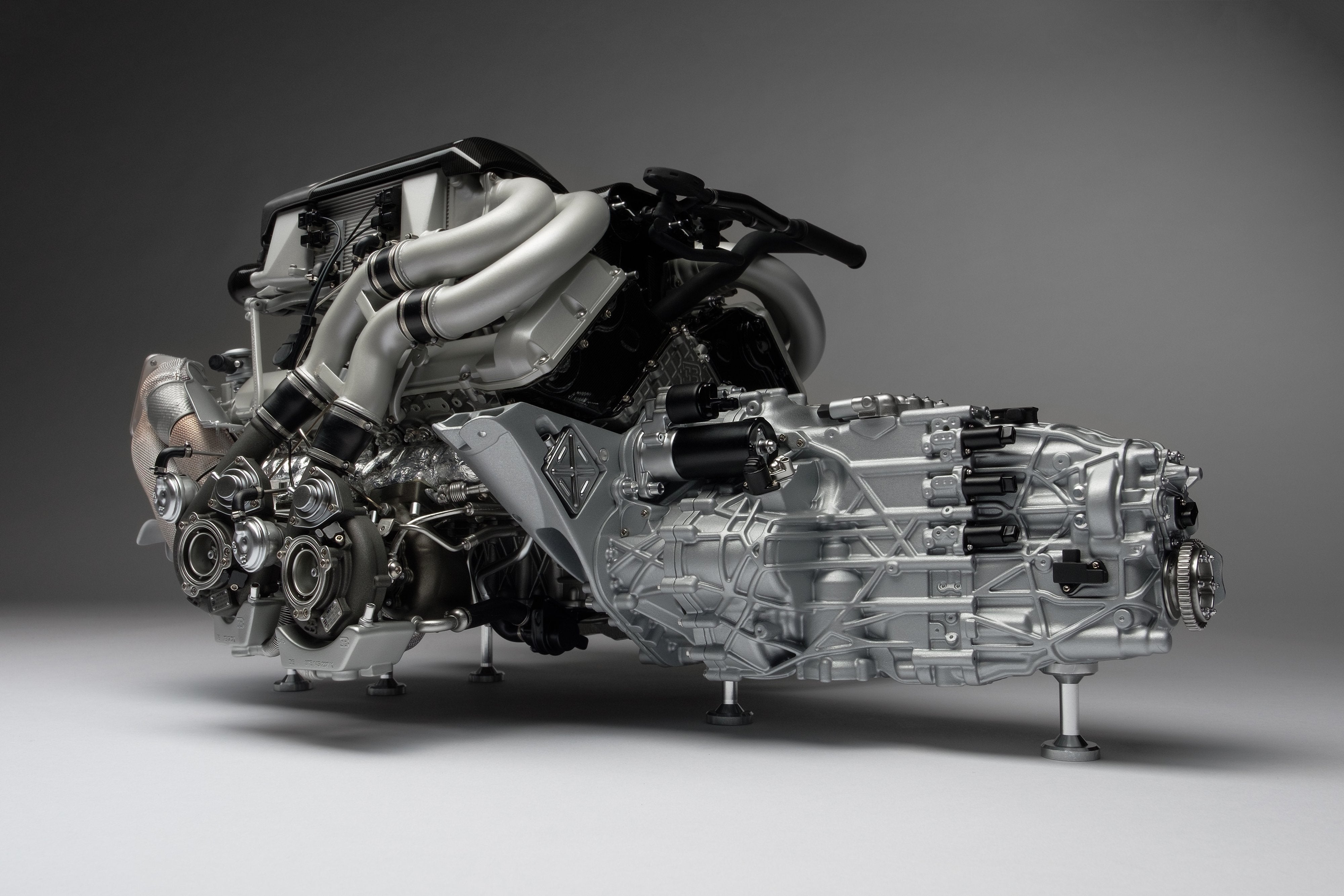
Technical specifications and how the W16 works
Key technical points at a glance:
- Engine type: 8.0‑liter W16 (16 cylinders in a W layout)
- Induction: Four turbochargers (quad‑turbo)
- Valvetrain: 64 valves (four per cylinder)
- Power: up to about 1,500 PS (1,479 hp) in many Chiron variants
- Torque: up to roughly 1,600 Nm (1,180 lb‑ft) in higher‑output versions
- Transmission: 7‑speed dual‑clutch automatic, all‑wheel drive
- Displacement: 7,993 cc
How the W16 is built and why it works:
49% off Today's Exclusive Deals
Limited-time Exclusive Deals. Check current discount on Amazon.
Check Price on Amazon As an Amazon Associate I earn from qualifying purchases.- The W configuration joins two narrow‑angle V8 banks on a common crank, creating four cylinder banks and 16 cylinders in a compact footprint.
- Quad turbos manage airflow and keep boost response usable across the rev range. Different turbo setups and tuning create the variations between Chiron models.
- Multiple radiators and cooling circuits are used to manage heat from both the engine and the turbos, because sustained high power requires heavy cooling.
This engine is a balance of complexity and packaging. The W16 design gives huge displacement without requiring an impractically long engine bay.
Performance, sound, and driving experience
On the road, the Bugatti Chiron engine feels like an on‑demand surge of force. Throttle response is immediate for a turbocharged high‑displacement engine, and the torque comes in across a wide band. The Chiron accelerates from 0–60 mph in well under 3 seconds in standard form, with top speeds that can exceed 250 mph in specific configurations.
Sound profile:
- Low‑end: a deep, rolling rumble from the 16 cylinders.
- Midrange: a rich, layered roar with turbo whistle and mechanical harmonics.
- High‑rpm: a more metallic note as the valves and exhaust harmonics climb.
Personal note: in my coverage of hypercars, I have seen the W16 up close at events and spoken with technicians about its behavior. That close view underscores how much engineering and calibration go into making the Bugatti Chiron engine both usable and breathtaking under acceleration.

Engineering choices: cooling, turbos, and drivetrain
Cooling systems and thermal management:
- The Chiron uses an elaborate cooling setup with multiple radiators and heat exchangers to keep both the engine and turbochargers within safe temperatures during prolonged runs.
- Efficient intercoolers are critical because quad‑turbo systems compress a lot of air, raising inlet temperatures.
Turbo strategy and tuning:
- Quad turbos help reduce lag and spread boost across the rev range.
- Software and hardware tuning differ by model to raise peak power or favor midrange response depending on the variant.
Drivetrain and gearing:
- The seven‑speed dual‑clutch transmission is built to handle extreme torque and offers lightning‑fast shifts.
- All‑wheel drive aids traction, but tuning ensures a balanced, driver‑engaging experience even at high speed.
These engineering choices explain how the Bugatti Chiron engine can deliver both blistering straight‑line speed and controlled performance during spirited driving.

Maintenance, cost, and reliability
Owning a Bugatti Chiron engine comes with unique demands:
- Service intervals: Regular, expert servicing is essential. Oil, filters, and inspection of turbo and cooling systems should follow the manufacturer schedule.
- Cost: Maintenance and parts are expensive compared with conventional cars. Even routine services are done by specialists.
- Reliability: The W16 is robust when correctly maintained, but complexity increases points of potential failure. Cooling, turbos, and electrics need careful attention.
Practical tips from experience:
- Choose service centers with hypercar experience.
- Follow break‑in and maintenance schedules precisely to avoid long‑term wear.
- Factor fuel and insurance into ownership costs; the Bugatti Chiron engine drinks high‑octane fuel and servicing is costly.
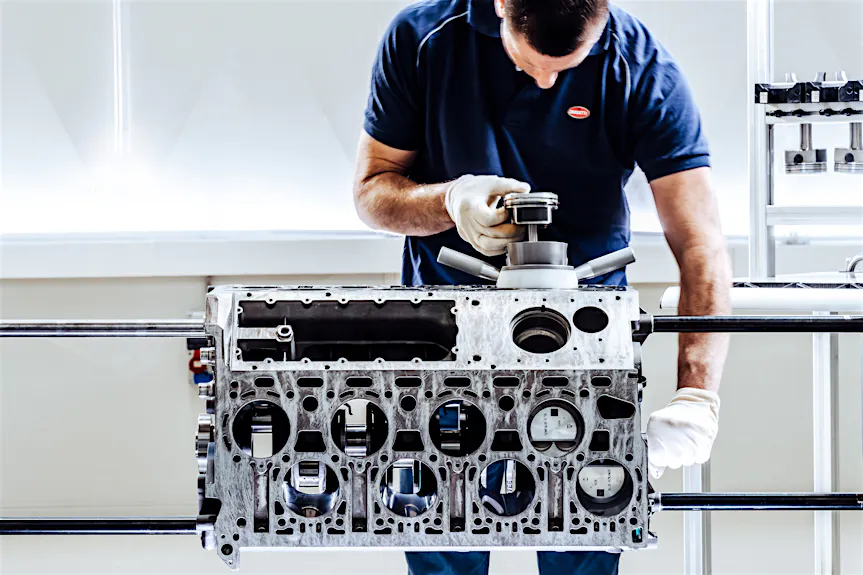
Practical considerations for owners and buyers
Before you decide to own a car with the Bugatti Chiron engine, consider:
- Daily usability: The Chiron is driveable but not as practical as a more modest sports car. Fuel stops and noise are part of the package.
- Resale and rarity: Chirons are rare and collectible. Engine condition heavily affects resale value.
- Legal and environmental limits: Emissions and noise regulations can limit where extreme performance is fully usable. Some markets restrict top speeds or require specific modifications.
If you value engineering extremes and the hypercar experience, the Bugatti Chiron engine delivers. If you want low cost and simplicity, this engine is likely not the right choice.
Quick answers to common searches
How powerful is the Bugatti Chiron engine?
Most Chirons use an 8.0L W16 that produces around 1,500 PS (about 1,479 hp), with torque figures up to roughly 1,600 Nm in some models.
Why does Bugatti use a W16 instead of a V12 or V16?
The W16 provides huge displacement in a shorter, more compact package than a conventional V16, letting engineers fit more cylinders and turbos without an overly long engine bay.
Does the Bugatti Chiron engine need special fuel?
Yes. The engine runs on high‑octane, premium fuels designed to handle high boost and compression safely, and using the wrong fuel can reduce performance and risk engine issues.
Frequently Asked Questions of What engine does the Bugatti Chiron use?
What exactly is a W16 engine?
A W16 engine is built by joining two narrow‑angle V8s on a single crankshaft, producing 16 cylinders in a compact block. It offers more cylinders in a shorter length than a straight or V16.
How many turbos does the Bugatti Chiron engine have?
The Bugatti Chiron engine uses four turbochargers. The quad‑turbo layout helps deliver high boost while keeping response manageable across the rev range.
What is the displacement of the Chiron’s engine?
The engine displacement is 8.0 liters, or 7,993 cc. That large displacement helps produce the engine’s massive torque and power.
Is the Chiron engine daily‑drivable?
Yes, the Chiron is drivable daily in short runs, but fuel consumption, noise, and maintenance needs make it less practical than most high‑performance grand tourers.
Can the Bugatti Chiron engine be tuned for more power?
Yes, the engine can be tuned, but increases in power require careful changes to cooling, fuel delivery, turbo systems, and drivetrain components. Tuning also affects warranty and longevity.
Conclusion
The Bugatti Chiron engine is an 8.0‑liter, quad‑turbo W16 built for extreme performance, combining massive power with compact packaging and advanced cooling and turbo systems. It delivers a unique driving experience but brings higher maintenance and operating costs. If you love cutting‑edge engineering and raw speed, the Bugatti Chiron engine stands as a peak example of automotive ambition. Takeaway: understand the practical costs and servicing needs before committing, and enjoy the rare thrill this engine offers.
If you found this helpful, please leave a comment, ask more questions, or subscribe for deeper dive articles on hypercar engines and ownership.