Dealing with a Subaru Outback transmission problem can feel overwhelming, but it's not always a disaster. If your Outback hesitates when pulling into traffic or shudders at highway speed, the next failure could leave you stranded. The repair bill for a CVT replacement can easily hit five figures.
Subaru's Lineartronic CVT has been in use since 2010. It's a chain-driven continuously variable transmission, not a belt design like many rivals. When healthy, it's smooth and efficient.

49% off Today's Exclusive Deals
Limited-time Exclusive Deals. Check current discount on Amazon.
Check Price on Amazon As an Amazon Associate I earn from qualifying purchases.When neglected, it fails. Service records show that most problems trace back to overheating and contaminated fluid rather than sudden part breakage. Catching the early warning signs is where you save real money.
Quick Answer
Most Subaru Outback transmission problems come from a failing valve body or torque converter. Watch for low-speed shudder, hesitation, or whining. Early fixes like fluid changes or valve body swaps are affordable.
Ignoring it can lead to a $6,000 replacement.
49% off Today's Exclusive Deals
Limited-time Exclusive Deals. Check current discount on Amazon.
Check Price on Amazon As an Amazon Associate I earn from qualifying purchases.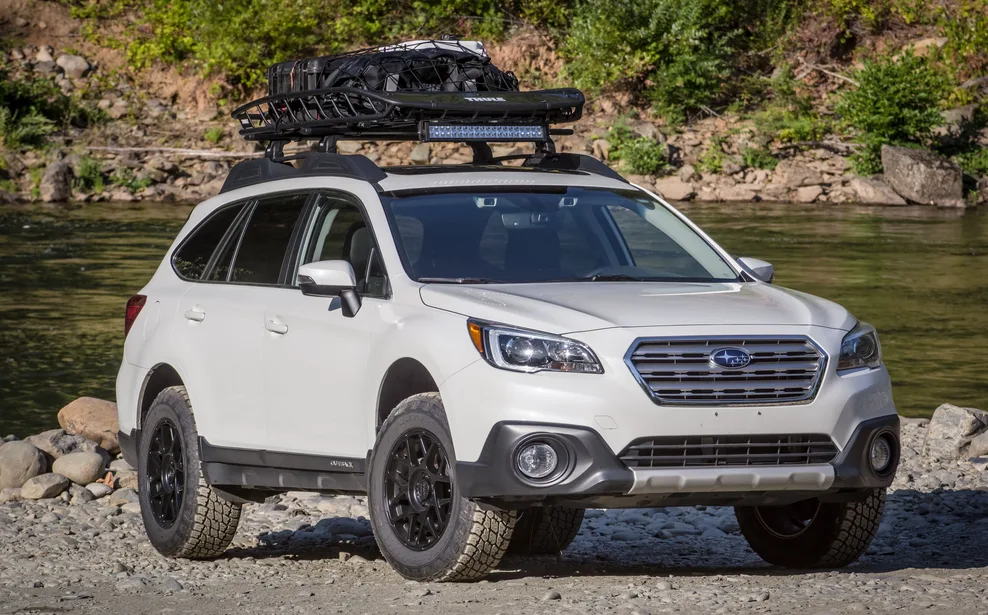
Image source: Bing (Web (fair-use with source credit))
Why Subaru Outback Transmission Problems Are Worth Taking Seriously
A transmission issue isn't just a mechanical nuisance. It's a safety risk and a wallet risk. If your Outback hesitates when pulling into traffic, that's a crash risk.
If it shudders at highway speed, the next failure might strand you. A full CVT replacement runs from $4,000 to $8,000.
49% off Today's Exclusive Deals
Limited-time Exclusive Deals. Check current discount on Amazon.
Check Price on Amazon As an Amazon Associate I earn from qualifying purchases.Heat is the Lineartronic CVT's main enemy. It wears valve body solenoids, the torque converter clutch, and the chain. Most failures trace back to overheating and contaminated fluid.
That means regular maintenance matters more than you might think.
The good news is that many problems are preventable if caught early. A fluid change costs about $150. A valve body repair costs $1,200 to $2,500.
Knowing what to watch for saves you thousands.
How Subaru's Lineartronic CVT Works (and Where It Goes Wrong)
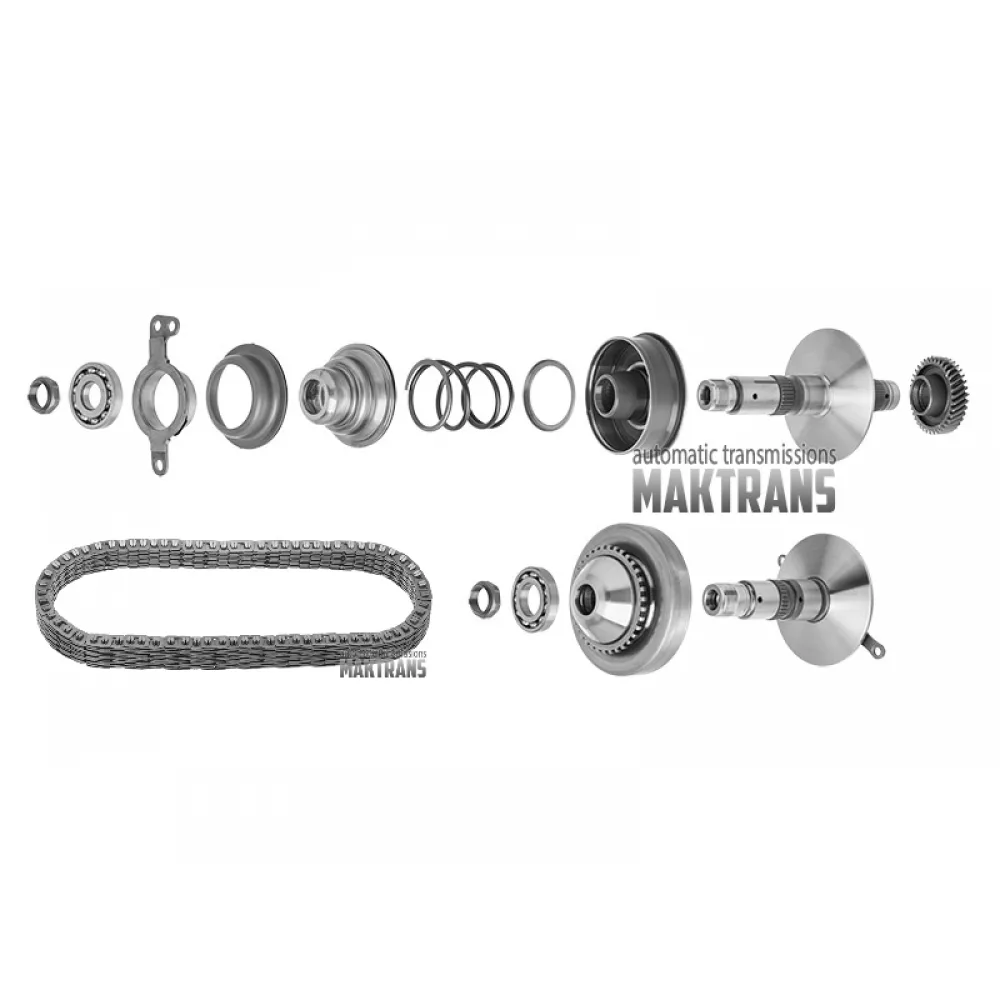
Image source: Bing (Web (fair-use with source credit))
Think of the CVT as a pulley system with a metal chain. Instead of fixed gears, it adjusts continuously to keep the engine in its ideal power band. That's why acceleration feels so smooth.
But that same design creates heat. Heat is the CVT's number one enemy.
The weak points are no secret. The valve body controls hydraulic pressure for shifting, and worn solenoids cause erratic behavior. The torque converter locks up at highway speed, and a shudder means its clutch is failing.
The chain itself can stretch, but that's rare below 150,000 miles.
Here's what typically fails first:
- Valve body wear and solenoid faults
- Torque converter lock-up shudder
- CVT fluid degradation from heat and age
- Chain and pulley wear in high-mileage units
None of these are instant death sentences. A valve body repair costs roughly $1,200 to $2,500. A full CVT replacement runs from $4,000 to $8,000.
The difference between those outcomes is usually how quickly you react.
Regular fluid changes are the single best way to extend CVT life. Subaru calls it "lifetime" fluid in some manuals, but aggregate service records show that's optimistic. Most specialists recommend a drain-and-fill every 30,000 miles for severe use and 60,000 miles for normal driving.
Common Outback Transmission Symptoms and What They Point To

Image source: Bing (Web (fair-use with source credit))
Symptoms tell you exactly where the problem lives, if you listen. A low-speed judder when pulling away from a stop usually points to the torque converter. A delay when shifting into Drive or Reverse often means the valve body is losing pressure.
Whining that gets louder with speed could be the chain or pulley bearings. A shudder at cruising speeds is almost always the torque converter's lock-up clutch.
Here's a quick symptom map:
| Symptom | Likely Cause |
|---|---|
| Shudder under light acceleration | Torque converter or fluid contamination |
| Hesitation or clunk into gear | Valve body, solenoids |
| Slipping or surging on the highway | TCM or internal chain wear |
| Whine or buzz at speed | Bearings, pump, or chain tension |
| Overheating warning under load | Cooling system failure or low fluid |
Some symptoms are misleading. A binding feeling in tight turns might be the all-wheel drive, not the transmission. If you hear a grinding noise, check the axles and differential first.
And if the transmission won't shift at all, don't assume it's an internal break. A dead TCM or bad solenoid can mimic a catastrophic failure.
Always check diagnostic trouble codes first. Codes like P0700, P2762, or P2763 point to specific circuits. A cheap OBD-II scanner gives you a starting point.
A Subaru-specific scan tool is better because it reads the TCM's adaptive data. That data shows how the transmission is actually behaving, not just the warning lights.
Which Outback Model Years Have the Most Transmission Risk
Not every Outback is equally prone to trouble. The early Lineartronic units, roughly 2010 to 2015, are the ones with the most documented failures. Those years used the TR580 CVT with the 2.5L engine and the high-torque TR690 with the 3.6L.
Both suffered from software glitches and valve body issues, but the TR580 got more complaints.
Subaru issued technical service bulletins for several symptoms, including torque converter shudder and delayed engagement. They also extended warranty coverage on some models. In one official action, coverage went to 100,000 miles or 10 years on certain vehicles.
You'd need to check your VIN with Subaru or the NHTSA to see if yours qualifies.
Here's what the data shows:
- 2010-2012: High rate of valve body and torque converter issues
- 2013-2015: Improved, but still some TCM and chain complaints
- 2016-2019: Better fluid quality, fewer major failures
- 2020+: Most reliable, but still need regular fluid changes
If you own an older Outback and haven't had the TCM software updated, that's a cheap fix from a dealer. The update changes shift logic and can reduce shudder. For used-car shoppers, avoid any Outback with a transmission light on unless you're ready to negotiate.
A 2011 Outback with documented fluid changes every 30,000 miles is often healthier than a 2018 with no service history.
Diagnosing the Problem Before You Spend Anything
Never throw parts at a transmission based on a feeling. Start with the cheapest, safest checks first. Find the CVT dipstick if your model has one.
Pull it, wipe it, and check the fluid color. Healthy CVT fluid is reddish and smells slightly sweet. If it's brown, dark, or smells burnt, that's your red flag.
Next, use an OBD-II scanner to read codes. Write down every code, not just the current one. Clear them and take a short test drive to see if they return.
Pay attention to when the symptom happens: cold start, warm, uphill, or at a specific speed.
A proper road test involves these steps:
- Park on level ground and shift through all gears slowly
- Let the engine idle, check for vibration in Neutral and Drive
- Drive in both manual and automatic modes
- Incline testing, if possible, to load the transmission
- Listen for noise under hard acceleration vs. coasting
If the fluid is fine and no codes appear, look for leaks. CVT fluid leaves a typical reddish stain under the car. A slow leak can cause intermittent symptoms that come and go.
Check the transmission pan area and the cooler lines. A simple leak fix might be less than $200.
When the basic checks point to internal trouble, see a Subaru specialist. A general shop might guess and suggest a rebuild. A specialist has the right software to test hydraulic pressure and cycle time.
That diagnostic precision is worth the $150 an hour. It's the difference between a $500 repair and a $5,000 mistake. For similar issues, read our guide on transmission slipping and related fixes.
Outback Transmission Repair Options and Real-World Costs
Not every transmission problem needs a full replacement. The right fix depends on what's broken, your mileage, and how long you plan to keep the car.
A CVT fluid drain-and-fill is the cheapest first step, usually $100 to $200 at a shop. It won't fix worn parts, but contaminated fluid causes most early symptoms. If your Outback has never had a fluid change past 60,000 miles, this alone can reduce shudder and hesitation.
Valve body replacement runs from $1,200 to $2,500 including labor. This is the most common fix for delayed engagement, erratic shifting, and solenoid-related codes. It's a surgical repair that targets the actual failure point without touching the rest of the transmission.
| Repair Option | Typical Cost | Best For |
|---|---|---|
| Fluid drain-and-fill | $100 to $200 | Mild symptoms, high-mileage neglect |
| Valve body replacement | $1,200 to $2,500 | Shifting faults, solenoid codes |
| Torque converter swap | $1,500 to $3,000 | Lock-up shudder at highway speed |
| Full CVT replacement | $4,000 to $8,000 | Chain wear, internal damage |
A full CVT replacement is the nuclear option. Dealer-new units cost the most. Remanufactured transmissions from reputable suppliers save a few thousand and carry warranties.
Used units are cheapest but riskiest. Our research shows that remanufactured CVTs with a 3-year warranty offer the best balance of cost and reliability.
Don't ignore strange noises either. Some sounds that seem like internal CVT failure are actually loose heat shields, bad axle bearings, or a failing alternator. Check our guide on transmission noise causes before you commit to a major repair.
Subaru Outback Transmission FAQ
Is Subaru's lifetime CVT fluid really lifetime?
No. Manufacturer specifications say the fluid is designed to last the vehicle's expected service life, but service records contradict that. Most Subaru specialists recommend changing the fluid every 30,000 to 60,000 miles.
Waiting beyond that risks accelerated wear on the chain and pulleys.
How often should I change the CVT fluid?
Every 30,000 miles for severe use, which includes towing, mountain driving, or stop-and-go commuting. For normal highway driving, 60,000 miles is acceptable. Use only Subaru-approved CVTF-II or CVT-HV fluid.
Generic CVT fluids can cause compatibility issues.
Can I tow with a CVT-equipped Outback?
Yes, but stay under Subaru's rated limit. Most CVT Outbacks are rated for 2,700 pounds max. Towing at or near that limit in hot weather puts serious heat load on the CVT.
If you tow regularly, invest in an auxiliary transmission cooler and shorten your fluid change intervals.
How many miles do Subaru CVTs usually last?
Aggregate service data shows most early Lineartronic CVTs reach 150,000 to 200,000 miles with proper maintenance. Units that never received fluid changes often fail between 80,000 and 120,000 miles. Later model years with updated software and fluid perform better overall.
Is it safe to keep driving with a shudder or hesitation?
It depends on severity. A mild shudder at light throttle won't strand you today. But continued driving accelerates wear and pushes a $1,500 fix toward a $5,000 one.
If the transmission slips worse under load, stop driving it until a mechanic inspects it.
Can a bad battery cause transmission codes?
Yes, it can. Low voltage confuses the TCM and throws false codes, including P0700 series transmission codes. Always check battery health before assuming the transmission is failing.
A $150 battery swap might be the entire fix. This is especially common on Outbacks with 5 or more years on the original battery.
The Bottom Line: What to Do Next
If you're dealing with a Subaru Outback transmission problem right now, start with the basics. Pull codes, check your fluid, and look up TSBs for your model year. A $150 diagnostic visit can confirm whether you need a $200 fluid change or a $3,000 valve body.
Don't skip that step.
For high-mileage Outbacks with documented fluid changes, the CVT is probably fine. Keep up with maintenance and watch for early symptoms. For neglected units with multiple symptoms, a remanufactured CVT with a solid warranty is the safest long-term play.
The single best investment is a transmission cooler if you live in a hot climate or tow anything regularly. Heat kills CVTs faster than mileage does. Keeping fluid temperatures down extends chain and pulley life dramatically.
If the repair cost approaches the car's market value, weigh selling versus fixing. A running Outback with a known transmission issue still has value to a buyer who can do the work. Be honest about the problem, price it fairly, and move on.
For other drivetrain concerns, our guides on clutch issues and gear shift problems cover related symptoms worth checking while you're diagnosing.