A car transmission won’t shift when fluid, sensors, linkage, or internal parts fail.
A transmission that refuses to shift can turn a normal drive into a stressful one fast. I’ve seen this problem show up as anything from a simple low-fluid issue to a deeper mechanical fault, and the good news is that many causes can be diagnosed early if you know what to look for. If your car transmission won’t shift, this guide will walk you through the most common reasons, warning signs, fixes, and smart next steps so you can make a clear, confident decision.

49% off Today's Exclusive Deals
Limited-time Exclusive Deals. Check current discount on Amazon.
Check Price on Amazon As an Amazon Associate I earn from qualifying purchases.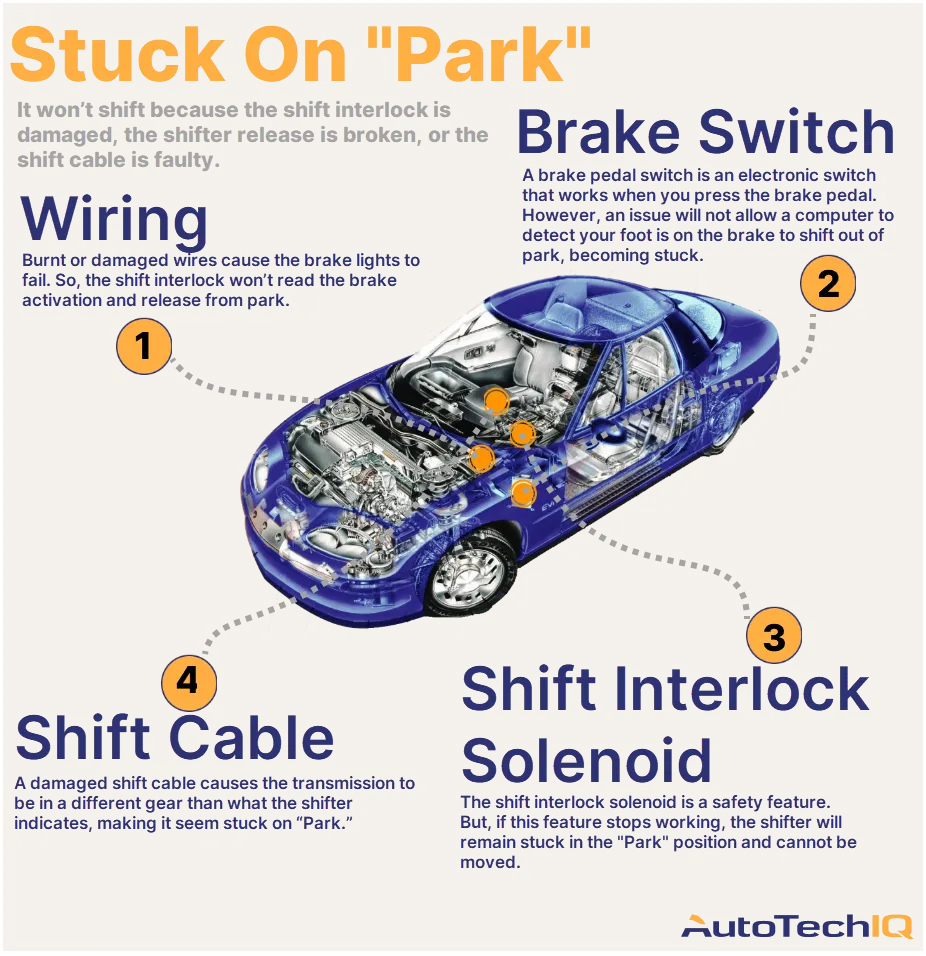
What it means when a car transmission won’t shift
When a car transmission won’t shift, it means the gearbox is not changing gears the way it should. In an automatic, that may look like the car staying in one gear, slipping between gears, or refusing to leave park. In a manual, it may mean the shifter feels stuck, the clutch does not disengage, or the car grinds when you try to move.
The big thing to know is this: the problem can come from either outside the transmission or inside it. Sometimes the issue is simple, like low transmission fluid or a broken shift cable. Other times, the transmission itself has worn clutches, bad solenoids, or valve body problems.
49% off Today's Exclusive Deals
Limited-time Exclusive Deals. Check current discount on Amazon.
Check Price on Amazon As an Amazon Associate I earn from qualifying purchases.I always tell people to avoid guessing too early. A car transmission won’t shift for many different reasons, and the wrong fix can waste time and money. A careful check of the symptoms usually points you in the right direction faster than random parts swapping.
Common reasons a car transmission won’t shift
There are several common reasons a car transmission won’t shift, and each one affects the system in a different way. Some are easy to inspect at home, while others need scan tools or a shop diagnosis. Knowing the main causes helps you narrow things down before you spend money.
Low or dirty transmission fluid
Transmission fluid does more than lubricate. It also helps create hydraulic pressure, cools parts, and lets the transmission shift smoothly. If the fluid is low, burnt, or contaminated, the transmission may delay shifts, slip, or stop shifting altogether.
49% off Today's Exclusive Deals
Limited-time Exclusive Deals. Check current discount on Amazon.
Check Price on Amazon As an Amazon Associate I earn from qualifying purchases.A fluid problem can happen because of a leak, worn seals, or skipped maintenance. I’ve seen vehicles act almost normal for a few days and then get much worse once the fluid level dropped further. That is why checking fluid early is one of the smartest first steps.
Bad transmission solenoids
Shift solenoids act like small electric valves that control fluid flow inside the transmission. If one fails, the transmission may get stuck in one gear, shift harshly, or refuse to shift at all. This is a very common reason an automatic car transmission won’t shift correctly.
Modern transmissions depend heavily on these electronic parts. A fault code may point to a specific solenoid, but not always. In some cases, wiring or connector damage is the real problem, not the solenoid itself.
Faulty speed sensors
Transmission speed sensors tell the computer how fast the input and output shafts are spinning. The control module uses that data to decide when to shift. If a sensor sends bad data, the transmission may shift at the wrong time or not shift at all.
This issue often shows up with a check engine light and rough shift behavior. I’ve found that some drivers ignore the light until the vehicle goes into limp mode, which makes the problem feel much bigger than it started.
Transmission control module or computer issues
The transmission control module, often tied to the engine computer, manages shift timing and pressure commands. If it glitches, loses power, or gets bad input from sensors, the transmission may stop shifting properly. This can feel like the car is “thinking” wrong.
Software updates, failed modules, or damaged wiring can all play a role. These are not the first things most people think of, but they matter a lot in newer vehicles.
Worn clutch or internal transmission damage
Inside the transmission are clutches, bands, gears, and valves that wear down over time. If these parts are damaged, the transmission may slip, hesitate, or refuse to change gears. In manual transmissions, a worn clutch can make shifting feel impossible even when the gearbox itself is fine.
This is where the repair can become expensive. If the fluid is full of metal debris or the transmission has been slipping for a while, internal damage is more likely. The earlier the issue is caught, the better the odds of avoiding a rebuild.
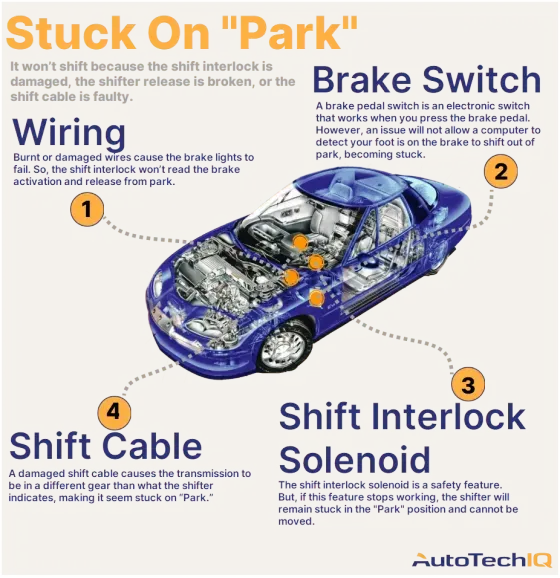
Shift linkage or cable problems
Sometimes the transmission is fine, but the shifter linkage is not. If a cable breaks, slips out of adjustment, or gets damaged, the gear selector may not tell the transmission what you want. The car may show one gear on the shifter but actually stay in another.
This kind of problem is common after minor accidents, corrosion, or worn bushings. It’s one of those “small part, big problem” situations that can make a car transmission won’t shift even though the gearbox itself is still healthy.
Brake switch or safety interlock failure
Many automatic vehicles will not shift out of park unless the brake pedal switch works properly. That safety system prevents accidental movement. If the switch fails, the shifter may stay locked even though everything else seems normal.
This is especially important if the car won’t move from park but will start just fine. A stuck shifter is not always a transmission failure, and that distinction can save you from an expensive mistake.
Signs your transmission is having trouble shifting
A car transmission won’t shift without usually giving warning signs first. These signs may show up gradually or all at once. Paying attention early can help you avoid a complete breakdown.
Common warning signs include:
• Delayed shifting, where the car hesitates before changing gears
• Hard shifts, where the gear change feels like a jolt
• Slipping, where engine speed rises but the car does not accelerate normally
• Stuck in one gear, often called limp mode
• Shifter moving but the vehicle not responding
• Grinding or whining noises
• Burning smell from overheated fluid
• Check engine light or transmission warning light
When I talk to drivers about this issue, I always ask when the symptom started and whether it got worse after heat, traffic, or towing. Those details matter. Heat and heavy load often make a weak transmission show its true colors.
What to check first if your car transmission won’t shift
If your car transmission won’t shift, start with the easiest checks first. You do not need to tear anything apart right away. A simple inspection can often reveal the problem or at least point you in the right direction.
1. Check the transmission fluid
Look at the fluid level, color, and smell if your vehicle has a dipstick and the manufacturer allows a user check. Healthy fluid is usually red or amber and does not smell burnt. Low fluid or dark, dirty fluid is a major clue.
If the fluid is low, find the leak before topping it off and forgetting about it. A leak left alone will come right back and can cause more damage.
2. Look for warning lights
A check engine light or transmission light often helps narrow the issue. Even if the car still drives, stored trouble codes may point to sensor, solenoid, or communication faults. A basic scan tool can often reveal more than a visual inspection.
3. Try manual gear selection
If your vehicle has a manual shift mode or low gear selection, test whether it responds differently. If the transmission shifts in one mode but not another, that clue can help separate a mechanical issue from an electronic one. It may also suggest a sensor or control problem.
4. Inspect the shifter and linkage
Move the shifter and feel for looseness, stiffness, or strange resistance. If the lever does not feel normal, the cable or linkage may be the issue. In many cases, the transmission itself is fine, but the connection between the shifter and the gearbox is not.
5. Check battery voltage
Low voltage can cause strange transmission behavior in modern vehicles. Control modules and solenoids need stable power. A weak battery or charging issue may create shifting problems that look like a transmission failure.

Can you drive if a car transmission won’t shift?
Sometimes you can move the vehicle a short distance, but that does not mean it is safe to keep driving. If the transmission is stuck in one gear, slipping badly, or making harsh noises, continued driving can make the damage worse. Heat is one of the biggest enemies here.
If the issue is only a brake switch, shift lock, or linkage problem, the car may still be drivable after repair. But if the transmission is slipping or the fluid is burnt, driving it further can turn a repair into a rebuild. I’ve seen people limp cars home and then face a much bigger bill because they kept pushing it.
If you feel unsure, tow it. That is often the cheapest decision in the long run.
How a mechanic diagnoses a shifting problem
A good diagnosis usually follows a clear process. First, the technician checks fluid condition, scan data, and visible damage. Then they test electrical signals, pressure, and shift behavior under real driving conditions.
A proper diagnosis may include:
• Reading trouble codes
• Checking live sensor data
• Inspecting the shift cable and linkage
• Testing solenoid resistance and operation
• Verifying battery and charging system health
• Measuring hydraulic pressure
• Inspecting for internal wear or contamination
This is where experience matters. A code alone does not always mean the failed part is the part named on the scan tool. For example, a solenoid code can come from bad wiring, poor fluid pressure, or a control module fault.
Repair options for a car transmission won’t shift
The right repair depends on the cause. Some fixes are fast and inexpensive. Others take more time and labor. The key is matching the repair to the actual failure, not the symptom alone.
Common repair paths include:
• Adding or replacing transmission fluid
• Fixing a fluid leak
• Replacing a shift solenoid
• Replacing a speed sensor
• Repairing wiring or connectors
• Adjusting or replacing shift linkage
• Replacing a brake switch
• Updating or replacing the control module
• Rebuilding or replacing the transmission
If the transmission has internal damage, a rebuild may be the most practical choice. In older vehicles, replacement can sometimes make more sense than a full rebuild, depending on mileage and parts availability. A trusted shop should explain the tradeoff clearly.
How much it may cost to fix
The cost depends on what is actually wrong. A fluid service or linkage adjustment may cost far less than a transmission rebuild. Electronics are often in the middle, while internal mechanical damage is the most expensive category.
General cost ranges can look like this:
• Fluid service: lower cost
• Sensor or solenoid replacement: moderate cost
• Wiring or linkage repair: moderate cost
• Module-related repair: moderate to high cost
• Transmission rebuild or replacement: high cost
Prices vary a lot by vehicle type, transmission design, and labor rate. Luxury and newer vehicles often cost more because parts and programming are more complex. That is why an accurate diagnosis matters before authorizing major work.
Mistakes to avoid when your transmission will not shift
I’ve seen a few mistakes come up again and again, and they usually make things worse.
• Ignoring warning signs until the car stops moving
• Topping off fluid without checking for leaks
• Using the wrong transmission fluid
• Replacing random parts before scanning the vehicle
• Driving hard with slipping or burnt fluid
• Assuming every shifting problem means a full transmission failure
The biggest lesson is simple: start small, stay methodical, and do not panic. A car transmission won’t shift for reasons that range from minor to major, and a calm diagnostic approach saves money.
How to prevent shifting problems in the future
A little care goes a long way with transmissions. They are not fragile, but they do punish neglect. Good habits can add real life to the system.
Best prevention tips include:
• Follow the factory service schedule
• Check fluid level and condition when applicable
• Fix leaks quickly
• Use the correct transmission fluid only
• Avoid towing beyond the vehicle’s rating
• Let the car warm up in cold weather before heavy driving
• Pay attention to new noises, delays, or slipping
From my experience, the vehicles that last longest are the ones where owners catch small changes early. A tiny delay in shifting today can become a full failure later if it is ignored.
Frequently Asked Questions
Why is my car stuck in one gear?
This often happens because of low fluid, a failed shift solenoid, bad sensor data, or the transmission entering limp mode. The system may lock into one gear to protect itself from damage.
Can low transmission fluid cause shifting problems?
Yes, low transmission fluid is one of the most common reasons a car transmission won’t shift properly. It can cause delayed shifts, slipping, overheating, and complete loss of hydraulic pressure.
Why won’t my car shift out of park?
A bad brake switch, shift lock issue, dead battery, or failed linkage can keep the shifter locked in park. It is not always a transmission failure, so checking the safety interlock is a smart first step.
Is it safe to drive with a transmission that won’t shift?
Usually no, especially if the car is slipping, grinding, or stuck in gear. Driving it can create more heat and make the damage worse, so towing is often the safer option.
How do I know if it is the transmission or a sensor?
A scan tool and basic diagnosis usually separate the two. If the fluid is fine but the computer shows bad sensor readings or related trouble codes, the issue may be electrical rather than mechanical.
Can a transmission problem fix itself?
No, not in the real sense. Sometimes symptoms come and go when the fluid is low or a connection is loose, but the root problem still needs attention before it gets worse.
Conclusion
A car transmission won’t shift for many reasons, but the most common ones are low fluid, bad solenoids, sensor issues, linkage problems, and internal wear. The best move is to start with simple checks, read the warning signs, and avoid driving if the transmission is slipping or stuck.
If you catch the issue early, you often have more repair options and a better chance of keeping costs down. Take the time to diagnose it the right way, and you’ll give your car a much better shot at a longer life. If this guide helped, keep learning, stay alert to warning signs, and talk with a trusted mechanic before the problem grows.



6 Comments on “Car Transmission Won’t Shift: Causes And Fixes”