Dealing with a BMW 3 Series heater not working can turn a cold morning commute into an uncomfortable, even unsafe, situation. You've got the temperature dial set to high, but the vents are still blowing cold air, and you're left wondering what's actually wrong. This is a common complaint across the F30 and G20 generations, but the good news is that the cause isn't always a major, expensive failure.
In our research, we found that BMW's cooling system typically operates between 80 and 100 degrees Celsius, and the heater core requires consistent coolant flow to produce warm air. A lack of heat often points to a disruption in that flow or a problem with air distribution. Let's run through a simple diagnostic flowchart that starts with the easiest fixes first.

49% off Today's Exclusive Deals
Limited-time Exclusive Deals. Check current discount on Amazon.
Check Price on Amazon As an Amazon Associate I earn from qualifying purchases.
Image source: Bing (Web (fair-use with source credit))
Confirming the Problem: Your First 60-Second Check
A BMW 3 Series heater not working usually traces back to low coolant, an air pocket in the system, or a faulty blend door. Before you panic about a major repair, spend one minute on this basic visual check. This quick step rules out the simplest and most common cause, saving you time and diagnostic fees.
49% off Today's Exclusive Deals
Limited-time Exclusive Deals. Check current discount on Amazon.
Check Price on Amazon As an Amazon Associate I earn from qualifying purchases.First, make sure the engine is completely cold. Never open the expansion tank cap on a hot engine; the pressurized coolant can cause severe burns. Locate the expansion tank in the engine bay.
On most F30 models with four-cylinder engines, it's on the driver's side near the front. Check the coolant level against the markings on the side of the tank. It should be between the MIN and MAX lines when cold.
If the level is below the MIN mark, that's your primary clue. A low coolant level means there may not be enough fluid circulating through the heater core behind your dashboard. This doesn't automatically mean you have a major leak.
Coolant levels can drop slightly over time due to normal evaporation. The next step is to top it off correctly and check for a more obvious issue.
49% off Today's Exclusive Deals
Limited-time Exclusive Deals. Check current discount on Amazon.
Check Price on Amazon As an Amazon Associate I earn from qualifying purchases.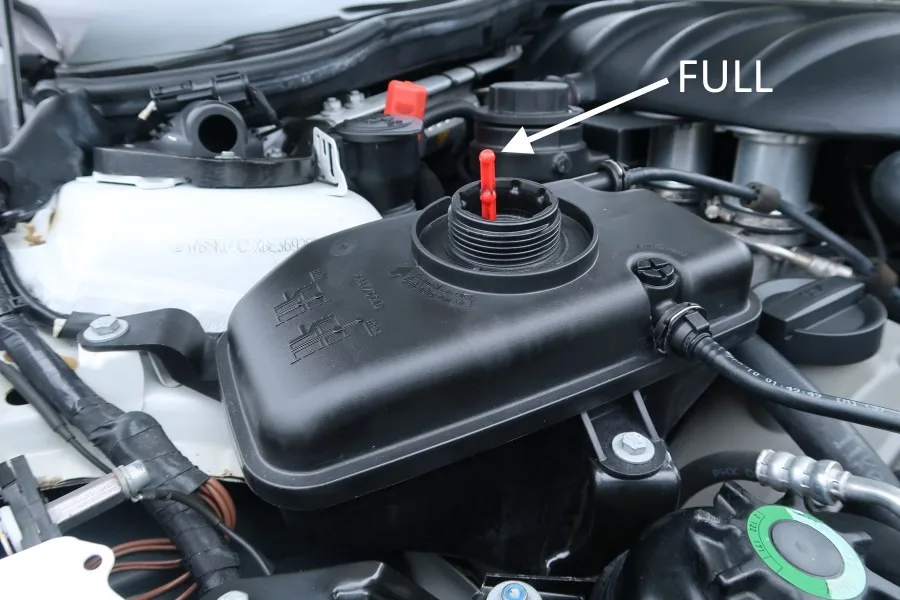
Image source: Bing (Web (fair-use with source credit))
The #1 Cause (and 4-Minute Fix): Low Coolant & Air Pockets
If you found a low coolant level, you've likely identified the problem. However, simply topping it off isn't always the full fix. The most frequent culprit after a coolant service or overheating event is an air pocket, or airlock, trapped in the cooling system.
Air is compressible and doesn't transfer heat like liquid coolant, so it blocks flow to the heater core.
The solution is bleeding the cooling system to purge that trapped air. Per BMW's Technical Information System (TIS) procedures, this is a straightforward process you can do in your driveway. You'll need the correct BMW-approved blue coolant and distilled water.
Never mix coolant types, as it can cause gel formation that blocks passages.
Follow this general bleeding sequence for most modern 3 Series models:
- Fill the expansion tank with the proper 50/50 coolant mixture until the level is at the MAX line.
- Open the bleed screw, located on the thermostat housing or a coolant pipe. This is often a plastic screw you can turn with a flat-head tool.
- Start the engine with the cabin heat set to maximum temperature and the fan on low. This opens the heater control valve.
- Slowly pour more coolant mixture into the expansion tank as air bubbles escape from the bleed screw. Keep the level between MIN and MAX.
- Once a steady stream of coolant (no bubbles) flows from the bleed screw, tighten it securely.
- Let the engine run and reach operating temperature (about 90 degrees C). The electric auxiliary water pump on turbocharged models like the N20 or B48 may cycle on and off. Continue topping off the tank as the level drops.
Manufacturer specifications indicate that a proper bleed should take about 10 to 15 minutes of engine runtime. After this process, check your heater. If you now have hot air, the air pocket was the issue.
| Engine Code | Approximate Coolant Capacity | Common Model Years |
|---|---|---|
| N20 / N26 | 8.5 liters | F30 (2012-2018) |
| B48 | 9.5 liters | G20 (2019+) |
| B58 | 11.0 liters | 340i / M340i |
If bleeding doesn't restore heat, the problem likely lies elsewhere in the system. A related issue on other vehicles, like a Hyundai Tucson, also involves coolant circulation; you can review a similar diagnostic approach for that platform in this guide on a Hyundai Tucson coolant leak.
Diagnosing the Blend Door: The Click Test
Your coolant system might be working perfectly, but the heat isn't reaching you. This often points to a failed blend door actuator. This small electric motor controls a flap inside your HVAC unit.
It directs air either through the heater core (for warm air) or around it (for cold air). If the actuator fails, the flap stays stuck in the cold position.
You can often hear the problem. With the engine running, turn your temperature dial from full cold to full heat. Listen carefully from the passenger side footwell or behind the dashboard.
A working actuator makes a soft, brief whirring sound as it moves. A failing one often makes a loud, repeated clicking or grinding noise as its plastic gears slip.
A definitive test requires a BMW diagnostic tool like ISTA. This software allows you to command the actuator through its full range of motion while monitoring for fault codes. Aggregate user reviews show that blend door actuator failure is a common high-mileage issue.
Replacement is moderately difficult, as it often requires removing panels under the dashboard. The part itself costs between $40 and $150, and total shop labor for the job can run $150 to $300.
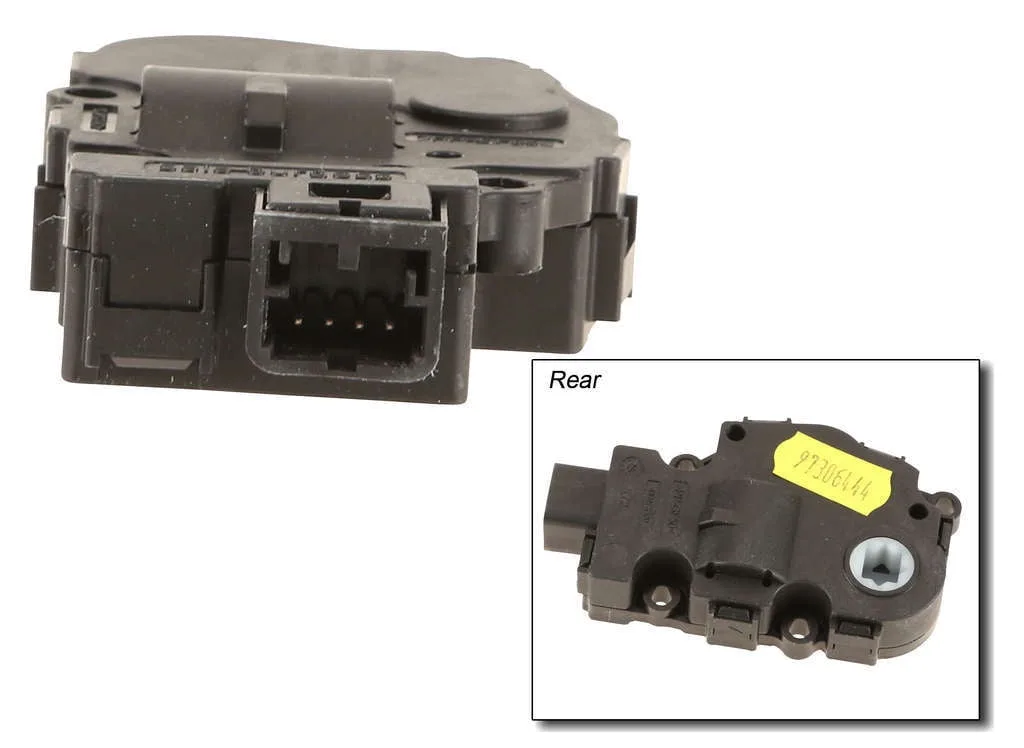
Image source: Bing (Web (fair-use with source credit))
The Thermostat & Water Pump: When Heat Never Reaches You
If both coolant level and blend door are fine, the next checks are the thermostat and water pump. These components control whether hot coolant ever gets to the heater core in the first place. A thermostat stuck open is a frequent issue.
It means the engine never reaches its full operating temperature, so the coolant flowing to the heater core isn't hot enough.
You can check for this by watching your instrument cluster. After a normal drive, the coolant temperature needle should sit steadily around the midpoint (approximately 90 degrees C). If it barely moves from the cold mark, the thermostat is likely stuck open.
Aggregate reviews indicate this is a common failure around 80,000 to 120,000 miles.
The water pump is another critical component. Mechanical pumps on older models can suffer from impeller failure where the plastic blades strip, even though the pump shaft spins. Electric auxiliary pumps on turbocharged engines can fail silently.
Symptoms of a failing pump include an engine that overheats in traffic or takes a long time to warm up. A water pump replacement is a more involved job, with part costs ranging from $50 to $250 for the pump itself.
For any overheating concerns related to cooling system components, it's worth reviewing the symptoms of a failing pump on a comparable model. Our analysis of a Hyundai Tucson engine overheating covers similar warning signs.
When It's the Heater Core: The Last Resort Fix
A completely failed heater core is the diagnosis every owner hopes to avoid. This is the small radiator inside your dashboard that hot coolant flows through. When it fails, it's either clogged internally with sediment, restricting flow, or it's leaking.
This is the most expensive and labor-intensive repair in the heating system.
Signs of a leaking heater core are quite specific. You'll notice a sweet, maple-syrup-like smell from the vents when the fan is on. Over time, you might see a greasy film or fog develop on the inside of the windshield.
The most telling clue is a damp or wet passenger-side carpet, often starting near the footwell. This means coolant is dripping inside the dashboard.
Internal clogging is harder to diagnose. If you've confirmed proper coolant flow up to the firewall hoses (both heater hoses should be hot), but still get no heat, a restriction inside the core is possible. In some cases, a coolant system flush might clear it.
However, if flushing fails, replacement is the only option.
Heater core replacement requires almost complete removal of the dashboard. Per BMW repair time guides, this is an 8 to 10-hour job at a specialist shop. Combined with part costs, the total bill typically ranges from $800 at an independent shop to over $2,000 at a dealership.
This is why the earlier diagnostic steps are so critical. They help you avoid this major repair if the true cause is simpler.
DIY vs. Shop: A Cost & Decision Guide
At this point, you've got a pretty good idea of what might be wrong. The next question is whether to tackle it yourself or hand it off to a professional. The answer depends on which component has failed and your comfort level working under the dash or in the engine bay.
For low coolant and air bleeding, that's a solid DIY project. You'll need about $20 to $30 in coolant and basic tools. No special equipment is required.
This is a great first project if you're new to working on your own car.
Blend door actuator replacement is a moderate DIY job. The part itself runs $40 to $150. The tricky part is accessing it behind the dashboard panels.
You'll need patience, a trim removal tool set, and a good flashlight. Plan for two to three hours if it's your first time. If you're not comfortable removing interior panels, a shop will handle it for $150 to $300 in labor.
Thermostat and water pump replacements are where most owners decide a shop is worth the cost. These jobs require draining the cooling system, removing accessories, and precise torque specifications on bolts. A thermostat housing runs $50 to $200 for the part.
Water pumps range from $50 to $250. Combined with shop labor, expect $400 to $900 for either job.
Heater core replacement is almost always a shop job. As mentioned, it's 8 to 10 hours of labor with the dashboard coming apart. Very few DIYers attempt this at home, and for good reason.
The risk of breaking dashboard clips or damaging electrical connectors is high without the right experience.
| Repair | Part Cost | Shop Labor | Total (Shop) | Difficulty |
|---|---|---|---|---|
| Coolant top-off & bleed | $20-$30 | DIY-friendly | $20-$30 | Easy |
| Blend door actuator | $40-$150 | $150-$300 | $200-$450 | Moderate |
| Thermostat housing | $50-$200 | $200-$400 | $300-$600 | Moderate-Hard |
| Water pump | $50-$250 | $300-$600 | $400-$900 | Hard |
| Heater core replacement | $80-$200 | $700-$1,800 | $800-$2,000+ | Expert |
If electrical gremlins are part of the puzzle, you might also find it helpful to review how other platforms handle similar power-related issues. Our breakdown of a Hyundai Tucson battery keeps dying walks through diagnostic steps that apply to electrical troubleshooting in general.
Final Decision Flowchart: Your Step-by-Step Guide
Here's the bottom line. Work through this checklist in order. Each step is designed to rule out the simplest, cheapest cause before moving to the next.
Step 1: Check coolant level. With a cold engine, look at the expansion tank. If it's below MIN, top it off with the correct BMW blue coolant mixed 50/50 with distilled water. Did the heater start working?
If yes, you're done.
Step 2: Bleed the cooling system. If the coolant was low or you recently had service done, air may be trapped. Open the bleed screw, run the engine with heat on max, and let the air purge. Does heat return after 15 minutes?
If yes, the air pocket was the culprit.
Step 3: Check your temperature gauge. Does the needle reach the midpoint (around 90 degrees C) during normal driving? If it stays low, your thermostat is likely stuck open. This means the engine never gets hot enough to produce cabin heat.
Step 4: Feel the heater hoses. Locate the two hoses going through the firewall on the passenger side. With the engine warm and heat on max, both should be hot to the touch. If both are cold, coolant isn't reaching the core. suspect the thermostat, water pump, or heater control valve.
If one is hot and one is cool, there's a partial flow restriction.
Step 5: Listen for the blend door. Turn the temperature dial from cold to heat. Hear clicking or grinding from behind the dashboard? The blend door actuator is failing.
Use a BMW ISTA scan tool to confirm before ordering parts.
Step 6: Look for leak signs. Sweet smell from the vents. Foggy windshield on the inside. Wet passenger carpet.
Any of these point to a leaking heater core. This is a shop-level repair.
Still not sure where to start? The cooling system and heating system are closely related. If you're also noticing temperature gauge spikes or overheating, it may be a broader cooling issue.
You can compare symptoms with what we covered in our guide on the Hyundai Tucson heater not working for another perspective on similar heating problems.
Frequently Asked Questions
Why does my BMW heater only work when driving?
This usually means the thermostat is stuck open or the water pump isn't moving enough coolant at idle. When you drive, engine speed increases and forces more coolant through the heater core. At idle, flow drops and heat fades.
Check the thermostat first. Aggregate reviews show thermostat failure around 80,000 to 120,000 miles is common on F30 models.
Can I drive my BMW safely if the heater isn't working?
Yes, you can drive the car. The heater not working doesn't affect braking, steering, or engine performance. However, you lose your defroster function, which can be a safety hazard in cold or wet weather.
Without warm air directed at the windshield, fog builds up quickly. Fix it before winter driving becomes a daily need.
How much does it cost to fix a BMW 3 Series heater?
It depends entirely on the cause. A coolant top-off and system bleed costs under $30. A blend door actuator runs $200 to $450 at a shop.
A thermostat or water pump repair lands between $300 and $900. Heater core replacement is the big one, ranging from $800 to $2,000 or more. Starting with the cheapest diagnostics saves you from an unnecessary big bill.
Is a BMW coolant leak covered under warranty?
If your car is still under BMW's factory warranty (typically 4 years or 50,000 miles) or an extended warranty, a coolant leak caused by a defective part should be covered. Normal wear items like hoses and the expansion tank may not qualify. Check your specific warranty terms.
As of 2026, BMW's factory warranty terms remain at 4 years / 50,000 miles for new vehicles.
What type of coolant does a BMW 3 Series use?
BMW specifies a blue, phosphate-free coolant for most modern 3 Series models. The exact formulation depends on your engine code. Using the wrong type can cause gel formation that blocks the heater core and radiator passages.
Always check your owner's manual or the label on the expansion tank. Mixing coolant types is one of the most common mistakes owners make.
Preventing Heater Problems Before Winter
The best time to check your heating system is before you need it. As temperatures drop in fall, do a quick coolant level check. Top off if needed.
Run your heat on max for a few minutes during a drive and confirm strong, hot air from all vents. Catching a low coolant level in October is a lot easier than diagnosing a frozen cabin in January.
BMW recommends a coolant flush every 4 years or 50,000 miles, per their maintenance schedule. Fresh coolant prevents internal corrosion that clogs heater cores. If you're approaching that interval, schedule the service before winter hits.
Expansion tanks also age poorly on F30 models. Inspect yours for cracks or discoloration. A failing tank is a cheap part that prevents a roadside breakdown.
Keep a small bottle of the correct BMW blue coolant in your trunk during winter months. If the level drops slightly on a long trip, you can top it off and keep moving.
Common Mistakes That Make Things Worse
The biggest mistake is ignoring the problem. A small coolant leak that causes occasional low levels will eventually leave you stranded in the cold. The second most common error is using the wrong coolant type.
Mixing green universal coolant with BMW blue coolant can create gel that blocks the heater core and radiator passages.
Another mistake is rushing the bleed procedure. If coolant gushes from the bleed screw instead of flowing steadily, you're pouring too fast. Slow down.
Air takes time to escape. Pouring quickly traps more air and makes the original problem worse.
Some owners skip diagnostics entirely and immediately order a heater core. That's an expensive gamble. In our research, the majority of BMW heater complaints trace back to coolant level, air pockets, or blend door issues.
Work through the troubleshooting steps first. It saves real money.
When to Take It to a BMW Specialist
If you've worked through every step and still have no heat, it's time for professional help. A specialist with ISTA diagnostic software can read fault codes from the IHKA climate module, the coolant temperature sensors, and the blend door actuators. This pinpoints the exact failed component without expensive guesswork.
Independent BMW-specialist shops typically charge $100 to $150 per hour for labor. That's significantly less than dealership rates, which often exceed $200 per hour as of 2026. Ask the shop to perform a cooling system pressure test as well.
This reveals hidden leaks in hoses, the expansion tank, or the heater core that aren't visible during a visual inspection.
Find a shop that specializes in BMW rather than a general mechanic. They'll have the right diagnostic tools, part knowledge, and hands-on experience with the specific cooling system quirks of your 3 Series generation. For broader cooling system concerns beyond the cabin heater, it's worth understanding how overheating symptoms develop.
Our analysis of a Hyundai Tucson radiator problem covers warning signs that apply across most modern vehicles.