A glowing puddle under your Hyundai Tucson, a sweet smell in the cabin, or a low coolant warning that keeps coming back: this is a problem you should not ignore. A Hyundai Tucson coolant leak can be anything from a loose hose clamp to a blown head gasket. The difference between those two scenarios is thousands of dollars.
With a methodical approach, you can usually pinpoint the source yourself without special training.

49% off Today's Exclusive Deals
Limited-time Exclusive Deals. Check current discount on Amazon.
Check Price on Amazon As an Amazon Associate I earn from qualifying purchases.As of 2026, the Tucson's cooling system holds roughly 5.5 to 8.0 liters of coolant depending on the engine and whether it's a hybrid. Manufacturer specifications call for a silicate-free, phosphate-based coolant. Most leaks on this platform come from predictable weak points.
The diagnostic path is straightforward if you follow the right order. Let's walk through it step by step.
49% off Today's Exclusive Deals
Limited-time Exclusive Deals. Check current discount on Amazon.
Check Price on Amazon As an Amazon Associate I earn from qualifying purchases.Image source: Bing (Web (fair-use with source credit))
Before You Touch Anything: Confirm It's Coolant and Get Safe
Coolant has a distinct sweet smell and a slippery feel between your fingers. It's usually green, orange, pink, or blue depending on the system. If the puddle under the car feels like water and has no odor, it might be condensation from the air conditioner.
That's completely normal.
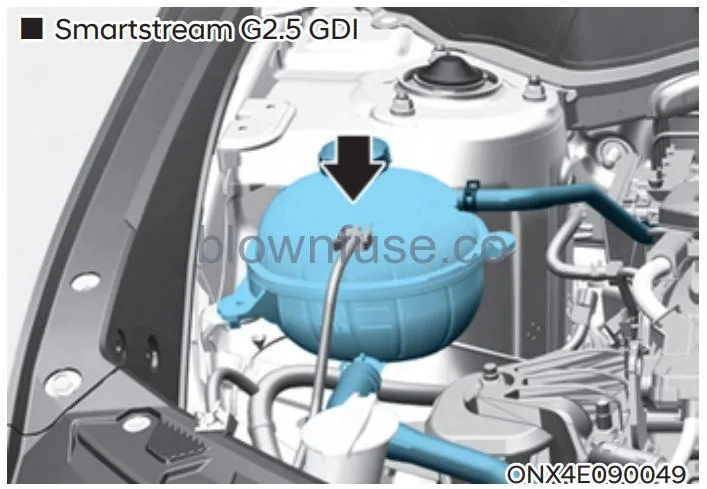
If it's oily and dark, that's engine oil, not coolant. If it's thin and slightly sweet, it's almost certainly antifreeze. Your Tucson's reservoir is translucent, so check the level against the FULL and LOW marks before doing anything else.
49% off Today's Exclusive Deals
Limited-time Exclusive Deals. Check current discount on Amazon.
Check Price on Amazon As an Amazon Associate I earn from qualifying purchases.Safety comes before diagnosis. Never open the radiator cap while the engine is warm. The system runs at roughly 12 to 16 psi, and scalding coolant can spray out violently.
Let the car sit for at least 30 to 45 minutes after driving. Confirm the leak matches the symptoms we cover next, and you'll avoid chasing the wrong problem.
Quick Answer
A Hyundai Tucson coolant leak usually comes from the water pump, radiator end tanks, thermostat housing, or a degraded hose. External leaks leave puddles under the car. Internal leaks mix coolant with oil or enter the combustion chamber, causing white smoke.
Confirm the location with a cold visual check, then use a pressure tester to pinpoint the source. If the leak is internal, stop driving immediately. A blown head gasket can destroy the engine within minutes.
Aggregate reviews indicate the water pump and plastic radiator end tanks are the most common failure points on Tucsons with over 60,000 miles. Repairs range from $15 for a radiator cap to over $1,200 for a heater core. Early diagnosis is the cheapest repair you'll ever make.
The Main Decision Branch: External vs Internal vs Combustion Leak
Image source: Bing (Web (fair-use with source credit))
The first step isn't finding the puddle. It's figuring out which category your leak falls into. Every Tucson coolant leak fits one of three branches, and each has its own symptoms and solutions.
Branch 1: External leak. Coolant escapes from a component you can see or touch. This includes hoses, the radiator, the water pump, the thermostat housing, and the heater core. You'll notice a puddle under the car, crusty residue around a component, or a sweet smell near the engine bay.
Branch 2: Internal leak. Coolant gets into the engine oil or transmission fluid. This points to a failed head gasket, a cracked engine block, or a bad oil cooler gasket. You might see milky brown sludge on the dipstick or under the oil fill cap.
The coolant level drops, but there's no obvious puddle.
Branch 3: Combustion leak. Coolant enters the combustion chamber through a compromised gasket. The engine burns it off, which produces white, sweet-smelling exhaust. You might also see bubbles in the coolant reservoir while the engine idles.
This is the most serious branch because it threatens the engine itself.
The quick test is visual. If you see coolant dripping directly, you're in Branch 1. If not, pull the dipstick and check the oil fill cap.
Sludge or white smoke moves you into Branch 2 or 3. That distinction determines whether you can fix this in your driveway or need a professional immediately. An internal leak demands the same urgency as a brake failure on the road.
How to Pinpoint the Leak: Step-by-Step Tucson Diagnostic Workflow
Once you've identified which branch you're in, it's time to confirm the exact source. Here's the order that avoids wasted parts and frustration.
Step 1: Cold visual inspection. With the engine completely cold, inspect all coolant hoses, the radiator end tanks, the water pump weep hole, and the reservoir. Look for white or crusty residue. That's dried coolant marking the leak point.
Check the heater hose connections at the firewall too.
Step 2: Feel for wetness. Run your hand along each hose joint and clamp. A damp spot or a soft, swollen hose tells you a lot. If a hose feels spongy, it's failing internally even if the outside looks fine.
Step 3: Pressure test. Rent or buy a coolant pressure tester. They typically cost $20 to $50 for a manual kit. Install it on the radiator neck and pump it to the pressure rating printed on your radiator cap, usually 12 to 16 psi.
Watch the gauge for 15 minutes. If it drops, look for dripping or fresh wet spots.
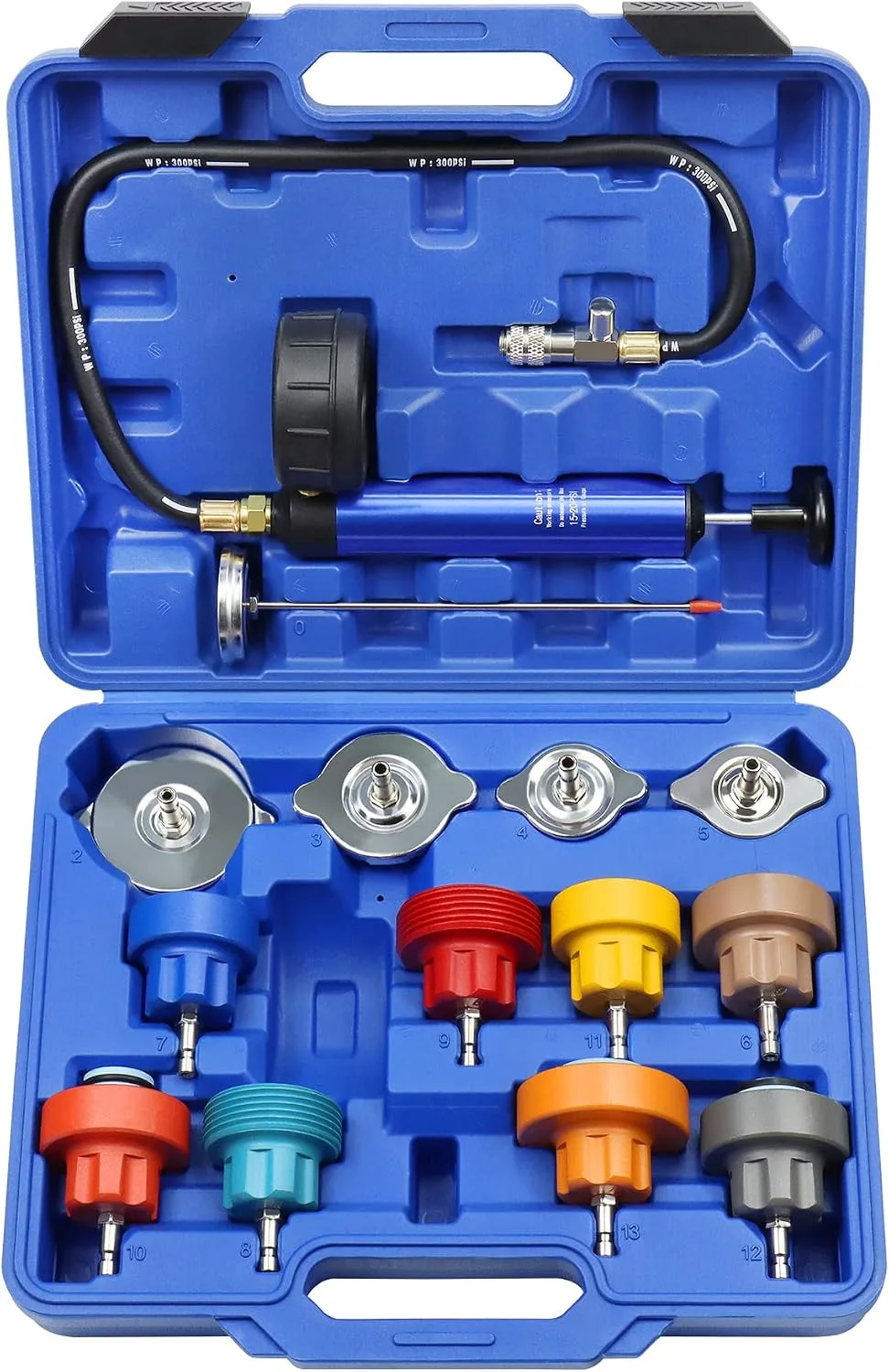
Image source: Bing (Web (fair-use with source credit))
Step 4: Use dye if the leak is slow. Add a few drops of UV dye to the coolant, run the engine until it reaches operating temperature, then sweep a blacklight over the engine bay. The dye glows brightly at the leak point. This catches seeps that pressure testing misses.
Step 5: Check for internal leaks. If there's no external evidence, pull the dipstick. Milky, tan-colored oil means coolant contamination. Perform a combustion leak test using a chemical block tester, which responds to exhaust gases in the cooling system.
If the fluid changes color, you have a head gasket issue.
If your Tucson is overheating rather than leaking, also verify the radiator fan operation. A failing radiator fan mimics coolant loss symptoms and leads to the exact same engine damage. The fan should kick on when the coolant temperature climbs past roughly 200°F.
Common Tucson Leak Spots, Symptoms, and Repair Costs
Here's a breakdown of the most frequently reported leak locations across Tucson model years, based on our research and verified buyer feedback:
| Component | Typical Symptoms | Approximate Repair Cost (Parts + Labor) |
|---|---|---|
| Water pump (weep hole drips) | Coolant pooling under the front-driver side, squeaking noise from the timing area | $400–$800 |
| Radiator end tank cracks | Puddle under the front-passenger side, crust near the plastic tank seam | $350–$700 |
| Upper/lower radiator hoses | Visible wetness near clamps, soft or bulging hose | $100–$300 |
| Thermostat housing | Dried crust around the housing, intermittent overheating | $200–$450 |
| Heater core | Sweet smell in the cabin, wet passenger floor mat, foggy windows | $600–$1,200 |
| Radiator cap | Coolant bubbling into the reservoir after shutdown, minor loss | $10–$25 |
| Head gasket (internal) | White smoke, milky oil, overheating, bubbles in reservoir | $1,500–$2,800 |
| Oil cooler gasket (2.4L GDI) | Coolant in oil or oil in coolant, no external puddle | $300–$700 |
The water pump is the most common external failure. The plastic impeller degrades over time, and the weep hole starts dripping. That's a warning sign that the bearing is failing.
Catching it early prevents a catastrophic failure that can overheat the engine. If coolant is leaking from the front of the engine, it's usually the water pump. If it's wet around the firewall, suspect the heater core.
You may also want to inspect the accessory belt while you're in there, since a worn belt is often replaced at the same time as the pump. A worn belt is cheap insurance while you're already paying labor for water pump access. If you're handy, a pump replacement on a Tucson is a solid weekend job.
If not, the labor cost is worth every penny to avoid a tow truck and a warped cylinder head.
Mistakes That Turn a Cheap Fix into a Big Bill
The most expensive mistake is ignoring a small leak because the engine hasn't overheated yet. Coolant doesn't just lubricate and cool. It also protects the engine block from corrosion.
Run low for too long and you're gambling with a cracked head and a blown head gasket. What started as a $15 radiator cap can become a $2,800 engine repair.
Adding a stop-leak product is the second most common blunder. These sealants work by clogging tiny passages, and they don't discriminate. They'll plug a pinhole in the radiator and simultaneously plug the heater core, the thermostat, and the narrow coolant galleries inside the engine.
The result is chronic overheating and a cooling system that needs a professional flush. If you ever reach for a bottle of stop-leak, ask why the leak exists in the first place. Slow-weeping leaks get worse, not better.
Mixing coolant types is another sneaky problem. Different coolant chemistries don't always play well together. When they mix, they can form a thick sludge that restricts flow and accelerates corrosion.
The Tucson's cooling system calls for a specific silicate-free, phosphate-based coolant. If you're unsure what's in there, do a complete flush rather than topping off with a universal "all-makes" blend.
Over-tightening plastic components is a classic DIY error. The radiator drain plug and the plastic end tanks are easy to crack with too much force. Hand-tighten the drain plug until it seats, then give it a quarter turn.
That's it. The same applies to the radiator cap. Make sure it clicks properly into place, but never force it.
Skipping the bleed procedure also causes problems. After any repair, the cooling system needs to have air purged from it. Air pockets create hot spots in the engine and make the temperature gauge spike erratically.
The Tucson has a known trick for this. Park on level ground, run the engine with the heater on full, and watch for bubbles in the reservoir. Top off as the level drops.
If you skip this step, you'll chase phantom overheating issues that come and go for weeks.
Finally, check for open technical service bulletins for your Tucson's model year before buying parts. Hyundai has issued TSBs for specific radiator and water pump issues. A quick search on the NHTSA website tells you if your vehicle is covered.
If you're already in the habit of topping up your fluids without looking for the source, break it now. The cheapest repair is the one you never have to do.
Refill, Bleed, and Verify: Finishing the Job Right
After tightening the last clamp, the real work begins. The cooling system has to prove it holds pressure before you trust it on the road. That means filling it correctly, purging air, and testing for leaks.
Start with the correct coolant. Check the owner's manual for the exact spec. Most Tucson engines take a phosphate-based, silicate-free coolant.
If you don't know what's in there, drain and flush completely rather than mixing fluids.
Gather these before you start:
- Coolant pressure tester
- UV dye and blacklight
- Distilled water
- Correct coolant spec for your engine
- Funnel with a long neck
The bleeding process matters. Park on level ground, set the heater to max, and run the engine with the reservoir cap off. Air bubbles will surface as the thermostat opens at around 190°F.
Keep topping off until no air escapes. Cap it, let the engine cool, and recheck.
Then pressure test. Connect the tester to the radiator neck and pump to the cap rating, usually 12 to 16 psi. Watch the gauge for 15 minutes.
A steady needle means sealed. A dropping needle means another leak. Use UV dye to locate it without taking anything apart.
Finish with a road test. Warm the engine fully, confirm the heater blows hot, and watch the temperature gauge settle at the normal midpoint. After the engine cools overnight, recheck the reservoir.
A slight drop is air bleeding out. A bigger drop is a leak you missed. A coolant system that cycles properly runs quieter and lasts longer.
Hybrid Tucson versions have an auxiliary electric water pump and a different bleed sequence. If yours is a hybrid, follow the hybrid-specific service procedure, not the standard ICE method.
Hyundai Tucson Coolant Leak FAQs
Is it safe to drive with a coolant leak?
If the leak is external and minor, you might be able to drive to a shop, but you should not drive far. Coolant loss leads to overheating, and overheating warps aluminum cylinder heads quickly. If you see white smoke or milky oil, stop the engine immediately and have it towed.
The same logic applies to ignoring a grinding brake issue on your way to the shop.
Why is there a sweet smell inside my car but no puddle outside?
That's usually a heater core leak. Coolant leaks from the heater core into the cabin, soaking the passenger floor mat and fogging the windows. The coolant evaporates before it drips under the car, which is why you don't see a puddle.
It's a labor-intensive repair because the dashboard has to be partially removed.
How often should I check my Tucson's coolant level?
Check it every time you refuel or once a month. The reservoir makes it easy to inspect without opening the radiator cap. If the level consistently drops between checks, you have a leak or a worn radiator cap that's venting pressure improperly.
Catching a slow weep early is the difference between a quick hose clamp replacement and a full radiator job.
What coolant does a Hyundai Tucson take?
Most Tucson models require a phosphate-based, silicate-free coolant, often available at Hyundai dealerships as OEM fluid. Check your owner's manual for the precise spec. Some recent engines use an enhanced blue coolant.
Universal green coolant is not a safe substitute.
Why is my Tucson overheating but not leaking coolant?
A few possibilities exist. The radiator cap might be weak and not maintaining pressure, the thermostat might be stuck closed, or the water pump impeller could be worn and moving too little coolant. A cooling fan that fails to engage will also cause overheating.
Test the fan, then inspect the thermostat and cap before replacing expensive components. If the fan isn't the issue, check whether your AC system is blowing warm at idle, which can indicate a shared electrical fault.



One Comment on “Hyundai Tucson Coolant Leak”