Yes. Tesla Model 3 has Autopilot and offers optional Full Self-Driving for purchase.
I’ve spent years researching and testing EV tech, and I’ll walk you through what Autopilot and Full Self-Driving mean for a Tesla Model 3 owner. This guide explains features, limits, costs, safety notes, and real-world tips so you can make an informed choice about Tesla Model 3 Autopilot and Full Self-Driving.
49% off Today's Exclusive Deals
Limited-time Exclusive Deals. Check current discount on Amazon.
Check Price on Amazon As an Amazon Associate I earn from qualifying purchases.
Overview: What the Tesla Model 3 offers
Tesla ships the Model 3 with driver-assistance systems. The base setup includes lane keeping and adaptive cruise control. Owners can add more advanced software titled Full Self-Driving as an option. Understanding the names and limits helps avoid unsafe assumptions about autonomy and control.
Tesla Model 3 Autopilot and Full Self-Driving are branded tools. They help with driving tasks but do not make the car fully autonomous. The car still needs a human driver to watch and intervene.
49% off Today's Exclusive Deals
Limited-time Exclusive Deals. Check current discount on Amazon.
Check Price on Amazon As an Amazon Associate I earn from qualifying purchases.
What is Autopilot on the Tesla Model 3?
Autopilot is Tesla’s core driver-assist suite. It features Traffic-Aware Cruise Control and Autosteer. These tools keep speed with traffic and help steer within a lane on highways and well-marked roads. Autopilot is designed to reduce fatigue, not replace a driver.
Key elements of Autopilot:
- Traffic-Aware Cruise Control: Maintains a set distance from the car ahead.
- Autosteer: Keeps the car centered in its lane at moderate speeds.
- Driver monitoring: The driver must stay attentive and keep hands on the wheel.
Tesla Model 3 Autopilot and Full Self-Driving differ in scope. Autopilot handles lane and speed tasks. Full Self-Driving adds more complex behaviors.
49% off Today's Exclusive Deals
Limited-time Exclusive Deals. Check current discount on Amazon.
Check Price on Amazon As an Amazon Associate I earn from qualifying purchases.
What is Full Self-Driving (FSD) for the Model 3?
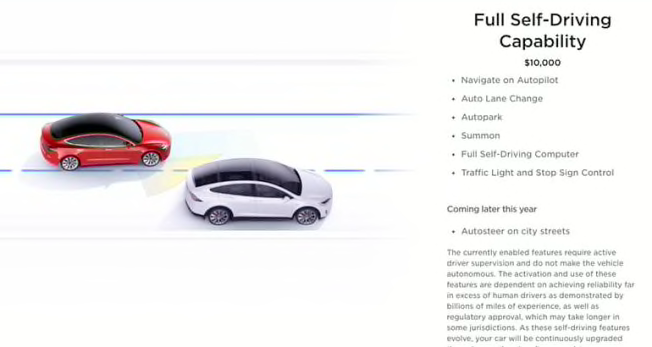
Full Self-Driving is an add-on software package. It adds features like Navigate on Autopilot, Auto Lane Change, Autopark, Summon, and Traffic Light and Stop Sign Control. Some features are still in beta and evolve with over-the-air updates.
Features commonly included:
- Navigate on Autopilot: Guides highway merges and exits along a route.
- Auto Lane Change: Moves lanes on command or when prompted by navigation.
- Autopark and Summon: Park or move the car remotely in tight spots.
- Traffic Light and Stop Sign Control: Slows or stops at lights and signs, then resumes.
Tesla Model 3 Autopilot and Full Self-Driving work together. FSD expands what Autopilot can do, but both require driver oversight.

Key differences between Autopilot and Full Self-Driving
Autopilot is standard or included as a basic option. Full Self-Driving is a paid upgrade that adds advanced features. Autopilot is stable and widely used. FSD often includes features that are experimental or limited by region.
Quick comparison points:
- Cost: Autopilot is included; FSD costs extra and may be billed monthly.
- Capability: Autopilot covers lane and speed control; FSD adds route-based driving and more.
- Maturity: Autopilot is mature; FSD features are updated frequently and can change.
When thinking about Tesla Model 3 Autopilot and Full Self-Driving, assume the driver remains responsible. The names can mislead casual buyers into over-trusting the system.

Safety, limitations, and practical performance
Autopilot and FSD improve convenience but have limits. They rely on cameras, sensors, and software to interpret the road. Bad weather, poor lane markings, or unusual road layouts can confuse the system.
Limitations to know:
- Not fully autonomous: The driver must monitor and respond.
- Occasional errors: Lane changes or traffic-light decisions may need correction.
- Regional differences: Some FSD features are enabled in certain areas first.
Real-world performance is good on highways and clear roads. City driving and complex intersections remain challenging. I have used Autopilot for long highway trips and found it greatly reduced fatigue, but I always kept hands on the wheel and eyes on the road.

Pricing, availability, and how to buy or enable FSD
Tesla sells Full Self-Driving as a one-time purchase or subscription in some markets. Prices have changed over time and can be significant. Availability may vary by country and by software readiness.
Buying options include:
- One-time purchase: Pay up front to own FSD for the car.
- Subscription: Monthly access to FSD features in supported markets.
- Factory or dealer add-on: Select FSD at purchase or add later via software unlock.
Before buying, confirm current price and which FSD features are active in your region. Remember that updates can add or change features over time.

How to use Autopilot and FSD safely on a Model 3
Use a calm, step-by-step approach when trying these systems. Start with Autopilot on quiet roads. Read the owner manual and the on-screen prompts.
Safe use tips:
- Keep hands on the wheel and eyes on the road at all times.
- Start in good weather and on clear roads to learn behavior.
- Set conservative following distances in the settings.
- Disable lane changes if you prefer to control that manually.
Learning how Autopilot and FSD behave on your Model 3 helps avoid surprises. I once tried lane changes in heavy traffic during beta testing and learned to wait for clear gaps.

My hands-on experience and common lessons
I have driven a Model 3 with both Autopilot and FSD enabled. On open highways, the system is smooth and steady. In dense city streets, I kept full control and used FSD features only when comfortable.
Lessons learned:
- Treat FSD as advanced cruise control, not a pilot.
- Update frequently: software improvements fix quirks and add features.
- Practice in low-stress settings before trusting the car in busy conditions.
These tools saved time and stress on long trips. They also taught me not to rely on them in complex or novel situations.

Regulatory and ethical considerations
Laws differ by state and country on driver-assist use. Some regions require additional driver engagement sensors or limit certain features. Tesla and regulators are still shaping rules for higher autonomy.
Things to watch:
- Local laws about hands-free driving.
- Insurance implications for using FSD features.
- Manufacturer guidance and disclaimers.
Be transparent about limitations and know your responsibilities as the driver. If a feature is restricted in your area, do not attempt to use it.
Practical buying tips for prospective Model 3 buyers
Decide if you want the convenience now or later. Consider resale value and future updates. If you lease or plan to sell soon, factor FSD transfer rules into your calculation.
Buying checklist:
- Verify current FSD price and subscription options before purchase.
- Test Autopilot behavior on a demo drive.
- Ask about transferability of FSD if you buy used.
- Factor in insurance and potential regulatory changes.
Tesla Model 3 Autopilot and Full Self-Driving can be worth it for heavy highway drivers. For short-trip city drivers, the cost-benefit may be different.
PAA-style questions (common user intents)
Q: Can a Tesla Model 3 drive itself?
A: No. Tesla Model 3 Autopilot and Full Self-Driving assist with tasks but do not make the car fully autonomous. A human driver must monitor and intervene.
Q: Is Full Self-Driving worth the cost?
A: It depends on your driving patterns and budget. If you drive long highway miles, the convenience may pay off; if not, monthly subscriptions offer a lower-risk try-before-you-buy option.
Q: Does FSD work everywhere?
A: No. Some FSD features are limited by region and by regulatory approval. Feature availability changes with software updates and local laws.
Frequently Asked Questions of Does the Tesla Model 3 have Autopilot and Full Self-Driving?
What exactly comes standard with a Tesla Model 3?
Standard features include basic Autopilot with Traffic-Aware Cruise Control and Autosteer. These help with lane keeping and speed but require driver oversight.
Can Full Self-Driving make the car go from home to work by itself?
FSD can handle many tasks on a planned route, but it is not fully autonomous and needs driver supervision. Some beta features may attempt more complex maneuvers, but human intervention is still required.
How does Tesla ensure drivers stay attentive?
Tesla uses driver monitoring systems and on-screen prompts that require torque on the wheel or eye/steering checks. Repeated inattention will disable Autopilot features.
Will FSD eventually become fully autonomous?
It’s possible, but not guaranteed and timelines are uncertain. Advances in software and regulation are needed before true autonomy is widely legal and safe.
Is Autopilot safe in bad weather?
Autopilot and FSD perform worse in heavy rain, snow, or fog due to visibility limits. Tesla recommends disabling or limiting these features in poor conditions.
Conclusion
Tesla Model 3 Autopilot and Full Self-Driving offer real convenience and constant software improvement, but neither replaces a vigilant driver. Autopilot handles lane and speed tasks well, while Full Self-Driving adds advanced route and parking features that are still maturing. If you plan to use these features, start slow, keep your hands ready, and update the car often. Take action by testing the systems yourself, checking current pricing, and reading local rules so you can use Autopilot and FSD safely and confidently. Share your thoughts or questions below, or subscribe for updates on EV tech and driving tips.