Popping the hood on your Jeep Grand Cherokee is a common task, whether you need to check your oil, top up the windshield washer fluid, or just get a general look under the hood. Knowing exactly how to open the Jeep Grand Cherokee hood ensures you can do this quickly and safely, without causing any accidental damage. It’s a fundamental skill for any vehicle owner.
Manufacturer specifications confirm that the process involves a two-step latch release. As of 2026, this system remains consistent across recent Grand Cherokee models, prioritizing user safety and preventing accidental hood openings. Let’s walk through exactly what you need to do.
49% off Today's Exclusive Deals
Limited-time Exclusive Deals. Check current discount on Amazon.
Check Price on Amazon As an Amazon Associate I earn from qualifying purchases.How Do You Open the Jeep Grand Cherokee Hood?
You open the hood via an interior lever and a secondary front safety catch. First, pull the interior lever located by the driver's left foot. Then, reach under the hood's front edge to release the safety catch.
Finally, lift the hood up.
Why You Need to Open Your Jeep's Hood
There are several practical reasons why you might need to get under the hood of your Jeep Grand Cherokee. These aren't usually complex repairs, but rather routine checks and basic maintenance tasks that every owner should be familiar with. Knowing how to access these components can save you time and money by allowing you to handle simple issues yourself.
49% off Today's Exclusive Deals
Limited-time Exclusive Deals. Check current discount on Amazon.
Check Price on Amazon As an Amazon Associate I earn from qualifying purchases.One common reason is checking essential fluid levels. Aggregate reviews report that drivers frequently need to inspect engine oil, coolant, brake fluid, and power steering fluid. Ensuring these are within their recommended ranges, which manufacturer specifications typically detail, is crucial for the vehicle's longevity and performance.
Another key task is topping up the windshield washer fluid reservoir, especially before long drives or during seasons with heavy road spray.
Image source: Web (Bing) / storage.googleapis.com (Web image (fair-use with source credit))
49% off Today's Exclusive Deals
Limited-time Exclusive Deals. Check current discount on Amazon.
Check Price on Amazon As an Amazon Associate I earn from qualifying purchases.Beyond fluid checks, opening the hood gives you visual access to components like the battery terminals, air filter housing, and various hoses and belts. This visual inspection can help you spot potential issues like leaks, cracks, or wear before they become major problems. For instance, identifying a frayed belt early can prevent a breakdown.
Similarly, checking the battery terminals for corrosion is a simple way to ensure proper electrical contact. This proactive approach helps maintain the vehicle's overall health.
Understanding the Jeep Grand Cherokee Hood Release System
The hood release system on your Jeep Grand Cherokee is designed with safety in mind, employing a two-stage process. This prevents the hood from accidentally springing open while you're driving, which could be incredibly dangerous. It involves a lever inside the cabin and a secondary latch located at the front of the hood.
The Interior Lever: Your First Step
The first part of the release mechanism is an interior lever, commonly referred to as the hood release handle. This lever is typically situated within the driver's reach inside the cabin. Its primary function is to disengage the main hood latch from its secured position.
Manufacturer specifications indicate this lever is usually found on the lower dashboard or the driver's side door sill. Pulling this lever actuates a cable that releases the primary latch holding the hood closed. It’s important to know its exact location in your specific Grand Cherokee model year, as minor variations can occur between different trims or generations.
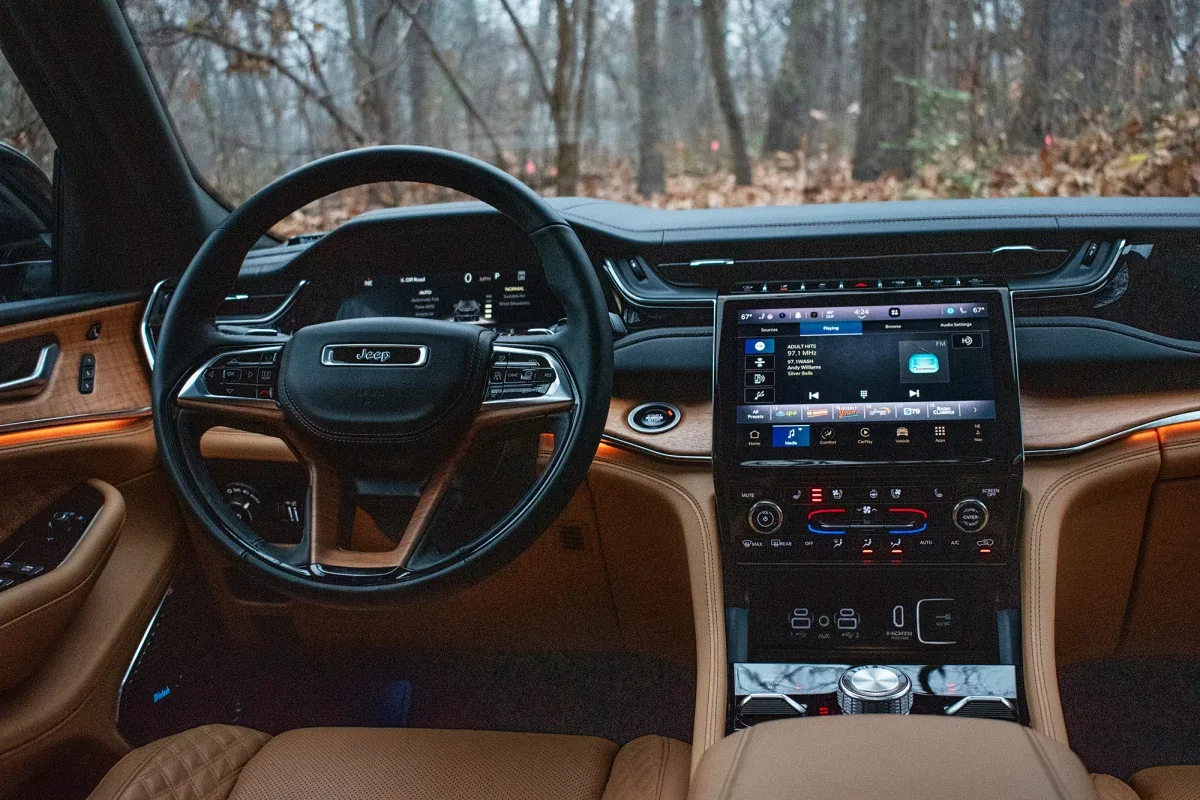
Image source: Bing (Web (fair-use with source credit))
The Front Latch: The Secondary Catch
After pulling the interior lever, the hood will usually pop up slightly, creating a small gap at the front edge. This is where the secondary safety catch is located. You must manually disengage this catch to fully release the hood.
This safety mechanism is a crucial component that prevents the hood from opening unintentionally. It requires you to reach under the hood and manipulate a specific tab or lever. Without disengaging this second catch, the hood will remain partially secured, and you won't be able to lift it all the way open.
Understanding this dual system is key to safely accessing the engine bay.
Step-by-Step: Opening Your Grand Cherokee Hood
Successfully opening your Jeep Grand Cherokee's hood involves a straightforward, two-step process once you know where to look. Following these steps precisely ensures you can access the engine compartment safely and efficiently for any necessary checks or basic maintenance. It's a sequence designed for ease of use but requires attention to detail.
Locating and Pulling the Interior Release
The first action is inside the vehicle. You'll need to find the hood release lever.
- Position yourself: Sit in the driver's seat and look down towards the lower dashboard area, near the driver's side door.
- Identify the lever: Search for a small lever, usually black, with a symbol that might resemble a car hood or simply say "Jeep." It's often located on the left side of the steering column or along the kick panel near the floor.
- Pull the lever: Once found, grasp the lever firmly and pull it towards you. You should hear a click or feel a release from the front of the vehicle, indicating the primary latch has been disengaged.
Finding and Disengaging the Safety Catch
With the interior lever pulled, the hood will lift slightly, revealing the secondary latch.
- Approach the front: Walk to the front of your Grand Cherokee and locate the gap between the hood and the grille.
- Reach for the catch: Carefully reach your hand up into this gap, feeling along the underside of the hood. You're looking for a small metal lever or tab.
- Push or slide: You’ll need to push this safety catch forward, upward, or slide it to the side, depending on its design. It’s often a small, spring-loaded mechanism.
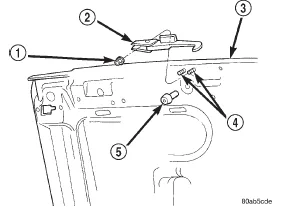
Image source: Bing (Web (fair-use with source credit))
Lifting and Securing the Hood with the Prop Rod
Once the safety catch is disengaged, the hood is ready to be opened.
- Lift the hood: With your free hand, lift the front edge of the hood. It should now open smoothly.
- Locate the prop rod: You'll see a metal rod attached to the underside of the hood. This is the prop rod.
- Secure the hood: Pull this rod out and insert its end into the designated slot or hole on the inner fender or firewall. This will hold the hood open securely.
Common Hiccups: When Your Hood Won't Open
Sometimes, things don't go as smoothly as planned, and your Jeep Grand Cherokee's hood might refuse to budge. These issues usually stem from a couple of common points in the release system. Understanding these potential problems can help you troubleshoot effectively without resorting to excessive force, which could cause damage.
Troubleshooting a Stubborn Interior Lever
If the interior hood release lever feels loose or doesn't seem to do anything when pulled, the issue might be with the release cable. Our research indicates that these cables can stretch, fray, or become disconnected over time. If the lever itself is visibly damaged or broken, it will obviously need replacement.
Another possibility is that the main latch mechanism at the front of the hood is seized due to dirt, debris, or corrosion. Manufacturer specifications suggest that regular cleaning and lubrication of the latch assembly can prevent this. If the lever feels stiff but still releases, the issue is likely just a need for lubrication.
If it feels completely limp or disconnected, the cable is the primary suspect.
Dealing with a Stuck Safety Catch
The safety catch, located at the front of the hood, can also be a source of frustration. This small lever is designed to prevent accidental hood opening, but it can sometimes get stuck in place. Aggregates of user feedback suggest that dirt or debris accumulation is a frequent culprit, jamming the mechanism.
Occasionally, the spring mechanism within the safety catch might fail. This means it won't return to its proper position after being disengaged, or it might require significant force to move. If you've pulled the interior lever and can't find or move the safety catch under the hood, it’s important to gently try wiggling the hood while reaching for it.
Sometimes, a slight shift in pressure can free it up. Avoid prying forcefully, as you could bend or break the catch or the hood edge.
Safely Closing Your Jeep's Hood
Closing your Jeep Grand Cherokee's hood is just as important as opening it, and doing it correctly ensures it stays securely latched. A properly closed hood prevents wind resistance issues and, more importantly, stops it from accidentally opening while you're driving. It's a simple process, but it requires a definitive action to confirm it's locked.
First, you'll need to lower the hood prop rod. This is the metal rod that holds the hood open. Carefully lift the prop rod out of its socket and secure it back to its mounting point on the underside of the hood.
Then, take hold of the hood's front edge and lower it gently and evenly. As it gets close to the latch, let it drop the last few inches from about waist height. You should hear a distinct "clunk" as both the primary latch and the safety catch engage.
It’s a good practice to give the hood a gentle push down at the front corners after you hear the initial click. This provides an extra assurance that both latches have fully secured. Always double-check that the hood is flush with the body panels and doesn't move when you give it a firm tug before driving off.
This simple confirmation step is critical for safety.
What Are the Pros and Cons of Owning a Range Rover?: Guide
Opening your hood is simple, but it’s part of a broader picture of vehicle ownership. For those considering a luxury SUV, understanding the overall ownership experience is crucial, and this includes potential maintenance needs and associated costs. For instance, while a Jeep Grand Cherokee offers robust utility, comparing it to premium vehicles like the Range Rover highlights different ownership considerations.
Owners often praise the Range Rover's sophisticated interior, powerful performance, and advanced technology.
However, these benefits are often balanced by significant expenses. The upfront cost is substantial, and ongoing costs like maintenance and insurance can be considerably higher. Some owners report that electrical issues can be more common in Range Rover vehicles.
Research indicates that the complexity of these luxury systems can translate into higher repair bills, even for minor issues.
What Tire Sizes Are Used On A Range Rover: Tire Size Guide
When you need to access your engine bay, ensuring your tires are in good condition is also part of basic vehicle care. The correct tire size is not just about aesthetics; it directly impacts your Grand Cherokee’s performance, handling, and safety. Jeep Grand Cherokees come equipped with a variety of tire sizes depending on the specific trim level, year, and optional packages.
For example, recent models might see factory-equipped tires ranging from 17 inches on base trims to 20 inches or even larger on higher-end versions. For a 2026 Jeep Grand Cherokee Laredo, you might find 18-inch wheels as standard, while a Summit Reserve could come with 21-inch wheels. Always consult your vehicle's owner's manual or the sticker on the driver's side doorjamb for the exact tire size specification for your model.
Using the incorrect tire size can affect speedometer accuracy and anti-lock braking system (ABS) performance.
How Often Should A Range Rover Be Serviced: Service Guide
While your Grand Cherokee might not have the same service requirements as a Range Rover, understanding routine maintenance is key to any vehicle's lifespan. Regular servicing, as recommended by the manufacturer, helps ensure all components are functioning correctly and can prevent more significant problems down the line. For many vehicles, including Jeep Grand Cherokees, a typical service interval is around every 5,000 to 7,500 miles or every six months, whichever comes first.
This interval usually covers basic checks like fluid levels, tire rotations, and brake inspections. More comprehensive services, involving oil changes, filter replacements, and deeper system checks, might be recommended at higher mileage intervals, such as every 15,000 or 30,000 miles. Always adhere to the service schedule outlined in your owner's manual to keep your vehicle running optimally and to maintain any warranty coverage.
What Type Of Oil Does A Range Rover Use?: Best Oil Guide
Understanding your vehicle's specific fluid needs is crucial, and this extends to engine oil. Using the wrong type of engine oil can lead to decreased performance, increased wear, and potentially severe engine damage. Manufacturer specifications for engine oil are based on factors like viscosity (e.g., 5W-30, 0W-20) and the oil's formulation (e.g., synthetic, conventional, blend), which are optimized for the engine's design and operating conditions.
For many modern Jeep Grand Cherokees, synthetic oil is often recommended. Synthetic oils provide superior lubrication, better resistance to high temperatures, and improved protection for engine components compared to conventional oils. Always check your owner's manual for the exact oil specifications, including the SAE viscosity grade and the API service classification, to ensure you are using the correct product.
Using the specified oil helps maintain engine health and efficiency.
Frequently Asked Questions
How long does it take to open the hood?
Opening the hood typically takes less than a minute once you know the locations of the interior lever and the safety catch.
Can I open the hood in the rain?
Yes, you can open the hood in the rain, but be prepared for water to get into the engine bay. Dry off components afterward if possible.
What if the hood release cable is broken?
If the interior release cable is broken, you may need professional assistance to access the hood latch. Sometimes a mechanic can release it manually.
Do I need any tools to open the hood?
No, typically no tools are required to open the hood. The release system is designed for manual operation.
Can I drive with the hood slightly ajar?
Absolutely not. Driving with the hood even slightly open is extremely dangerous, can cause significant damage, and may lead to accidents. Always ensure it is fully latched.