Using a winch strap can look simple, but many people make mistakes that cause damage, accidents, or wasted time. Whether you’re securing cargo, towing a vehicle, or moving heavy equipment, knowing how to use a winch strap properly is key for safety and efficiency.
This guide breaks down every step, explains what to avoid, and shares practical insights that most beginners miss. If you’re new to winch straps or want to improve your skills, you’ll find clear instructions, examples, and important tips here.

49% off Today's Exclusive Deals
Limited-time Exclusive Deals. Check current discount on Amazon.
Check Price on Amazon As an Amazon Associate I earn from qualifying purchases.What Is A Winch Strap?
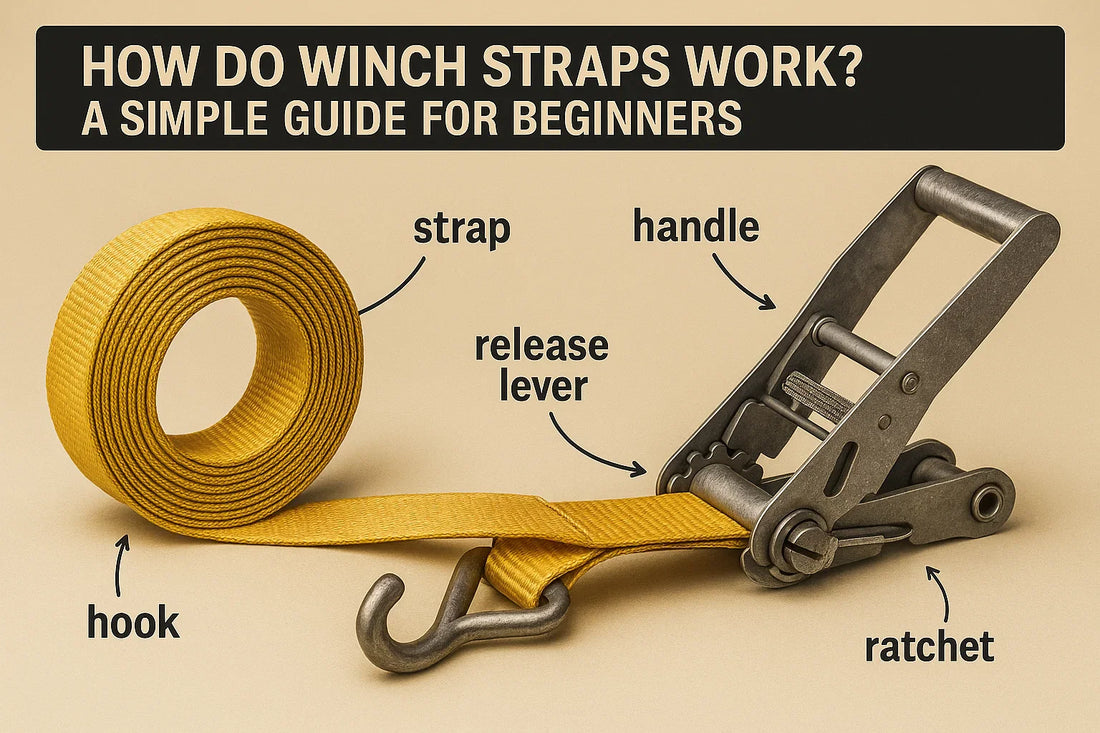
A winch strap is a strong, flat piece of webbing designed to secure loads on trucks, trailers, or other vehicles. It’s usually made from polyester or nylon, which offers high strength and resistance to stretching. The strap connects to a winch—a mechanical device that tightens or releases the strap—letting you secure cargo quickly and safely.
Winch straps come in various lengths, widths, and strengths. Most common are 2-inch and 4-inch wide straps, with breaking strengths from 5,000 to 20,000 pounds. They often have hooks or loops on one end to attach to anchor points.
Common Uses
- Securing cargo on flatbed trucks
- Towing vehicles
- Recovering stuck vehicles
- Holding heavy equipment in place
Why Choose A Winch Strap?
Compared to chains or ropes, winch straps are lighter, easier to handle, and cause less damage to cargo. The flat webbing distributes force evenly, reducing pressure points.
49% off Today's Exclusive Deals
Limited-time Exclusive Deals. Check current discount on Amazon.
Check Price on Amazon As an Amazon Associate I earn from qualifying purchases.Types Of Winch Straps
Not all winch straps are the same. The right type depends on your job, the weight of your load, and how you plan to use it.
| Type | Common Width | Breaking Strength | Best For |
|---|---|---|---|
| Flat Strap | 2″–4″ | 5,000–20,000 lbs | Cargo securement |
| Loop End Strap | 2″–3″ | 5,000–12,000 lbs | Winching, towing |
| Chain End Strap | 4″ | 15,000–20,000 lbs | Heavy-duty loads |
| Recovery Strap | 2″–4″ | 7,000–30,000 lbs | Vehicle recovery |
How To Choose The Right Winch Strap
Consider these factors:
- Load Weight: Always pick a strap rated above your maximum load.
- Length: The strap should be long enough to reach your anchor point without excess slack.
- End Fittings: Hooks, loops, or chains affect how you attach the strap.
- Material: Polyester is best for cargo securement; nylon is preferred for recovery (it stretches under load).
Most accidents happen when people use straps that are too weak, too short, or incorrectly attached. Double-check these points before buying.
Essential Safety Tips
Using a winch strap without proper safety can lead to injury or damage. Always follow these guidelines:
49% off Today's Exclusive Deals
Limited-time Exclusive Deals. Check current discount on Amazon.
Check Price on Amazon As an Amazon Associate I earn from qualifying purchases.- Inspect the strap for cuts, fraying, or damage before use.
- Avoid knots—knots weaken the strap by up to 50%.
- Don’t exceed the rated capacity.
- Keep straps away from sharp edges.
- Never stand in line with a tensioned strap.
Experienced users know that many accidents happen during unloading, not just loading. Always stay alert.
Step-by-step Guide: How To Use A Winch Strap
Let’s break down how to use a winch strap for cargo securement. This method applies to flatbed trucks, trailers, and similar setups.
1. Inspect The Strap And Winch
Before you start, check the strap and winch for signs of wear or damage.
- Look for cuts, tears, or frayed edges.
- Check the winch for rust, broken teeth, or loose bolts.
- Make sure the end fitting (hook or loop) is intact.
If you find any problem, do not use the strap. Replace or repair as needed.
2. Position The Strap
Lay the strap across your cargo, making sure it covers the area evenly.
- Place the strap flat, with no twists.
- The end fitting should reach the anchor point on the trailer or truck.
Twisted straps reduce strength and can cause uneven tension.
3. Attach The End Fitting
Connect the hook, loop, or chain end to the anchor point.
- Use D-rings, stake pockets, or anchor rails.
- Make sure the fitting is secure and won’t slip during transport.
If your strap has a chain end, thread the chain through the anchor and hook it back to itself.
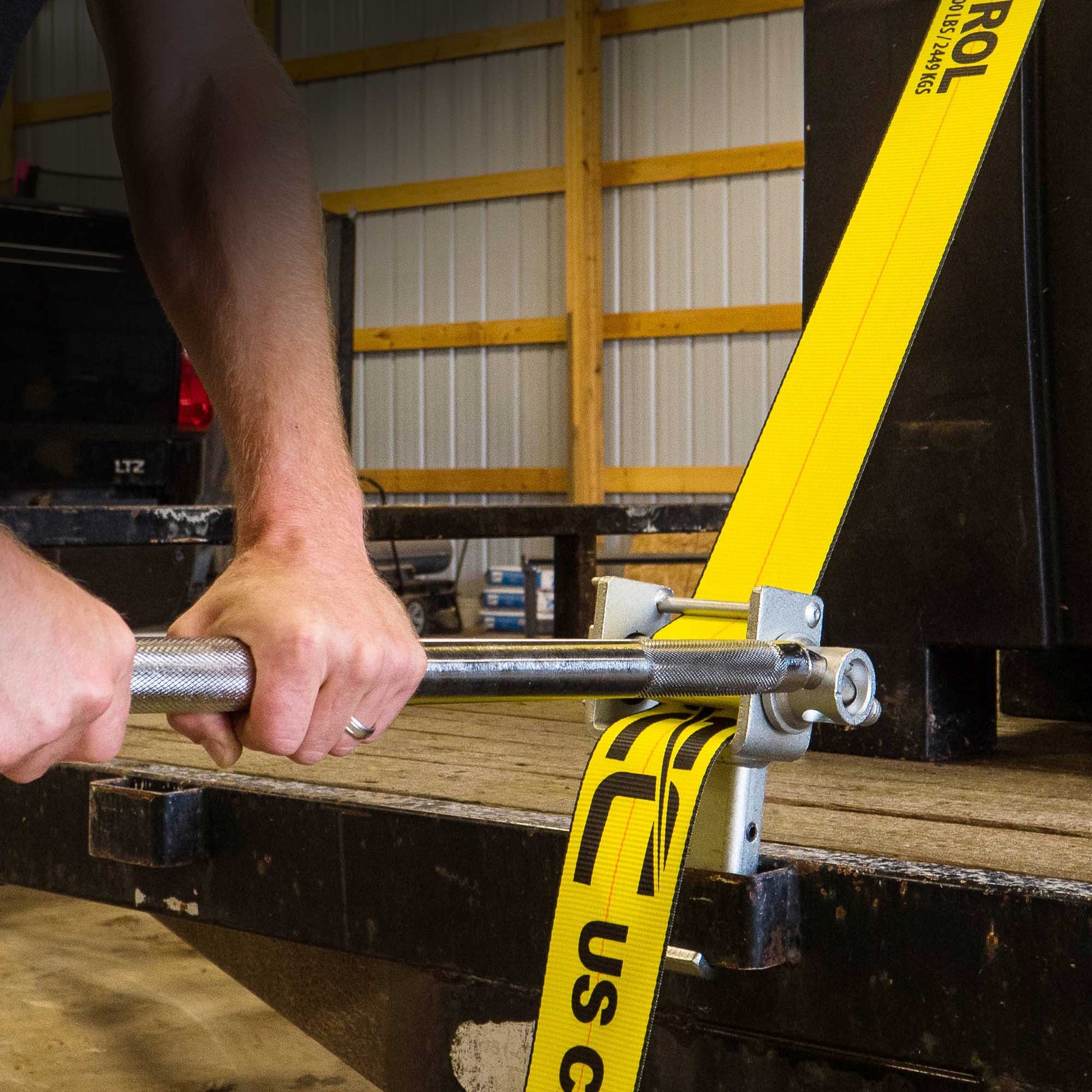
4. Feed The Strap Into The Winch
Insert the loose end of the strap into the winch drum.
- Slide the strap through the slot or opening in the drum.
- Pull the strap until there’s minimal slack.
Most winches have a slot that fits the strap snugly. Make sure the strap lays flat inside the drum.
5. Wind The Strap
Turn the winch handle to wind the strap onto the drum.
- Keep the strap flat—no overlaps or twists.
- Apply tension slowly to avoid sudden jerks.
Experienced drivers often use a winch bar for extra leverage. Never use your hands alone.
6. Tighten And Secure
Continue turning the winch until the strap is tight.
- The cargo should not move when pushed.
- Don’t overtighten—too much force can damage the cargo or strap.
Lock the winch handle in place. Some winches have a locking pin; others rely on friction.
7. Check And Adjust
Once tightened, inspect the setup.
- Ensure the strap is tight and even.
- Check all anchor points.
- Look for any signs of shifting or slack.
If needed, adjust the tension. It’s common for straps to loosen slightly after a few miles of driving.
8. Secure Loose Ends
Tie or tuck any excess strap length to prevent flapping.
- Use a rubber band, Velcro, or tuck the end under another strap.
- Loose ends can get caught in wheels or fly off.
This step is often missed by beginners, but it prevents damage and keeps your load legal.
Using A Winch Strap For Vehicle Recovery
Recovering a stuck vehicle is different from cargo securement. Here’s how to use a winch strap for recovery.
1. Assess The Situation
- Check the ground (mud, sand, snow) and vehicle position.
- Choose a strong anchor point—tree, another vehicle, or a recovery anchor.
2. Select The Right Strap
Use a recovery strap (nylon preferred). Make sure the breaking strength is at least twice the vehicle’s weight.
3. Attach The Strap
- Connect to the vehicle’s recovery point (not bumpers or suspension).
- Use a D-shackle or hook for secure attachment.
4. Connect To The Winch
Feed the strap into the winch drum and wind up slack.
5. Apply Tension
Slowly operate the winch to pull the vehicle. Don’t jerk or rush—the strap can snap.
6. Monitor And Adjust
Stop if the strap stretches too much or starts to fray. Reposition as needed.
Recovery is dangerous—never stand in line with the strap, and always use gloves.
Common Mistakes And How To Avoid Them
Many beginners make errors that cost time or cause accidents. Here are mistakes to watch for:
- Using the wrong strap type: Flat straps aren’t for recovery; recovery straps aren’t for cargo.
- Ignoring the rated capacity: Overloading is a major cause of strap failure.
- Not inspecting before use: Small cuts can lead to big failures under load.
- Failing to secure loose ends: Loose straps can fly up and cause accidents.
- Twisting the strap: Reduces strength and causes uneven tension.
- Anchoring to weak points: Always use proper anchor points rated for load.
One insight many miss: straps lose strength if exposed to sun, chemicals, or extreme temperatures over time. Store them properly for longer life.
How To Maintain Your Winch Strap
A well-maintained winch strap lasts longer and is safer. Here’s what to do:
- Clean after use: Use mild soap and water to remove dirt and chemicals.
- Dry completely: Wet straps can mildew or rot.
- Store away from sunlight: UV rays weaken webbing over time.
- Inspect regularly: Look for wear, damage, or broken threads.
- Replace as soon as damage appears.
Never try to repair a strap with tape or glue—this reduces strength and is unsafe.
Legal And Regulatory Requirements
In the US, the Federal Motor Carrier Safety Administration (FMCSA) sets rules for cargo securement. Key points include:
- Straps must be rated for the load.
- Minimum number of straps depends on load weight and length.
- Straps must be in good condition—no cuts or fraying.
Failure to follow these rules can result in fines or out-of-service orders. Always check local regulations, as some states have stricter rules.
| Load Weight | Minimum Straps Required | Regulation Reference |
|---|---|---|
| Under 5,000 lbs | 1 | FMCSA 393.102 |
| 5,000–10,000 lbs | 2 | FMCSA 393.102 |
| Over 10,000 lbs | 3+ | FMCSA 393.102 |
Choosing Quality Winch Straps: What Really Matters
When shopping for a winch strap, focus on these factors:
- Breaking strength: Pick a strap rated at least 1.5 times your maximum load.
- Webbing material: Polyester is best for cargo; nylon is better for recovery.
- End fittings: Hooks, loops, or chains—choose based on your anchor type.
- Certification: Look for FMCSA or DOT certification.
Some brands claim high breaking strength but use low-quality stitching. Always check for double-stitched reinforced ends.
| Brand | Material | Breaking Strength | Certification |
|---|---|---|---|
| US Cargo Control | Polyester | 15,000 lbs | FMCSA |
| Erickson | Nylon | 20,000 lbs | DOT |
| Keeper | Polyester | 10,000 lbs | FMCSA |
Real-world Examples
Let’s look at two situations where winch straps are used.
Example 1: Securing Lumber On A Flatbed
A trucker hauls 8,000 pounds of lumber. He uses three 4-inch polyester winch straps, each rated at 15,000 pounds. He checks each strap for damage, lays them flat, and winds the straps evenly on the winch. After 50 miles, he stops to check tension—one strap has loosened slightly, so he tightens it. He tucks excess strap under the lumber to avoid flapping.
Example 2: Recovering A Stuck Jeep
A driver’s Jeep is stuck in mud. He uses a 3-inch nylon recovery strap with a breaking strength of 20,000 pounds. He attaches the strap to the Jeep’s recovery point and a nearby tree using a D-shackle. He operates the winch slowly, pulling the Jeep out without jerking. The strap stretches under load, then returns to its original length. He checks for damage after recovery.
These examples show the importance of picking the right strap, inspecting before use, and checking tension during the job.
Winch Strap Vs. Other Load Securement Tools
Some people ask if a winch strap is always best. Here’s how it compares to other options:
- Chains: Strong but heavy; can damage cargo.
- Ropes: Easy to handle but much weaker.
- Ratchet straps: Good for smaller loads; less tension than winch straps.
Winch straps are best for large, heavy loads and when you need fast, repeatable tension.
Practical Tips For Beginners
If you’re new to winch straps, keep these tips in mind:
- Practice winding and tightening with no load first.
- Always carry extra straps for emergencies.
- Use edge protectors for fragile cargo.
- Check strap tension every 100 miles.
- Keep a winch bar handy.
- Store straps in a dry, cool place.
One advanced tip: When securing multiple straps, tighten each a little at a time instead of fully tightening one before moving to the next. This keeps tension even.

Frequently Asked Questions
How Do I Know If My Winch Strap Is Strong Enough?
Check the breaking strength printed on the label or tag. It should be at least 1.5 times your maximum load. For example, if your cargo is 10,000 pounds, use a strap rated for at least 15,000 pounds.
Can I Use A Winch Strap For Towing?
Yes, but only if the strap is rated for towing and is made from nylon (for stretch). Never use a cargo strap for vehicle recovery. Always attach to proper recovery points, not bumpers.
What Is The Difference Between A Winch Strap And A Ratchet Strap?
A winch strap is tightened using a mechanical winch, while a ratchet strap uses a ratcheting handle. Winch straps are stronger and used for large loads; ratchet straps are for lighter cargo.
How Often Should I Replace My Winch Straps?
Replace any strap that shows cuts, fraying, or broken stitching. As a rule, inspect before every use and replace at least every two years if used regularly. Exposure to sun, chemicals, or heavy loads shortens lifespan.
Are There Legal Requirements For Using Winch Straps?
Yes. The FMCSA requires straps to be rated for the load and in good condition. The number of straps depends on cargo weight and length. Always check your local rules and follow FMCSA guidelines. For more details, see FMCSA Cargo Securement Rules.
Using a winch strap properly takes practice, but the right approach saves time and keeps you safe. By understanding types, using correct steps, and avoiding common mistakes, you’ll secure loads and recover vehicles with confidence. Always inspect your gear, follow safety guidelines, and keep learning—your skills and safety depend on it.