Image source: Bing (Web (fair-use with source credit))

49% off Today's Exclusive Deals
Limited-time Exclusive Deals. Check current discount on Amazon.
Check Price on Amazon As an Amazon Associate I earn from qualifying purchases.If you're dealing with a Hyundai Tucson door lock problem, you already know how frustrating it gets. The fob clicks, the lights flash, but one door just sits there. Or worse, the car locks you out entirely with no warning.
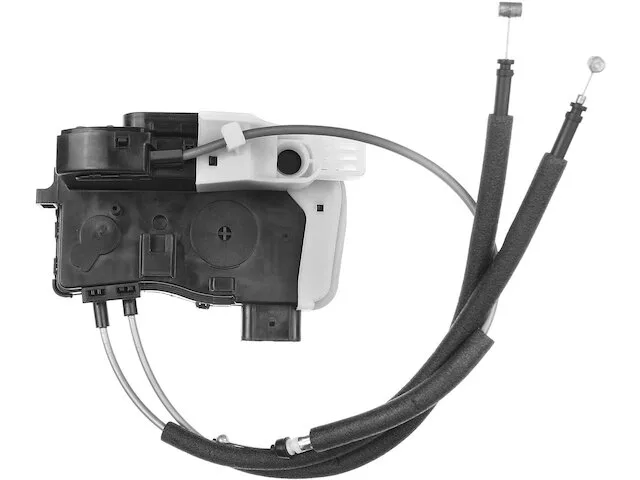
In our research, most Tucson lock issues trace back to just a few causes: a dead CR2032 fob battery, a blown fuse, broken wires in the door boot, or a failed lock actuator. The good news is that you can diagnose most of these at home with basic tools. As of 2026, replacement actuators are often sold as complete latch assemblies, which makes the physical swap straightforward for DIYers.
Let's walk through this step by step.
49% off Today's Exclusive Deals
Limited-time Exclusive Deals. Check current discount on Amazon.
Check Price on Amazon As an Amazon Associate I earn from qualifying purchases.Quick Answer
A Hyundai Tucson door lock problem usually means one of four things. The key fob battery is dead. The door lock actuator has failed.
The wiring harness in the door boot is broken. Or the child safety lock is engaged. Test the simple things first.
Replace the CR2032 battery before touching anything else. If the door locks manually but not electronically, the actuator is likely bad.
The Problem: Pin Down Your Exact Door Lock Symptom
Before you order any parts, you need to answer one question: what exactly is failing? The fix changes completely based on your answer.
49% off Today's Exclusive Deals
Limited-time Exclusive Deals. Check current discount on Amazon.
Check Price on Amazon As an Amazon Associate I earn from qualifying purchases.If the fob doesn't work on any door, you're looking at a battery, receiver, or BCM issue. If only one door refuses to lock, that points to a local mechanical or wiring fault. If the rear door won't open from outside but works from inside, check the child lock first.
It's the cheapest "repair" on this list.
Here's a quick symptom table to help you narrow it down:
| Symptom | Most Likely Cause | Difficulty |
|---|---|---|
| Fob dead on all doors | Fob battery or BCM | Easy |
| One door won't lock | Actuator or wiring | Moderate |
| Rear door stuck shut | Child lock engaged | Very easy |
| Clicking but no movement | Worn actuator gears | Moderate |
| Intermittent operation | Broken wire in boot | Tricky |
Write down which pattern matches. That single step will save you from replacing parts you don't need. Most people skip it and pay for an actuator they never needed.
How Tucson Door Locks Work (and Why They Fail)
Your Tucson's central locking is a network of small electric motors, switches, and sensors. When you press the fob button, the smart key receiver wakes the Body Control Module. The BCM sends power to the correct door lock actuator.
Each actuator spins a gear, and the gear pulls the mechanical latch closed.
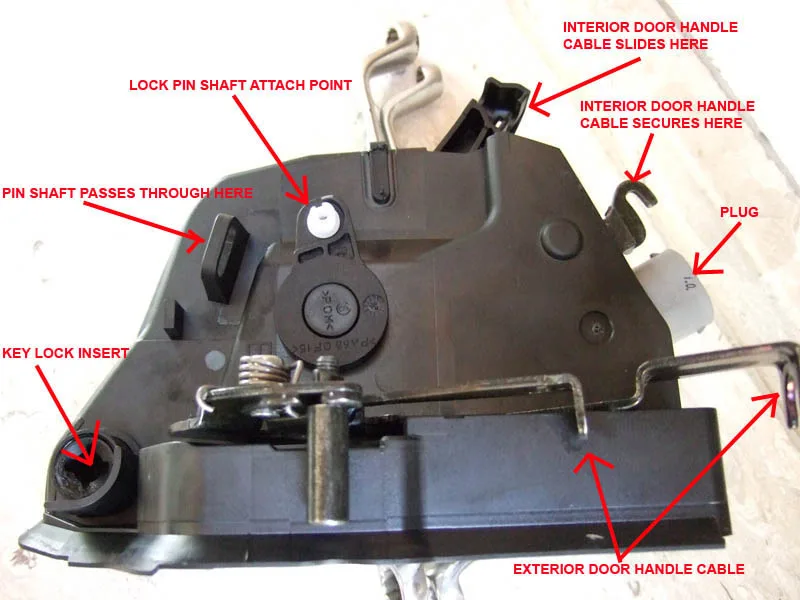
Image source: Bing (Web (fair-use with source credit))
Every door has its own actuator. It's a tiny DC motor inside the latch assembly. These motors are reliable, but they wear out.
The plastic gears strip, the internal contacts corrode, and the motor's brushes die. Extreme heat and cold accelerate this. If you hear a faint clicking from the door but the latch doesn't move, that's a dead giveaway of a stripped gear.
The second weak point is the wiring harness between the car body and the door. That black rubber boot flexes every time you open and close the door. After years of bending, the wires inside snap.
This causes intermittent lock operation that seems to come and go with no pattern. It's the same kind of fatigue that affects power window wiring.
The BCM itself rarely fails. When it does, you'll usually see multiple electrical issues at once, not just a single locked door. If only one door misbehaves, the BCM is almost certainly innocent.
This narrower focus helps you spot the real culprit faster.
The Diagnostic Workflow: Match Your Symptom to the Right Fix
Now we get to the practical part. Follow these steps in order. Skip-ahead-and-guess is exactly why so many people waste money.
We'll keep the workflow clean and clear.
Step 1: Test the Key Fob and Its Battery
Grab the spare fob if you have one. If the spare works, your problem is the first fob. If both fail, grab your multimeter.
The CR2032 battery inside the fob typically lasts one to two years. It dies faster in cold climates. If your fob's LED is dim or won't light at all, the battery is suspect.
Testing is simple: set your multimeter to DC volts, and check the battery's resting voltage. A fresh CR2032 reads around 3.0V. If it reads below 2.7V, replace it.
Batteries cost a few dollars and take thirty seconds to swap. This step alone solves a surprising number of Tucson lock complaints.
Step 2: Try the Inside Door Switch
Walk over to the affected door and use the physical lock switch on the door panel. If the switch locks and unlocks the door normally, the actuator and wiring are fine. That means the fault sits upstream, in the fob, receiver, or BCM.
If the switch does nothing, you've localized the trouble to that specific door's actuator, latch, or wiring. This distinction is the most important branch in the entire diagnostic tree. It instantly separates a cheap fix from an expensive one.
Step 3: Check the Rear Child Lock and Hidden Key Slot
Before pulling any panels, check every possible manual override. The child safety lock is a small lever or rotating slot on the edge of the rear door. If it's engaged, the inside handle won't open the door.
People panic over this all the time.
Also, find the hidden mechanical key slot. On most Tucson models, it sits behind a small cap on the driver's door handle. Pop the cap off with a trim tool and insert the blade end of your fob.
This unlocks the driver door mechanically and can confirm whether the issue is electrical or purely mechanical.
Don't force the key if it won't turn. The cylinder can seize from lack of use. A shot of dry PTFE lubricant usually frees it up.
Step 4: Listen — Clicking vs Total Silence
Unlock the car and stand next to the problem door. If you hear a click but the latch doesn't move, the actuator motor is running but its internal gears are stripped. That's a replacement job.
If you hear absolutely nothing from that door while other doors respond, the actuator isn't getting power. That points to a wiring break, a blown fuse, or a faulty actuator motor. A quick continuity check with your multimeter answers the question.
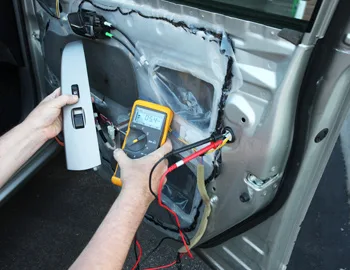
Image source: Bing (Web (fair-use with source credit))
Set the multimeter to DC voltage, probe the actuator connector, and have a helper press the lock button. If you see 12V but the door doesn't move, the actuator itself is dead. If you see zero volts, the wiring or BCM output is the problem.
Step 5: Inspect the Fuse, Wiring Boot, and Actuator
Start with the door lock fuse. It's usually in the interior fuse box under the dash. Pull the fuse and check for a broken filament.
A shorted actuator can blow this fuse repeatedly. If the replacement fuse pops instantly, you have a shorted motor. Time to open the door panel.
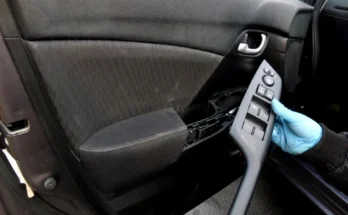
Remove the door panel carefully. Tucson panels use a mix of screws and push clips across the bottom edge. Once the panel is loose, unplug the wiring connectors, including any airbag harness, before lifting it away.
Peel back the vapor barrier enough to reach the harness boot. Flex the rubber boot and inspect the wires. Look for cracked insulation, exposed copper, or green corrosion.
If you find broken wires, solder them back together or use a repair connector. This is a common fix on high-mileage Tucsons. The same diagnosis applies when turn signals stop working due to a broken ground.
If the wiring looks fine, remove the latch assembly and bench-test the actuator. Apply 12V directly from your battery. If the gear doesn't turn, you've found the fault.
Replace the latch assembly as a unit. It's usually one or two bolts and one electrical connector.
What Each Fix Costs: DIY vs Dealership
Pricing matters, and it varies widely. Here's a realistic breakdown as of 2026:
| Fix | DIY Parts | Dealer Labor | Total at Dealer |
|---|---|---|---|
| Fob battery | $5–$8 | N/A | Do it yourself |
| Door lock fuse | $5–$15 | $50–$100 | Not worth it |
| Actuator/latch assembly | $50–$120 | $150–$250 | $200–$400 |
| Wiring repair | $10–$30 | $100–$200 | $120–$250 |
The biggest savings happen at the actuator level. A DIY replacement takes one to two hours with basic hand tools. The dealer charges a diagnostic fee before quoting you anything, which is often around $150.
That fee alone covers the price of the new part.
If you're handy with a multimeter and trim tool, skip the dealer entirely. If you've never removed a door panel and you're not comfortable with wiring, the dealer is a fair option. Just know you're paying extra for certainty, not necessarily for skill.
Mistakes That Waste Time and Money on Door Lock Repairs
The most expensive mistake is guessing. People order an actuator because a forum post says that's the fix. Then they install it, and the door still won't lock.
They didn't check whether the switch worked first.
Another common trap: ignoring the child lock. A rear door that won't open from inside is almost always the child lock. No part needed.
No money spent. Just flick the lever.
Then there's the battery shortcut. A weak car battery causes bizarre electrical behavior, including random door lock glitches. If your multimeter shows below 12.4V at rest, charge the battery before you blame the locks.
A dying car battery can keep the BCM from sending full power to the actuators.
Forcing the mechanical key is another classic error. If the key won't turn, it's not stuck. Spray the cylinder with PTFE lubricant and try again.
Forcing it can snap the key or destroy the cylinder. That turns a twenty-minute fix into a hundred-dollar repair.
Finally, don't ignore the wiring boot. Those wires flex every time you open the door. A broken wire looks like a dead actuator.
If you skip the visual inspection and just replace the part, you'll be back in the same spot within a week. Checking fuses and grounds first is the same habit that fixes headlight failures.
FAQs: Hyundai Tucson Door Lock Problems
Why is my Hyundai Tucson door lock clicking but not locking?
The actuator motor is running, but its internal plastic gears are stripped. You'll hear a click and feel nothing happen. The fix is replacing the door latch actuator assembly.
It's a one-to-two-hour DIY job with basic hand tools.
How much does it cost to fix a Hyundai Tucson door lock actuator?
A replacement latch assembly costs $50 to $120 for the part. If a shop does it, expect $200 to $400 total with labor. Doing it yourself keeps the cost under $150 in most cases.
Why won't my Tucson doors unlock with the key fob?
Dead fob battery, weak car battery, or a blown fuse are the top causes. Replace the CR2032 in the fob first. Check the car battery voltage next.
If both test fine, inspect the door lock fuse and the wiring boot between the body and door.
Can I fix a broken Tucson door lock myself?
Yes, if you're comfortable removing a door panel and using a multimeter. The diagnostic steps you already read cover every branch. If you don't own a trim tool or feel unsure about wiring, a professional is a safe backup.
Just know you'll pay for their diagnosis time.
Final Decision Guide: DIY Repair or Take It to a Pro
Run through this quick check before spending money.
| If you see this | Do this |
|---|---|
| Child lock engaged | Fix it yourself in 10 seconds |
| Dead fob battery | Replace your own CR2032 |
| Blown fuse | Swap it yourself |
| Broken wire in the boot | Solder it or use a repair connector |
| Actuator clicking | Replace the latch assembly yourself |
| No power at the actuator | Have a pro trace the wiring |
The most common Tucson door lock problem is a failed actuator. It's a simple part swap with normal hand tools. Watch the airbag connector when you pull the panel.
Always disconnect the 12V battery negative terminal before electrical work.
If the wiring tests fine and your parts are brand new, stop and recheck the BCM. Sometimes a simple reset fixes it. Disconnect the battery for 10 minutes, then reconnect.
This clears temporary faults in the central locking module.
Our research shows most Tucson owners successfully handle this repair at home. The savings are significant. The confidence boost is even better.
If you've dealt with a stuck power window before, this job isn't any harder. Take your time, follow the steps, and you'll have every door responding again.



One Comment on “Hyundai Tucson Door Lock Problem”