If you’ve been driving around with a noticeable Tesla Model 3 suspension noise, you’re not imagining things. These cars are whisper-quiet by design, so any new clunking, creaking, or rattling stands out immediately. The good news is that most of these sounds come from a handful of well-known wear points.
A little detective work will pinpoint the culprit before you spend a dime.

49% off Today's Exclusive Deals
Limited-time Exclusive Deals. Check current discount on Amazon.
Check Price on Amazon As an Amazon Associate I earn from qualifying purchases.Manufacturer specifications indicate that suspension components like control arms and bushings are service items, not lifetime parts. Aggregate owner feedback across online forums and NHTSA complaint data shows these sounds often start between 30,000 and 60,000 miles. Let’s walk through what you’re hearing, why it’s happening, and how to fix it without overpaying.
Quick Answer
Tesla Model 3 suspension noise is usually a worn control arm bushing, ball joint, or sway bar link. Clunking over bumps points to control arms. Squeaking during turns points to ball joints.
Most repairs cost $200 to $600. A structured test drive narrows the diagnosis in about ten minutes.
49% off Today's Exclusive Deals
Limited-time Exclusive Deals. Check current discount on Amazon.
Check Price on Amazon As an Amazon Associate I earn from qualifying purchases.Why Does My Model 3 Make That Noise? Start Here.
Suspension noise in a Model 3 almost always means a worn joint or bushing has developed play. When that happens, metal parts start making contact over bumps, and you hear it as a knock, squeak, or rattle.
The first step is to stop treating the noise as a mystery. It’s a mechanical clue. You just need to match the sound to the component, then match the component to the fix.
Here’s what you should know before you book anything:
- Clunking over bumps usually points to control arms or stabilizer bar links.
- Squeaking during low-speed turns often means a ball joint or bushing is dry and worn.
- Rattling on rough roads can be a loose component or a failing strut mount.
- Model Year 2018 to 2020 cars show more bushing wear than 2021+ refresh models.
As of 2026, Tesla’s official service guidance for suspension noises centers on replacing worn arms and bushings rather than repairing them. Labor and parts vary, but the repair is straightforward for a competent mechanic.
49% off Today's Exclusive Deals
Limited-time Exclusive Deals. Check current discount on Amazon.
Check Price on Amazon As an Amazon Associate I earn from qualifying purchases.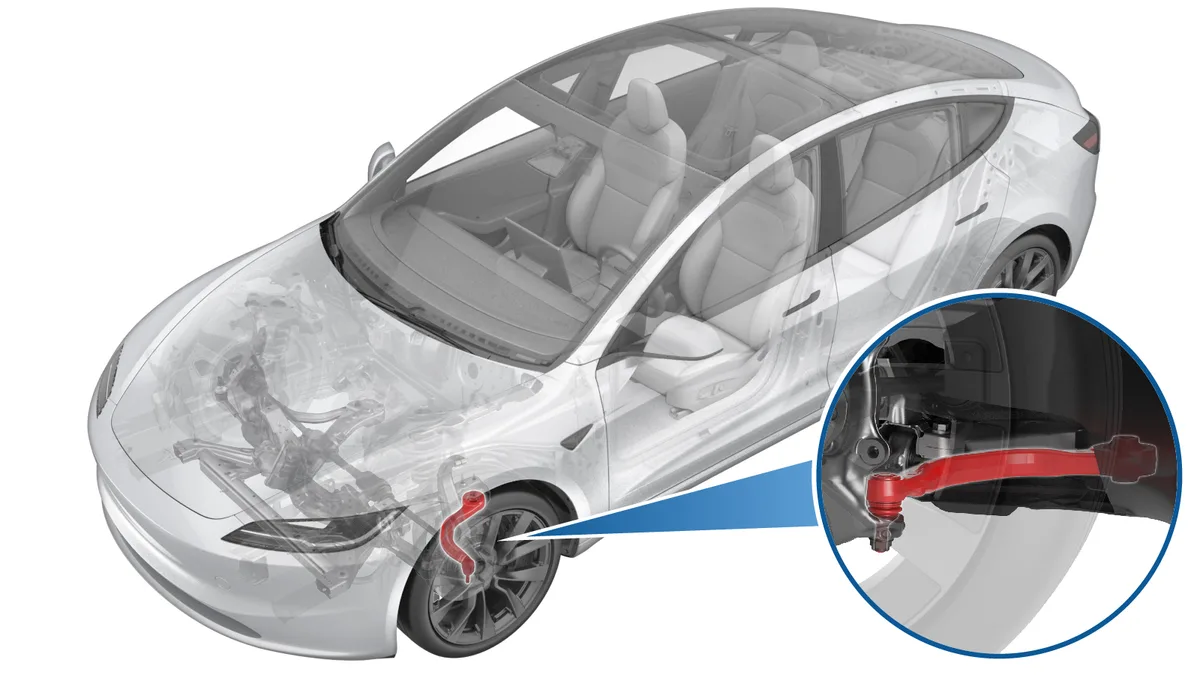
Image source: Bing (Web (fair-use with source credit))
The Usual Suspects: Control Arms, Bushings, and Ball Joints
The Model 3 uses a MacPherson strut front suspension and a multi-link rear setup. That’s normal for modern EVs. What isn’t normal is premature wear, though it happens more than it should.
The most common failure points are the control arm bushings. These are rubber or polyurethane sleeves that let the arm pivot smoothly. Over time, they crack, dry out, and lose their shape.
When that happens, the metal arm moves freely and smacks against its mount. That’s your clunk.
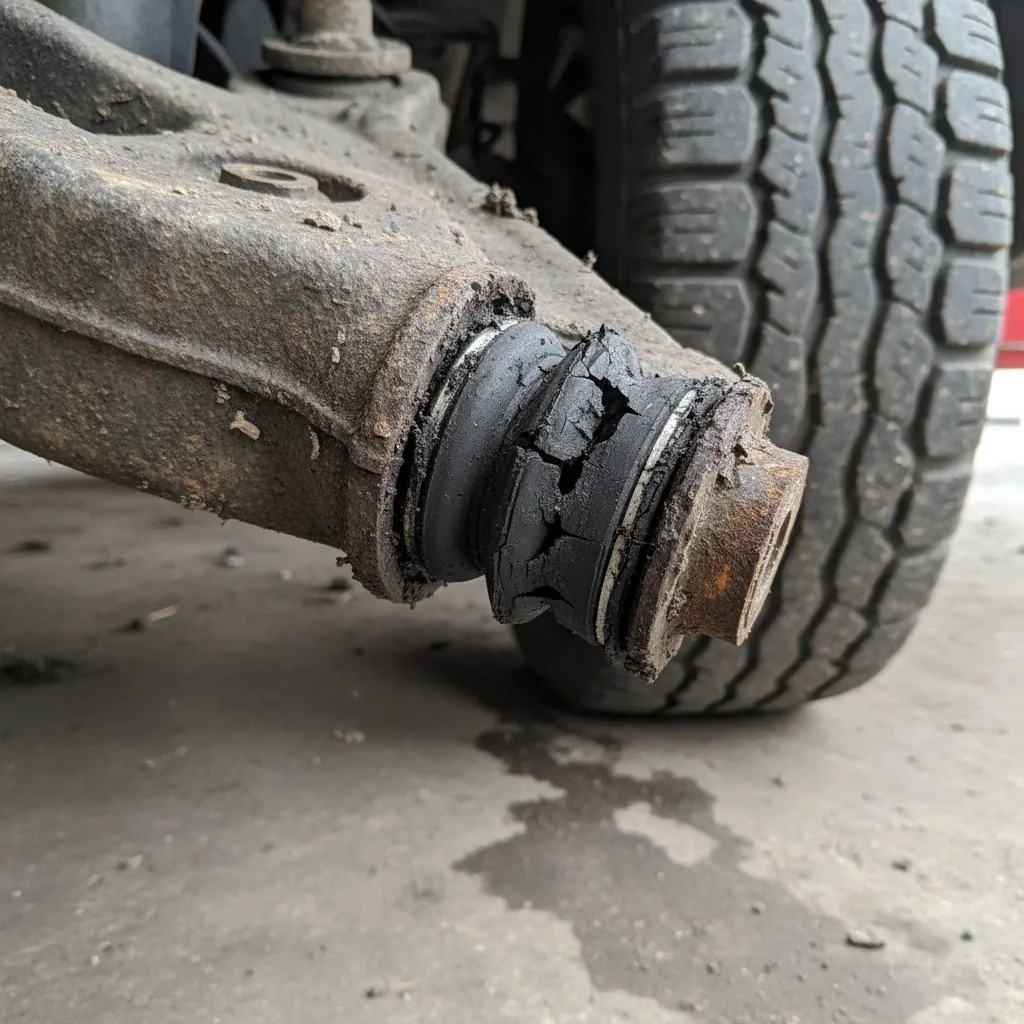
Image source: Bing (Web (fair-use with source credit))
Ball joints are the second big offender. They sit at the end of the control arm and connect it to the steering knuckle. A worn ball joint produces a creak or pop, especially when turning at low speed.
Here’s a quick rundown of the usual components:
- Upper control arms wear faster on the 2018, 2020 models.
- Lower forward control arms are a common cause of front clunks.
- Stabilizer bar links fail early and are cheap to replace.
- Strut mounts can creak when the bearing inside collapses.
Model year differences matter. The 2021 suspension refresh improved bushing materials and geometry. If you own an older car, you’re more likely to hear these noises sooner.
Tesla’s service portal lists the revised part numbers, so check before ordering.
Clunking vs. Creaking vs. Rattling: What the Sound Tells You
The noise itself is your best diagnostic tool. You just need to listen carefully and categorize what you hear.
Clunking Over Bumps
If you hear a deep, hollow knock when crossing a pothole or speed bump, suspect the control arms or bushings. This is the most frequently reported Model 3 suspension noise, and it’s rarely dangerous right away, but it worsens quickly.
- Likely cause: Worn forward lower control arm bushing.
- Related cause: Loose stabilizer bar link.
- Fix: Replace the arm and bushing assembly. Old bushings can’t be pressed out reliably on these cars.
Squeaking or Creaking at Low Speed
A high-pitched squeak during slow parking maneuvers usually means a ball joint is running dry. It can also come from a strut mount bearing. Don’t confuse this with brake squeal, which typically shows up when braking and fades once the pads warm up.
- Likely cause: Dried-out grease in the ball joint.
- Related cause: Collapsed rubber bushing that lets metal rub on metal.
- Fix: Replace the ball joint or the complete control arm.
Rattling or Clicking When Turning
A rhythmic click or rattle that speeds up with your wheels’ rotation often points to the sway bar links. These fail early and are inexpensive to replace.
- Likely cause: Worn stabilizer bar link ball sockets.
- Related cause: Loose suspension fasteners from improper torque.
- Fix: Replace the links and re-check torque specs.
Distance, Speed, and Weather: How to Test When It Happens
Context matters. The same part will behave differently at 30 degrees than at 80 degrees. You need to note exactly when the noise appears.
Cold Weather and Suspension Noise
Rubber bushings get stiffer in cold temperatures. That’s why many owners report more creaking in winter. The noise often fades once the car warms up.
If it doesn’t, that’s a sign of real wear.
Slow vs. Highway Driving
Noise only over speed bumps and driveways is classic bushing wear. Noise at highway speeds can point to tire issues, wheel bearings, or unbalanced wheels.
How to Run a Structured Test
Drive the car on a quiet road and vary conditions deliberately.
- Start at slow speeds and pass over a few speed bumps.
- Do tight figure-eights in an empty parking lot to stress ball joints.
- Hit a rougher surface at 30 mph to check for rattling.
- Listen for changes when the car is fully loaded with passengers.
This process takes ten minutes and narrows the diagnosis significantly. It also prevents you from paying a shop to chase the wrong component. If you hear grinding that changes when you brake, check your brake hardware before blaming the suspension.
The same applies to a low-speed squeak, which may be nothing more than worn pads rather than a failing joint.
Shop-Ready: DIY Repair vs. Tesla Service vs. Aftermarket Parts
Once you’ve isolated the noise, you have three realistic paths forward. Each one has trade-offs in cost, time, and risk.
When the Warranty Still Covers It
If your Model 3 is under the factory warranty or an extended service agreement, let Tesla handle it. Their service diagnosis fee is worth it when the repair is covered. Many owners report warranty replacements for control arm noise on older models.
Check your coverage on Tesla’s owner dashboard before paying out of pocket.
DIY Repair: Doable, but Not for Everyone
Replacing control arms on a Model 3 is a weekend project. You need jack stands, basic sockets, and a torque wrench. The parts are heavy and bolt torque matters a lot.
If you’re comfortable working on cars, you’ll save serious money. If not, a botched job can turn a $300 fix into a $1,500 repair.
Aftermarket Upgrades: Worth It or a Risk?
Polyurethane bushings from aftermarket brands last longer than stock rubber. But they transmit more road vibration into the cabin. That trade-off isn’t for everyone.
Stick to OEM or OEM-equivalent parts if comfort matters most.
Cost Comparison Table
| Option | Parts Cost | Labor Cost | Time | Best For |
|---|---|---|---|---|
| DIY Replacement | $120–$300 | $0 | 2–4 hours | Experienced DIYers |
| Independent Shop | $200–$400 | $150–$300 | 1–2 days | Owners saving over Tesla |
| Tesla Service | $300–$600+ | Included | 1 Day | Warranty or convenience |
A quick note: noise from a worn front suspension can sometimes feel like a separate brake issue. If you hear grinding that changes when you brake, check your brake health before blaming the suspension. Similarly, a persistent low-speed squeak can be confused with accessory belt or alternator noise, so it pays to rule out other systems before you order parts.
Pitfalls and Mistakes That Send Owners in Circles
The fastest way to waste money on suspension noise is guessing. Owners order a control arm, replace it, and the clunk remains. That’s usually because the real culprit was a sway bar link or a strut mount.
Misdiagnosis is the number one pitfall. A rhythmic drumming that changes with speed is often tire wear, not suspension. The same goes for grinding brake pads, which sound terrifying but live in a different system entirely.
Rule those out first before you touch anything. It’s also worth listening for transmission sounds at highway speeds, since drivetrain whine can travel through the chassis and mimic a suspension rattle.
Skipping the post-repair alignment is the second big mistake. Replacing control arms alters your camber and toe settings. Without an alignment, your new parts work fine but your tires wear unevenly and the car pulls to one side.
That’s an extra $100 avoidable cost.
Reusing worn hardware is the third. Those old bolts and nuts have been through heat cycles and corrosion. New hardware is cheap.
Torque specs matter more than most home mechanics realize, and a bolt fails when you reuse it past its limit.
Finally, don’t ignore the noise because the car drives fine. Suspension wear compounds. A loose ball joint can damage the wheel hub assembly.
A failing bushing can crack the mounting bracket. Small fixes today prevent big bills later.
Pro Tips: Torque Specs, Part Numbers, and Repair Hacks
The single best diagnostic trick is the pry bar test. Put the car on a lift, insert a pry bar under the control arm, and try to move it. If there’s visible play in the bushing or ball joint, you’ve found your problem.
No lift? Jack up the front end and use a long screwdriver to check for movement.
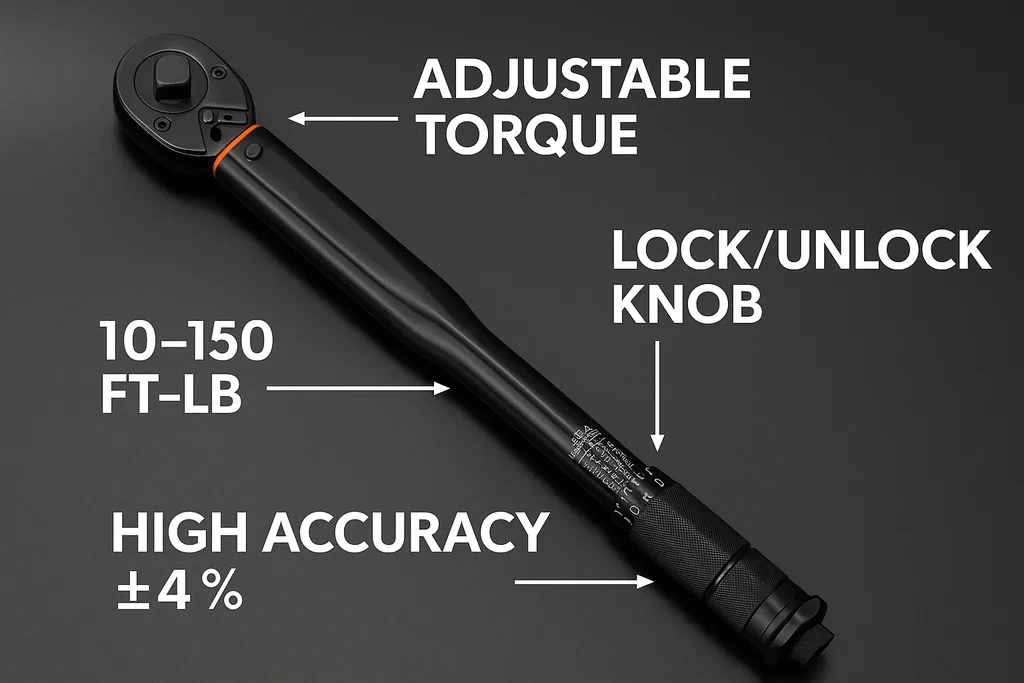
Image source: Bing (Web (fair-use with source credit))
Part numbers are another trap. Tesla’s control arms vary by model year and trim. A 2019 Long Range arm won’t fit a 2022 Performance.
Cross-reference your VIN when ordering, either from Tesla directly or a reputable parts supplier.
Torque specs for Model 3 control arm bolts typically fall in the 120, 150 Nm range, but confirm against your vehicle’s service data. Under-torque causes play. Over-torque strips threads or snaps bolts.
A good torque wrench is non-negotiable for this job.
Getting a second opinion doesn’t have to cost double. Take the car to an independent alignment shop for a walk-around inspection before committing to a Tesla appointment. They can sometimes identify the noise for free or a small fee, saving you the service center’s diagnostic charge.
Frequently Asked Questions
Does a Warranty Cover Control Arm Noise?
Yes, if you’re within the basic warranty. Tesla covers suspension repairs for 4 years or 50,000 miles, whichever comes first. Many owners with 2018, 2020 models have gotten control arm replacements at no cost.
The battery and drive unit warranty does not cover suspension components.
Can I Drive With a Noisy Suspension?
You can drive for a while, but it’s risky. Worn bushings and ball joints let metal components move excessively. That extra movement can damage wheel hubs, brake lines, and mounting points.
If the car feels unstable at speed, park it and get a repair quote immediately.
Will Lowering the Car or Upgrading Bushings Void the Warranty?
It can. Tesla may deny warranty claims for parts affected by aftermarket suspension modifications. Under the Magnuson-Moss Warranty Act, the manufacturer must prove your modification caused the failure, but that fight isn’t worth the hassle.
Keep stock parts if your warranty is active.
How Much Does Tesla Charge for a Suspension Diagnosis?
A Tesla Service Center diagnostic fee typically runs $100 to $200. The fee is waived if you approve the repair. Independent shops often charge less, and some will inspect a suspension noise for free if you’re booking the repair with them.