The Ford Explorer packs a full suite of modern driver-assist systems and strong crash protection.
I’ve spent years testing family SUVs and studying their safety gear. This article breaks down the safety features of the Ford Explorer in clear terms. You’ll get what systems are standard, which come in packages, how they work, and practical tips from real-world use. If you want to know how the Explorer protects you, your passengers, and a child seat, keep reading for a thorough, user-focused guide.

49% off Today's Exclusive Deals
Limited-time Exclusive Deals. Check current discount on Amazon.
Check Price on Amazon As an Amazon Associate I earn from qualifying purchases.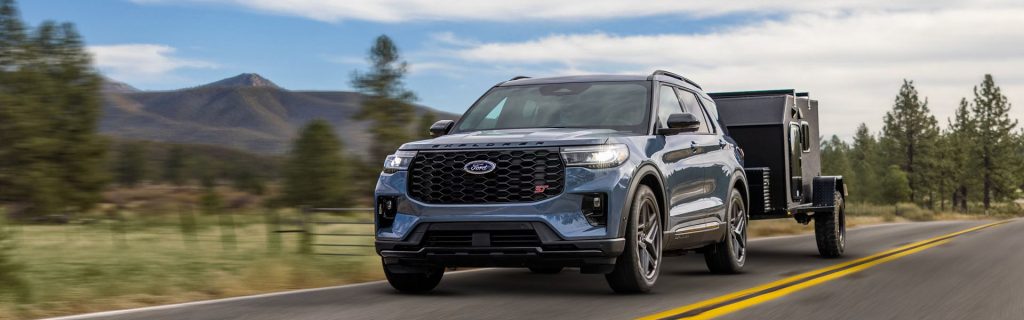
Modern safety suite: what to expect from the Explorer
The safety features of the Ford Explorer combine active driver aids and passive crash protections. Ford bundles many systems into its Co-Pilot360 suite. Some items are standard across trims, while others are optional or part of packages.
Key points you should know:
49% off Today's Exclusive Deals
Limited-time Exclusive Deals. Check current discount on Amazon.
Check Price on Amazon As an Amazon Associate I earn from qualifying purchases.- Standard driver-assist tech often includes automatic emergency braking, lane keeping, and a rearview camera.
- Higher trims add adaptive cruise control, a 360-degree camera, and advanced park aids.
- Crash structure, multiple airbags, and stability control protect occupants in a collision.
This mix gives everyday help and crash protection. It makes the Explorer a safe choice for families and commuters.

Active safety technologies explained
Active safety reduces crash risk before impact. The safety features of the Ford Explorer focus heavily on active systems designed to prevent or soften crashes.
Common active systems you’ll find:
49% off Today's Exclusive Deals
Limited-time Exclusive Deals. Check current discount on Amazon.
Check Price on Amazon As an Amazon Associate I earn from qualifying purchases.- Automatic Emergency Braking with pedestrian detection. It senses imminent collisions and applies brakes.
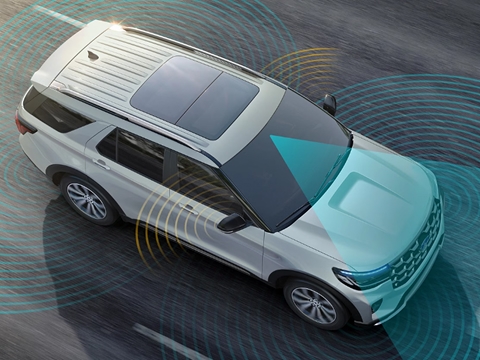
- Blind Spot Information System with Cross-Traffic Alert. It monitors side lanes and alerts on approach.
- Lane-Keeping System with Lane-Keeping Assist. It warns and nudges steering to stay in lane.
- Adaptive Cruise Control with Stop-and-Go. It keeps distance from traffic and can slow to a stop.
- Rear Parking Sensors and available 360-degree camera. They aid low-speed maneuvers.
- Evasive Steering Assist and Reverse Brake Assist on select trims. They help avoid collisions in tight situations.
These features work together. They use radar, cameras, and ultrasonic sensors. They reduce driver workload and improve safety in traffic and on highways.
Quick PAA-style questions
How does automatic emergency braking help?
It detects a forward collision risk and applies brakes if the driver does not react. This reduces crash severity or avoids impact.
Will lane-keeping let me drive hands-free?
No. Lane-keeping assists steering but requires driver attention and hands on the wheel at all times.
Passive safety and crash protection
Passive systems protect you in a crash. The safety features of the Ford Explorer include a robust body structure and multiple airbags.
What you get for crash protection:
- High-strength steel frame and engineered crumple zones to absorb impact.
- Front, side-curtain, and knee airbags for varied collision types.
- Seat belts with pretensioners and load limiters to reduce occupant movement.
- Post-collision braking or SOS alerts on some models to reduce secondary risk.
The design focuses on managing crash forces. This lowers injury risk for front and rear occupants.
Child safety, seating, and towing considerations
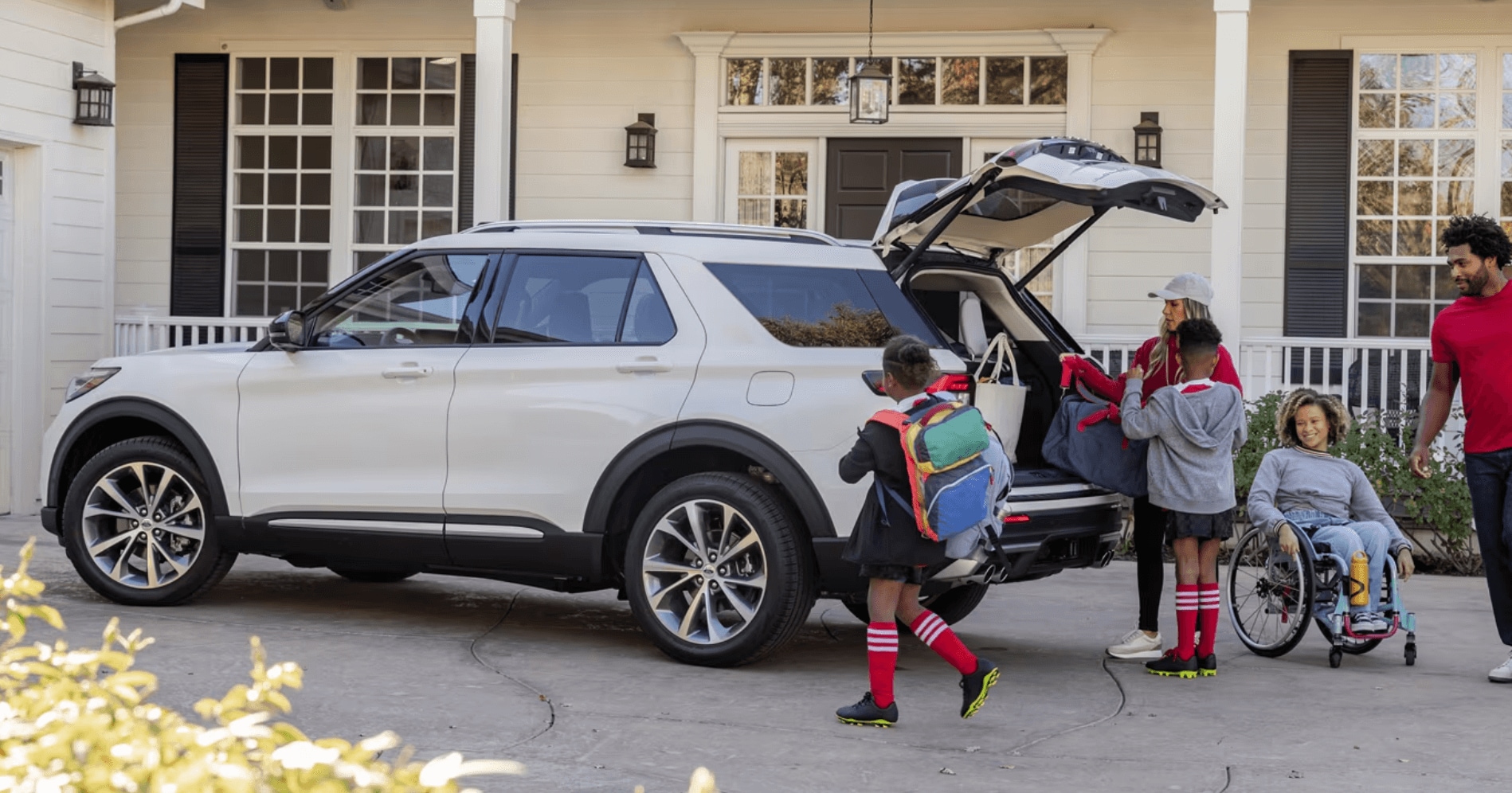
Families need clear child-seat support and safe towing tech. The safety features of the Ford Explorer cover both.
Child and seating features:
- LATCH anchors and tether points on second-row seats for secure car-seat installation.
- Rear-seat reminder on many models to prevent leaving a child or pet behind.
- Spacious second and third rows with proper head restraint design to reduce whiplash.
Towing and hitch safety:
- Available trailer sway control and integrated trailer brake controller to keep towing stable.
- Backup assist tools help align a trailer when hitching.
Always check your car seat’s manual and practice installation. If towing often, choose a trim with the extra towing safety aids.
Driver-assist packages and Co-Pilot360 details
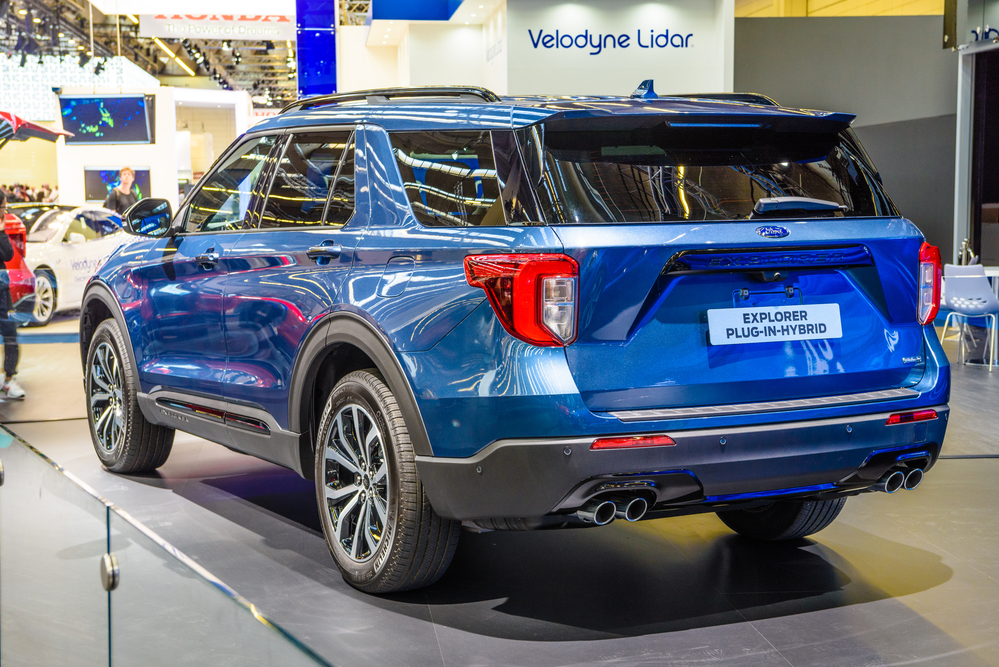
Ford’s branded suite ties many safety features together. The safety features of the Ford Explorer depend on trim and optional packages.
Common package elements:
- Standard Co-Pilot360 often includes AEB, blind-spot monitoring, lane keeping, and a rearview camera.
- Co-Pilot360 Assist+ or higher adds adaptive cruise control, evasive steering assist, and traffic sign recognition.
- Technology or premium packages may include a 360-degree camera, active park assist, and enhanced towing aids.
Trim level matters. If driver-assist tech is must-have, prioritize trims that include the higher Co-Pilot360 tiers.
Real-world performance and personal experience
I’ve driven Explorers in rain, highway traffic, and city parking lots. The systems are helpful, but they are not perfect.
What I learned on the road:
- Adaptive cruise control eases long drives and reduces fatigue.
- Lane-keeping is supportive but can be overcautious on faded lane lines.
- Blind-spot alerts are reliable; keep sensors clean to avoid false warnings.
- The 360 camera makes tight parking fast and stress free.
A major lesson is to treat driver aids as helpers, not replacements. Stay alert and use the aids to extend safe driving habits.

Maintenance, limitations, and tips for safe use
Safety features need upkeep and proper use. The safety features of the Ford Explorer are robust, but they depend on sensors, software, and the driver.
Practical tips:
- Keep cameras and sensors clean from ice, dirt, and road salt.
- Update vehicle software when dealer updates are available.
- Learn how each system alerts and intervenes in a low-risk setting.
- Don’t rely on automation in poor weather or off-road conditions.
Limitations to remember:
- Cameras and radars can be blind to heavy rain, snow, or mud.
- Driver-assist systems don’t replace a sober, attentive driver.
- Some advanced features vary by year and trim; confirm specs before buying.

Source: normreeves.com
Frequently Asked Questions of What are the safety features of the Ford Explorer?
What safety tech comes standard on the Ford Explorer?
Most recent models include the Co-Pilot360 suite with automatic emergency braking, lane-keeping, blind-spot monitoring, and a rearview camera as standard features.
Are advanced driver-assist systems optional?
Yes. Items like adaptive cruise control, a 360-degree camera, and active park assist may be part of higher packages or trims.
How many airbags does the Explorer have?
The Explorer is equipped with multiple airbags, including front, side, and side-curtain airbags to protect all rows in varied collisions.
Is the Explorer good for child seats?
Yes. It offers LATCH anchors, tether points, and roomy rear seats, making child-seat installation straightforward and secure.
Do I need extra maintenance for the safety systems?
Keep sensors and cameras clean, install software updates, and have routine inspections to ensure systems work properly.
Conclusion
The safety features of the Ford Explorer mix strong crash protection with modern driver-assist technology. You get a practical balance of active systems like automatic braking and adaptive cruise control plus passive elements like airbags and a reinforced structure. My hands-on experience shows these systems lower stress and real risk, when used properly.
Takeaway: prioritize trims with the Co-Pilot360 Assist+ if you want the most help on the road. Test drive and try each system before you buy. If this guide helped, leave a comment, ask a question, or subscribe for more vehicle safety guides.