F1 cars protect drivers with a carbon survival cell, halo, HANS device, multi-point belts, fuel and fire systems.
I’ve spent years studying and visiting teams, pit lanes, and safety labs. I know the question "What safety features are built into a Formula One car?" inside out. This article breaks down every major system. You’ll learn how each part works, why it matters, and how safety shapes design and racing. Read on for clear, practical detail from real-world observation and technical insight.

49% off Today's Exclusive Deals
Limited-time Exclusive Deals. Check current discount on Amazon.
Check Price on Amazon As an Amazon Associate I earn from qualifying purchases.
Core structural protections
Answering "What safety features are built into a Formula One car?" starts with the car’s bones.
Every modern F1 car uses a carbon-fiber monocoque. This is the survival cell. It is rigid and light. It protects the driver in high-energy impacts. The monocoque is tested in many crash scenarios. It must meet strict FIA strength rules.
Front and rear impact structures absorb crash forces. They crush in a controlled way. This lowers the energy reaching the survival cell. Side-impact structures and deformable foam further reduce loads. The roll hoop gives strength in rollovers and supports the air inlet above the driver.
49% off Today's Exclusive Deals
Limited-time Exclusive Deals. Check current discount on Amazon.
Check Price on Amazon As an Amazon Associate I earn from qualifying purchases.I’ve seen mock crash tests in person. The monocoque stands out for its strength and precision. Teams and regulators keep improving the materials and test methods.

Cockpit and driver restraints
When people ask "What safety features are built into a Formula One car?" they often mean cockpit safety. The halo is the most visible device. It is a titanium ring in front of and above the cockpit. The halo deflects large objects and saves lives. It was the top safety change in recent years.
The HANS device protects the neck and spine by limiting head movement in a crash. Drivers wear six-point harnesses that keep them tightly in the seat. Seats are custom-molded foam shells. They match the driver’s body and spread loads evenly. Quick-release buckles and the removable steering wheel help fast extraction when needed.
49% off Today's Exclusive Deals
Limited-time Exclusive Deals. Check current discount on Amazon.
Check Price on Amazon As an Amazon Associate I earn from qualifying purchases.I recall a team engineer explaining how much time and detail go into each seat mold. Small fit changes can improve comfort and safety.

Fire protection and fuel safety
If you wonder "What safety features are built into a Formula One car?" fire and fuel systems are central. F1 uses a crash-resistant fuel cell with a strong outer skin and inner bladder. The cell is designed to resist rupture and leakage.
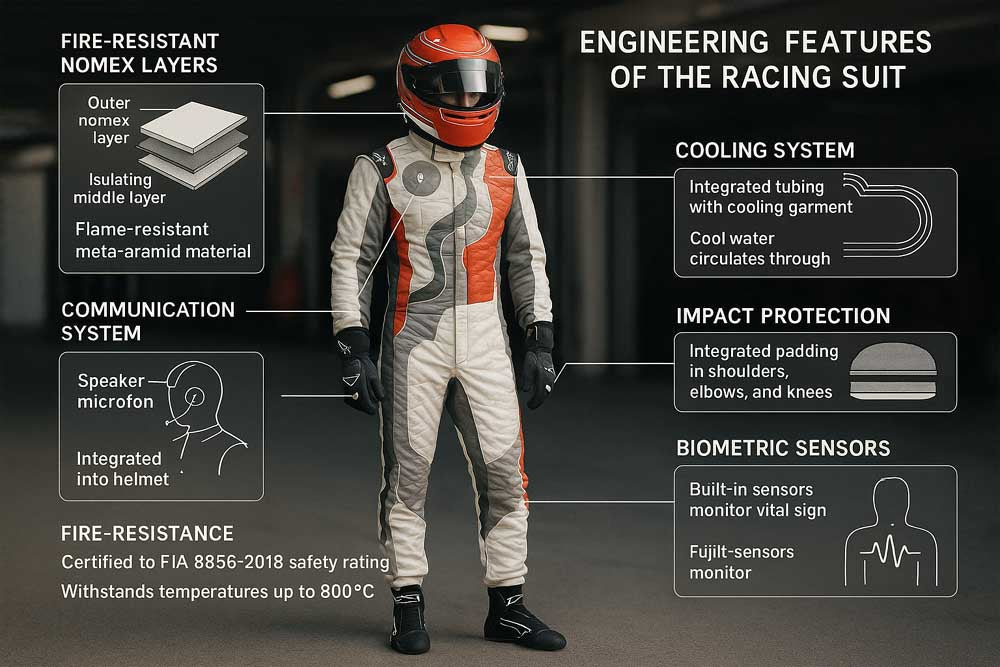
Onboard fire extinguisher systems can be triggered by the driver or marshals. Fuel lines use dry-break couplings to limit spillage during pit stops. Driver suits, gloves, boots, and balaclavas are fire-retardant and tested to high heat standards. Teams also use thermal barriers around hot parts to reduce ignition risk.
From watching pit crews, I learned how strict refueling controls were phased out to reduce risk. That change has reduced fire incidents in modern races.

Wheel and debris protection
A top question is "What safety features are built into a Formula One car?" when thinking about flying wheels and debris. Wheel tethers help here. Strong cables link wheels to the chassis. They slow and hold wheels in severe impacts. This lowers the chance of wheels becoming dangerous projectiles.
Cockpit surrounds and the halo also reduce debris hits to the head. The front of the car has crashable nose cones that catch debris early. Teams also design bodywork to keep broken parts from endangering other cars or marshals.
I once watched a wheel tether tested after a crash. It still held heavy mass at high load. That test gave me real trust in the system.
Electronics, telemetry, and fail-safes
People asking "What safety features are built into a Formula One car?" should not forget electronics. Modern F1 cars have many sensors and automatic safety systems. Crash sensors trigger fuel-pump cut-offs. They also arm fire suppression. Telemetry sends crash data instantly to the team and race control.
Kill switches let marshals or drivers isolate batteries and electronics. Battery packs and hybrid systems have containment and cooling to avoid thermal runaway. Software limits prevent excessive engine or electrical output in unsafe conditions.
Teams analyze telemetry after every incident. That data leads to quick fixes and rule changes that save lives.

Testing, standards, and continuous improvement
If you asked "What safety features are built into a Formula One car?" the answer must include testing and rules. The FIA sets rigorous crash test standards. Tests include frontal, side, rear, and rollover impacts. There are also sled tests for neck loads. Materials and components must pass fire and ballistic tests.
Teams and suppliers run laboratory tests beyond the rules. They use finite-element models and full-scale crash rigs. Lessons from real crashes lead to rule updates. This cycle keeps safety moving forward year after year.
I have read many test reports and seen how a single incident led to rapid changes. The sport learns fast.
How safety features affect performance and strategy
As you consider "What safety features are built into a Formula One car?" note that safety shapes design and race choices. Safety parts add weight. Engineers must balance protection with speed. Placement of the halo, tethers, and fuel cell affects center of gravity and aerodynamics.
Pit procedures adapt for safety. Quick-exit designs must not weaken structure. Teams trade off a few tenths of a second to keep drivers alive. That tradeoff matters more than any lap time.
From working near engineers, I’ve seen how safety-driven choices become strengths. A safer car can be faster in races that end early due to incidents.
Frequently Asked Questions of What safety features are built into a Formula One car?
What is the survival cell and why is it important?
The survival cell is a carbon-fiber monocoque that surrounds the driver. It is the main structure that resists intrusion and keeps the driver safe during high-energy impacts.
How does the halo protect drivers?
The halo is a titanium ring that shields the cockpit from large objects and debris. It redirects forces away from the driver’s head and has proven effective in multiple crashes.
Are F1 drivers protected from fires?
Yes. F1 cars have crash-resistant fuel cells, onboard fire extinguishers, and heat-shielding. Drivers also wear fire-retardant suits, gloves, and boots for personal protection.
Do wheel tethers really stop wheels from flying off?
Wheel tethers are strong cables designed to hold wheels during severe impacts. They reduce the number of detached wheels and lower risk to drivers and trackside personnel.
How are safety systems tested and enforced?
Safety systems must pass FIA crash tests and material standards like frontal, side, and rollover tests. Teams also run extra lab tests and use telemetry to refine designs after incidents.
Conclusion
Modern F1 safety combines strong structure, active restraints, fire and fuel protections, electronic fail-safes, and relentless testing. Each item answers "What safety features are built into a Formula One car?" with clear purpose and proof. These systems work together to save lives while letting drivers race hard.
Takeaway: Safety is not a single item. It is a layered approach that improves with every test and incident. If you’re curious, follow rule updates, watch crash-test footage, or visit a team garage to see these features up close. Leave a comment or subscribe to learn more about how safety keeps pushing motorsport forward.