Choosing the right winch size can feel confusing, especially if you’re new to off-roading, boat recovery, or heavy-duty hauling. Get it wrong, and you risk damaging your equipment—or worse, failing in a critical moment. If you get it right, you’ll have the confidence to tackle mud, sand, snow, or even rocky terrain.
With so many choices on the market, and technical terms like “pulling capacity” and “line speed,” it’s easy to get overwhelmed. But the answer to “What size winch do I need? ” is simpler than most people think. This guide will help you make a smart, safe decision, even if you’ve never bought a winch before.

49% off Today's Exclusive Deals
Limited-time Exclusive Deals. Check current discount on Amazon.
Check Price on Amazon As an Amazon Associate I earn from qualifying purchases.Understanding Winch Sizing
A winch’s size is usually defined by its pulling capacity—the maximum weight it can safely pull. This is measured in pounds or kilograms. But it’s not just about how much weight you’re moving. Factors like terrain, vehicle weight, and the type of recovery matter too. Many beginners miss the point that a winch’s rating assumes “perfect” conditions, which rarely exist in real life.
A winch that’s too small can overheat or break under pressure. A winch that’s too large may drain your battery or add unnecessary weight. The goal is to find a balance: enough power for your needs, but not so much that you add weight or cost you don’t need.
Calculating The Right Winch Size
The most common mistake is picking a winch based only on the vehicle’s weight. Instead, you should consider the gross vehicle weight rating (GVWR) and multiply it by a safety factor. Here’s how you do it:
49% off Today's Exclusive Deals
Limited-time Exclusive Deals. Check current discount on Amazon.
Check Price on Amazon As an Amazon Associate I earn from qualifying purchases.- Find your GVWR: This includes the vehicle, passengers, gear, and fuel. It’s usually found on a sticker inside the driver’s door or in the manual.
- Multiply by 1.5: This accounts for extra resistance from mud, sand, hills, or other obstacles.
For example, if your vehicle’s GVWR is 5,000 lbs:
- 5,000 lbs x 1.5 = 7,500 lbs minimum winch capacity
This “1. 5x rule” is widely used and recommended by experts. For ATVs and UTVs, you can use a 1. 25 multiplier since these vehicles are lighter and less likely to get deeply stuck.
Winch Sizes For Common Vehicles
Let’s look at typical winch sizes for different types of vehicles and uses:
| Vehicle/Use | GVWR (lbs) | Recommended Winch Size (lbs) |
|---|---|---|
| ATV | 700–1,000 | 2,000–2,500 |
| UTV | 1,200–1,800 | 3,000–4,500 |
| Jeep/Small SUV | 4,000–5,500 | 6,000–8,000 |
| Full-size Truck | 6,000–8,000 | 9,000–12,000 |
| Heavy Duty Truck | 8,000–12,000 | 12,000–16,500 |
| Boat Trailer | 3,000–8,000 | 4,500–12,000 |
Most off-roaders with mid-size SUVs choose 8,000–10,000 lb winches. If you have a full-size pickup, aim for at least 12,000 lbs. ATVs and UTVs rarely need more than 4,500 lbs unless you regularly tackle deep mud.
49% off Today's Exclusive Deals
Limited-time Exclusive Deals. Check current discount on Amazon.
Check Price on Amazon As an Amazon Associate I earn from qualifying purchases.Factors That Affect Winch Size
It’s not just about weight. Here are other things that change what winch size you need:
Terrain
If you drive in mud, sand, or snow, you’ll need a bigger winch. These surfaces create more resistance, so even a light vehicle can need a high-capacity winch.
Steep Inclines
Pulling uphill is much harder than on flat ground. If you often recover vehicles on steep trails, add 10–20% to your winch size.
Accessories And Gear
Roof racks, bumpers, camping gear, and passengers all add weight. Always include these when calculating GVWR.
Winch Line Type
Synthetic rope is lighter than steel cable. It’s easier to handle and safer if it breaks. But synthetic rope can stretch or fray, so you must check the rating.
Battery And Electrical System
Large winches need more electrical power. Make sure your battery and alternator can support the winch you choose. If not, you might need upgrades.
Comparing Winch Sizes And Features
Winch brands offer many options. Let’s compare typical features by winch size:
| Winch Size | Motor Power | Line Speed (ft/min) | Weight (lbs) | Typical Uses |
|---|---|---|---|---|
| 2,000–4,500 lbs | 0.8–1.6 HP | 10–18 | 15–30 | ATV, UTV, small boat |
| 6,000–8,000 lbs | 2.5–3.5 HP | 15–25 | 40–60 | Small SUVs, light trucks |
| 9,000–12,000 lbs | 4.0–5.5 HP | 20–30 | 60–80 | Full-size trucks, heavier boats |
| 13,000–16,500 lbs | 6.0–7.2 HP | 20–35 | 80–105 | Heavy-duty trucks, commercial use |
Higher capacity winches usually have more powerful motors and slower line speeds. Line speed slows down as the load increases.
Choosing Winch Size: Practical Examples
Let’s walk through real situations where winch size matters.
Example 1: Jeep Wrangler For Off-roading
A Jeep Wrangler has a GVWR of about 5,000 lbs. With gear and passengers, it’s closer to 6,000 lbs. Multiply by 1.5, and you need a winch of at least 9,000 lbs. Many Jeep owners choose a 10,000 lb winch for extra safety.
Example 2: Full-size Pickup For Work
A Ford F-150 has a GVWR around 7,000 lbs. With tools and equipment, it might reach 8,000 lbs. 8,000 x 1.5 = 12,000 lbs. Choose a 12,000 lb winch, or even 13,000 lbs if you work in muddy fields.
Example 3: Boat Recovery
A boat trailer with a total weight of 6,000 lbs needs a winch of at least 9,000 lbs. If you launch or retrieve in strong currents or steep ramps, upgrade to 12,000 lbs.
Example 4: Atv For Hunting
An ATV with a GVWR of 800 lbs needs a 2,000 lb winch. If you carry heavy cargo or hunt in deep mud, go to 2,500 or 3,000 lbs.
Mistakes To Avoid When Choosing Winch Size
Many people make these common errors:
- Ignoring total weight: Only considering the empty vehicle weight, not passengers or gear.
- Underestimating terrain difficulty: Not adding extra capacity for mud, sand, or hills.
- Choosing the biggest winch “just in case”: Oversized winches can stress your vehicle’s frame and electrical system.
- Not checking mounting compatibility: Some vehicles can’t fit larger winches without modifications.
- Forgetting electrical upgrades: Large winches need strong batteries and alternators.
A less-known insight: winch line strength is not always equal to winch capacity. Always check that the rope or cable matches or exceeds the winch rating.
Winch Features That Matter
Besides size, you should consider these features:
Motor Type
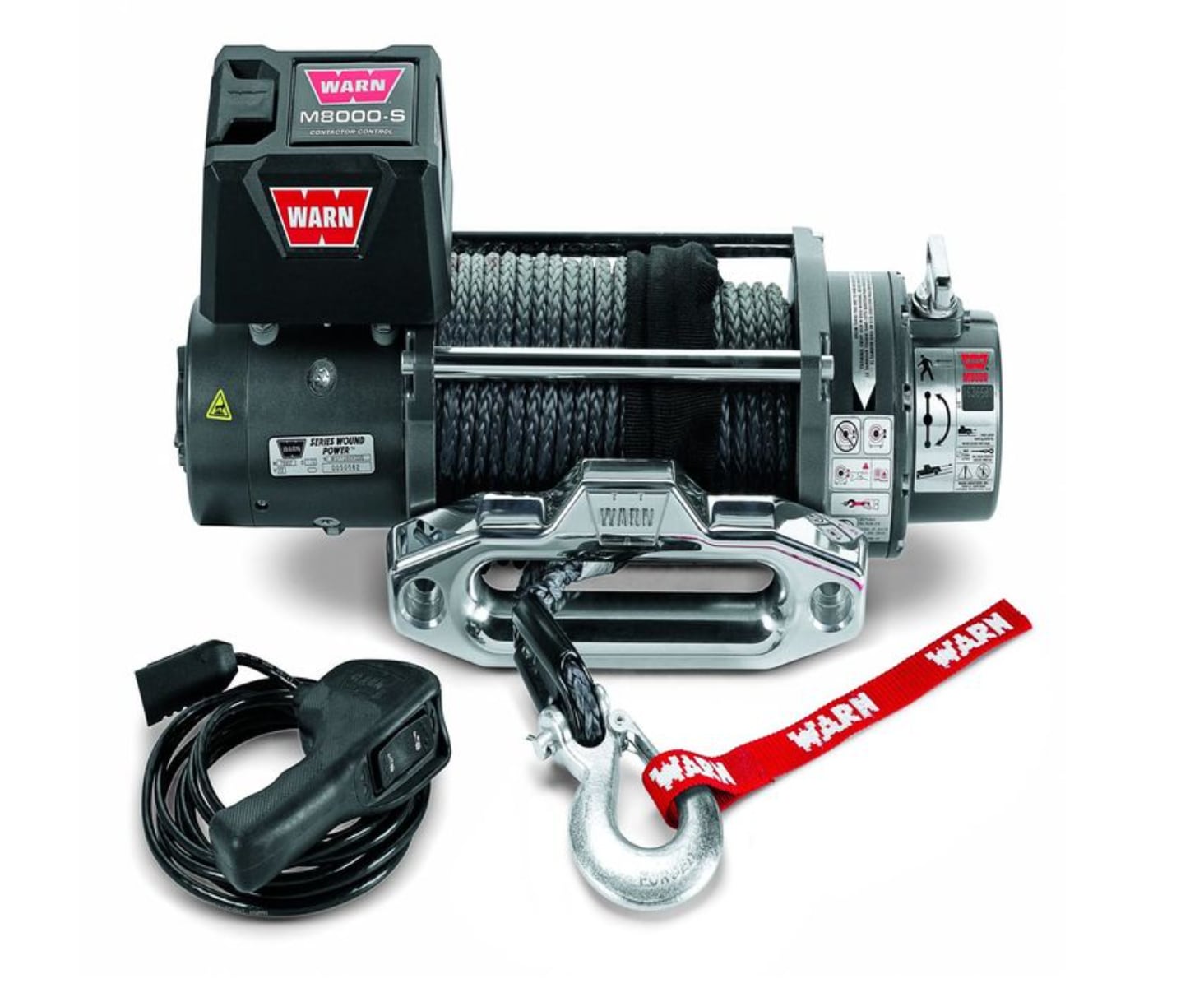
Winches use permanent magnet or series wound motors. Series wound motors are stronger and better for heavy-duty use, but they cost more.
Gear Ratio
A higher gear ratio means slower line speed but more pulling power. If you value speed, choose a lower ratio.
Remote Control
Wireless remotes are safer and more convenient, especially if you need to stand away from the winch.
Waterproofing
If you drive through water or mud, get a winch with a sealed motor and controls.
Rope Type
Synthetic rope is lighter and safer, but needs regular inspection. Steel cable is tougher but heavier and can recoil dangerously if it breaks.
How Winch Size Impacts Performance
Winch size affects not just pulling power but also speed, battery drain, and mounting options.
- Bigger winches pull slower under heavy load
- Large winches need more power and can drain batteries faster
- Heavy winches may require reinforced mounting plates
- Small winches are lighter and easier to install
A well-sized winch balances power and efficiency. For example, a 10,000 lb winch on a 6,000 lb vehicle is powerful but not overkill.
Winch Sizing For Specialized Uses
Sometimes you need a winch for jobs beyond vehicle recovery. Here’s how sizing changes:
Industrial And Construction
Industrial winches are rated for continuous use and often pull loads over 20,000 lbs. Always follow manufacturer specs and local safety laws.
Trailer And Boat Recovery
Trailers and boats need “rolling load” capacity—less than dead weight, but steep ramps or currents may require more power.
Utility Work
Utility winches, used for lifting or pulling equipment, should be sized based on the heaviest load plus safety margins.
Winch Size Vs. Mounting Options
Not every vehicle can handle any winch. Mounting plates have weight and size limits. Check these before buying:
| Vehicle Type | Max Winch Weight (lbs) | Mounting Plate Required | Common Compatibility Issues |
|---|---|---|---|
| ATV | 30 | Small, bolt-on | Space constraints |
| Jeep/SUV | 70 | Medium, bumper mount | Bumper strength |
| Full-size Truck | 100 | Heavy-duty, frame mount | Frame reinforcement |
| Boat Trailer | 80 | Specialized trailer mount | Ramp angle |
If you upgrade to a larger winch, you may need a stronger mounting plate or reinforced bumper.
Winch Sizing And Safety
Safety is more important than power. Here’s how winch size affects safety:
- Too small: The winch may stall or break, risking injury or equipment damage.
- Too large: Can overload mounts or drain batteries, causing electrical fires or failure.
- Always wear gloves and use a damper on the winch line to reduce risk if it snaps.
A surprising insight: the winch’s maximum rating is only true for the first layer of cable on the drum. As more layers build up, pulling power drops by 20–30%. If you often need full power, unwind most of the cable before pulling.

Upgrading Your Electrical System For Winch Use
Winches draw a lot of current. A 10,000 lb winch can pull 400 amps under heavy load. If your battery or alternator is weak, the winch may stall. Upgrade to a deep-cycle battery and check your alternator specs.
Install heavy-gauge wiring and use proper fuses. This prevents overheating and electrical failure.
Winch Sizing For Dual-purpose Vehicles
Some people use their vehicles for both off-roading and towing. Choose a winch that covers the heaviest job you expect. For example, if you tow a 7,000 lb trailer and drive a 5,000 lb SUV, get a 10,500–12,000 lb winch.

How To Choose Between Synthetic Rope And Steel Cable
Both work well, but the choice can affect winch size:
- Synthetic rope: Lighter, safer, easier to handle. Can fray or degrade in sunlight.
- Steel cable: Stronger, more durable, but heavier and can recoil dangerously if it snaps.
Synthetic rope is better for most users unless you work in rocky or abrasive environments.
Real-world Data: What Winch Sizes Are Most Popular?
According to industry sales data, 8,000–10,000 lb winches are the most popular for off-road vehicles. ATVs and UTVs mostly use 2,500–4,500 lb winches. Heavy-duty trucks often use 12,000–15,000 lb models.
You can find more technical specs and data on the Warn Winch Official Site.
Frequently Asked Questions
What Happens If My Winch Is Too Small?
If your winch is too small, it may stall, overheat, or break under load. This can leave you stranded and damage your equipment. Always use the 1. 5x GVWR rule for safety.
Is A Bigger Winch Always Better?
Not always. A bigger winch adds weight, drains more power, and may require vehicle upgrades. Choose a winch that matches your real needs, not just the largest you can afford.
Can I Use A Winch For Lifting Objects?
Most vehicle winches are designed for pulling, not lifting. Lifting requires special winches with safety features. Never use a standard winch for overhead lifting.
Does The Winch Line Type Affect Size Choice?
Yes. Synthetic rope is lighter and easier to handle, but its strength must match the winch’s capacity. Steel cable is heavier and stronger but can be dangerous if it snaps.
How Do I Maintain My Winch For Long Life?
Regularly inspect the cable or rope for wear, check electrical connections, and keep the winch clean. Lubricate moving parts, and store synthetic rope away from UV light.
Choosing the right winch size can be the difference between success and frustration in tough situations. With the right information, you’ll feel confident in your choice and ready for adventure—or work—whenever you need it. Remember to use the 1. 5x safety factor, consider terrain and gear, and check mounting compatibility.
Don’t overlook battery and electrical needs, and always prioritize safety. Now you’re ready to pick the perfect winch for your next job or journey.