Every winch owner knows how important this tool is—whether you’re towing, off-roading, or working in construction. But many people wonder how often they should service their winch. A winch is not a “set and forget” device. It faces tough conditions: mud, water, dust, vibration, and heavy loads. If you neglect maintenance, your winch can fail when you need it most. This guide explains how often to service a winch, what affects the schedule, and how to keep your equipment reliable for years.
Why Regular Winch Service Matters
A winch is an investment. If you use it for vehicle recovery, off-roading, or industrial work, you rely on it to pull heavy loads safely. But winches face unique challenges:

49% off Today's Exclusive Deals
Limited-time Exclusive Deals. Check current discount on Amazon.
Check Price on Amazon As an Amazon Associate I earn from qualifying purchases.- Moisture and dirt can cause corrosion and damage.
- Heavy loads stress the motor, gears, and cable.
- Extreme temperatures affect lubrication and electrical parts.
If you don’t service your winch, several risks appear:
- Cable failure: Frayed or rusted cables can snap, causing injury or damage.
- Motor burnout: Overheated or dirty motors may fail suddenly.
- Gear and brake wear: Lack of lubrication leads to breakdowns.
- Electrical faults: Dirty or loose connections cause unpredictable operation.
Winch manufacturers usually recommend routine checks, but few people follow them closely. The right service schedule depends on how you use your winch, the environment, and the model.
Factors That Affect Winch Service Frequency
There’s no universal answer. You need to consider several factors to set the right schedule for winch maintenance.
49% off Today's Exclusive Deals
Limited-time Exclusive Deals. Check current discount on Amazon.
Check Price on Amazon As an Amazon Associate I earn from qualifying purchases.1. Type Of Use
How you use your winch changes everything.
- Occasional use: If you use your winch once every few months (for recreational off-roading, boat launching, or emergencies), service it at least twice a year.
- Frequent use: If you use your winch weekly or monthly for work or heavy recovery, inspect and service it monthly.
- Heavy-duty/industrial use: For winches in daily professional settings (construction, mining, logging), perform detailed service every 2-4 weeks.
2. Environment
Winches used in harsh conditions need more frequent care.
- Wet/muddy areas: Water and mud increase corrosion and cable wear.
- Dusty environments: Dust can enter the motor and gears, causing abrasion.
- Saltwater exposure: Marine winches face extreme corrosion risk; service after every use.
3. Winch Model And Age
Older winches or those with exposed parts require more attention. Sealed, modern winches may last longer between services, but seals can fail over time.
4. Load And Stress
Pulling loads near the winch’s rated capacity stresses the motor, cable, and gears. Heavy loads mean you should check components more often.
49% off Today's Exclusive Deals
Limited-time Exclusive Deals. Check current discount on Amazon.
Check Price on Amazon As an Amazon Associate I earn from qualifying purchases.5. Manufacturer Guidelines
Always check your winch’s manual. Brands like Warn, Superwinch, and Ramsey give recommended service intervals. Some models even have service indicators or reminders.
Typical Winch Service Schedule
Here’s a general schedule for most electric and hydraulic winches. Always adjust based on your usage and environment.
| Usage Type | Recommended Service Interval | Key Service Tasks |
|---|---|---|
| Occasional (2-6 times/year) | Every 6 months | Inspect cable, check electrical, lubricate gears |
| Moderate (monthly) | Every 1-2 months | Inspect cable, clean motor, check brakes, lubricate gears |
| Heavy-duty (weekly/daily) | Every 2-4 weeks | Full inspection, replace worn parts, deep clean |
| Marine/Saltwater | After every use | Rinse, dry, lubricate, check for corrosion |
What Happens During A Winch Service?
Many people think winch service means “just checking the cable.” In reality, it’s a detailed process. Here’s what a complete service usually includes:
Cable Or Rope Inspection
- Look for fraying, kinks, or broken wires (for steel cable).
- Check for cuts, abrasion, or UV damage (for synthetic rope).
- Replace cables/ropes showing significant wear.
Motor And Electrical Checks
- Inspect wiring for corrosion and loose connections.
- Test motor operation—listen for unusual sounds or slow performance.
- Clean terminals and apply dielectric grease.
Gearbox And Brake Service
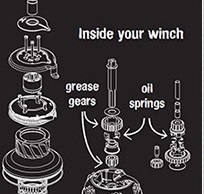
- Open the gearbox, clean old grease, and apply new lubricant.
- Check for worn gears, bearings, or seals.
- Inspect the brake mechanism—ensure it holds and releases smoothly.
Drum And Fairlead
- Make sure the drum spins freely and isn’t damaged.
- Clean the fairlead—rollers should turn smoothly, and hawse fairleads should have no grooves.
Remote And Controls
- Test the remote (wired or wireless) for reliable operation.
- Replace batteries if needed.
- Check for water ingress or broken buttons.
Mounting And Frame
- Inspect bolts and mounting hardware for tightness.
- Check for rust, cracks, or movement in the mount.
Signs Your Winch Needs Immediate Service
Sometimes, waiting for the next scheduled service is risky. If you notice any of these signs, service your winch right away:
- Unusual noises: Grinding, clicking, or whining sounds.
- Slow operation: The winch pulls slower than normal.
- Cable damage: Fraying, kinks, or rust spots.
- Electrical problems: Intermittent operation, dead remote, or visible corrosion.
- Gearbox leaks: Grease or oil leaking from the winch.
Ignoring these signs can lead to sudden failure—especially during critical recovery situations.
How To Service Your Winch: Step-by-step
You don’t always need a professional. Many winch owners can handle basic service themselves. Here’s a practical step-by-step process:
Step 1: Disconnect Power
Always disconnect the battery or power source before starting. This prevents accidental operation.
Step 2: Unwind Cable/rope
Pull out the entire cable or rope. Inspect for damage, rust, or dirt. Clean using a wire brush (for steel) or mild soap and water (for synthetic).
Step 3: Inspect Drum And Fairlead
Check the drum for cracks, rust, or wear. Clean the fairlead and rollers.
Step 4: Lubricate Moving Parts
Apply grease to gears, bearings, and moving joints. Avoid over-lubrication, which attracts dirt.
Step 5: Check Electrical Connections
Inspect terminals, wiring, and solenoids. Tighten any loose connections and clean off corrosion.
Step 6: Test Remote And Controls
Operate the winch with the remote. Check for lag, delay, or button issues.
Step 7: Inspect Mount And Frame
Look for rust, cracks, or loose bolts. Tighten hardware as needed.
Step 8: Rewind Cable/rope
Wind the cable or rope evenly onto the drum. Avoid overlapping or cross-layering, which weakens the cable.
Step 9: Test Under Load
After servicing, test the winch with a moderate load. This checks real-world operation.
Common Winch Service Mistakes
Even experienced users make mistakes during winch maintenance. Avoid these errors to keep your winch reliable.
- Skipping lubrication: Dry gears and bearings wear out quickly.
- Ignoring cable damage: Small frays or kinks can become dangerous breaks.
- Using the wrong grease: Always use high-quality grease recommended by the manufacturer.
- Overlooking electrical issues: Loose wires or corroded terminals cause unpredictable failures.
- Failing to check mounting bolts: Loose or rusted bolts can let the winch shift under load.
- Not rinsing marine winches: Saltwater causes fast corrosion; always rinse after use.
Professional Vs. Diy Winch Servicing
Some tasks need a skilled mechanic, especially for industrial winches. Here’s a comparison:
| Service Task | DIY Feasibility | Professional Needed? |
|---|---|---|
| Basic cable inspection | Easy | No |
| Lubricating gears | Moderate | No |
| Replacing cable/rope | Moderate | No |
| Motor repair | Difficult | Yes |
| Gearbox overhaul | Difficult | Yes |
| Brake adjustment | Moderate/Difficult | Depends |
| Electrical troubleshooting | Moderate | Depends |
If you’re unsure, consult a professional—especially for complex repairs or industrial winches.

Winch Maintenance Tips For Long Life
Servicing your winch is important, but daily care matters just as much. Here are tips to extend your winch’s life:
- Keep it clean: Rinse off mud, dirt, and salt after each use.
- Store properly: Cover your winch when not in use. Avoid direct sun and rain.
- Use a cable damper: This reduces shock load and risk if the cable snaps.
- Don’t overload: Never exceed the winch’s rated capacity. Overloading damages motor and gears.
- Operate smoothly: Avoid jerky starts and stops.
- Replace worn parts promptly: Don’t wait for complete failure.
- Use correct accessories: Shackles, snatch blocks, and gloves improve safety and reduce wear.
Winch Service Data And Real-world Examples
To understand winch maintenance, let’s look at some data and real-world examples.
Winch Service Statistics
A survey of off-roaders by Overland Journal found:
- 87% of users experienced at least one winch failure due to lack of maintenance.
- 62% replaced their cable within three years.
- 28% had motor issues after three years of heavy use.
Industrial winch operators report:
- Regular monthly service reduces breakdowns by 40%.
- Servicing after saltwater exposure lowers corrosion risk by over 80%.
Real Example: Off-road Recovery
John, an off-roader from Colorado, uses his electric winch four times a month. He found that servicing every two months prevented cable fraying and motor overheating. One time, skipping service led to a remote failure—he couldn’t recover his vehicle until he fixed the wiring.
Real Example: Marine Winch
Lisa, who operates a boat launch winch in Florida, rinses and lubricates her winch after every use. She replaced her cable every 18 months, much longer than her friends who skipped post-use care and needed cable replacement every six months.

When To Replace Winch Parts
Servicing helps, but some parts need periodic replacement. Here’s a guide:
| Winch Component | Typical Replacement Interval | Signs of Failure |
|---|---|---|
| Cable/Rope | 1-3 years | Fraying, kinks, rust, broken strands |
| Motor | 3-7 years | Slow operation, burning smell, failure to run |
| Gears | 3-5 years | Grinding, slipping, unusual noises |
| Remote/Controls | 2-5 years | Intermittent operation, broken buttons, water damage |
| Brake | 3-5 years | Won’t hold load, slipping |
Choosing A Service Schedule For Your Winch
Setting the right schedule is critical. Here’s how to decide:
- Assess your usage: How often and how hard do you use your winch?
- Check your environment: Are you in mud, dust, saltwater, or clean conditions?
- Consult your manual: Manufacturer recommendations are a good starting point.
- Record maintenance: Keep a log of service dates and tasks.
- Respond to signs of wear: Service sooner if you notice problems.
If you’re unsure, err on the side of more frequent service. It’s better to over-maintain than risk failure.
Winch Service Vs. Inspection: What’s The Difference?
Many owners confuse inspection with servicing. Inspection means looking for signs of trouble—servicing means cleaning, lubricating, and replacing parts. Both are important.
- Inspection: Quick checks before/after use.
- Servicing: In-depth cleaning, lubrication, and repair.
You should inspect your winch before every use, especially in harsh environments.
Advanced Winch Service: Industrial And Hydraulic Models
Hydraulic winches and industrial models have special needs:
- Hydraulic fluid checks: Low fluid causes slow operation.
- Pressure testing: Ensures safe operation under load.
- Seals and hoses: Check for leaks or cracks.
Industrial winches may require professional service every 1-4 weeks, depending on workload.
Non-obvious Insights: What Beginners Miss
- Synthetic ropes need UV protection: Sunlight weakens synthetic fibers. Cover your winch when not in use.
- Remote batteries can cause failures: Many “dead” winches are just dead remote batteries. Check them regularly.
- Cable layering affects strength: If the cable overlaps on the drum, it loses pulling power and wears out faster.
- Salt spray travels far: Even if you don’t submerge your winch, salt spray from roads can cause corrosion.
Frequently Asked Questions
How Often Should I Service A Winch Used Only For Emergencies?
For emergency-use winches, service every 6 months. Inspect after each use, even if rare. Environmental exposure (mud, rain, salt) can still cause corrosion and damage.
Is It Safe To Use A Winch Without Regular Maintenance?
No, it’s risky. Lack of maintenance can cause cable failure, motor burnout, and unsafe operation. Always inspect before each use, and follow a regular service schedule.
Should I Service A Synthetic Rope Winch Differently From A Steel Cable Winch?
Yes. Synthetic ropes need cleaning with mild soap and water, and protection from UV. Steel cables need wire brushing and rust checks. Both require regular inspection for fraying and cuts.
Can I Service My Winch Myself, Or Do I Need A Professional?
Most basic tasks (inspection, cleaning, lubrication) can be done yourself. Complex repairs (motor, gearbox, electrical faults) may need a professional. Always follow the manual, and don’t hesitate to ask for help.
Where Can I Find Official Winch Maintenance Guidelines?
Check your winch’s manual or the manufacturer’s website. For general info and safety standards, visit OSHA, which sets guidelines for equipment safety.
Winch service is not complicated—but it’s essential. The right schedule depends on your usage, environment, and model. If you take care of your winch, it will take care of you, whether you’re pulling a vehicle, launching a boat, or lifting heavy loads.
Regular service prevents breakdowns, extends life, and keeps you safe in every situation.



One Comment on “How Often Should You Service a Winch: Expert Maintenance Tips”