Most Mercedes‑Benz S‑Class models use fully synthetic engine oil that meets MB‑Approval specifications.
As a mechanic and longtime Mercedes enthusiast, I’ve worked on many S‑Class models and know how vital the right oil is. This article explains what type of oil does the Mercedes‑Benz S‑Class use?, which Mercedes specifications to look for, recommended viscosities, real-world tips, and service best practices. Read on to make the right choice for your S‑Class and protect its engine for years.

49% off Today's Exclusive Deals
Limited-time Exclusive Deals. Check current discount on Amazon.
Check Price on Amazon As an Amazon Associate I earn from qualifying purchases.
Understanding Mercedes‑Benz oil specifications and approvals
What type of oil does the Mercedes‑Benz S‑Class use? The short technical answer is an oil that meets Mercedes‑Benz MB‑Approval standards tailored to the engine and model year. Mercedes approvals are labeled like MB 229.5, MB 229.51, MB 229.71, and others. These approvals ensure the oil protects turbochargers, catalysts, and particulate filters while maintaining viscosity and wear protection.
Why approvals matter
49% off Today's Exclusive Deals
Limited-time Exclusive Deals. Check current discount on Amazon.
Check Price on Amazon As an Amazon Associate I earn from qualifying purchases.- They confirm the oil has passed Mercedes tests for wear, volatility, and soot handling.
- Using approved oil helps maintain warranty coverage and peak engine performance.
- Different approvals match different engines: high‑performance AMG, gasoline, diesel, and DPF‑equipped units often need different specs.
Common Mercedes oil approvals you’ll see
- MB 229.5 — Long trusted for many gasoline and some diesel engines; often paired with 0W‑40 or 5W‑40.
- MB 229.51 — Low SAPS formulation for diesel engines with particulate filters and extended drain.
- MB 229.71 / MB 229.72 — Newer, fuel‑economy focused specs compatible with many modern S‑Class engines.
- MB 229.31 — For certain older engines and some lower viscosity, longer‑life oils.
Always check your owner's manual or the oil cap for the exact MB‑Approval. If in doubt, use the highest MB‑Approval recommended for your engine to be safe.

Recommended oil types and viscosities for the S‑Class
What type of oil does the Mercedes‑Benz S‑Class use? Most S‑Class cars prefer full synthetic oil. Viscosity depends on engine type, year, and climate. Here are typical viscosity choices you will encounter.
49% off Today's Exclusive Deals
Limited-time Exclusive Deals. Check current discount on Amazon.
Check Price on Amazon As an Amazon Associate I earn from qualifying purchases.Typical viscosities by scenario
- Cold climates and modern turbo engines — 0W‑40 or 0W‑30 helps cold starts and reduces wear.
- Warm climates or older high‑mileage engines — 5W‑40 or 10W‑40 offers stable warm viscosity.
- Fuel economy focus — 0W‑30 or 5W‑30 when the MB‑Approval allows it.
Matching approvals and viscosity
- If your manual lists MB 229.5, a 0W‑40 or 5W‑40 MB‑approved oil is a safe bet.
- If the manual requires MB 229.51, select a low‑SAPS oil with the required approval and recommended viscosity.
- AMG engines sometimes specify a specific oil grade and MB approval for high RPM and higher temperatures.
Quick clarifications drivers often ask
- Will synthetic oil harm older S‑Class engines? No. Synthetic oils generally protect better and keep sludge away. If the engine is very old with leaks, consult a mechanic before switching.
- Can I mix two oils if I’m low? Short term mixing of similar synthetic oils is acceptable, but avoid mixing oils with very different specs or viscosities for long periods.
- Does turbocharged S‑Class engine need special oil? Yes. Turbo engines need high thermal stability and detergency, which MB‑approved synthetics provide.
From my experience, using MB‑approved 0W‑40 synthetic on a mid‑2000s S‑Class delivered smooth cold starts and steady oil pressure. For newer S‑Class models, I follow the owner's manual MB‑Approval requirement without exception.

How to check oil type and change the oil safely
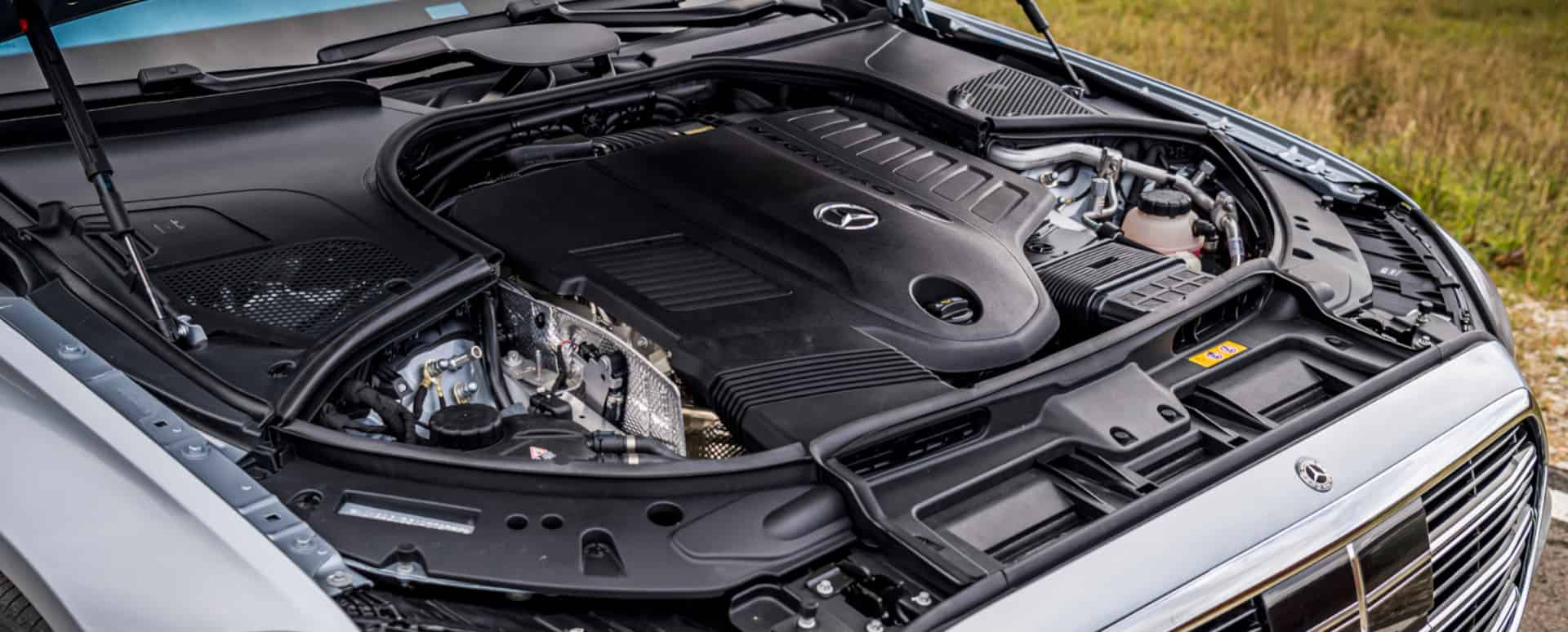
What type of oil does the Mercedes‑Benz S‑Class use? You should confirm the answer by checking three places: the owner's manual, the oil filler cap, and the service sticker in the engine bay or door jamb. These sources give the approved MB‑Approval and the recommended viscosity.
Step‑by‑step oil check and change basics
- Verify MB‑Approval and viscosity in the owner’s manual or on the oil cap.
- Warm the engine to operating temperature, then park on level ground and turn off the engine.
- Check the dipstick for level and color; brown is normal, very dark and gritty means change earlier.
- Replace the oil filter with an OEM or MB‑approved filter every oil change.
- Use the correct oil quantity listed in the manual and torque the drain plug to spec.
Practical tips I follow
- Keep a log of oil type and date. It helps spot leaks and consumption trends.
- Use a clean funnel and avoid spills into electrical areas.
- If you do the oil change yourself, dispose of used oil responsibly at a recycling center.
Oil‑change intervals and service considerations
What type of oil does the Mercedes‑Benz S‑Class use? The oil itself and the service interval are both crucial for longevity. Mercedes often specifies extended intervals, but real‑world driving affects how often you should change oil.
Recommended intervals
- Normal driving — many S‑Class models can go 10,000 to 15,000 miles between services if MB‑approved oil is used and condition is monitored.
- Severe driving — frequent short trips, towing, or lots of idling means change oil every 5,000 to 7,500 miles.
- Time limit — change at least once every 12 months, even if mileage is low.
Service reminders
- Rely on the vehicle’s onboard service system as a guide, but use common sense when conditions are tough.
- Record MB‑Approval and viscosity at each service to ensure consistency.
- For warranty protection, always use MB‑approved oil and an authorized service center when required.

Common mistakes, tips, and things to avoid
What type of oil does the Mercedes‑Benz S‑Class use? Avoid guessing. Wrong oil can reduce protection, dirty emissions equipment, or even affect warranty. Here are common mistakes and how to avoid them.
Common mistakes
- Using non‑approved oil to save money. The short‑term saving can cost more in repairs.
- Ignoring oil leaks or consumption. A sudden drop in oil level often signals a problem.
- Overfilling the oil. Too much oil can cause pressure issues and seal damage.
Practical tips
- Keep an MB‑approval list in your glovebox or phone. It saves time at the parts store.
- Buy oil from reputable brands that explicitly list MB approvals on the label.
- When in doubt, call a dealer or a trusted Mercedes specialist for verification.
Personal lesson learned
- Early in my career I once used a cheaper, non‑approved oil in an S‑Class. The car ran fine short term, but the owner later needed particulate filter maintenance. Since then I never compromise on MB‑approved oils.

Frequently Asked Questions of What type of oil does the Mercedes‑Benz S‑Class use?
What oil specification should I look for in my S‑Class?
Look for the MB‑Approval listed in your owner’s manual or on the oil cap. Common specs include MB 229.5, MB 229.51, and MB 229.71, depending on the engine and year.
Can I use any synthetic oil in a Mercedes‑Benz S‑Class?
No. Use a synthetic oil that explicitly meets the Mercedes‑Benz MB‑Approval required for your engine. Generic synthetics without the right approval might not protect emission systems or meet warranty rules.
What viscosity is best for the S‑Class in cold weather?
Many S‑Class models perform well with 0W‑40 or 0W‑30 in cold climates for better cold‑start protection. Always match the viscosity to the MB‑Approval and the manufacturer’s recommendations.
How often should I change oil in my S‑Class?
Typical intervals range from 10,000 to 15,000 miles for normal driving if using MB‑approved oil. For severe driving or older cars, consider changing every 5,000 to 7,500 miles.
Will switching to a different approved oil harm my engine?
Switching between MB‑approved oils is usually fine if the viscosities are compatible. Avoid mixing oils with very different properties or non‑approved formulations for long periods.
Is high mileage oil recommended for older S‑Class models?
High mileage oils can help older engines with seals and minor leaks, but ensure the oil also meets the MB‑Approval specified for your engine. Consult a trusted mechanic before making a long‑term switch.
Should I use dealer oil or aftermarket MB‑approved oil?
Either is acceptable as long as the oil lists the required MB‑Approval. Reputable aftermarket oils often match or exceed dealer oil performance at lower cost.
Conclusion
Choosing the right answer to What type of oil does the Mercedes‑Benz S‑Class use? starts with the owner's manual and ends with MB‑approved, fully synthetic oil in the correct viscosity. Use the MB‑Approval listed for your engine, keep consistent records, and adapt intervals to driving conditions. A small investment in the correct oil protects the engine, saves on repairs, and keeps the S‑Class running smoothly.
Takeaway: verify the MB‑Approval, pick the recommended viscosity, and stick to a sensible service schedule. If you found this helpful, try checking your oil cap now, or leave a comment with your S‑Class model and year — I’ll share a tailored oil recommendation.