CR-V trims differ mostly in powertrain, features, comfort, tech, safety, and price.
I’ve worked with hundreds of buyers and driven many CR‑Vs, so I know how confusing trim choices can be. This article breaks down the differences between Honda CR‑V trim levels clearly and simply, so you can pick the right one for your needs, budget, and driving style. Read on for a straightforward guide that compares engines, tech, safety, comfort, cargo, pricing, and real-world buying tips.

49% off Today's Exclusive Deals
Limited-time Exclusive Deals. Check current discount on Amazon.
Check Price on Amazon As an Amazon Associate I earn from qualifying purchases.
Overview of the current Honda CR‑V trim lineup
Here’s a short, clear look at common CR‑V trims you’ll see at dealers. The exact names can vary by model year and market, but most lineups include these gas and hybrid options:
- LX — base model with essential features
- EX — adds useful tech and comfort upgrades
- EX‑L — leather and added comfort options
- Sport or Sport Touring — sportier styling and extra convenience
- Touring — top-level gasoline trim with premium features
- Hybrid trims — often labeled Hybrid, Hybrid EX‑L, Hybrid Touring
The differences between Honda CR‑V trim levels show up in engines, drivetrains, cabin features, and safety tech. Knowing which trims carry the turbo 1.5L, which are hybrid, and which add all‑wheel drive helps cut your options fast.
49% off Today's Exclusive Deals
Limited-time Exclusive Deals. Check current discount on Amazon.
Check Price on Amazon As an Amazon Associate I earn from qualifying purchases.
Key differences by category
Below I break down the main categories where the differences between Honda CR‑V trim levels matter most. This helps you compare trims by what you actually use day to day.
Performance and powertrain
- Engines — Lower trims usually have the 1.5L turbo 4‑cylinder. Hybrid trims combine a gasoline engine with electric motors.
- Power — Expect around 190 horsepower for the turbo gas engine and roughly 200–210 combined horsepower for the hybrid system.
- Drive options — Front‑wheel drive is standard on base trims; all‑wheel drive is common as an option or standard on higher trims.
- Fuel economy — Hybrid trims deliver better city MPG; turbo gas trims have competitive highway numbers.
Interior and comfort
49% off Today's Exclusive Deals
Limited-time Exclusive Deals. Check current discount on Amazon.
Check Price on Amazon As an Amazon Associate I earn from qualifying purchases.- Seating — LX has cloth seats; EX adds upgraded materials; EX‑L and Touring normally add leather and heated front seats.
- Space — Cabin and cargo space are similar across trims, but higher trims add small convenience features like power liftgates and memory seats.
- Noise and refinement — Upper trims often include better sound deadening and upgraded audio for a quieter ride.
Technology and infotainment
- Displays — Base trims get standard touchscreen and Apple CarPlay/Android Auto; mid and high trims add larger screens and wireless connectivity.
- Audio — Upgraded speakers appear on EX‑L and Touring; premium audio is usually a Touring feature.
- Convenience tech — Things like wireless phone charging, navigation, and hands‑free power tailgates are trim‑dependent.
Safety and driver assistance
- Standard safety — Honda Sensing suite (automatic emergency braking, lane assist, adaptive cruise) is standard on most trims today.
- Advanced features — Higher trims may add blind‑spot monitoring with rear cross‑traffic braking and surround‑view cameras.
- Driver comfort aids — Parking sensors and driver memory settings are typically available on upper trims.
Cargo and practicality
- Cargo volume — Very similar across trims, but roof rails and cargo floor options vary by trim.
- Towing and payload — Slight variations based on powertrain; hybrids sometimes have different towing capacity.
- Practical extras — Roof rails, cargo nets, and underfloor storage more likely on mid and top trims.
Price and value
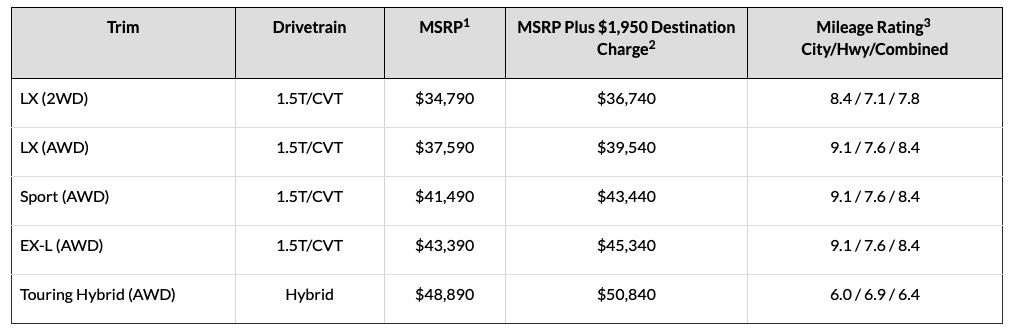
- Starting price — LX is most affordable; Touring and hybrid Touring are the most expensive.
- Cost to own — Hybrid trims may cost more up front but can save on fuel long term.
- Resale — Higher trims with more features often hold value better, especially hybrid and AWD models.
These categories capture the main differences between Honda CR‑V trim levels. Use them as a checklist when you compare trims at a dealer.

Trim‑by‑trim breakdown (practical snapshot)
Here’s a practical list of what each trim typically includes. Use this when you’re scoping a test drive or comparing prices.
LX (base)
- Core safety features and infotainment
- Cloth seats and manual adjustments
- FWD standard; AWD usually optional
- Best if you want a simple, economical CR‑V
EX
- Adds a bigger touchscreen, more comfort features, and upgraded driver aids
- Often includes heated front seats and blind‑spot monitoring
- Good mid‑level value — the sweet spot for many buyers
EX‑L
- Leather upholstery, power driver’s seat, and interior upgrades
- Improved comfort for long drives and family use
- Choose if cabin comfort is a priority
Sport / Sport Touring
- Sporty exterior trim and sometimes stiffer suspension tuning or unique wheels
- Extra convenience and styling cues compared to EX trims
- Ideal if you want a more athletic look
Touring (top gas trim)
- Premium audio, navigation, hands‑free power liftgate, and full feature set
- Best for buyers who want a fully loaded gas CR‑V
Hybrid trims (Hybrid, Hybrid EX‑L, Hybrid Touring)
- Hybrid powertrain for better city fuel economy
- Many features mirror the corresponding gas trim (EX, EX‑L, Touring)
- Pick if you want the best fuel economy and smoother low‑end power
These snapshot lists let you match trims to real needs: budget, comfort, or fuel economy.
How to choose the right CR‑V trim for you
Answer these quick questions to narrow down the differences between Honda CR‑V trim levels that matter to you.
- Do you want the best fuel economy? Consider a hybrid trim.
- Do you care about leather and heated seats? Look at EX‑L or Touring.
- Do you want top tech and sound? Touring often includes premium options.
- Is AWD necessary? Add it if you live where weather demands it.
- Will you keep the vehicle long term? Higher trims may have better resale value.
Practical tips for buying
- Test drive both the turbo gas and hybrid models back‑to‑back.
- Bring a checklist of must‑have features to avoid being upsold.
- Negotiate on total price, not monthly payment.
- Check certified pre‑owned inventory if you want a higher trim at a lower price.
These steps will reduce regret and make the choice clearer when comparing differences between Honda CR‑V trim levels.

My experience, lessons learned, and owner tips
I’ve helped buyers pick trims and have taken CR‑Vs on long trips. Here are short lessons from real use.
- Drive both powertrains — the hybrid feels smoother in town; the turbo is peppier on the highway.
- Don’t overpay for features you won’t use — heated rear seats are nice but unnecessary for many buyers.
- Consider long trips — if you do many highway miles, a turbo gas trim can be more cost‑effective than you expect.
- Value practical features — blind‑spot monitors and adaptive cruise control add safety and daily convenience.
- Inspect the tech — make sure the infotainment and smartphone features work easily for you.
These personal tips help turn the abstract differences between Honda CR‑V trim levels into real decisions you can live with.

Frequently Asked Questions of What are the differences between Honda CR‑V trim levels?
What does the base LX trim include?
The LX trim includes essential safety tech, a standard infotainment system with smartphone integration, and cloth seats. It is the most budget‑friendly option and covers basic needs.
Are hybrid trims worth the extra cost?
Hybrid trims cost more upfront but deliver better city fuel economy and smoother low‑end power, which can save money if you drive mostly in town. For highway‑heavy drivers, the gas turbo trim may be more cost‑effective.
Which trim has the best value for most buyers?
The EX trim often hits the best balance of price, comfort, and useful features without the premium cost of top trims. It includes many desired safety and convenience upgrades.
Do higher trims improve safety significantly?
Most safety features come standard across trims via the Honda Sensing suite, but higher trims add convenience items like parking sensors and surround cameras. Core crash‑averting tech is standard on most modern CR‑Vs.
Should I choose AWD or FWD?
Choose AWD if you face frequent snow, ice, or poor roads; it improves traction and peace of mind. FWD is fine for mild climates and saves a bit on fuel and cost.
Conclusion
Choosing among the differences between Honda CR‑V trim levels comes down to three simple things: powertrain preference, desired comfort/tech features, and budget. Test drive both gas and hybrid models, prioritize the features you use daily, and pick the trim that fits your lifestyle. Take action now: make a short checklist of must‑have features, schedule two test drives (gas and hybrid), and compare dealer quotes. If you found this guide useful, leave a comment with your priorities or subscribe for more practical car‑buying advice.