A dark puddle under your Jeep means a Jeep Wrangler oil leak that kills a sunny day fast. But that puddle is not where the problem lives. Oil runs downhill, follows wiring, and hides behind heat shields.
The source is higher up and travels a longer path to the ground than you'd expect.

49% off Today's Exclusive Deals
Limited-time Exclusive Deals. Check current discount on Amazon.
Check Price on Amazon As an Amazon Associate I earn from qualifying purchases.Manufacturer specifications show every Wrangler generation has its own weak points. The 4.0L inline-six leaks from the valve cover. The 3.6L Pentastar cracks its plastic oil cooler housing.
As of 2026, that cooler fails so often that aftermarket aluminum replacements are a standard upgrade. Before you buy any gasket, trace the highest wet spot. The same diagnostic approach also works on other vehicles, so understanding common causes of engine oil leaks can speed up the job.
Quick Answer
A Jeep Wrangler oil leak usually comes from the valve cover gasket or plastic oil cooler. Oil runs downhill before it drips. UV dye finds the true source.
49% off Today's Exclusive Deals
Limited-time Exclusive Deals. Check current discount on Amazon.
Check Price on Amazon As an Amazon Associate I earn from qualifying purchases.Heat cracks plastic coolers on the 3.6L. Fix the right part, not the first wet spot.
Before You Crawl Underneath: Why the Drip Always Lies
Don't trust the stain. That puddle on your garage floor is the end of a long oil trail, not the beginning. Engine oil runs downhill, clings to the block, and only lets go when it reaches a low point.
By the time it drips, the origin can be a foot higher and tucked behind a bracket.
Think about gravity's role. A valve cover leak runs down the side of the engine, coats the oil pan, then drops onto the skid plate. You see a spot under the front axle, but the real leak is at the top.
49% off Today's Exclusive Deals
Limited-time Exclusive Deals. Check current discount on Amazon.
Check Price on Amazon As an Amazon Associate I earn from qualifying purchases.The rear main seal works the same way, only it sends oil backward to the bellhousing. One drop visible on the ground means a hundred hidden oil traces spread across the block.
That's why proper diagnosis starts with finding the highest wet point, not the lowest puddle.
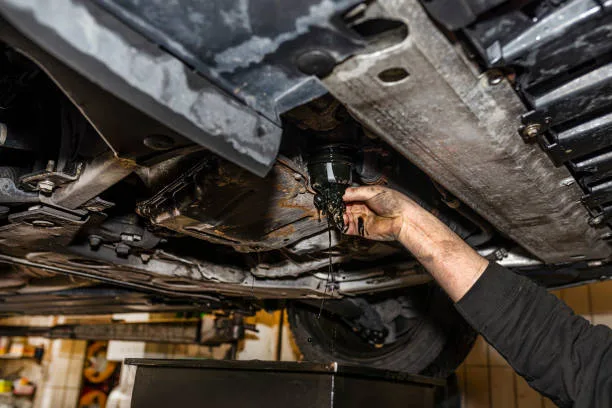
Image source: Bing (Web (fair-use with source credit))
Know Your Engine's Known Weak Spots
Your Wrangler's engine generation decides which leak is most likely. The 3.6L, 3.8L, 3.0L EcoDiesel, and the ancient 4.0L all have different failure patterns. Starting with the right suspect saves hours.
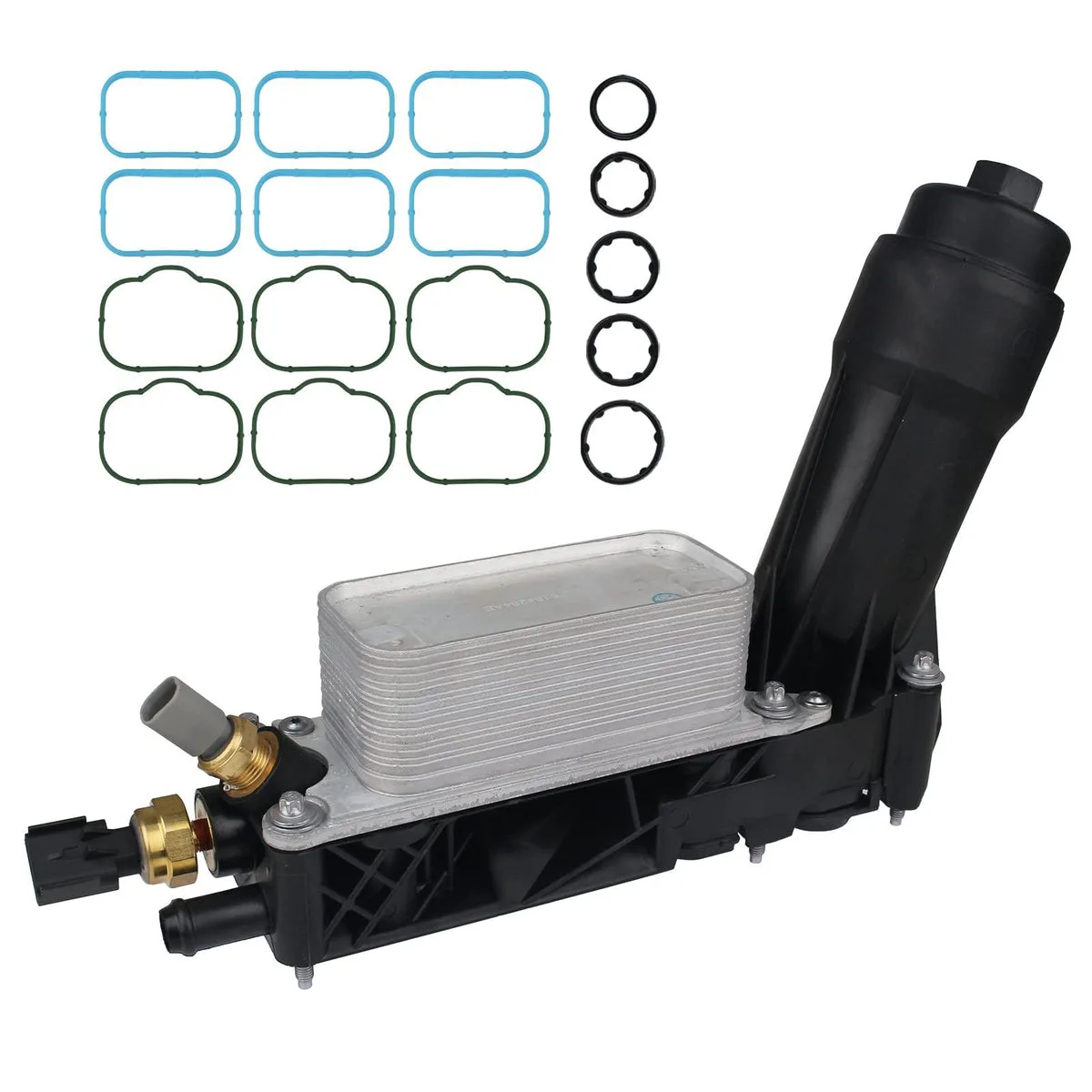
Image source: Bing (Web (fair-use with source credit))
3.6L Pentastar: The Plastic Oil Cooler Housing Problem
If you own a 2012 or newer Wrangler with the 3.6L, start here. The oil filter housing and oil cooler share one plastic unit that sits in the engine valley on top of the block. Heat cycles make it brittle.
Aggregate repair reports show hairline cracks and seal failure after 60,000 to 80,000 miles. When it fails, oil runs down the back of the bellhousing and collects above the transmission. Swapping it for an aluminum housing ends the recurring leak.
Valve Cover Gaskets: Where Seepage Starts and Where It Ends Up
The valve cover gasket seals the space between the aluminum cylinder head and the stamped steel cover. Both the 3.6L and the older 3.8L develop hard, brittle gaskets as they age. Oil weeps out of the front and rear corners and travels down the block to the ground.
You'll often notice a faint burning smell first because the oil drips onto the exhaust manifold before it ever hits your floor.
Oil Pan Gasket, Rear Main Seal, and the "Low-Drip" Misdiagnosis
That puddle right beneath the center of the engine is rarely the rear main seal. The rear main sits where the crankshaft exits the block, behind the flexplate. It's a common failure on high-mileage 3.8L engines, but it's also the most expensive fix because the transmission has to drop.
Before you suspect it, check the oil pan gasket and drain plug. A loose plug, over-torqued pan lip, or damaged gasket drips in exactly the same location.
How to Trace the Leak Like a Pro (No Lift Required)
You don't need a lift to find a leak. You need patience, a light, and a clean engine. Follow these four steps, and you'll pinpoint the source with surprising accuracy.
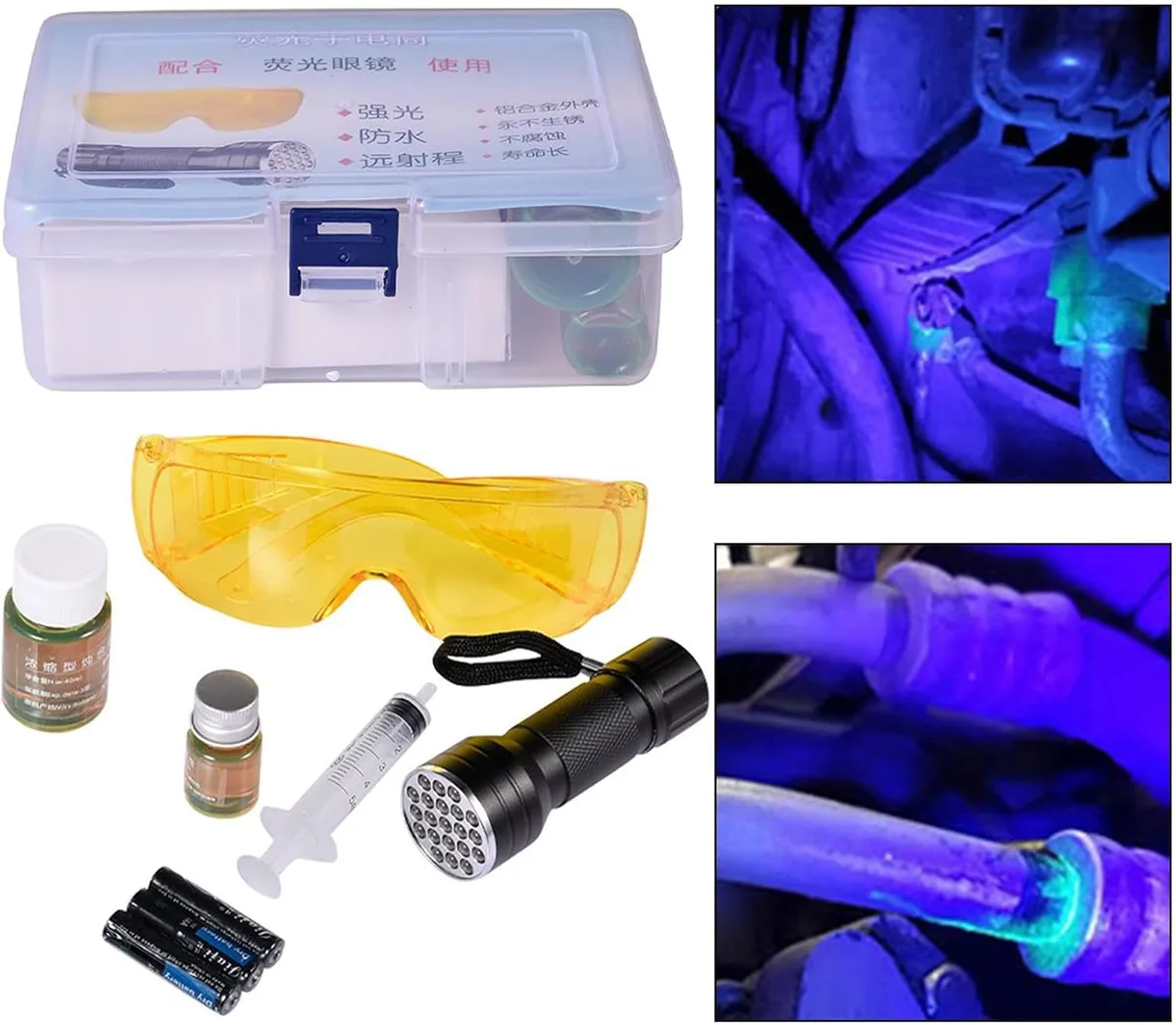
Image source: Bing (Web (fair-use with source credit))
Step 1: Degrease and Blow Dry the Engine Bay
A clean engine is a readable engine. Spray the bay with a heavy-duty degreaser, let it soak for a few minutes, then rinse with low-pressure water. Use a leaf blower or shop air to dry every surface.
If you skip this step, you can't distinguish fresh oil from old grime.
Step 2: Add UV Dye, Run It to Operating Temperature
UV dye is cheap and the single most reliable tool for diagnosing oil leaks. Add the recommended amount to the oil, start the engine, and let it idle until the thermostat opens. Take it for a ten-minute drive if you want full distribution.
Then park in a dark garage and shine your UV flashlight around the engine. The dye glows bright yellow-green wherever oil is actively escaping.
Step 3: Inspect with a Blacklight — Track the Highest Wet Spot
Read the glow systematically, working from top to bottom. Photograph or mentally note every glowing area. The highest glowing point is your leak source, even if the brightest glow is down near the pan.
Oil travels laterally, so the topmost trace is the real culprit. If you only see a glow at the lower edges, move upward until you find where it starts.
Step 4: Confirm with a Clean Paper Towel or Mirror
Once you've found the main suspect, wipe it off with a white paper towel. Fresh oil leaves an amber or dark brown streak. Then use a mechanic's mirror to look behind and above the area.
A gasket that looks swollen, wet at the edge, or slightly discolored is your leak. If in doubt, clean the spot, drive, and re-inspect after a short loop.
What That Puddle Is Telling You: Color, Smell, and Location
Not every fluid under a Wrangler is engine oil. Axle fluid, transmission fluid, power steering fluid, and even coolant can create similar stains. Getting this wrong sends you down the wrong repair path.
The color and smell will sort it out fastest.
Oil vs. Transmission Fluid vs. Power Steering Fluid — At a Glance
Used engine oil is dark brown or black, slippery, and carries a burnt hydrocarbon smell. Transmission fluid is darker red or brown with a sweeter, thinner feel. Power steering fluid is similar to transmission fluid but often lighter red.
Coolant stands out with bright green, yellow, or pink color and a sugary smell. The table below makes the differences obvious.
| Fluid | Color | Smell | Typical Drip Location |
|---|---|---|---|
| Engine oil | Dark brown/black | Burnt | Front or center of engine |
| Transmission fluid | Red/brown | Sweet/burnt | Center, near transmission pan |
| Power steering fluid | Light red/amber | Sweet | Driver side, near lines |
| Coolant | Green/yellow/pink | Sweet/syrupy | Front center, near radiator |
Coolant has a sweet smell that's impossible to miss. If the puddle is green or pink, you're dealing with a coolant problem, not a Jeep Wrangler oil leak. And before assuming engine oil, check for transmission problems that leak red fluid.
A separate coolant leak requires its own fix.
If you have a manual transmission and oil seeps onto the clutch, you'll understand why a clutch slips under load. A wet clutch disc can't grip the flywheel properly. You'll feel it most in third or fourth gear under acceleration.
The fix is replacing the clutch, not just fixing the leak.
Drip Locations and What They Point To
Location is the second biggest clue after color. A spot under the front differential area often means the valve cover or timing cover. A spot under the bellhousing points to the rear main seal or the oil cooler housing on a 3.6L.
A spot dead center can be the oil pan, drain plug, or transmission housing. If you see oil collecting on the skid plate but nothing dripping while parked, the leak is probably pressure-related and only shows at highway speeds.
Severity vs. Repair Cost: When to Fix It and When to Wait
Not every oil leak is an emergency. The deciding factor is whether it seeps, drips, or streams. Grading the severity is the difference between a weekend repair and a breakdown on the trail.
Seep, Drip, or Stream — How to Grade It Yourself
A seep is a thin film of oil around a gasket with no drops on the ground overnight. That can wait for a few months. A drip is one to five drops overnight, enough to leave a small spot.
Worth tackling before it gets worse. A stream is a steady flow that eventually triggers the low oil pressure light. That needs an immediate stop.
Severe leaks can contaminate brakes and steering components, meaning we're talking about compromised brake safety, not just messy floors.
Typical Repair Costs and DIY Difficulty by Leak Source
The repair cost depends almost entirely on where the leak lives. Some fixes take an hour and cost twenty bucks. Others require dropping the transmission.
Here's a realistic breakdown:
| Leak Source | DIY Difficulty | Parts Cost | Shop Cost |
|---|---|---|---|
| Valve cover gasket | Easy | $30-$100 | $200-$400 |
| Oil pan gasket | Moderate | $50-$150 | $400-$700 |
| Oil cooler housing (3.6L) | Hard | $150-$400 | $800-$1,200 |
| Rear main seal | Hard | $100-$250 | $1,000-$1,800 |
Valve cover gaskets are accessible on most Wranglers and make a good first project. Oil pan gaskets need lifting and, in some cases, dropping the front diff. The 3.6L oil cooler is buried under the intake manifold, so many owners pay a shop.
The rear main seal is the worst, with five to eight hours of labor. Catching a leak early gives you options. Ignoring a stream turns a repair into a tow.
Mistakes That Turn a Small Seep into a $1,500 Repair Bill
Every Wrangler owner makes at least one of these errors before they learn the hard way. The good news is they're all preventable once you know what to watch for.
Jumping Straight to the Rear Main Seal
The rear main seal lives at the back of the engine, behind the flexplate. Dropping the transmission to replace it costs serious money. Aggregate repair data shows most "rear main leaks" actually originate from the oil cooler housing on the 3.6L or a weeping valve cover gasket.
Always work top to bottom. Confirm the source with UV dye before you commit to a teardown.
Replacing Plastic Cooler Housings with Another Plastic One
Mopar OEM replacements on the 3.6L Pentastar are the same plastic unit that failed in the first place. Aftermarket aluminum housings cost a bit more upfront but eliminate the repeat failure. Our research shows owners who swap to aluminum rarely return to the same problem.
Going back to plastic just restarts the clock.
Using "Stop-Leak" Additives as a Legit Fix
Stop-leak products thicken your oil to slow a seep. They work short term, but they clog oil passages, coat the oil cooler, and reduce lubrication. The EPA recommends the proper handling of used engine oil, and adding chemical thickeners only creates more contaminated waste.
A bottle of stop-leak turns a $50 gasket job into a $3,000 engine rebuild.
Ignoring Crankcase Pressure and PCV Blockage
A clogged PCV valve forces crankcase pressure upward. That pressure pushes past every gasket it can find. If you've replaced a valve cover gasket and it leaks again within a few months, the PCV system is your real culprit.
Check it every oil change. A stuck valve costs almost nothing to replace and prevents the leak from coming back.
Frequently Asked Questions
Is a Jeep Wrangler oil leak dangerous to drive?
It depends on severity. A slow seep around the valve cover is not an emergency. A steady stream that drops oil onto the exhaust is a fire risk.
Oil contamination on brake lines or steering components compromises safety. If you see the low oil pressure light come on, stop driving immediately and check the level.
What does it cost to fix an oil leak on a Wrangler?
A valve cover gasket runs roughly $200 to $400 at a shop. The 3.6L oil cooler housing replacement runs $800 to $1,200. A rear main seal can hit $1,000 to $1,800 because of the labor involved.
DIY repairs cut those numbers by about half, assuming you have the tools and workspace.
Can I drive my Jeep with an oil leak?
Yes, if the oil level stays within range and the leak is slow. Top off the oil and check the dipstick daily. Avoid long highway drives or off-road trips until the leak is diagnosed.
If the oil pressure gauge drops below normal, pull over. Running an engine low on oil causes bearing damage that costs thousands.
How often should I check my oil on a Wrangler with a known leak?
Once a week minimum. Pull the dipstick, wipe it, reinsert, and read the level. If you drive daily, check it every two to three days.
The 3.6L Pentastar holds about five quarts. Losing a quart between changes means the leak is moderate. Losing more than a quart a week signals a serious problem.
Will an oil leak fail a state inspection?
It depends on your state. States with emissions-focused inspections usually pass a minor seep. States with safety-focused inspections may fail a Wrangler if oil contamination reaches brake components or the undercarriage shows heavy fluid buildup.
Check your local DMV requirements before scheduling an inspection.
Should I take my Wrangler to a dealer or an independent mechanic?
Dealers know the Pentastar-specific failures well and carry OEM parts. Independent shops charge less labor and often source the same parts. For a simple valve cover job, an independent mechanic saves money.
For the oil cooler housing on a 3.6L or a rear main seal, either works. Experience with Wranglers matters more than the shop name.