If you’ve heard a screech when reversing out of the driveway, you’ve probably typed “Tesla Model 3 brake problem” into a search bar. You’re not alone. Most of what you’ll find points to one of two things: normal corrosion from low use, or a genuine hydraulic fault that needs urgent attention.
As of 2026, aggregate owner reports and Tesla’s service documentation indicate the Model 3 braking system is fundamentally sound. The confusion comes from its blended design, where regenerative braking handles most slow-down duties and the friction brakes sit idle. Tesla recommends a brake fluid inspection every 2 years, typically using DOT 3 fluid.

49% off Today's Exclusive Deals
Limited-time Exclusive Deals. Check current discount on Amazon.
Check Price on Amazon As an Amazon Associate I earn from qualifying purchases.Understanding that split is the key to knowing what you’re hearing.
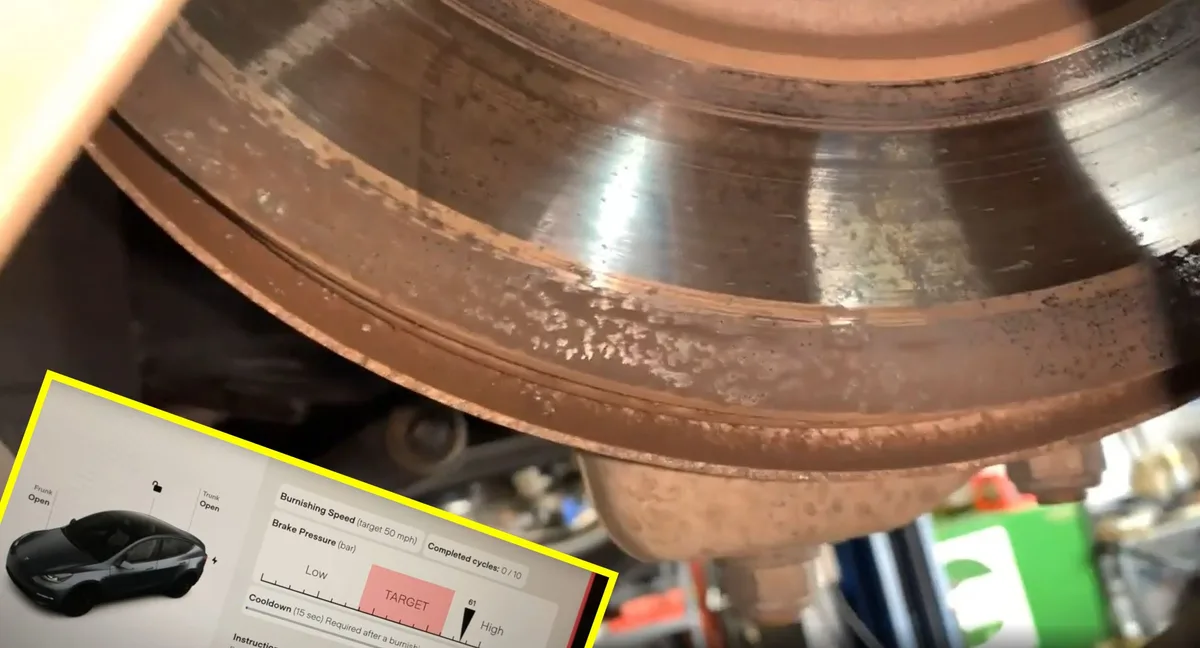
Image source: Bing (Web (fair-use with source credit))
49% off Today's Exclusive Deals
Limited-time Exclusive Deals. Check current discount on Amazon.
Check Price on Amazon As an Amazon Associate I earn from qualifying purchases.Quick Answer
Most Tesla Model 3 brake noises are harmless rotor rust. The car’s regenerative system keeps friction brakes idle, so rotors corrode lightly. Noise that fades after a few stops is normal.
A soft pedal, a constant grind, or persistent pulling requires professional attention.
Why Your Model 3 Brakes Are Squealing, Grinding, or Feeling Soft
The first thing to know: not every brake noise is a brake problem. The Model 3 barely uses its friction brakes because regen does most of the stopping. So the rotors sit exposed to moisture, and even overnight humidity can create a thin layer of rust.
The next morning, you get a squeal or a short grinding sensation on the first few stops.
49% off Today's Exclusive Deals
Limited-time Exclusive Deals. Check current discount on Amazon.
Check Price on Amazon As an Amazon Associate I earn from qualifying purchases.If that sound disappears after five or ten brake applications, you’re seeing normal rotor corrosion. An occasional aggressive stop from 40 mph on a quiet road clears the rust film and usually silences the noise for weeks. If the sound repeats every time you brake, or you hear a constant metallic scrape, the pad may be worn to its backing plate.
Check pad thickness through the wheel spokes. Less than 3 mm means replacement.
| Symptom | Likely cause | Severity |
|---|---|---|
| Squeal on first stops after rain | Surface rotor rust | Low |
| Grinding with every stop | Worn pads or stuck debris | High |
| Pedal sinks toward the floor | Hydraulic failure | Emergency |
| Car pulls to one side while braking | Seized caliper slide pin | Medium |
A soft or long brake pedal is a different category. That’s not rust. That’s a hydraulic issue, possibly air in the line or a fluid leak.
Pull over safely and have the car towed. It’s the one symptom where you should not wait. If you’re ever unsure, review what to do if the pedal hits the floor before you drive another mile.
How the Model 3 Brake System Really Works: Regen Blending, the Hydraulic Unit, and the Friction Hardware
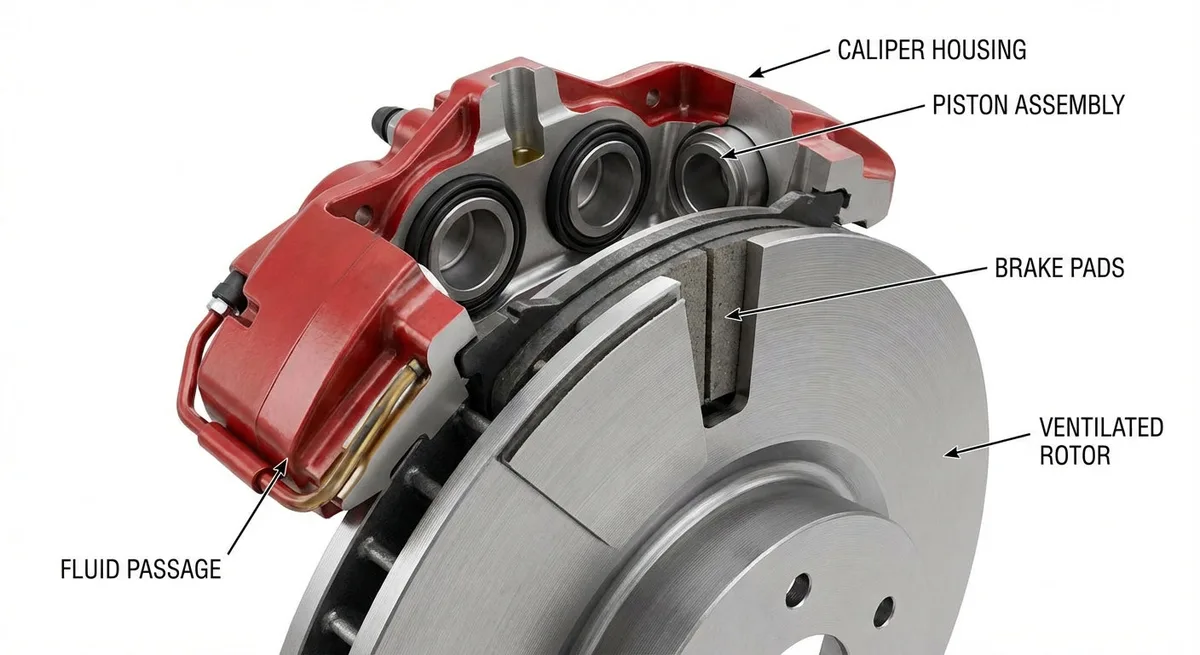
Image source: Bing (Web (fair-use with source credit))
The Model 3 doesn’t use a traditional vacuum booster. Instead, an electrohydraulic brake unit combines inputs from the pedal, a pressure sensor, and software that decides when to use regen versus friction. The same unit integrates anti-lock braking and stability control.
When you lift off the throttle, the electric motor slows the car and converts kinetic energy back into the battery. That’s regenerative braking. The friction calipers only clamp when you press the brake pedal, or when regen is unavailable, like at full battery charge or during a cold soak.
What this means in practice: the brake pads and rotors can go weeks without heavy use. That’s great for pad life, but bad for corrosion. Surface rust builds quickly on cast-iron rotors, which explains all those brake noise after rain complaints you’ll read online.
Software updates can also change pedal feel. Tesla has adjusted regen blending thresholds over the air, and some owners report a softer or longer pedal after an update. Usually, that’s a normal recalibration.
If the pedal travels unusually far and doesn’t firm up, that’s still a mechanical concern.
The Most Common Model 3 Brake Problems: Normal Quirks vs. Genuine Safety Issues
Rusted Rotors
Surface rust is cosmetic, not structural. It appears after rain, washing, or high humidity. It sounds like a squeal or a light sanding when you first apply the brakes.
It clears within a few stops. If it doesn’t, you may have pitting that needs rotor replacement.
Seized Caliper Slide Pins
A stuck pin prevents the caliper from releasing fully. The car pulls to one side, the wheel feels warm after driving, and pad wear becomes uneven. Cleaning and re-lubricating the pins usually fixes it.
Worn Brake Pads
Model 3 pads wear slowly, but they don’t last forever. When they reach the backing plate, you hear a metallic grind. That’s exactly why brake pads grind, and it’s a problem you don’t want to ignore.
Replacing pads early saves the rotors.
Soft Brake Pedal
This is your red-flag symptom. It can mean air in the hydraulic system, a failing master cylinder, or an internal fluid leak. Don’t drive the car.
Park it, call Tesla roadside, and arrange a tow. You can also report the issue to the NHTSA, but protecting yourself comes first.
Brake Maintenance That Prevents 90% of Model 3 Brake Issues
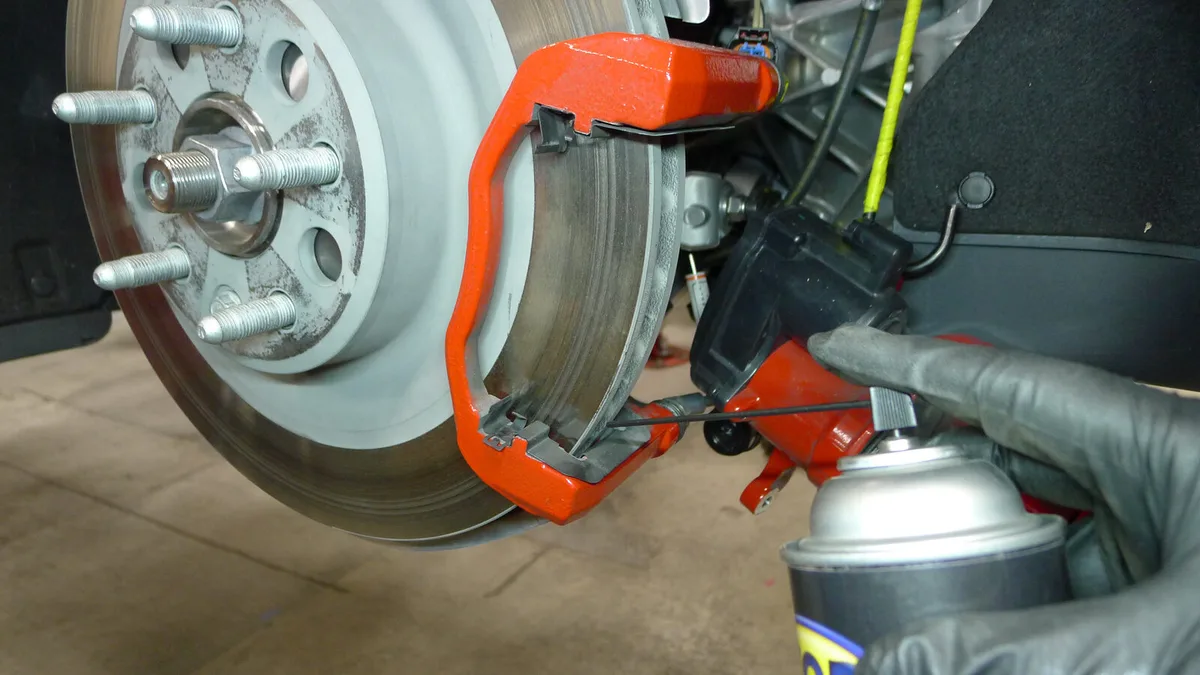
Image source: Bing (Web (fair-use with source credit))
Use the Friction Brakes on Purpose
Once a month, when it’s safe, brake from 40 mph down to 5 mph with moderate pressure. Repeat four or five times. This scrubs the rust film off the rotors and keeps the calipers working the way they should.
Learn the Brake Service Menu
The Model 3 has a brake service mode that retracts the pistons and releases the parking brake for maintenance. It’s meant for pad and rotor work, not for everyday cleaning. Follow the on-screen instructions exactly, and never force the calipers back with a pry bar.
Don’t Skip the 2-Year Fluid Flush
Even if the pads look fine, brake fluid absorbs moisture over time. A flush every two years keeps the boiling point high and prevents internal corrosion. It’s cheap insurance compared to a master cylinder failure.
Lubricate the Slide Pins
When pads are replaced, ask the shop to clean and re-grease the caliper slide pins. Sticky pins are a common cause of uneven wear and small pulls to one side. It’s a 20-minute job for a technician, and it saves you from buying a new caliper later.
If you’re dealing with a squeal that won’t go away, the causes of persistent brake squeaking are worth reviewing. The fix is often simpler than it sounds.
What Tesla Model 3 Brake Service Actually Costs
Tesla service centers charge higher labor rates than most independent EV shops. You’ll usually get a written quote before work starts, and the parts used are genuine Tesla components.
| Service | Typical cost range |
|---|---|
| Front brake pad replacement | $250 – $450 |
| Front pads with rotors | $600 – $900 |
| Rear pads with rotors | $500 – $800 |
| Brake fluid flush | $150 – $250 |
These ranges come from aggregate owner quotes and independent shop estimates. Actual pricing depends on whether you drive a base RWD or a Performance model, which uses larger front rotors and fixed calipers.
Warranty coverage won't usually pay for pads and rotors because they’re wear items. That’s normal in every car. But if a caliper seizes or a sensor fails within the 4-year/50,000-mile basic warranty, Tesla should cover the repair.
Model 3 Brake FAQs: Rusted Rotors, One-Pedal Driving, and OTA Updates
Does one-pedal driving really extend brake pad life?
Yes, dramatically. Aggregate owner reports show many Model 3 pads lasting over 100,000 miles when regen handles most stops. The catch: the friction brakes sit idle, and idle rotors rust.
That’s why noise is so common on a car with otherwise healthy brakes.
Can I fix the rotor rust myself without taking the wheels off?
Usually, if it’s light surface rust. Five or six moderate stops from 40 mph will scrub the film off. If the squeal persists, the rotors may be pitted.
That’s when a visual inspection matters. Deep pits need rotor replacement, not more braking.
What does the “regenerative braking temporarily reduced” warning mean?
It means the battery is too cold or too full to accept regen energy right now. The friction brakes take over automatically, and the pedal may feel different or less smooth. It’s normal in winter or right after a full charge.
It’s not a brake fault.
Why does my brake pedal feel different after a software update?
Tesla adjusts regen blending thresholds over the air, and those changes affect pedal feel. It should still stop predictably and firmly. If the pedal sinks, goes soft, or feels spongy, that’s a hydraulic issue, not a software quirk.
Final Call: When to Keep Driving, When to Call Tesla, and When to Tow It
A simple severity check for every brake symptom
Rust noise that fades after a few stops means keep driving. A persistent squeal or grind means schedule service. Pulling to one side means book an inspection soon.
A pedal that sinks to the floor means stop driving and tow it.
The exact questions to ask before paying for brake work
Ask what pad thickness was measured on each corner. Ask whether the rotors are pitted or grooved, and whether the caliper slide pins got cleaned and greased. Ask if the tech used brake service mode.
Any shop that skips these details isn't doing the job right.
The biggest pain point isn't brake reliability. It's separating normal EV behavior from a real fault. Trust the severity check above.
When in doubt, a $250 inspection beats a $900 rotor replacement. And if the car ever fails to stop completely, you need to react fast. That's why we keep a dedicated guide on complete brake failure ready.