Your Subaru Outback power window problem is rarely a mystery. It's either an electrical fault or a mechanical failure, and a few simple checks will tell you which before you spend a cent. The good news is that most causes fall into a handful of predictable patterns.
The frustrating part is that fixing the wrong part wastes both time and money.

49% off Today's Exclusive Deals
Limited-time Exclusive Deals. Check current discount on Amazon.
Check Price on Amazon As an Amazon Associate I earn from qualifying purchases.As of 2026, most Outback models still use the same fundamental design: a small DC motor drives a cable-operated regulator that raises and lowers the glass on a track. Power flows from the master window switch panel, through the door wiring harness, and into each individual motor. That path is exactly where corrosion, broken wires, and worn parts show up.
Understanding that path is the key to fixing it fast.
Why Is Your Outback Window Dead? Start Here.
Quick Answer
Test the window lockout button first. Then check both switch locations. Listen for a click.
49% off Today's Exclusive Deals
Limited-time Exclusive Deals. Check current discount on Amazon.
Check Price on Amazon As an Amazon Associate I earn from qualifying purchases.A click means a jammed regulator. Silence means no power. All dead windows point to a fuse or master switch.
Most fixes cost $50 to $200 in parts.
The first question is always the same: is it one window, or all of them? This single detail splits the diagnosis into two completely different paths. If only one window is dead, the switch, motor, regulator, or wiring for that specific door is at fault.
If every window is dead, the problem points to the master switch, a fuse, or the main wiring feed.
49% off Today's Exclusive Deals
Limited-time Exclusive Deals. Check current discount on Amazon.
Check Price on Amazon As an Amazon Associate I earn from qualifying purchases.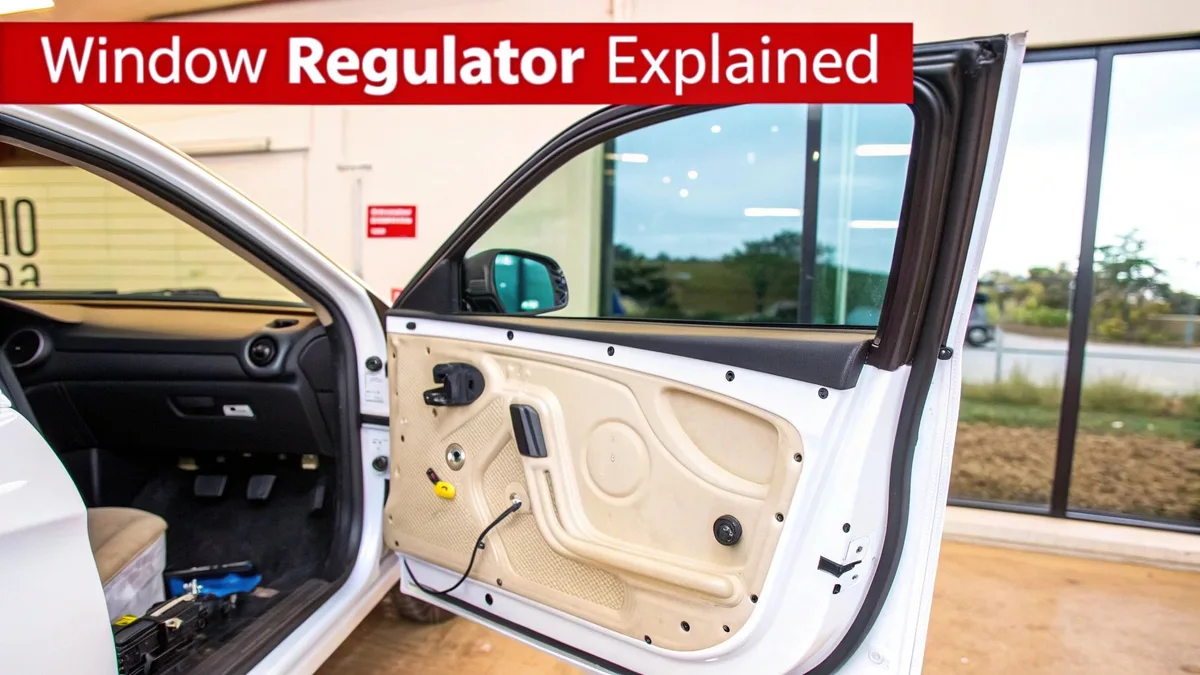
Image source: Bing (Web (fair-use with source credit))
Here's a snapshot of what your symptom usually means:
| Symptom | Likely cause | Repair category |
|---|---|---|
| One window dead, no sound | Dead motor, bad switch, or broken wire | Electrical |
| One window dead, clicking sound | Motor works, regulator or track is jammed | Mechanical |
| All windows dead | Blown fuse, master switch, or harness fault | Electrical |
| Window slow or crooked | Worn regulator, dry track, or bent guide | Mechanical |
Remember how the system works. The switch sends a signal. The motor turns that signal into rotation.
The regulator converts rotation into vertical motion.
The track and seals guide the glass. Every stage fails with a slightly different pattern. That makes the diagnosis easier.
Manufacturer specifications indicate that Outback window motors typically last 8 to 12 years. Regulators fail earlier in cold or dusty climates because the plastic slider clips get brittle and snap. The door wiring harness is another weak spot that Subaru owners talk about constantly.
Before buying parts, check the National Highway Traffic Safety Administration recall database. Several Subaru recalls have touched door wiring and window switches. It's a free check that takes two minutes.
Here's the good news. You don't need dealer diagnostic tools to sort this out. A multimeter, a socket set, and about an hour will get you to the exact part.
We'll walk through the branches in order, from the free checks to the parts that cost real money.
One rule above all: don't buy parts before you finish the diagnosis. Many owners skip the testing step and order a window motor, only to find a snapped regulator cable an hour later. That's a fully avoidable mistake that costs you shipping fees and a weekend of downtime.
Quick Troubleshooting Before You Buy Parts
Before you pull a single screw, run through these five checks. They take about ten minutes and cost nothing. Most power window issues get solved right here.
Check the window lockout button first. It sits on the driver's master switch panel, usually with a small icon of a window crossed out. When it's active, some Outback models kill power to the rear window switches entirely.
The windows still work from the driver's panel, but passengers can't operate them. It's the easiest false alarm in the book.
Test both switch locations. If the passenger window only works from the master panel, the individual door switch is likely faulty. If it only works from the passenger door, the master switch circuit is the problem.
If it works from neither location, the issue runs deeper in the motor, regulator, or wiring.
Listen carefully when you press the switch. A faint clicking sound from inside the door means the motor is trying to run but something is physically stopping it. Total silence means the motor isn't getting any power at all.
That single distinction tells you which path to take next.
Check the relevant fuse. Your Outback's power windows use fuses in the under-dash fuse box, and some models have a second fuse under the hood. The owner's manual shows the exact location for your year.
A blown fuse usually takes out more than one window, so this check matters most for the "all windows dead" branch.
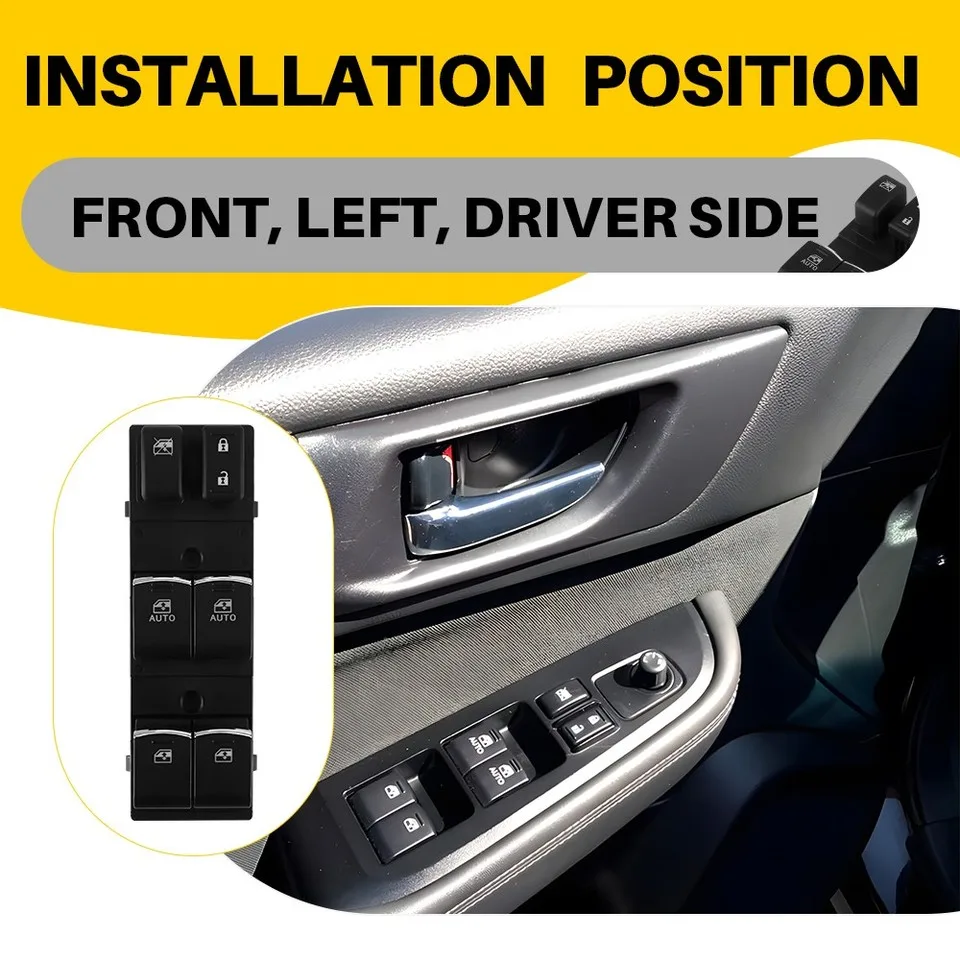
Image source: Bing (Web (fair-use with source credit))
Here's the thing. These checks aren't just about finding the fix. They're about avoiding the wrong fix.
If you hear clicking and order a window motor, you're replacing a perfectly good part.
The motor is fine. The regulator is what stopped moving. Once you've run through these basics, you'll know whether you're chasing an electrical open circuit or a mechanical jam.
How to Diagnose It Step by Step
Now it's time to get systematic. Grab a digital multimeter, a flathead screwdriver, and a trim tool. Here's how to work through each branch.
Branch 1: one window is dead. Press the switch and listen. If you hear a click, skip the multimeter and focus on the regulator. The motor is trying to move but the cables or sliders are jammed.
If you hear nothing, test for power at the motor connector. Remove the door panel, then peel back the moisture barrier to reach the two-wire plug. Set the multimeter to DC volts and press the switch.
You should see approximately 12V when the switch is held.
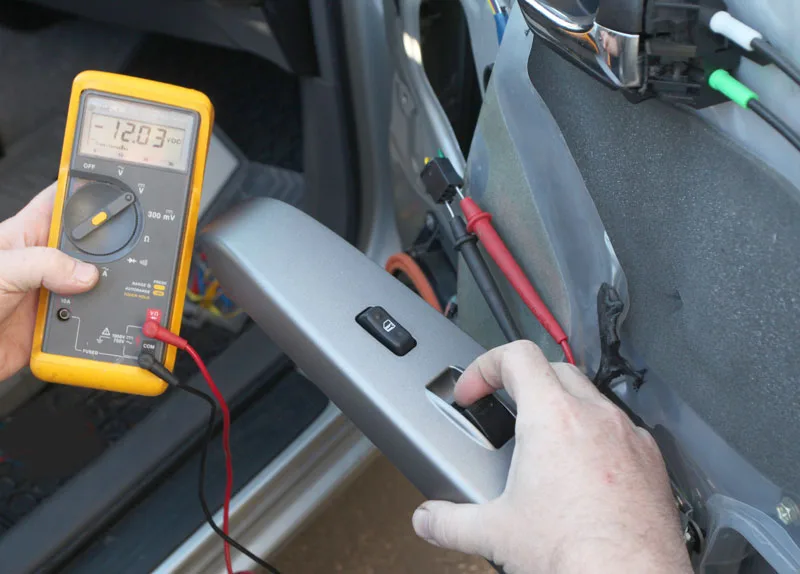
Image source: Bing (Web (fair-use with source credit))
If 12V appears, the motor is getting power and is likely dead. Tap the motor gently with a wrench handle while pressing the switch. If it suddenly moves, the brushes or commutator are worn.
If no voltage appears, trace backward through the switch and the fuse.
Branch 2: all windows are dead. Start with the fuse. If it's fine, the master switch panel becomes the usual suspect. Outbacks are known for internal failure inside the master switch, especially on the driver's window circuit.
The door wiring harness in the rubber boot between the body and door is another classic failure point. Repeated opening and closing fatigues the copper wires until they snap.
Branch 3: the window is slow, crooked, or falls off track. Manually lift the glass with both hands while gently pressing the switch. If the window moves freely, clean and lube the track with silicone spray. If it binds, the regulator cable is fraying or a slider clip has broken.
If the window is physically stuck and you're on the road, the basic rescue steps we've outlined elsewhere will get you moving again. The general flow transfers across most makes and models.
Here's the decision summary. Clicking but not moving? Regulator.
No sound and no voltage? Switch or wiring. No sound but has voltage?
Motor. Slow and crunchy? Track or regulator.
That's the whole diagnosis in four lines.
What's Actually Broken in There? Key Components to Understand
Understanding the parts is half the battle. Every component fails in a recognizable way.
The window regulator is the mechanical heart of the system. Most Outbacks use a cable-operated regulator with a small drum that winds two steel cables to move the glass. Newer models ride on a plastic slider clip.
When that clip cracks or a cable snaps, the window usually drops into the door and tilts. That's the classic "window fell off track" moment.
Scissor-type regulators show up in some Outback generations. They use a pivoting metal arm to lift the glass. These are more robust but less common.
If you're not sure which one you have, check the part number through the door cavity before ordering.
The window motor is a simple permanent-magnet DC motor bolted to the regulator. Brushes wear out, grease hardens, and gears strip. Some owners replace just the motor because it's cheaper.
That works if the regulator is still smooth.
If the regulator shows any wear, replace both as a unit. A fresh motor on a bad regulator dies quickly because it's still fighting the friction.
The master window switch panel acts as the power distributor for all four windows. Internal contacts arc and fail, especially on the heavily used driver circuit. If one window works from the door switch but not the master, this panel is usually the culprit.
The same worn-contact pattern shows up in turn signal switches across many Subaru generations.
The door wiring harness runs from the body through a rubber boot into the door. That boot flexes every time the door opens. Over years, the copper strands fatigue and break.
It's a well-documented Outback weak spot.
Test it by wiggling the boot while pressing the switch. If the window stutters, you've found it. This same gremlin shows up in other electrical systems like a dead horn, where a broken wire masquerades as a failed component.
Fuses and relays complete the circuit. Window circuits draw serious current, and a shorted motor or jammed regulator can blow a fuse.
Always replace a blown fuse with the exact same amperage. Never use a higher-rated fuse to "fix" the issue. That's how wiring harness fires start.
Common Mistakes That Turn a $150 Fix into a $600 Repair
Let's talk about the expensive ways to learn this lesson. None of these mistakes are fatal, but they all cost money, time, or both. Avoid them and your repair stays cheap.
Mistake one: replacing the motor when the regulator is broken.
If you hear clicking, the motor is working. It's trying to move a regulator that's jammed or snapped. Buying the motor on a hunch wastes $80 to $120.
Do the voltage test first.
Mistake two: testing with the door panel on.
You can't hear the motor, you can't see the cables, and you can't check the slider clips. The trim panel insulates everything.
Pull the panel before you conclude anything. The whole job takes ten minutes with a Phillips screwdriver and a clip tool.
Mistake three: ripping the moisture barrier.
That plastic sheet inside the door keeps water out of the cabin. If you tear it, rain and window runoff drip straight into the interior.
Peel it carefully and reuse it. Heavy-duty poly sheeting and butyl tape make a good replacement if needed.
Mistake four: forgetting to reset the one-touch auto-up.
After you disconnect the battery, the auto-up function loses its memory. If you don't reset it, the window rolls up in tiny increments and may trigger pinch protection early.
The reset for most Outbacks is simple. Roll the window all the way down and hold the switch down for five seconds. Then roll it up and hold the switch up for five seconds.
Mistake five: using the wrong fuse.
When a window circuit blows a fuse, the temptation is to jam in a higher amp fuse so it stops blowing. That's a serious fire risk. The wiring isn't rated for that current.
If a window keeps blowing fuses, the motor is shorting or the wiring is chafing. Find the short instead. The same logic applies to brake light circuits, which are equally unforgiving of an oversized fuse.
Mistake six: ordering the wrong regulator.
Outback regulators differ by year, door position, and trim level. Check your VIN and the part number stamped on your current regulator.
Returning a mismatched part costs you shipping and days of downtime. For any remaining doubts, our general power window guide walks a similar path across other makes.
Cost Guide: DIY vs. Dealership vs. Mobile Mechanic
Parts are where the savings show up. A window regulator assembly for an Outback runs $50 to $180 depending on the generation and whether you buy OEM or aftermarket. The motor alone adds $60 to $150.
The master switch panel usually costs $100 to $250.
Aftermarket units from brands like Dorman and ACDelco hold up fine for most owners. OEM parts cost more but match the exact factory spec.
Dealership labor pushes the total much higher. Most shops charge one to three hours of labor, and rates land between $100 and $180 per hour. That puts dealer pricing between $300 and $600 per window.
A mobile mechanic typically charges $60 to $120 per hour, which often makes them the smart middle ground.
| Repair | Parts cost | DIY total | Shop or dealer total |
|---|---|---|---|
| Regulator assembly | $50 to $180 | $50 to $180 | $250 to $500 |
| Motor only | $60 to $150 | $60 to $150 | $200 to $450 |
| Master switch panel | $100 to $250 | $100 to $250 | $250 to $450 |
| Door harness repair | $5 to $30 | $5 to $30 | $150 to $350 |
One tip before you order. Cross-check the part number against Subaru's official owner resources using your VIN. That prevents the sixth mistake on our list and gets the right part the first time.
When a Window Problem Isn't the Window
Frozen seals are the classic cold-climate gotcha. If the window refuses to move on a frosty morning, ice can glue the glass to the weatherstrip. Pressing the switch repeatedly just strains the motor.
Let the cabin warm up, gently break the ice along the edge, and use a plastic trim tool to pry the seal loose.
Never use a screwdriver. It will scratch the glass and slice the rubber seal.
A battery disconnect erases the one-touch auto-up memory. That's not a failure. Roll the window down and hold the switch for five seconds, then roll it up and hold for another five.
The window relearns its travel limits.
Aftermarket window tint can cause slow or stuck windows. Thick film peels or shifts inside the glass channel, catches the seal, and jams the window mid-roll. If a car was recently tinted and the window acts up, check the tint edge first.
And the window lockout button? Subaru dealers get calls about dead back windows every winter. It stays a mystery because nobody checks the lockout switch first.
If you're stuck at a toll booth with the window down, roll up the others and lock the doors. Deal with the fix when you're home.
Subaru Outback Power Window FAQs
How do I reset the auto-up window function after replacing a regulator?
Roll the window all the way down. Hold the switch down for five seconds. Then roll it up and hold the switch up for five seconds.
The window relearns its travel limits. If the one-touch function still fails, repeat the cycle once more.
Why does my driver's window work but not my passenger's?
That usually points to the master switch panel. The driver's switch sends power to every window. Its internal contacts wear out from heavy use.
Test the passenger window from its own door switch. If it works there, replace the master switch, not the window motor.
Should I replace the motor and regulator together?
Only if the regulator shows wear. A smooth regulator with a dead motor can take just the motor. But a jammed or frayed regulator should go out with the motor.
Doing both at once costs a bit more. It also saves you from tearing the door apart twice.
What causes the clicking sound when I press the window switch?
A click means the motor has power and is trying to run. The regulator cable is jammed or snapped, so the motor spins against the obstruction. Stop pressing the switch right away.
Repeated tries overheat the motor and turn a cheap repair into an expensive one.
Can a bad battery cause power windows to act up?
Yes. Window motors demand full voltage. If the battery sits near 10 or 11 volts, windows roll slowly or stop working.
Check battery voltage first when multiple windows fail at once. A weak battery can mimic a failed master switch.