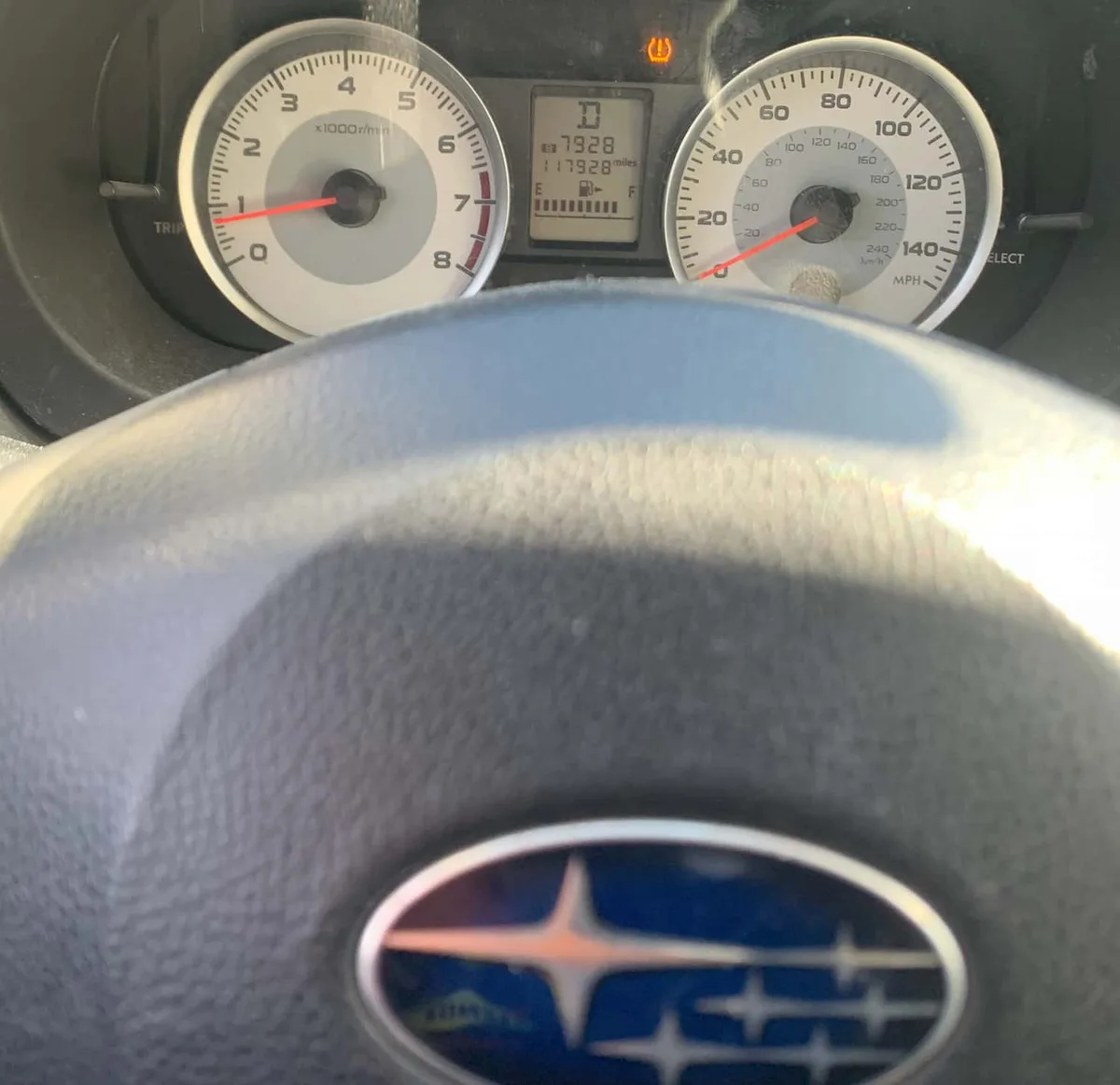
That little amber horseshoe with the exclamation point just lit up on your dash. The Subaru Outback tire pressure light is easy to recognize, but knowing what to do next isn't always obvious. Should you pull over, or can you keep driving?
Before anything else, understand this: the light carries two completely different messages depending on whether it's steady or blinking.

49% off Today's Exclusive Deals
Limited-time Exclusive Deals. Check current discount on Amazon.
Check Price on Amazon As an Amazon Associate I earn from qualifying purchases.In the United States, NHTSA's FMVSS 138 requires the system to warn you when pressure drops about 25 percent below the recommended setting. That threshold protects you from blowouts, poor handling, and uneven tire wear. It also means the light is rarely an emergency, just a signal that needs a quick response.
Let's walk through what your Outback is telling you.
49% off Today's Exclusive Deals
Limited-time Exclusive Deals. Check current discount on Amazon.
Check Price on Amazon As an Amazon Associate I earn from qualifying purchases.Image source: Bing (Web (fair-use with source credit))
Quick Answer
If the light is steady, check your tire pressure. Add air to match the door placard. Drive above 20 mph for about 10 minutes.
If the light blinks, the TPMS needs service. Adding air won't fix it, so plan a shop visit.
Problem: Why Is My Subaru Outback Tire Pressure Light On?
Before you chase a fix, figure out which warning you're dealing with. A steady Outback tire pressure light means at least one tire is underinflated. It stays lit until the system reads acceptable pressure across all four wheels.
49% off Today's Exclusive Deals
Limited-time Exclusive Deals. Check current discount on Amazon.
Check Price on Amazon As an Amazon Associate I earn from qualifying purchases.A blinking light is a different story. It means the Tire Pressure Monitoring System itself has a fault. Dead sensor batteries, damaged sensors, or lost programming are the usual culprits.
The TPMS in your Outback uses direct sensors mounted inside each wheel. Those sensors broadcast real-time pressure data to the car's computer. When pressure drops about 25 percent below the recommended setting, the computer triggers the warning.
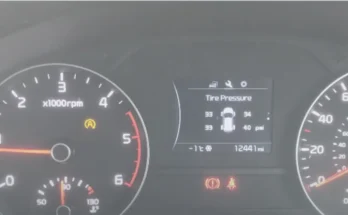
You'll see the amber light on the dash and, on many trims, a message identifying the low tire.
Most Outbacks built after 2008 include this system as standard equipment. That's federal law. As of 2026, every new Outback still works exactly the same way.
If the light is steady, you have time. The tire is soft, not flat. You can usually reach home or a gas station if you keep speeds reasonable and do a quick visual check first.
Driving on a severely underinflated tire damages the sidewall, so take it easy.
Temperature swings often trigger this light overnight, which is worth a closer look.
Solid Light vs. Blinking Light: What Your Outback Is Telling You
The difference between a solid and blinking tire pressure light is the difference between "fix this soon" and "get this serviced." That distinction saves you time and guesswork.
Solid light
A steady light stays on after start-up and doesn't flicker. It means one or more tires read below the warning threshold.
Check the multi-information display if your Outback has one. It'll usually show which corner is low and the current pressure reading. Add air, and the light goes off after a short drive.
Blinking light
A blinking light flashes for about 60 seconds after you start the car, then stays solid. That pattern is a diagnostic signal.
It means the system detected a fault, not low pressure. If the light is blinking, filling your tires won't help. You need a scan tool to read the sensor codes or a visit to a tire shop.
How to tell them apart in 10 seconds
Start the engine and watch the light. If it's solid right away, that's low pressure. If it flashes for about a minute before staying solid, that's a fault.
Too many drivers ignore the blinking pattern, just like they ignore persistent brake noise. Don't be one of them.
Getting this wrong costs you time. Plenty of drivers top off their tires, watch a blinking light stay on, and assume their gauge is broken.
Why the Outback Tire Pressure Light Comes On (Beyond the Obvious)

Image source: Web (Bing) / fity.club (Web image (fair-use with source credit))
Cold weather is the number one reason TPMS lights appear overnight. Here's the physics: tire pressure drops roughly 1 psi for every 10°F drop in ambient temperature. A cold snap from 70°F to 30°F can lower your pressure by 4 psi.
On a tire already running at the edge of the warning threshold, that's enough to light up your dash.
Altitude matters too. Drive from sea level up to a mountain pass, and the air inside your tires expands as outside pressure drops. You might see a temporary warning that clears once you descend.
Then there are the slow leaks. Nails, screws, or a cracked wheel bead can bleed air over days or weeks. The TPMS catches it before you feel it in the steering wheel.
Sensor batteries die. Most TPMS sensors last between 5 and 10 years. When a battery dies, the sensor stops transmitting.
The computer doesn't know the tire's pressure, so it reports a fault. That's the blinking light pattern.
Tire rotations and seasonal wheel changes can also knock a sensor out of sync. A careless mount can damage the sensor stem. And just like a failing heater becomes more obvious in winter, pressure problems surface when temperatures drop the hardest.
The final cause is simple neglect. Most drivers don't check pressures monthly. The TPMS light isn't nagging you.
It's doing its job.
Step-by-Step: How to Fix and Reset the Tire Pressure Light
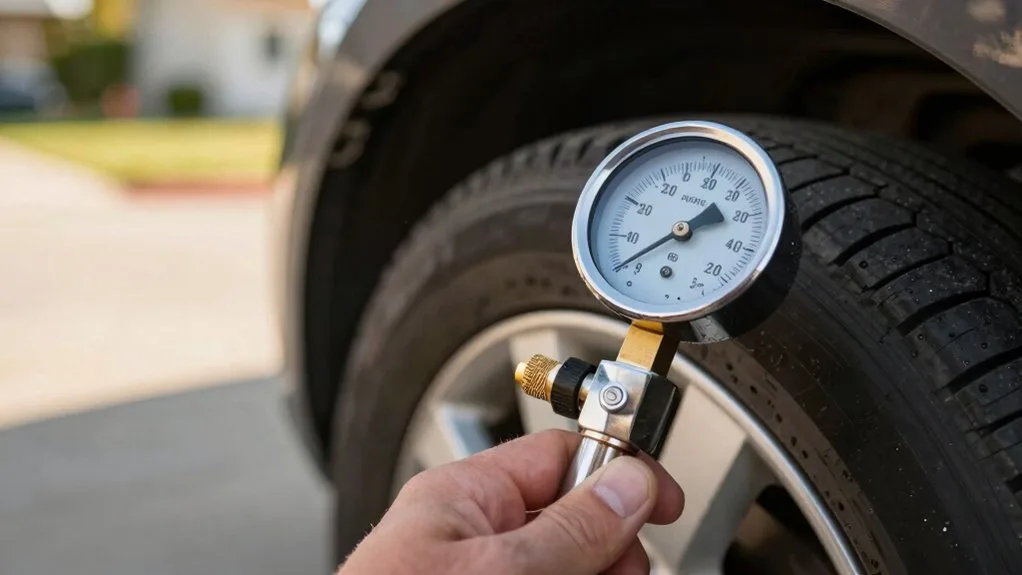
Image source: Bing (Web (fair-use with source credit))
Step 1: Find the correct pressure
Open the driver's door and look at the jamb sticker. That's the placard. It lists recommended pressure for front and rear tires.
Most Outback trims run around 35 psi, but confirm your own.
Don't use the number molded into the sidewall. That's the maximum, not the target.
Step 2: Check pressures cold
The placard values assume cold tires. Cold means the car hasn't been driven for at least a few hours. If you've been driving, add 2 to 3 psi to your target before comparing.
Step 3: Inflate to the placard spec
Use a digital gauge or a gas station air pump. Remove the valve cap, press the hose firmly, and add air in short bursts. Check the pressure between bursts.
Step 4: Drive to reset
After filling, drive above 20 mph for about 10 minutes. The sensors need wheel rotation to transmit fresh data. Most Outbacks reset automatically.
There's no hidden reset button on the dash.
Step 5: If the light stays on
Re-check pressures with your gauge. If the light remains steady with correct pressures, you likely have a slow leak or a failing sensor. That's when a shop visit makes sense.
It's the same logic as addressing mechanical trouble before it strands you.
Common Mistakes to Avoid When Dealing with the TPMS Light
Some mistakes turn a 5-minute fix into a shop visit. Here's what we see most often.
- Filling tires before checking the door placard. You'll either under- or over-inflate, and the light stays on.
- Trusting the dashboard readout over a manual gauge. Dash numbers round. A digital gauge shows exact psi.
- Ignoring a blinking light because "pressure looks fine." That's a sensor fault, not a leak.
- Skipping the spare. The TPMS doesn't monitor it. Check it manually after a flat swap.
- Using the sidewall max pressure instead of the placard number. That's a load limit, not a daily target.
- Disconnecting the battery to "reset" the light. It won't clear the fault, and you'll lose presets.
It's the same trap as brushing off squealing brakes. Small warnings become big repairs.
Pro Advice & Maintenance: Keeping the TPMS Light Off for Good
A few habits keep the TPMS light off more often than it comes on.
Check pressures monthly with a good digital gauge. Cold weather steals about 1 psi per 10°F drop, so top off before a cold front arrives. After filling, drive above 20 mph for about 10 minutes to let the sensors refresh.
Watch the clock on sensor batteries. They last 5 to 10 years. If your Outback's original sensors are nearing that age and the light blinks, plan for replacements.
Winter tire swaps are the sneakiest sensor killer. A careless mount tears valve stems. Ask the shop to confirm the sensors survived before you leave.
Keep a basic digital gauge in the glovebox. Aggregate owner reports show routine pressure checks prevent most TPMS visits. It's like catching early coolant trouble before it strands you.
Subaru's official maintenance guidance recommends the same monthly check.
Frequently Asked Questions
Can I reset the Subaru Outback TPMS light myself?
If the light is solid, yes. Inflate all four tires to the door placard pressure, then drive above 20 mph for about 10 minutes. The system resets automatically.
If the light blinks, that's a sensor fault, not a pressure issue. You'll need a shop visit.
Why does the light blink for a minute then stay on?
A blinking light for about 60 seconds indicates a TPMS system fault. A sensor battery died, a sensor was damaged during a tire change, or one lost its programming. Adding air won't fix it.
Is it safe to drive with the tire pressure light on?
A steady light means underinflation. You can drive carefully to the nearest air pump if the tire looks full enough. A blinking light means a system fault, which is usually safe to drive short distances, but get it checked soon.
How long does it take for the light to go off after adding air?
Typically 10 minutes of driving above 20 mph. The sensors need wheel rotation to broadcast fresh pressure data. If it stays on after that, re-check the pressure with a manual gauge.
Final Decision Guide: What to Do Based on Your Situation
Here's the full decision tree in one view.
| Situation | Action |
|---|---|
| Solid light, low pressure | Inflate to placard spec, drive 10 minutes above 20 mph |
| Solid light, correct pressure | Look for slow leaks, damaged sensors |
| Blinking light | Schedule TPMS service, no amount of air helps |
| Cold front incoming | Inflate early, prevent the warning |
When in doubt, start with the gauge. It answers more than a scan tool will.
And don't let a warning ride. Like a failing transmission, a small problem only gets more expensive the longer you wait.