That Mercedes C-Class suspension noise is more than an annoyance. It's your car trying to tell you something is wearing out. Ignore it long enough, and you'll damage components that cost far more to fix.
Mercedes multi-link suspensions are complex. Front upper control arm bushings typically show significant wear by 60,000 to 80,000 miles. Our research confirms this is one of the most common failure points across the W205 generation.

49% off Today's Exclusive Deals
Limited-time Exclusive Deals. Check current discount on Amazon.
Check Price on Amazon As an Amazon Associate I earn from qualifying purchases.Let's walk through exactly what that noise means and how to find the source.
Quick Answer: Why Your Mercedes C-Class Suspension Is Making Noise
A Mercedes C-Class suspension noise usually points to a worn rubber bushing, a failing sway bar link, or a strut mount bearing. The sound changes depending on the failed part. A clunk over small bumps often means a sway bar link.
A creak on turns points to a control arm bushing. A constant rattle may indicate a loose heat shield or a failing strut mount. Start by matching your specific noise to the right component.
49% off Today's Exclusive Deals
Limited-time Exclusive Deals. Check current discount on Amazon.
Check Price on Amazon As an Amazon Associate I earn from qualifying purchases.The Problem: What That Clunk, Squeak, or Rattle Actually Means
Different noises signal different worn parts. Here's how to read your car's signals.
| Noise Type | When It Happens | Most Likely Cause |
|---|---|---|
| Clunk / Knock | Over small bumps, during slow turns | Worn sway bar links |
| Creak / Squeak | Turning at low speed, uneven pavement | Dry or torn control arm bushings |
| Rattling | Over rough roads, constant at certain speeds | Loose component, worn strut mount |
| Grinding / Hum | Constant, changes with speed | Wheel bearing failure |
If your C-Class has AIRMATIC air suspension, a hissing sound or a car that sags overnight indicates a leak in the air spring or line. That's a separate diagnosis but equally urgent.
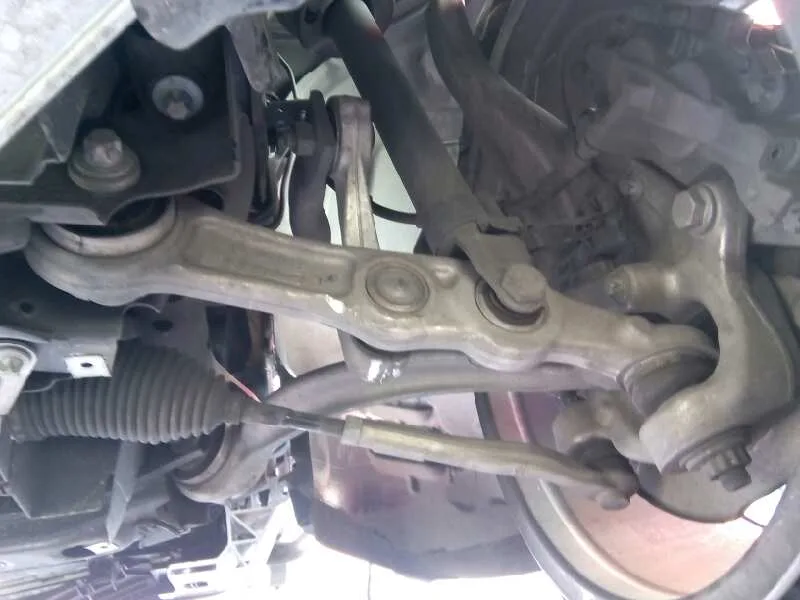
Image source: Bing (Web (fair-use with source credit))
49% off Today's Exclusive Deals
Limited-time Exclusive Deals. Check current discount on Amazon.
Check Price on Amazon As an Amazon Associate I earn from qualifying purchases.What's Inside: Mercedes C-Class Suspension Components That Wear Out
Understanding the parts helps you understand the noise. The W205 and W206 C-Class use a multi-link front suspension. Several key components degrade over time.
- Sway Bar Links (Drop Links): Connect the sway bar to the suspension. They have small ball joints that wear out, causing a metallic clunk.
- Control Arm Bushings: Rubber cushions that mount control arms to the subframe. They crack and split, leading to clunks and vague steering.
- Strut Mounts and Bearings: Located at the top of the strut assembly. A worn mount clunks. A bad bearing creaks when you turn the wheel.
- Spring Seats and Insulators: The rubber pad between the spring and the strut. When it disintegrates, you get a metal-on-metal rattle.
- Ball Joints: Integrated into some control arms. A failing ball joint clunks and poses a serious safety risk.
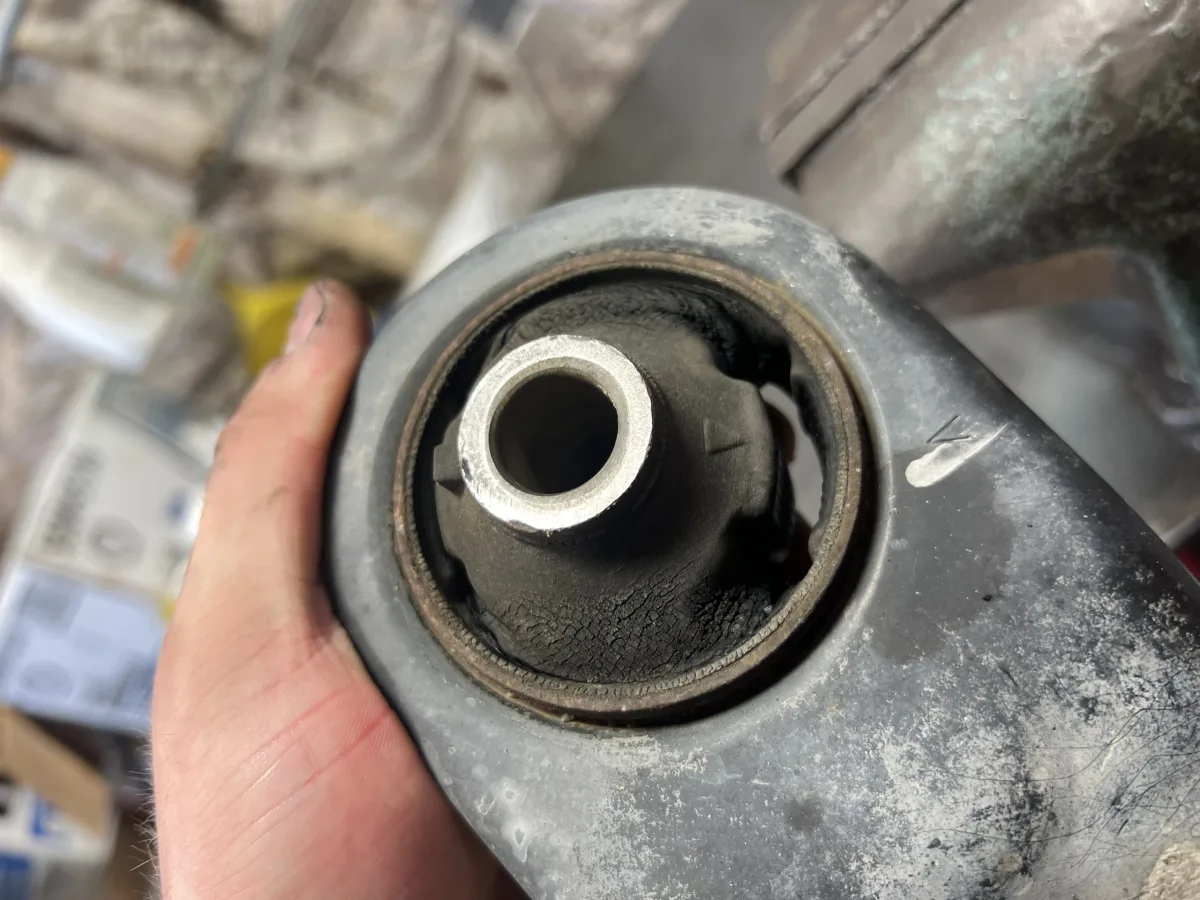
Image source: Bing (Web (fair-use with source credit))
The Diagnostic Workflow: Identifying Your Exact Suspension Noise
This is a decision tree. Follow the branches based on your specific situation.
Step 1: Describe the Noise
Be precise. Is it a single clunk, a repetitive squeak, or a constant rattle? Record a short video with your phone if it helps you compare sounds later.
Step 2: Identify When It Happens
The context matters most. Does the noise only happen when going over speed bumps? That points to strut mounts or spring seats.
Does it happen when turning? That points to the load-bearing side's control arm or strut mount. Does it happen under braking?
That could be a caliper guide pin affecting the wheel assembly.
Step 3: Pinpoint the Location
Try to determine which corner of the car is making the noise. Have a friend drive slowly over a known bumpy road while you listen from outside, standing near each wheel in turn.
Step 4: Match It to the Most Likely Cause
Use this logic flow.
- Clunk on small bumps? Inspect sway bar links first. They're cheap and often the culprit.
- Creak on turns? Look at control arm bushings. Check for visible cracks or tears in the rubber.
- Rattle over rough roads? Check strut mounts and spring seats. You may need to remove the strut top cover.
Step 5: Confirm With a Physical Inspection
Safely lift the car on jack stands. Use a pry bar to apply gentle leverage on suspension components. Any excessive play indicates a worn part.
This hands-on step confirms what your ears already told you.
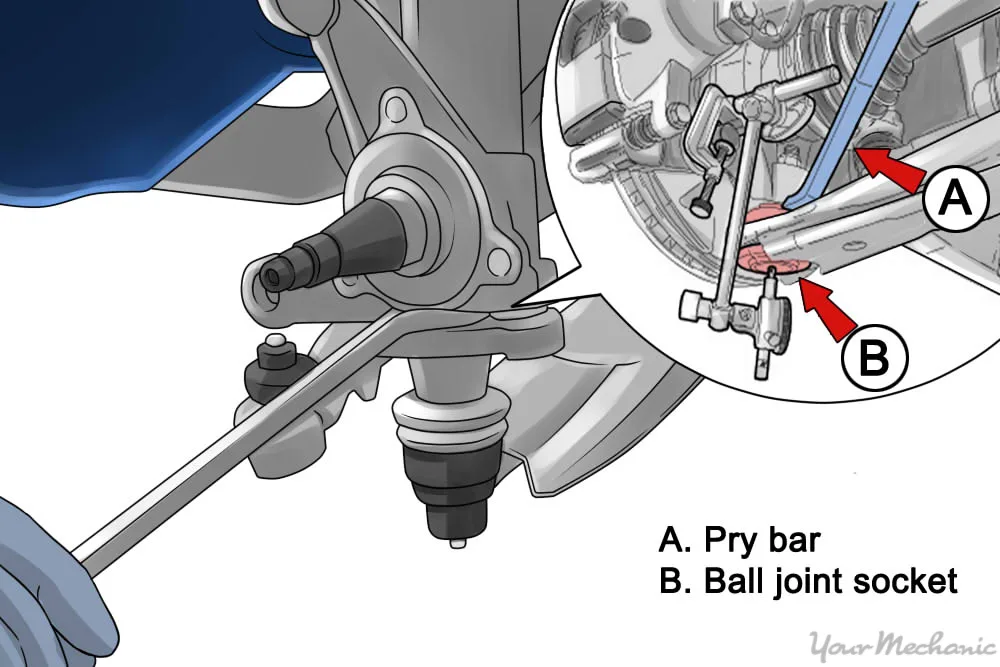
Image source: Bing (Web (fair-use with source credit))
Mistakes to Avoid When Diagnosing Suspension Noise
These traps waste time and money. Here's what to watch for.
Replacing parts blindly. Always diagnose the actual failed part first. Swapping both front control arms when only one bushing is torn is unnecessary expense.
Ignoring the noise under load. Some problems only appear when the suspension carries the car's full weight. A visual inspection on a lift can miss it. Always do a thorough road test first.
Forgetting simple checks. Ensure wheel lug nuts are torqued. Check that the plastic wheel well liner isn't loose. A loose heat shield can mimic a suspension rattle perfectly.
Skipping the alignment. After replacing any steering or suspension component, a wheel alignment is mandatory. Without it, you'll ruin new tires and the new parts you just installed.
Common Mercedes C-Class Suspension Repairs: Costs, Specs, and Timelines
Here's what repairs typically cost at independent shops as of 2026. Dealer pricing runs 30% to 50% higher.
| Repair | Parts Cost | Labor Time | Total Estimate |
|---|---|---|---|
| Sway Bar Links (pair) | $40 to $120 | 0.5 to 1 hr/side | $150 to $350 |
| Control Arm (per side) | $200 to $450 | 1.5 to 3 hrs | $400 to $900 |
| Strut Mount/Bearing | $100 to $250 | 2 to 4 hrs | $500 to $1,000 |
| Wheel Bearing | $150 to $300 | 1.5 to 3 hrs | $300 to $600 |
You'll face a choice with control arms. You can press in new bushings for $30 to $60 each, or replace the entire arm. Our research shows full arm replacement is more reliable long-term.
Either way, budget $150 to $250 for a four-wheel alignment afterward.
Expert Tips From a Real-World Perspective
A few things that save you money and hassle down the road.
Replace sway bar links in pairs. If one side is worn, the other is close behind. Doing both at once avoids a second labor charge later.
OEM-equivalent rubber matters. Aftermarket bushings work in many cases. But cheaper rubber compounds wear faster. Lemförder and Bilstein are reliable OEM-equivalent brands.
Avoid no-name parts for anything in the suspension.
Listen before you lift. A five-minute road test with the windows down tells you more than an hour under the car. Focus on when, where, and how the noise happens.
Check for Technical Service Bulletins. Mercedes has issued TSBs for specific suspension concerns on certain model years. Your dealer can look these up using your VIN. Per the National Highway Traffic Safety Administration, tracking recall and TSB data is a smart step before paying for any repair.
Don't ignore warning signs. If the noise comes with vague steering or the car pulling to one side, get it checked immediately. A worn ball joint can separate and cause sudden loss of steering control.
Mercedes C-Class Suspension Noise: FAQs
Why does my Mercedes C-Class clunk when going over speed bumps?
A clunk over bumps most often points to worn sway bar links or strut mounts. The sway bar link ball joint develops play over time. When the suspension compresses, the loose joint knocks against its housing.
Strut mounts produce a deeper thud.
Can suspension noise be dangerous?
Yes. A minor bushing squeak is mostly annoying, but a severely worn ball joint or control arm can fail while driving. This causes sudden loss of steering.
Any clunking that gets progressively louder should be inspected immediately.
How long do Mercedes C-Class suspension parts typically last?
Most rubber bushings last 60,000 to 80,000 miles under normal driving. Sway bar links often fail earlier, around 40,000 to 60,000 miles. Rough roads and harsh winters shorten these intervals significantly.
Should I go to the dealer or an independent shop?
Dealers use factory-trained technicians and OEM parts. Independent Mercedes specialists often deliver equal quality at lower labor rates. The key is finding a shop experienced with multi-link suspension geometry.
Poor work on these systems leads to alignment problems.
Do I always need an alignment after suspension repairs?
Almost always. Any component connected to the steering knuckle changes alignment angles. Skipping this step causes uneven tire wear.
The main exception is sway bar link replacement, which doesn't affect alignment geometry.
What if my C-Class has AIRMATIC air suspension?
Air suspension adds significant complexity. A hissing noise or a car that drops overnight signals an air leak. Air strut replacement costs $1,000 to $2,500 per corner.
This repair typically requires dealer-level diagnostics and specialized equipment.