Your Mercedes C-Class steering wheel shaking at highway speed points to a specific set of issues. This vibration typically stems from problems in the tire, wheel, brake, or suspension systems. Ignoring it won't make it go away.
Mercedes-Benz specifies a wheel bolt torque of 130 Nm (96 ft-lbs) for most C-Class models. Incorrect torque can cause exactly this kind of vibration. Let's walk through a logical diagnostic workflow to find your cause.

49% off Today's Exclusive Deals
Limited-time Exclusive Deals. Check current discount on Amazon.
Check Price on Amazon As an Amazon Associate I earn from qualifying purchases.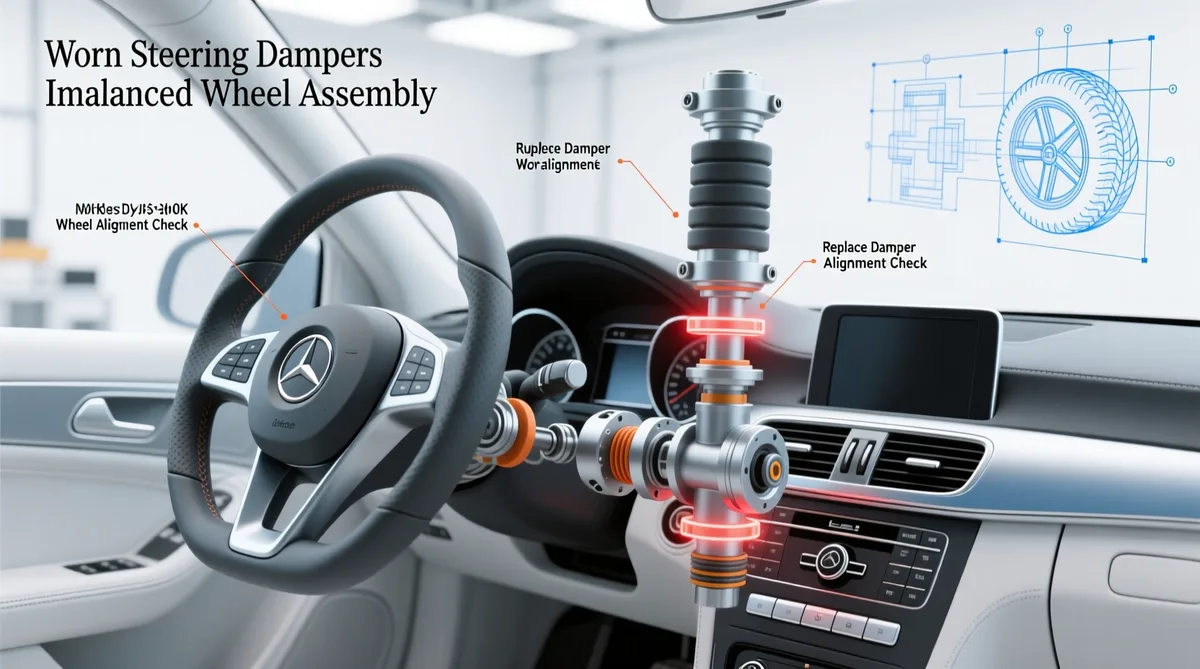
Image source: Bing (Web (fair-use with source credit))
When Your Steering Wheel Shakes: What It Means
A shaking steering wheel is never normal. It's your car's way of telling you something is out of balance or worn. The key to fixing it is figuring out when it happens.
49% off Today's Exclusive Deals
Limited-time Exclusive Deals. Check current discount on Amazon.
Check Price on Amazon As an Amazon Associate I earn from qualifying purchases.That tells you where to look.
Research across Mercedes service forums and technical bulletins shows the cause almost always falls into one of four categories. Each has distinct clues. The pattern you feel while driving is your best diagnostic tool.
The Four Key Conditions That Change Everything
Pinpointing when the shake occurs narrows the diagnosis instantly. Pay attention to these four scenarios on your next drive.
| Condition | When It Happens | Most Likely Culprit |
|---|---|---|
| Steady Highway Vibration | Shake is constant at 60–80 mph, fades at lower speeds. | Tire balance, wheel runout, tire deformation. |
| Braking-Induced Shudder | Shake happens only when you press the brake pedal. | Warped brake rotors, stuck caliper. |
| Acceleration or Deceleration Vibration | Shake worsens when speeding up or slowing down. | Flex disc (guibo), center support bearing, CV axle. |
| Idle Tremble | Steering wheel shakes while stopped in gear with A/C on. | Engine mount wear. |
If the shake happens only when braking, front brake rotors are the prime suspect. If it's steady at highway speed, start with the tires and wheels.
49% off Today's Exclusive Deals
Limited-time Exclusive Deals. Check current discount on Amazon.
Check Price on Amazon As an Amazon Associate I earn from qualifying purchases.Step-by-Step Diagnostic Workflow: Find Your Cause
Follow this approach in order. Start with the simplest checks before moving to complex repairs.
Step 1: Document the Symptoms
Take a short drive and note exactly when the shaking starts. Does it match one of the four conditions above? Write down the speed.
Shaking at 60 mph is a different clue than shaking at 20 mph.
Step 2: Visual Inspection of Tires and Wheels
Park on level ground. Look at your tires for uneven tread wear, bulges, or flat spots. A bulge signals internal tire failure.
A flat spot can form if the car sat unused for weeks. Check wheel bolt tightness with a torque wrench set to 130 Nm.
Step 3: Isolate the Brake System
If the shake is braking-related, inspect the rotors next. Safely lift and support the front of the car. Remove a front wheel.
Measure rotor thickness with a micrometer and compare it to the minimum spec stamped on the rotor. Look for deep scoring or blue heat spots.
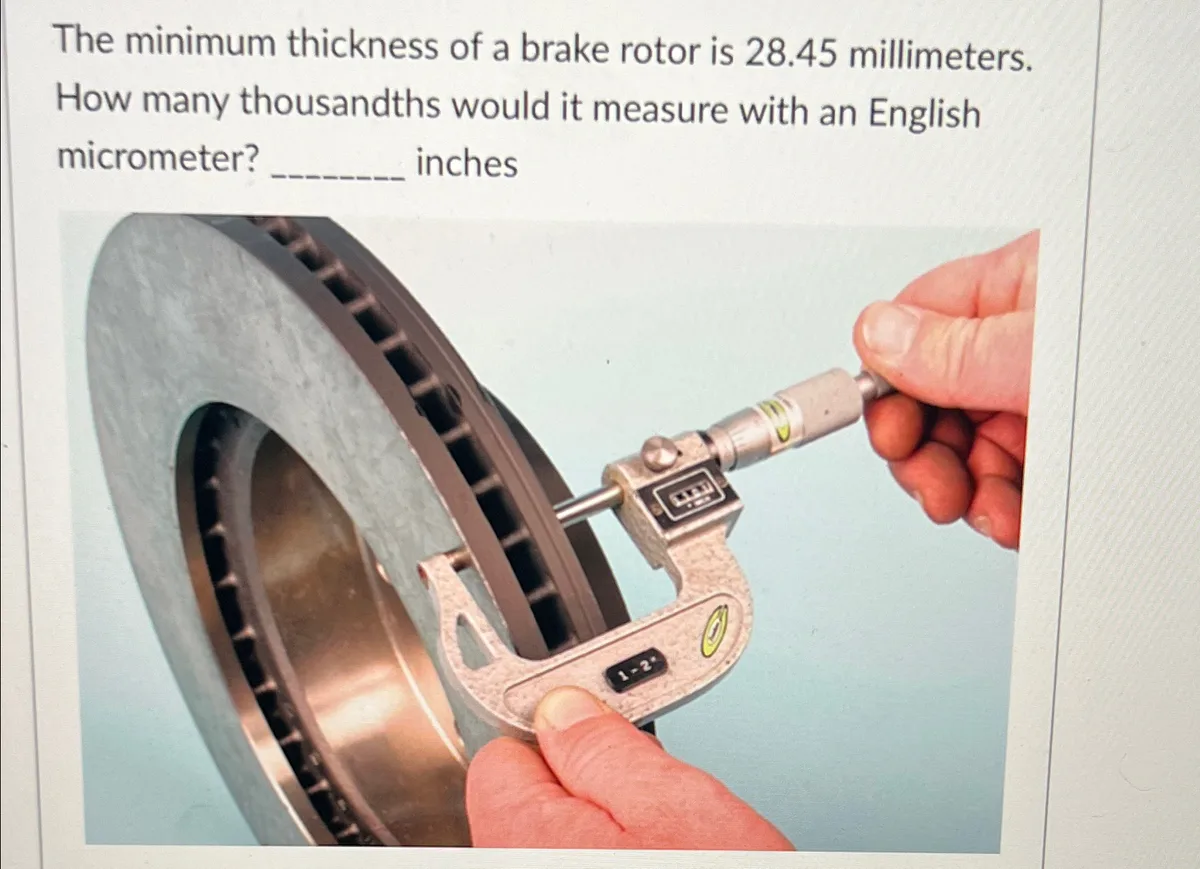
Image source: Bing (Web (fair-use with source credit))
Step 4: Check Suspension Components
With the wheel off, grab it at 12 o'clock and 6 o'clock. Rock it. Any clunking or play means a bad wheel bearing.
Repeat at 3 and 9 o'clock to check tie rod ends. Visually inspect rubber control arm bushings for cracks or collapse.
Step 5: Road Force Balance Test
If visual checks look good, the issue is likely wheel balance. Take your wheels to a shop offering road force balancing. It's more precise than standard spin balancing.
This test measures force variation in both the tire and the wheel rim.
Common Fixes and Their Real-World Costs
Once you've found the cause, here's what the repair typically involves. Prices reflect independent European specialist rates for parts and labor as of 2026.
Image source: Bing (Web (fair-use with source credit))
| Problem | Typical Fix | Estimated Cost |
|---|---|---|
| Imbalanced wheels | Road force balance and alignment | $150 – $250 |
| Warped front rotors | Replace front rotors and pads (axle set) | $400 – $700 |
| Worn flex disc (W205) | Replace rubber guibo joint | $450 – $750 |
| Bad wheel bearing | Replace hub bearing assembly | $350 – $800 per side |
| Worn control arm bushings | Replace front lower control arm | $300 – $600 per side |
Using OEM-spec rotors from manufacturers like Zimmermann or ATE is worth the premium. Cheaper aftermarket rotors warp faster under normal driving. If you're dealing with a steering wheel shaking issue on a different vehicle, the diagnostic logic follows the same sequence.
A soft brake pedal alongside steering vibration often points to a failing master cylinder or air in the lines. That's a separate but related problem.
Mistakes That Lead You Back to the Shop
These common shortcuts waste time and money.
- Getting a standard tire balance when you need road force balancing. Standard spin balancing misses issues in tire construction and wheel rim runout.
- Replacing only one brake rotor. Always replace rotors in axle pairs. Different thicknesses cause uneven clamping and new vibration.
- Ignoring the simple fix. A single loose wheel bolt causes wobble. Always torque bolts in a star pattern to 130 Nm.
- Assuming it's the tires without checking brakes first. The vibration source is often further inward than you think.
- Skipping the test drive after repair. Verify the fix at the exact speed where shaking occurred.
If you hear brake noise alongside the vibration, that's strong confirmation of a rotor or pad issue. It narrows your diagnosis fast.
Expert Tips From Mercedes-Benz Specialists
Per Mercedes-Benz Workshop Information System (WIS) guidelines, always perform a four-wheel alignment after any suspension work. Skipping this step leaves your new parts fighting against incorrect geometry.
For W204 models (2008, 2015), pay close attention to front lower control arm bushings. They're a known wear item that degrades silently before producing noticeable vibration. For W205 models (2015, 2022), check for a 5mm wheel spacer installed at the factory behind the front wheels.
If missing or loose, it creates the exact shake pattern owners describe.
A steering problem that develops suddenly after a tire change usually means the new tires have a manufacturing defect or the mounting surface wasn't clean. Both are easy fixes if caught early.
Never drive with severe vibration at highway speed. It signals a safety-critical component is failing. If the shake comes with grinding noise or brake pedal pulsation, pull over and have the car towed.
The risk of wheel separation from a failed bearing is real.
For vehicles showing suspension noise along with steering vibration, inspect every bushing and joint in the front end. One worn component often accelerates wear on its neighbors.
Frequently Asked Questions
Can low tire pressure cause steering wheel shaking?
Yes. Low pressure allows excessive sidewall flex, which creates a wobble at speed. Check pressure against the spec on the driver's door jamb, not the tire sidewall.
This takes 30 seconds and should be your very first step.
What is the wheel bolt torque spec for a Mercedes C-Class?
The standard is 130 Newton-meters (Nm), which converts to about 96 foot-pounds. Always use a calibrated torque wrench in a star pattern. Over-tightening damages brake rotors and causes the very vibration you're trying to fix.
Why does the shaking only happen between 55 and 65 mph?
That speed range is often the resonant frequency for a minor wheel imbalance. The vibration gets amplified at that specific speed but may be too faint to feel above or below it. It's a classic sign the wheels need a high-precision road force balance.
Could the shaking be covered under a recall?
It's possible. Check the NHTSA recall database using your vehicle's VIN. While steering shake itself is rarely a recall subject, underlying causes like suspension components have been the subject of recalls.
It's free and takes two minutes.
Do I need new tires if they're causing vibration?
Not always. If the tires are worn unevenly from poor alignment, a professional road force balance and rotation may solve it. If the tires show bulges, internal separation, or tread below 4/32 inch, replacement is mandatory.
How long does diagnosis and repair take?
A proper diagnosis at a specialty shop takes 1 to 2 hours. Wheel balancing takes about an hour. More involved repairs like control arm or brake rotor replacement run 2 to 4 hours per axle.