If your Hyundai Tucson steering wheel shaking has started recently, don't ignore it. The exact moment the vibration appears is the most useful clue you have. Shaking at highway speed, pulsing while braking, and shuddering under acceleration all point to completely different repairs.
Nail the timing first, and you'll avoid unnecessary part replacements.

49% off Today's Exclusive Deals
Limited-time Exclusive Deals. Check current discount on Amazon.
Check Price on Amazon As an Amazon Associate I earn from qualifying purchases.In our research, tire and wheel imbalance accounts for most Tucson vibration cases, with brake rotor issues close behind. Hyundai's service tolerance allows minimal rotor lateral runout, typically around 0.002 inches, before vibration becomes noticeable. The MDPS steering coupling wear also shows up on earlier model years, so it's worth keeping in mind.
Let's walk through each branch and find yours.

49% off Today's Exclusive Deals
Limited-time Exclusive Deals. Check current discount on Amazon.
Check Price on Amazon As an Amazon Associate I earn from qualifying purchases.Image source: Bing (Web (fair-use with source credit))
Quick Answer
The quickest diagnosis starts with when the shake happens. Hyundai Tucson steering wheel shaking at highway speed points to tire imbalance. Shaking while braking points to front rotors, while shuddering under acceleration points to CV axles.
Diagnose first, replace parts second. It's rarely an alignment problem.
First, Listen to When the Shake Happens
The most useful diagnostic question takes two seconds: when does the steering wheel shake? The answer splits the repair into completely different branches. Most Tucson owners guess parts before asking it, and that's how money gets wasted.
49% off Today's Exclusive Deals
Limited-time Exclusive Deals. Check current discount on Amazon.
Check Price on Amazon As an Amazon Associate I earn from qualifying purchases.Speed-Based Shaking vs. Brake Judder vs. Acceleration Shudder
There are three main patterns. Highway-speed shaking appears around 55 to 75 mph and usually points to the tires or wheels. Brake judder shows up only when you press the pedal, which points directly at the front rotors or caliper slides.
Acceleration shudder happens when you give it gas and points to the CV axles or engine mounts. Constant wobble at every speed points to steering and suspension parts like tie rods or the steering coupling.
Why the Timing Matters More Than the Severity
Vibration intensity changes with road surface, load, and temperature. Timing doesn't. Matching the vibration moment to the right branch eliminates most causes before a wrench touches the car.
| When It Happens | Likely Culprit | Repair Branch |
|---|---|---|
| 55–75 mph, steady speed | Tire imbalance, bent wheel | Wheel and tire |
| Pressing the brakes | Rotor wear, stuck caliper | Brake |
| Accelerating | CV axle or drivetrain | Drivetrain |
| All the time | Tie rods, steering coupling | Steering |
Let's walk through each branch, starting with the most common one.
Shaking at Highway Speeds: The Wheel and Tire Branch
When the shake lives strictly between 55 and 75 mph, the tires and wheels are the prime suspects. This is the classic imbalance symptom. A wheel weight falls off, the tire develops a flat spot, or the rim bends on a hard pothole hit.
The assembly spins unevenly, and the steering column sends that rhythm straight into your hands.
Standard spin balancing catches some of this, but not all of it. Road-force balancing, which follows the SAE J2568 test method, measures how the tire contacts the road under load. It finds variations a conventional balancer misses.
That's the service you want if a routine balance didn't fix the shake.
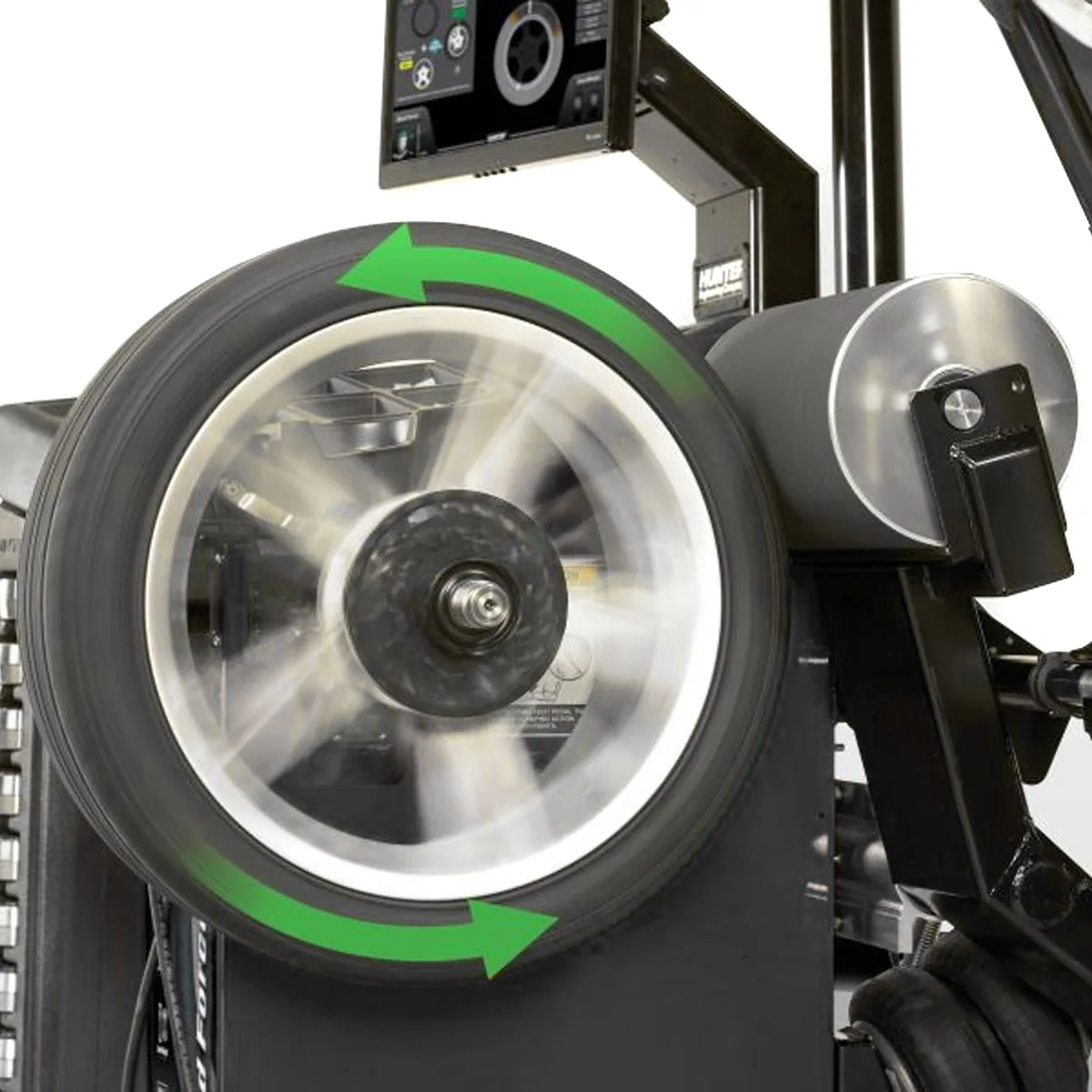
Image source: Bing (Web (fair-use with source credit))
Check these items before booking anything:
- Missing or shifted wheel weights
- Bent or dented rim lips, especially on the inner barrel
- Cupping or flat spots across the tread face
- Missing hub centric rings on aftermarket wheels
- Lug nuts torqued below factory spec
Aggregate owner reports and NHTSA complaint records confirm this is the most common Tucson scenario. Snow packed inside a wheel can also produce a sudden high-speed shake in winter. The fix is usually a road-force balance or a tire replacement.
An alignment is not the answer here.
Shaking When Braking: The Rotor and Caliper Branch
If the steering wheel pulses only when you brake, the front brake system is almost always at fault. The usual cause is disc thickness variation, often called DTV. The rotor wears unevenly, and the pads alternate between gripping and releasing as they sweep the surface.
That alternating bite creates the pulsing you feel.
Hyundai's service spec allows very little rotor lateral runout, typically around 0.002 inches. Beyond that, vibration becomes noticeable. Sometimes the root cause sits elsewhere.
Seized caliper guide pins stop the caliper from sliding evenly, which makes one pad do all the work and overheats the rotor. Always check the caliper hardware before blaming the rotor itself.
Image source: Web (Bing) / autotrader.co.za (Web image (fair-use with source credit))
You have two repair paths. Resurfacing the rotor works if it still meets the minimum thickness stamped on the rotor. Replacing the rotor is the better call when it's too thin, deeply grooved, or already machined once.
If you hear metal-on-metal noise alongside the shake, that's the backing plate contacting the rotor, and you're dealing with metal-on-metal brake scraping, not just vibration. Worn pads also squeal before they reach that stage, so catch it early.
Shaking Under Acceleration or Constant Wobble: The Drivetrain and Steering Branch
Now for the less common branches. If the vibration appears when you press the accelerator and fades when you coast, the CV axles are the main suspect. The outer joints wear, the boot splits, and the grease escapes.
A dry joint then sends a pulsing shudder through the chassis at exactly the moment you apply torque.
A failing front wheel bearing produces a different feel, more like a low hum that grows with speed. Lift the front end and grab the wheel at the 12 and 6 o'clock positions. Rocking play points to a loose bearing.
Play at the 3 and 9 o'clock positions suggests tie rod wear. Constant wobble at any speed also raises the Hyundai MDPS steering coupling, a known weak point on earlier Tucson generations. The plastic coupling dries, cracks, and introduces slack into the electric steering column.
You'll feel it as a shimmy, a click, or a loose spot when turning slowly.
If the vibration comes with a low hum or clunk from below, compare the symptoms against common drivetrain failure sounds. Worn internals can send vibrations through the engine mounts. CV axle replacement is straightforward for a qualified mechanic, and the MDPS coupling is an affordable fix compared to a full steering column.
Confirm the source before ordering anything.
Quick Diagnostic Checks You Can Do Before the Shop
Before you pay for a shop diagnosis, run a 30-minute driveway inspection. You need a jack, a torque wrench, and a flashlight. These checks won't fix everything, but they'll confirm the branch you're on.
- Check all four tire pressures. Underinflation produces a rhythmic high-speed shake that mimics imbalance.
- Inspect the tread face for cupping, feathered edges, or flat spots.
- Look for missing balance weights, bent rims, or packed snow and ice inside the wheels.
- Torque the lug nuts to the spec printed on the driver's door placard. Most Tucson models call for roughly 80 to 100 lb-ft, but confirm the exact number.
- Rotate the front tires to the rear. If the vibration moves or disappears, the tire assembly was the issue.
- Lift the front end and check for play at the 12 and 6 o'clock positions, then 3 and 9 o'clock. Rocking indicates a bad wheel bearing. Horizontal play points to tie rods.
- Look through the wheel spokes at the brake rotors. Deep grooves, heavy rust, or blue heat tinting all point to rotor problems.
If you find brake pads with less than 3mm of friction material, replace them right away. Pads that thin are a safety issue, and complete brake failure demands attention. Catching these issues early separates a $200 repair from a $1,500 one.
Mistakes to Avoid and What Actually Fixes the Tucson
The most expensive mistake Tucson owners make is paying for a wheel alignment first. Alignments don't fix vibrations. They fix pulling and uneven tire wear.
Aggregate reviews show countless drivers spending $120 on alignment, then paying another $200 for a road-force balance that should have come first.
Skipping the timing question is the second big error. A brake vibration treated with new tires wastes the whole weekend. Replacing rotors when the issue is a seized caliper guide pin means the new rotor warps within months.
Diagnosis always beats replacement.
Here's what actually helps:
- Request a printout of the road-force measurements for each wheel
- Replace all four tires if tread depth sits near the 2/32-inch wear bar
- Balance the spare wheel if you rotate it into service
- Use a torque wrench on lug nuts, never an impact gun
One missing variable worth checking: excessive play in the front end can mimic tire imbalance. If the wheel rocks at the 6 and 12 positions, that's a hub or bearing issue, not a tire issue. Fix that before balancing anything, or the vibration returns.
Frequently Asked Questions
Can I drive my Tucson with a shaking steering wheel?
You can, but you shouldn't wait long. A vibration from tire imbalance is annoying but low risk. A vibration tied to worn suspension parts or brake issues gets worse quickly.
If it appears only under braking or at high speed, shorten your trips and book a diagnosis promptly.
Why does my Tucson shake only at 70 MPH?
That's the classic tire imbalance signature. At lower speeds, the imbalance is too slow to feel. At 70 mph, the wheel assembly spins fast enough to send a rhythm through the steering column.
A road-force balance fixes most cases. A bent rim or flat-spotted tire needs replacement.
How much does it cost to fix a shaking steering wheel?
A road-force balance runs roughly $60 to $120 depending on the shop. Rotor resurfacing costs about $40 per pair, while new rotors run $80 to $200 per axle. CV axle replacement lands between $200 and $400 per side.
MDPS coupling repair varies by year, usually $150 to $400.
Should I go to a dealer or an independent mechanic?
Start with a reputable independent shop that does road-force balancing. They charge less and catch tire issues faster. Visit the dealer if the issue points to the MDPS steering coupling or a warranty-covered component.
Hyundai dealers also handle any open technical service bulletins that independents can't access.
Final Decision Guide: Which Fix Is Right for Your Tucson?
Match your symptom to the fix and stop guessing.
| Symptom | Likely Cause | Recommended Repair | Typical Cost |
|---|---|---|---|
| Shakes at 55–75 mph | Tire imbalance | Road-force balance | $60–$120 |
| Pulses while braking | Rotor DTV | Resurface or replace rotors | $80–$200 |
| Shudders on acceleration | CV axle outer joint | Replace CV axle | $200–$400 |
| Constant wobble | Steering coupling, tie rods | Inspect and replace worn parts | $150–$400 |
| Hum that grows with speed | Wheel bearing | Replace front bearing | $150–$350 |
If you're still torn between two branches, rotate the front tires to the rear and test drive. If the vibration moves or disappears, it's the tire assembly. If it stays in the steering wheel, the suspension and brake parts are the real source.
If the shudder feels more like a slip than a vibration, investigate transmission slippage indicators before ordering axles.
As of 2026, Hyundai has issued several technical service bulletins covering steering column noise and MDPS coupling wear across Tucson generations. Vibration complaints remain common enough that many independent shops now stock Tucson-specific parts. That's good news for you.
Diagnosis time is shorter, and the repair path is well-trodden.



2 Comments on “Hyundai Tucson Steering Wheel Shaking”