Your Toyota Camry transmission problem probably started as something small. A slight hesitation between gears, a barely noticeable shudder at low speed. Now it's getting worse, and you need to know whether you're looking at a quick fluid service or a four-figure rebuild.
Here's what makes this tricky. Toyota used at least three different automatic transmissions across recent Camry generations, and each one fails differently. The U660E six-speed in 2012 to 2017 models has its own failure pattern.

49% off Today's Exclusive Deals
Limited-time Exclusive Deals. Check current discount on Amazon.
Check Price on Amazon As an Amazon Associate I earn from qualifying purchases.The CVT in 2018 and newer Camries behaves entirely differently. Knowing which transmission you have changes everything about diagnosis, cost, and the right fix.
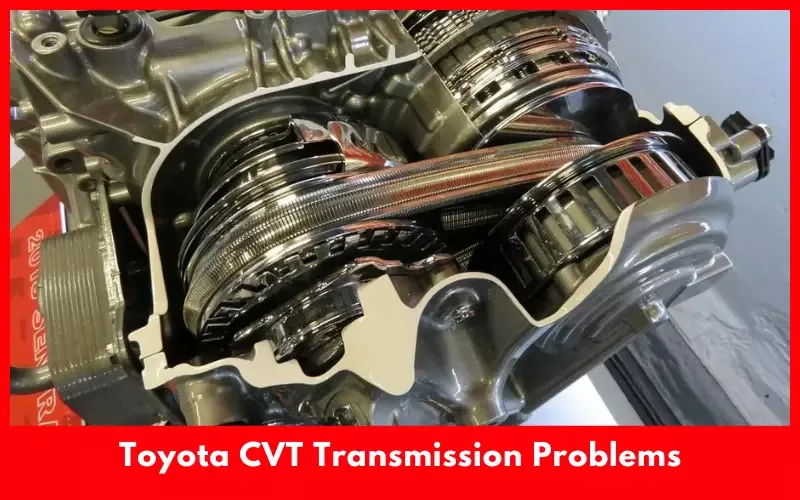
Image source: Bing (Web (fair-use with source credit))
49% off Today's Exclusive Deals
Limited-time Exclusive Deals. Check current discount on Amazon.
Check Price on Amazon As an Amazon Associate I earn from qualifying purchases.Quick Answer
A Toyota Camry transmission problem is usually caused by worn solenoids, degraded fluid, or torque converter failure. The U660E six-speed in 2012 to 2017 Camries generates the most complaints. Models with over 80,000 miles face the highest risk.
A fluid service runs $150 to $300. A full replacement can cost $3,500 to $5,500 or more. Start with an OBD-II scan to pull the diagnostic trouble codes before anything else.
Why Camry Transmission Problems Need an Accurate Diagnosis
The core issue is that most transmission symptoms overlap. A harsh shift could mean a failing solenoid. It could mean low or degraded fluid.
It could be a TCM calibration issue that a software update fixes in under thirty minutes.
49% off Today's Exclusive Deals
Limited-time Exclusive Deals. Check current discount on Amazon.
Check Price on Amazon As an Amazon Associate I earn from qualifying purchases.Without proper diagnosis, you're guessing. And in transmission work, guesses get expensive.
Toyota used very different transmissions depending on the generation. A 2015 Camry uses the U660E, a traditional six-speed automatic with clutch packs and bands. A 2020 Camry uses a CVT with a steel belt and pulley system.
These are fundamentally different machines. A repair strategy that fixes one won't touch the other.
Aggregate owner data from NHTSA complaint records shows a clear pattern. Many Camry owners have paid for a full transmission replacement when the actual problem was a single failing solenoid or a valve body issue. That's the difference between a $500 to $800 repair and a $4,000 to $5,500 one.
Per Toyota's Technical Information System, proper diagnosis begins with scanning for diagnostic trouble codes using an OBD-II reader. The most common transmission-related DTCs include:
- P0741: torque converter clutch performance
- P0766: shift solenoid D stuck off
- P0746: pressure control solenoid A performance
- P2757: torque converter clutch pressure control solenoid
These codes point the technician in a specific direction before any parts come off the car.
Fluid condition tells the rest of the story. Burnt-smelling or dark fluid indicates internal wear and heat damage. Fluid that still looks red and clean but the transmission acts up suggests an electrical or hydraulic control issue.
That distinction alone saves you thousands.
A basic OBD-II scanner runs $20 to $40 and reads the same primary codes a shop starts with. Even if you plan to let a professional handle the repair, pulling the code yourself helps you avoid upselling. It keeps the conversation focused on the real issue.
Toyota dealerships use Techstream, their proprietary diagnostic software. It reads manufacturer-specific codes that generic scanners sometimes miss. If your Camry shows early symptoms but the check engine light hasn't triggered yet, Techstream can pull pending codes.
Many independent shops don't have this tool, so for early-stage issues the dealer may give you a more complete picture.
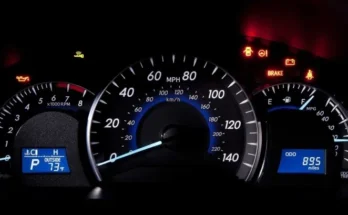
If you're noticing dashboard warning lights alongside your shifting issues, don't ignore them. The specific code your car stores tells the technician exactly where to focus.
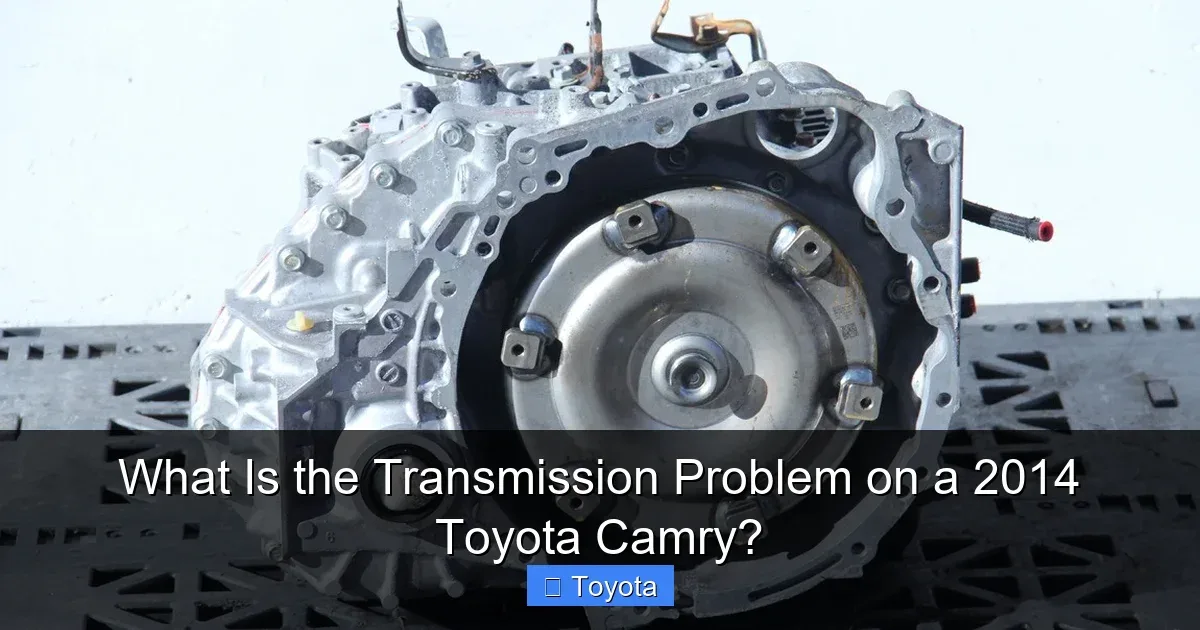
Image source: Bing (Web (fair-use with source credit))
Which Camry Transmissions Are Most Likely to Fail (And by Which Model Year)
Not every Toyota Camry transmission problem follows the same script. The transmission type in your car determines the failure pattern, the symptoms you'll see, and the repair approach.
U250E Five-Speed (2007 to 2011)
The oldest transmission still commonly seen in high-mileage Camries. It's a straightforward five-speed automatic with a torque converter. Failures typically involve worn clutch packs and degraded valve body seals after 150,000 miles.
Parts are plentiful, and many independent shops know this unit well.
U660E Six-Speed (2012 to 2017)
This is the transmission most associated with Toyota Camry transmission complaints. It handles more torque than its predecessor and uses a more complex valve body. The most reported issues are torque converter shudder, harsh 2-to-3 shifts, and solenoid failure.
Toyota issued multiple TSBs for this unit, including T-SB-0088-16 addressing shudder concerns. Failure typically appears between 80,000 and 150,000 miles. Stop-and-go driving accelerates the timeline.
Transmission slipping is one of the most common first signs, and the U660E is no exception.
U880E Eight-Speed (2018 to 2024)
The eight-speed automatic replaced the U660E in most gas-only Camry models. It shifts more smoothly and runs cooler under normal conditions. Complaints are fewer but they exist.
Some owners report intermittent harsh downshifts and delayed engagement in cold weather. This unit is still relatively new, so long-term failure data remains limited.
CVT (2018 and newer, hybrid and some gas models)
The Continuously Variable Transmission uses a steel push belt between two variable-diameter pulleys instead of fixed gears. It delivers better fuel economy but drives differently. Common complaints include a rubber-band acceleration feel, hesitation on hard throttle, and occasional judder at low speeds.
CVT failures tend to appear around 100,000 miles, especially in high-duty urban driving.
Which one do you have? Check your driver's door jamb sticker for the model code, or look up your VIN on Toyota's owner site. That tells you exactly which transmission sits inside your car.
Understanding your specific type matters because it dictates fluid specs, service intervals, and repair costs. A drain-and-fill on the U660E takes about 30 minutes. Servicing a sealed CVT system requires different equipment and more time.
Symptoms That Signal Real Trouble, Not Just Normal Operation
How do you know whether your Toyota Camry transmission problem is serious or just normal behavior? Some things Camrys do are expected. Others are warnings you shouldn't ignore.
Investigate These Immediately
- Torque converter shudder. A vibration at low speed, usually between 25 and 45 mph, especially when lightly accelerating. This is the most commonly reported issue in 2012 to 2017 Camries and it gets worse over time.
- Slipping between gears. The engine RPM jumps during acceleration, as if the transmission momentarily loses its grip. This can happen at any speed.
- Delayed engagement. You shift from Park to Drive or Reverse, and there's a noticeable pause before the car moves. A second on cold starts is normal. Three to five seconds is not.
- Harsh or erratic shifting. The transmission bangs into gear or shifts unpredictably. If it happens consistently, something is failing.
- Check Engine Light with transmission codes. An OBD-II scan returning P0741, P0746, P0766, or P2757 means the transmission system is flagging a specific fault.
If you notice steering vibrations alongside your transmission symptoms, the two problems might be connected. A failing torque converter can send vibrations through the drivetrain to the steering wheel.
Probably Normal
- Brief harsh shift on the first drive of the morning in cold weather
- Slight RPM flare after a battery disconnect while the TCM relearns
- CVT rubber-band feel during light acceleration (that's how CVTs work by design)
- A single clunk when shifting from Park to Drive on a steep incline
Get It Checked Within a Week
- Occasional hesitation during acceleration
- Slight vibration that comes and goes at specific speeds
- Fluid that looks darker than fresh Toyota WS but doesn't smell burnt
Don't Drive It
- Transmission temperature warning light stays on
- Grinding or metal-on-metal noises
- Transmission won't engage any gear
- Visible fluid leaking rapidly from under the car
Symptoms that happen once and don't repeat are usually fine. Symptoms that happen repeatedly, get worse over time, or come with dashboard warnings need professional diagnosis. A transmission problem that gets ignored doesn't fix itself.
Safe Next Steps: What You Can Handle Yourself and When a Shop Is Non-Negotiable
You've identified a Toyota Camry transmission problem. Now what? The right next step depends on what you're comfortable doing and what the symptoms suggest.
Step 1: Pull the Codes Yourself
If your check engine light is on, start here. Plug a basic OBD-II scanner into the port under your dashboard, driver's side above the pedals. Most scanners cost $20 to $40 and work with any Camry from 1996 onward.
Write down the exact DTC number.
Don't clear the code yet. A shop may need freeze-frame data, which shows what the car was doing when the fault occurred.
Step 2: Check Your Fluid
Toyota sealed the transmission on most 2012 and newer Camrys, so there's no dipstick. That doesn't mean you can't check it. The process involves removing the overflow plug on the transmission pan while the engine is running and warm.
If fluid trickles out, the level is correct. If nothing comes out, it's low.
Not comfortable with this step? Skip it and let a shop handle it. Adding the wrong fluid or overfilling causes more damage than the original problem.
Step 3: Know When to Stop DIYing
Some diagnosis is safe at home. Transmission repair generally isn't, unless you have the right tools and experience.
You can safely: pull codes, check fluid level and condition, reset the TCM by disconnecting the battery for fifteen minutes, and research TSBs on Toyota's TIS site.
You should not: attempt solenoid replacement, valve body work, or transmission removal without professional-grade tools and a service manual.
Definitely don't drive the car if you notice metal shavings in the fluid, the transmission won't engage gears, or the temperature warning stays on.
For symptoms like soft or unresponsive brake pedals appearing alongside transmission issues, get the car inspected immediately. Drivetrain and brake problems can compound each other.
Step 4: Choose the Right Shop
Not every mechanic specializes in transmissions. For anything beyond a fluid service, look for a shop with ASE-certified transmission technicians. Ask whether they reference Toyota TSBs and use manufacturer-specific diagnostic tools.
A good shop diagnoses before quoting, not the other way around.
If your Camry is still under the 5-year, 60,000-mile powertrain warranty, go to the dealership. Document everything. Repairs covered under warranty save you the full cost.
If you're buying a used Camry, budget for a pre-purchase inspection that includes transmission diagnostics. A scanner check and fluid inspection take thirty minutes. That small investment can prevent you from inheriting a $4,000 problem.
What the Fix Will Actually Cost, and How to Avoid Getting Overcharged
The biggest source of stress around a Toyota Camry transmission problem is the bill. Costs vary depending on what's wrong, who does the work, and whether you're driving a 2013 or a 2022. Here's what real-world pricing looks like as of 2026.
| Repair | Estimated Cost Range |
|---|---|
| Toyota WS fluid drain and fill | $150 to $300 |
| Solenoid replacement | $300 to $800 |
| Valve body replacement | $500 to $1,500 |
| Torque converter replacement | $800 to $1,800 |
| Full transmission rebuild | $2,500 to $4,000 |
| New OEM transmission installed | $3,500 to $5,500+ |
These numbers reflect both dealership and independent shop pricing. Dealership rates typically run 15 to 30 percent higher than independent shops for the same work.
What Drives the Price Up
- Sealed transmission design. No dipstick means fluid checks and top-offs take more labor time.
- CVT-specific parts. CVT replacement components cost more than traditional automatic parts.
- Vehicle mileage. High-mileage Camries may have additional worn components that need attention during the repair.
How to Avoid Overcharging
First, get the DTC before you visit any shop. Walk in with the code already pulled. This anchors the conversation and prevents vague diagnoses.
Second, get at least two or three quotes. A second opinion often reveals a much more affordable option for the same problem.
Third, ask whether the shop references Toyota TSBs. A shop that checks service bulletins before diagnosing is less likely to recommend unnecessary work. Toyota's TIS database, along with NHTSA's complaint records, documents known issues and factory-approved fixes for each model year.
Fourth, ask about parts warranty. Reputable shops stand behind their work with at least a 12-month or 12,000-mile warranty on parts and labor.
If you're dealing with a fluid leak alongside the transmission issue, address both at the same time. Combining repairs saves on duplicate labor charges.
For owners on a tight budget, a transmission rebuild from a reputable local specialist often delivers the best value. It replaces worn internals while reusing the existing case and hard parts. A rebuild with updated components can last as long as a brand-new unit at roughly half the price.