If you're dealing with a Mazda CX-5 brake pedal soft feeling, don't ignore it. A brake pedal that sinks, feels spongy, or doesn't respond the way it should is a serious safety warning. It means something in your brake system isn't holding pressure the way it was designed to.
The good news is that the cause is usually identifiable, and in many cases, fixable.

49% off Today's Exclusive Deals
Limited-time Exclusive Deals. Check current discount on Amazon.
Check Price on Amazon As an Amazon Associate I earn from qualifying purchases.Per SAE International standards, your brake system relies on hydraulic pressure to clamp the pads against the rotors. That pressure depends on sealed fluid lines, a working master cylinder, and the right fluid in the reservoir. A soft pedal means that chain has a weak link.
Let's find it.
49% off Today's Exclusive Deals
Limited-time Exclusive Deals. Check current discount on Amazon.
Check Price on Amazon As an Amazon Associate I earn from qualifying purchases.Image source: Bing (Web (fair-use with source credit))
Why a Soft Brake Pedal Demands Immediate Attention
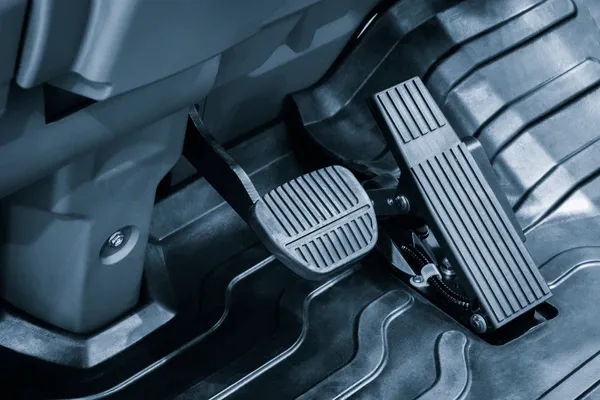
A soft or spongy brake pedal is never a "drive it later" problem. Your CX-5's braking system is the single most critical safety feature on the vehicle. When the pedal doesn't feel firm, you may need significantly more stopping distance.
In a panic stop scenario, that extra distance can be the difference between a near-miss and a collision.
Manufacturer specifications for the Mazda CX-5 call for a firm pedal that engages roughly one to two inches from the floor. If yours travels further than that, or if it slowly sinks to the floorboard under steady pressure, something is compromised. That "sinking" sensation is especially dangerous because it signals a loss of hydraulic pressure in the system.
49% off Today's Exclusive Deals
Limited-time Exclusive Deals. Check current discount on Amazon.
Check Price on Amazon As an Amazon Associate I earn from qualifying purchases.Several things can cause this, from simple fluid loss to a failing master cylinder. Understanding which one you're dealing with starts with one quick check.
The Key Insight: Stop Driving and Check Fluid First
Here's the single most important step. If your brake pedal feels soft, stop driving the car until you've checked the brake fluid level. This takes two minutes and requires zero tools.
Pop the hood and locate the brake fluid reservoir, usually mounted on the driver's side of the engine bay near the firewall. It's a small, translucent plastic container with min and max lines marked on the side.
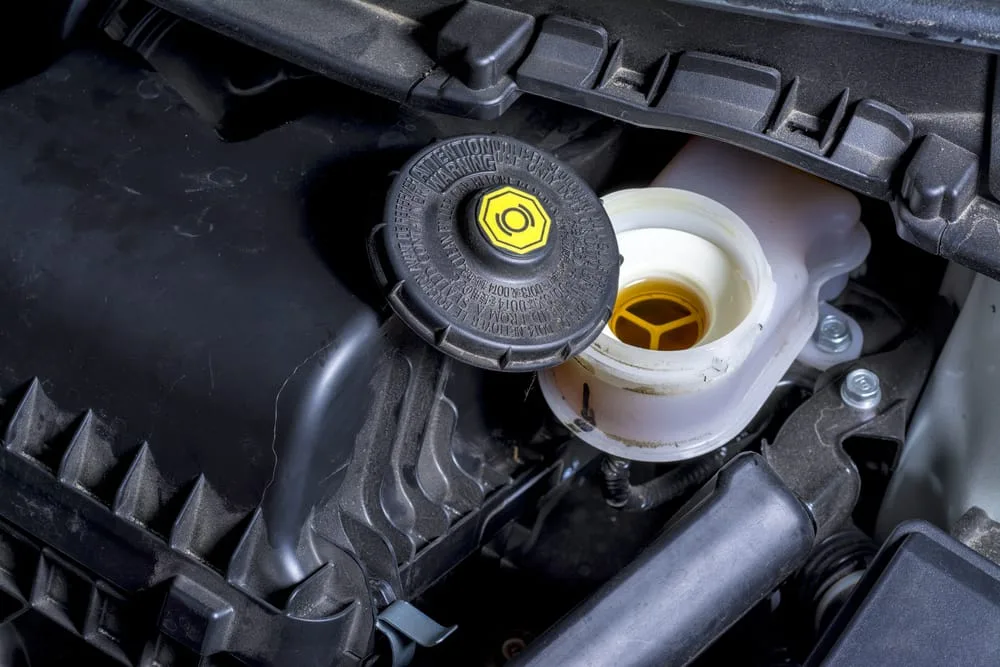
Image source: Bing (Web (fair-use with source credit))
If the fluid is below the minimum line, that's your starting clue. Low fluid typically means one of two things. Either the system is overdue for a fluid top-off, or there's a leak somewhere in the brake lines, calipers, or wheel cylinders.
A leak is far more serious and needs professional attention right away.
Even if the fluid level looks normal, check its condition. Fresh brake fluid is clear or light amber. Dark, murky fluid has absorbed moisture over time and may not perform as it should.
Mazda specifies DOT 3 brake fluid for most CX-5 models, though some trims and newer model years as of 2026 may accept DOT 4. Always confirm with your owner's manual before adding anything.
How Your CX-5's Brake System Works (The Simple Version)
Understanding the basics helps you talk to your mechanic and spot problems early. Your CX-5 uses a hydraulic braking system, which means brake fluid carries force from the pedal to the wheels.
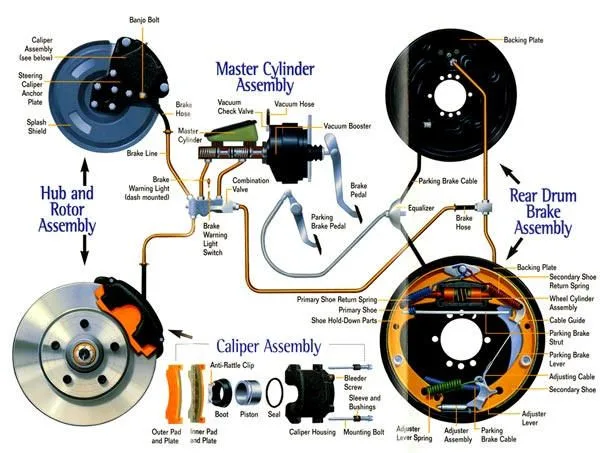
Image source: Bing (Web (fair-use with source credit))
When you press the brake pedal, it pushes a rod into the master cylinder. The master cylinder is a sealed metal tube with pistons inside. Those pistons compress the brake fluid and push it through steel lines and rubber hoses to each wheel.
At each wheel, the pressurized fluid forces the caliper pistons outward. This squeezes the brake pads against the rotors, creating friction that slows the vehicle. The harder you press, the more pressure builds, and the stronger the braking force.
Several components help this process:
- Brake booster: Uses engine vacuum to multiply the force you apply at the pedal. Without it, you'd need to press extremely hard.
- ABS module: Monitors wheel speed and modulates pressure during hard stops to prevent lockup.
- Proportioning valves: Balance front and rear braking force for stable, even stops.
If any part of this chain has air, a leak, or a worn component, the pedal will feel soft. The system was designed to be closed and pressurized. Any breach disrupts that pressure and compromises your ability to stop.
The 3 Most Common Causes of a Soft Pedal
Based on aggregate repair data and manufacturer service bulletins, three issues account for the vast majority of soft brake pedal complaints on the Mazda CX-5. Here's how to think through each one.
1. Air in the Brake Lines
Air is compressible. Brake fluid is not. When air bubbles get into the hydraulic lines, pressing the pedal compresses that air instead of transferring force to the calipers.
The result is a pedal that feels soft or spongy.
Air typically enters the system during a brake job (pad or rotor replacement, for example) if the system wasn't properly bled afterward. It can also seep in through a damaged seal or a loose fitting. If the pedal felt fine right after recent brake work and then went soft, air in the lines is the most likely culprit.
Bleeding the system in the correct sequence, usually starting from the wheel farthest from the master cylinder, purges the air and restores firm pedal feel. This is a straightforward but methodical process that requires the right fluid and a helper.
2. Failing Master Cylinder
The master cylinder converts your pedal push into hydraulic pressure. Over time, the internal seals wear out. When that happens, fluid can bypass the pistons internally instead of flowing to the brakes.
You'll notice the pedal gradually gets softer over weeks or months, or it may slowly sink to the floor when you hold it down.
This is a critical safety component. A failing master cylinder won't fix itself, and it will only get worse. Replacement is the standard repair, and it's not something to delay.
3. Leaking Brake Fluid
If fluid is escaping from a caliper, a brake hose, a line fitting, or the master cylinder itself, the system can't maintain pressure. Signs include a low fluid reservoir, wet spots near the wheels or under the car, and a pedal that gets softer as you drive.
Brake fluid is corrosive and will damage paint, so look for fluid residue on the inner wheel surfaces or on suspension components. Any visible leak means the vehicle should be towed to a shop rather than driven. For context, similar brake fluid concerns come up across many vehicles, including the soft-pedal issues some Tucson owners report.
Safe, Step-by-Step Checks You Can Do at Home
You don't need a lift or special tools to narrow down the cause. Here's a safe, methodical approach you can follow in your driveway.
What you'll need:
- Clean rags
- Flashlight
- The correct brake fluid (check your owner's manual for the DOT rating)
- A second person (for the pedal test)
Step 1: Check the fluid level and condition.
With the car on a flat surface and the engine off, open the hood and inspect the reservoir. Top off to the max line if needed. Note the color and clarity of the fluid.
Step 2: Inspect for leaks.
Use your flashlight to look under the car at each wheel. Check the brake hoses where they connect to the calipers. Look at the hard lines running along the undercarriage.
Any wetness, dripping, or fluid staining is a red flag.
Step 3: Do a static pedal test.
Have a helper start the engine (vacuum assist needs the engine running). Press the brake pedal firmly. It should feel firm and not sink.
If it slowly creeps toward the floor while you hold steady pressure, the master cylinder is suspect.
Step 4: Check for error lights.
Look at the dashboard for a brake warning light or ABS warning light. Either one, especially combined with a soft pedal, points toward a system-level issue that needs scanning.
Step 5: Note when the problem occurs.
Does the pedal feel soft only when the car is cold? Does it get worse after driving for a while? Does it happen only at low speeds or at every speed?
These details help a technician diagnose the issue faster and can point to whether heat-related brake fade or a component failure is at play.
If any of these checks reveal a leak, visible damage, or a pedal that sinks to the floor, do not drive the vehicle. Have it towed to a qualified repair shop. Brakes are not a "wait and see" system.
When It's Time to See a Professional Mechanic
Some brake issues you can diagnose at home. Others absolutely require a shop. Knowing the difference saves you time and keeps you safe.
See a professional immediately if:
- The pedal sinks to the floor when pressed
- You spot fluid leaking near any wheel
- The brake warning light or ABS light stays on
- The pedal feels firm when cold but goes soft during driving
- You hear grinding or metal-on-metal sounds
That last one matters more than people realize. Grinding means the brake pads are completely gone. The rotor surface is taking direct contact damage.
Every additional mile driven increases the repair cost.
A qualified technician will run a hydraulic pressure test, inspect all four corners for leaks, measure pad and rotor thickness, and scan the ABS module for stored fault codes. They'll also check the brake booster vacuum supply and test the master cylinder for internal bypass.
Rough cost range (as of 2026):
| Repair | Estimated Cost (Parts + Labor) |
|---|---|
| Brake fluid flush | $100 to $150 |
| Master cylinder replacement | $300 to $500 |
| Caliper replacement (per wheel) | $200 to $400 |
| Full brake service (pads, rotors, fluid) | $400 to $700 |
These numbers shift based on your region and whether the shop uses OEM or aftermarket components. If the technician recommends additional work, ask to see the worn parts before signing off. That simple step keeps the conversation honest.
The NHTSA's vehicle safety guidelines reinforce that brake system integrity is non-negotiable for roadworthiness.
Preventing Future Brake Issues: Maintenance Must-Dos
Once the soft pedal is fixed, keeping it firm comes down to consistent maintenance. Brakes are durable, but they're definitely not maintenance-free.
Brake fluid replacement: Mazda recommends changing the fluid every two to three years, regardless of mileage. Brake fluid is hygroscopic, which means it absorbs moisture from the atmosphere over time. That moisture lowers the boiling point and promotes internal corrosion in the lines and cylinders.
Fresh fluid keeps the hydraulic system sealed and performing as designed.
Regular inspections: Have the brakes checked at every oil change or at least once a year. A visual inspection of pad thickness, rotor condition, hose flexibility, and caliper function takes minutes. It catches problems early, when they're cheap to fix.
Watch for these red flags during daily driving:
- Pedal feel changes, even subtle ones
- The car pulling to one side under braking
- New squealing, clicking, or grinding noises
- Vibrations through the steering wheel or pedal
- Any brake-related warning light on the dashboard
Catching these early usually means a quick, affordable repair. Waiting too long often means damaged rotors or seized calipers, which cost far more. Prevention beats reaction every time, and it's especially true with brake systems.
A small investment in routine inspections avoids the bigger headaches down the road.
Your Brake Questions, Answered
Can I drive my CX-5 with a soft pedal?
No. A soft pedal means reduced braking capacity. Even if the car still slows down, your stopping distance is significantly longer than it should be.
Drive only to a safe location or have the vehicle towed to a shop.
Will adding brake fluid fix a soft pedal?
Sometimes, but only temporarily. If the fluid is simply low, topping it off with the correct DOT-rated fluid may restore pedal feel. But low fluid almost always signals a leak or heavily worn pads.
Top it off, then find and fix the root cause.
How often should brake fluid be changed?
Every two to three years per Mazda's service schedule. This applies even if your annual mileage is low. Moisture absorption happens regardless of how often the car is driven.
It's a time-based degradation, not a mileage-based one.
Is a soft brake pedal covered under warranty?
If your CX-5 is within the basic warranty period and the failure stems from a manufacturing defect, brake components may be covered. Wear items like pads and rotors are typically excluded after the first year or 12,000 miles. Your local Mazda dealer can confirm what applies to your specific VIN.
Can ABS problems cause a soft pedal?
Yes. A malfunctioning ABS modulator valve can allow hydraulic pressure to bleed back through the system, resulting in a soft or low pedal. An ABS warning light on the dashboard combined with a soft pedal strongly suggests this possibility.
A diagnostic scan with a proper tool will confirm or rule it out.
What's the difference between a spongy pedal and a sinking pedal?
A spongy pedal feels springy or cushioned under your foot, like stepping on a firm pillow. That texture almost always means air is trapped in the brake lines. A sinking pedal slowly drifts toward the floorboard when you hold steady pressure.
That movement typically indicates a failing master cylinder or a hydraulic leak somewhere in the system. Both conditions require immediate attention.