If you're here because you've noticed a grinding noise, a soft pedal, or a warning light on your dashboard, you've likely got a Hyundai Tucson brake problem on your hands. That's not a small thing to ignore. Brakes are the single most important safety system on your vehicle, and when something feels off, you need a clear path forward.
The good news is that most Tucson brake issues are well-documented, diagnosable, and fixable without panic. This guide walks you through the most common failure points, how to tell what's actually wrong, and what it costs to fix. As of 2026, Hyundai's braking systems are reliable, but they're still mechanical parts that wear out.

49% off Today's Exclusive Deals
Limited-time Exclusive Deals. Check current discount on Amazon.
Check Price on Amazon As an Amazon Associate I earn from qualifying purchases.Let's get to the bottom of it.
Quick Answer: What's Most Likely Wrong With Your Tucson's Brakes
Most Hyundai Tucson brake problems come down to a few familiar culprits. Worn brake pads are the number one cause of noise. Warped rotors are the typical cause of pedal vibration.
Sticking calipers cause pulling or uneven wear.
49% off Today's Exclusive Deals
Limited-time Exclusive Deals. Check current discount on Amazon.
Check Price on Amazon As an Amazon Associate I earn from qualifying purchases.A spongy brake pedal points to air in the lines or a fluid leak. Warning lights usually mean the ABS module, wheel speed sensors, or electronic parking brake needs attention.
If you're hearing metal-on-metal grinding, stop driving immediately. That means your pads are gone, and you're damaging the rotors. If the pedal sinks slowly to the floor, that's a fluid leak and a critical safety issue.
Everything else, here's how you diagnose it.
49% off Today's Exclusive Deals
Limited-time Exclusive Deals. Check current discount on Amazon.
Check Price on Amazon As an Amazon Associate I earn from qualifying purchases.Image source: Bing (Web (fair-use with source credit))
How the Tucson Brake System Works (and Why Hybrids Feel Different)
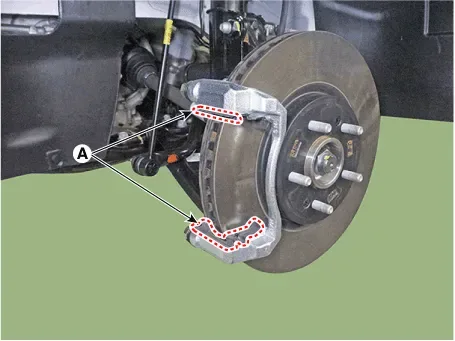
Your Tucson's braking system is straightforward in concept. You press the pedal, brake fluid pushes the calipers, and the calipers squeeze the pads against the rotors. Friction slows the wheels down.
That basic hydraulic setup has been refined over decades, but the principle hasn't changed.
The system includes the master cylinder, brake booster, brake lines, calipers, brake pads, and rotors. Modern Tucsons also add ABS, electronic stability control, and hill-start assist. These systems use wheel speed sensors to detect lockup and apply or release brake pressure automatically.
Here's where the Tucson Hybrid and Plug-in Hybrid differ. They use regenerative braking, meaning the electric motor helps slow the car and recovers energy back into the battery. The friction brakes still do the heavy lifting at low speeds and in hard stops, but the regenerative system reduces wear on the pads and rotors.
That's why hybrid owners often get double the lifespan from a set of front pads.
The standard Tucson uses a conventional vacuum brake booster. The hybrid models use an electronic brake booster, which feels different at the pedal. It can feel slightly artificial or even a bit grabby, but that's normal.
What isn't normal is a sudden change in pedal feel, so trust your instincts.
Diagnose by Symptom: Sound, Feel, and Warning Lights
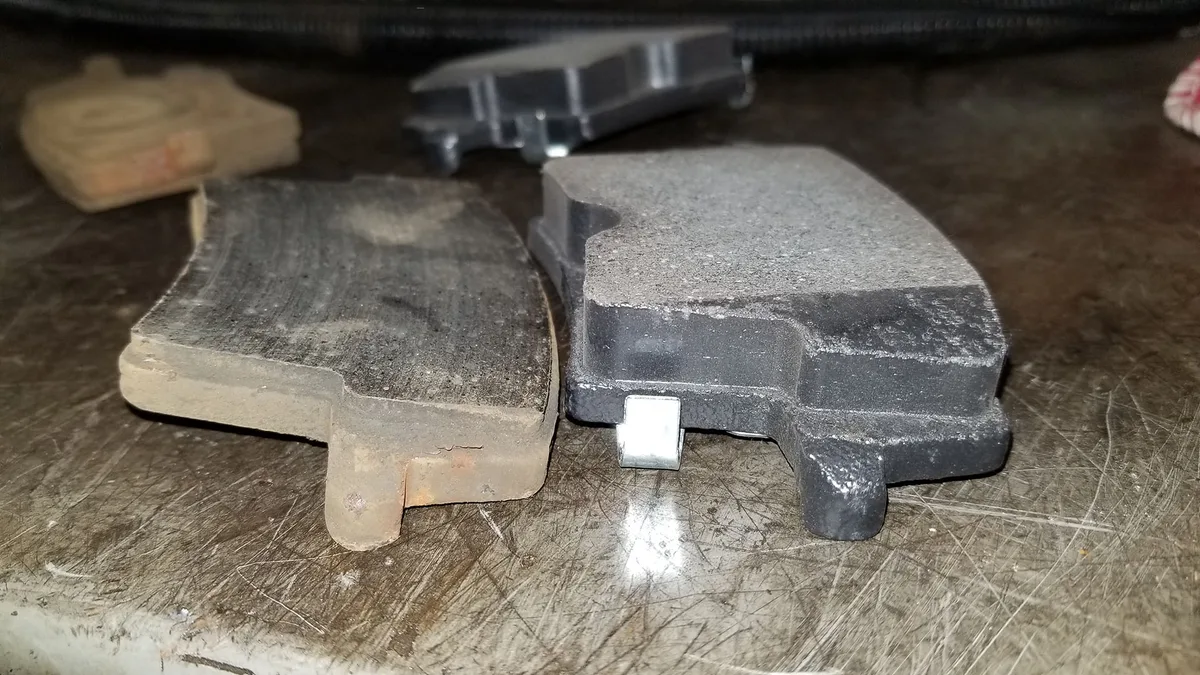
Image source: Bing (Web (fair-use with source credit))
Every brake problem leaves clues. Your job is to read them. This section breaks down the most common symptoms, what they mean, and what to do next.
Squealing and Squeaking
High-pitched squealing usually comes from the wear indicators on your brake pads. These are small metal tabs that contact the rotor when the friction material drops to around 3 millimeters. It's an intentional warning, not a malfunction.
If the noise disappears after a few stops and comes back, it's definitely wear indicators. You have maybe 500 to 1,000 miles before the pads reach metal-on-metal contact. If you catch it early, you only need new pads.
If you ignore it, you'll need rotors too.
For a closer look at the squeaking issue beyond the Tucson, our guide on squeaky brake causes and fixes covers the full diagnostic picture.
Grinding and Groaning
Grinding is an emergency-level warning. It means the friction material is gone, and the metal backing plate is grinding against the rotor. You'll hear a harsh metal-on-metal sound, and you might feel vibration through the pedal.
Do not drive the car until you've had it inspected. You're chewing through the rotors quickly, and there's a risk of caliper damage too. Replacing pads alone won't fix it now.
You'll need new rotors, likely new pads, and possibly caliper work. If you need more detail on the damage, take a look at our piece on grinding brake causes and fixes.
Spongy or Low Brake Pedal
A pedal that feels soft, sinks toward the floor, or requires more travel than usual suggests a hydraulic issue. The most common causes are air in the brake lines or a leak somewhere in the system.
Air gets into the system when brake fluid is low or when the system was opened and not properly bled. A leak usually leaves visible fluid under the car, often near the wheels or under the engine bay. Check the brake fluid reservoir level first.
If it's low, you have a leak, and you need professional help.
If you've lost enough pressure that the pedal hits the floor, that is a total brake failure scenario, and you should not drive the vehicle until it's repaired.
Vibration or Shudder When Braking
A pulsing brake pedal or vibration through the steering wheel during braking usually means rotor thickness variation, often called warped rotors. The rotors have developed uneven wear patterns, causing the pads to grab unevenly as they spin.
The cause is usually heat-related. Hard braking, towing, or driving down steep grades can overheat the rotors and create uneven deposits. In the Rust Belt, surface corrosion can also cause the same symptom after a car sits for a while.
Resurfacing the rotors is a temporary fix. Replacement is usually the better long-term solution, especially if they're below minimum thickness specifications. Check the minimum thickness stamped on the rotor before making a decision.
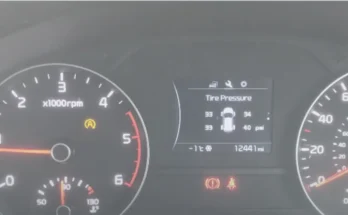
ABS, Brake, or Electronic Parking Brake Warning Light On
The dashboard warning lights mean different things. The brake warning light, often a circle with an exclamation point, signals low brake fluid, a hydraulic fault, or the parking brake being engaged. Check the parking brake first, then the fluid level.
The ABS light means the anti-lock braking system has a fault. It could be a wheel speed sensor, the ABS module, or damaged wiring. The car still brakes normally in most cases, but ABS won't activate in an emergency stop.
That's a serious downgrade in safety.
The electronic parking brake warning light usually points to the EPB actuator or switch. Modern Tucsons use rear calipers with built-in electric motors. Broken wiring, a stuck motor, or a dead battery can trigger this fault.
A diagnostic scan will tell you which circuit is failing.
Year-Specific Brake Issues: 2016–2021 vs 2022+ Tucson
Not all Tucson brake problems are created equal. The third-generation Tucson, covering model years 2016 to 2021, has a different brake system than the fourth-generation model that launched for 2022. Understanding which generation you own narrows down the likely issues.
For the 2016, 2021 Tucson, aggregate owner feedback points to premature rear brake pad wear. The electronic parking brake integrated into the rear calipers can also fail, causing the motor to overheat or stop engaging entirely. Sticking rear caliper slide pins are another common culprit, leading to uneven pad wear and rotor scoring.
The 2022 and newer Tucson has fewer widespread complaints, but the hybrid models occasionally show electronic brake booster issues. Some owners report a hard pedal or a delayed brake response, which is a safety concern. Hyundai has addressed some of these through software updates and service bulletins, so getting a dealer scan is worth the time.
The manufacturer's own service guidance is the gold standard here. Checking NHTSA's recall database is also smart, because brake-related recalls happen, and they're fixed free of charge. Use the NHTSA website and your VIN to confirm whether your specific Tucson is affected.
Owners in colder climates should also watch for accelerated rotor corrosion on the rear axle. Road salt attacks the rotor surface, and after a few winters, the rear rotors can look like rough tar paper. That doesn't necessarily mean premature replacement, but it does mean keeping up with regular inspections.
Dealer, Independent Shop, or DIY: How to Decide Safely
When a Tucson brake problem hits, you have three main repair routes. Each one has tradeoffs between cost, convenience, and reliability. Here's how they compare for the typical owner.
Dealership service is the most expensive option, usually 30% to 50% higher than an independent shop. You get factory-trained technicians, genuine Hyundai parts, and typically a courtesy inspection. If your Tucson is still within its powertrain warranty or a recall applies, the dealer is the right call.
For out-of-warranty work, it's hard to justify the premium.
An independent mechanic is the sweet spot for most drivers. Look for a shop that specializes in Asian imports and has experience with electronic parking brakes. A reputable shop will use quality aftermarket pads or OEM parts, and they'll usually warranty their labor.
The key is finding someone who actually diagnoses the problem rather than just throwing parts at it.
DIY work makes sense if you have the tools, space, and patience. A Tucson brake job is not especially difficult. It requires basic socket wrenches, jack stands, a torque wrench, and a scan tool if the electronic parking brake needs service mode.
That last point is critical for 2022+ rear brakes.
If you're comfortable with mechanical work and have a safe place to lift the vehicle, you can save hundreds of dollars. The risk is that newer Tucsons are less DIY-friendly. Aggressive rust can make caliper bolts a nightmare, and the electronic parking brake can trap you if you don't know how to release it properly.
Weight the stakes carefully. Brakes are not a place to cut corners. If you have doubts about your skill level, the peace of mind from a professional job is worth every dollar.
For the specifics on tackling common brake maintenance yourself, our guide on rotor and pad maintenance explains the steps in plain language.
What a Fair Brake Job Costs on a Hyundai Tucson
A fair brake job on a Tucson runs between $250 and $800 per axle. The final number depends on what's worn, which shop you choose, and whether you're driving a hybrid.
Here's a realistic price breakdown based on typical independent shop rates:
| Service | Parts | Labor | Total Range |
|---|---|---|---|
| Front or rear pad replacement (rotors resurfaced) | $60–$150 | $120–$200 | $180–$350 |
| Pads plus new rotors, one axle | $150–$350 | $150–$250 | $300–$600 |
| Full brake job, all four wheels | $300–$700 | $300–$500 | $600–$1,200 |
| Brake fluid flush | $30–$80 | $80–$120 | $110–$200 |
| Electronic parking brake repair (2022+) | $100–$300 (part) | $150–$300 | $250–$600 |
Dealership prices run 30% to 50% higher than these numbers. Hybrid models also cost more because the electronic brake booster and regenerative system require specialized parts and scan tools.
One bright spot: if your Tucson has a brake-related recall, Hyundai repairs it free. Check the NHTSA recall database with your VIN before paying for anything. You might not owe a penny.
Brake Maintenance That Prevents Most Tucson Problems
Most brake failures are preventable with routine care. A few simple habits keep your Tucson stopping safely and save you money over the long run.
Here's a practical maintenance schedule for any Tucson owner:
- Check brake pads every oil change. Look through the wheel spokes. If the pad material is under 3 mm, schedule a replacement.
- Flush brake fluid every 2 years. Old fluid absorbs moisture, which lowers the boiling point and causes a spongy pedal.
- Lubricate caliper slide pins annually, especially in the Rust Belt. Sticking pins cause uneven pad wear and rotor scoring.
- Inspect rotors for deep grooves or rust. Surface rust is cosmetic, but deep scoring means replacement is near.
- Never skip the electronic parking brake service mode when working on rear brakes. Forcing the caliper piston back without it damages the motor.
Image source: Web (Bing) / dream-house.co.jp (Web image (fair-use with source credit))
Hybrid owners get a bit of a break. Regenerative braking cuts friction pad wear significantly, often doubling pad life. But the hydraulic system still needs fluid flushes and inspections.
Don't skip them just because the pads last longer.
Catching a problem early is always cheaper than fixing the damage. A $100 pad job beats a $600 rotor job every single time.
Frequently Asked Questions
How often do Hyundai Tucson brake pads need replacing?
Most Tucson owners need new front pads every 30,000 to 50,000 miles. Rear pads last longer, often 50,000 to 70,000 miles, unless the electronic parking brake or sticking calipers wear them early. Hybrid models can push front pads past 60,000 miles thanks to regenerative braking.
Check them every oil change rather than relying on the calendar.
Why does my Tucson brake pedal feel soft or spongy?
A soft brake pedal means air in the hydraulic lines or low brake fluid. Air compresses, so pedal travel increases before the brakes engage. Low fluid usually points to a leak at a caliper, line, or the master cylinder.
Check the reservoir level immediately. If it's low, have the system inspected before driving. Our guide on emergency brake failure steps covers what to do next.
Is it safe to drive with the ABS light on?
You can drive, but you shouldn't delay a repair. The basic brakes still work, but the anti-lock system won't activate in a panic stop. That means the wheels can lock up on slippery surfaces, and you lose steering control.
This is especially dangerous in rain or snow. Get the ABS system scanned as soon as possible.
Should I use OEM or aftermarket brake pads on my Tucson?
OEM pads are the safe choice for most owners. They match factory performance, noise, and dust levels. Quality aftermarket ceramic pads work well too, but cheap semi-metallic pads often squeal or wear rotors faster.
If your Tucson is under warranty, stick with OEM to avoid any dispute over coverage.
Will Hyundai cover brake repairs under warranty?
Hyundai's new vehicle limited warranty covers brake components for 5 years or 60,000 miles, but only for defects in materials or workmanship. Normal wear from daily driving is not covered. Brake-related recalls are always free, regardless of mileage or age.
Check the NHTSA website with your VIN to see if a recall applies to your Tucson.



One Comment on “Hyundai Tucson Brake Problem”