That Kia Sportage tire pressure light staring at you from the dashboard means something needs attention right now. Whether it's flashing or glowing steady, the tire pressure monitoring system has found a problem with at least one wheel. Don't ignore it, but don't panic either.
Per the TREAD Act, TPMS has been mandatory on all passenger vehicles sold in the US since 2007. The warning activates when pressure drops roughly 25% below the recommended PSI on your door jamb sticker. Here's exactly what's happening and how to fix it.

49% off Today's Exclusive Deals
Limited-time Exclusive Deals. Check current discount on Amazon.
Check Price on Amazon As an Amazon Associate I earn from qualifying purchases.Quick Answer
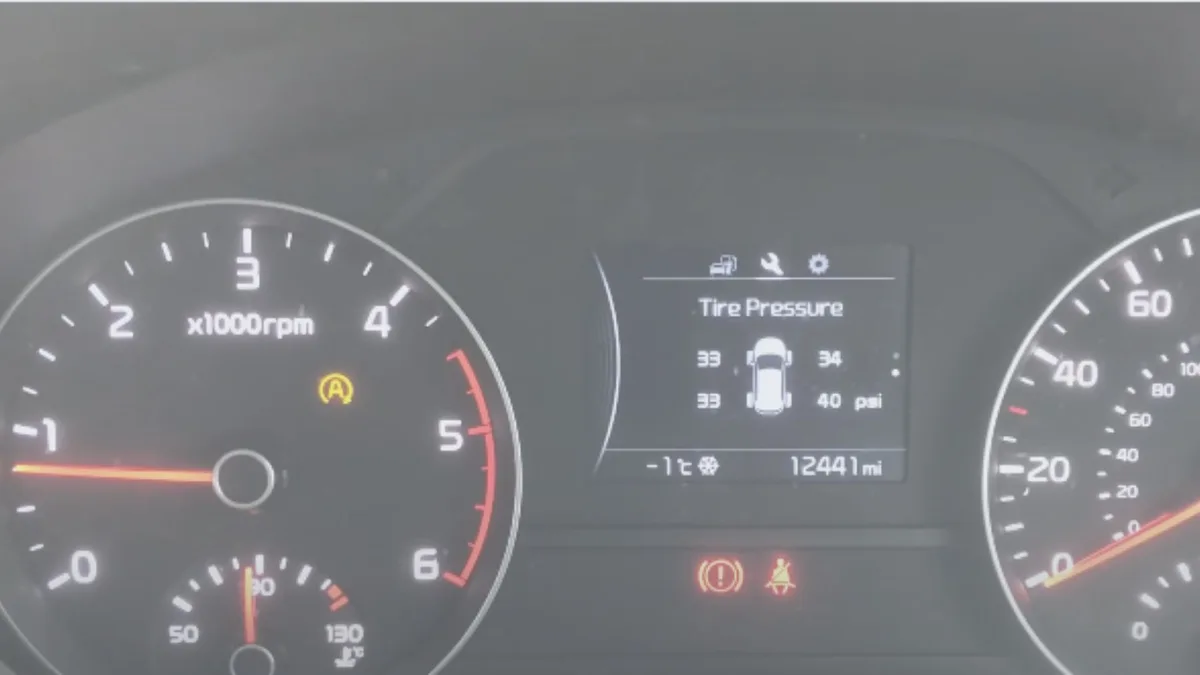
The Kia Sportage tire pressure light signals low tire pressure or a TPMS sensor fault. A steady light means one or more tires need air. A flashing light means the system can't read a sensor.
Check all four tires with a gauge. Inflate to the door jamb spec. Reset the system.
49% off Today's Exclusive Deals
Limited-time Exclusive Deals. Check current discount on Amazon.
Check Price on Amazon As an Amazon Associate I earn from qualifying purchases.Image source: Bing (Web (fair-use with source credit))
Flashing vs. Steady: Your First Decision Point
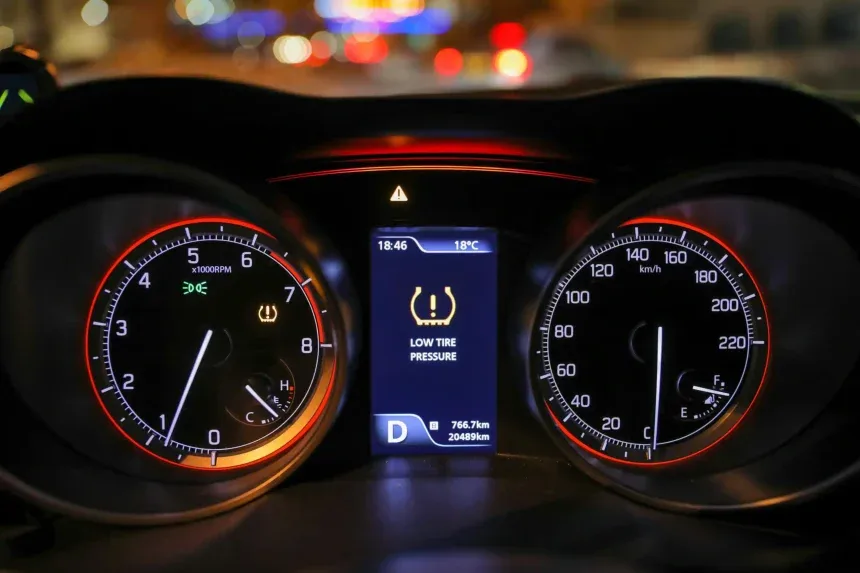
Image source: Bing (Web (fair-use with source credit))
The behavior of the light tells you which problem you're dealing with before you grab a gauge.
49% off Today's Exclusive Deals
Limited-time Exclusive Deals. Check current discount on Amazon.
Check Price on Amazon As an Amazon Associate I earn from qualifying purchases.Steady light. One or more tires dropped below the pressure threshold. Inflation usually fixes it.
Flashing light. The system can't communicate with a TPMS sensor. This points to a dead sensor battery, physical damage, or signal interference. Air pressure alone won't solve this.
| Light Behavior | Likely Cause | First Action |
|---|---|---|
| Stays on continuously | Underinflated tire | Check and inflate all tires |
| Flashes 60 to 90 seconds, then goes steady | Sensor fault | Inflate first, then reset |
| Flashing continuously | Severe sensor failure | Professional TPMS diagnostic |
Temperature plays a hidden role. Tire manufacturers confirm tires lose about 1 PSI for every 10°F drop in ambient temperature. A light triggered by a cold morning may be normal seasonal behavior.
The Sportage uses a direct TPMS system. Individual sensors inside each wheel transmit real-time pressure data at 315 MHz in North American models. More accurate than indirect systems, but those sensors carry batteries rated at five to ten years.
How to Check and Correct Your Tire Pressure
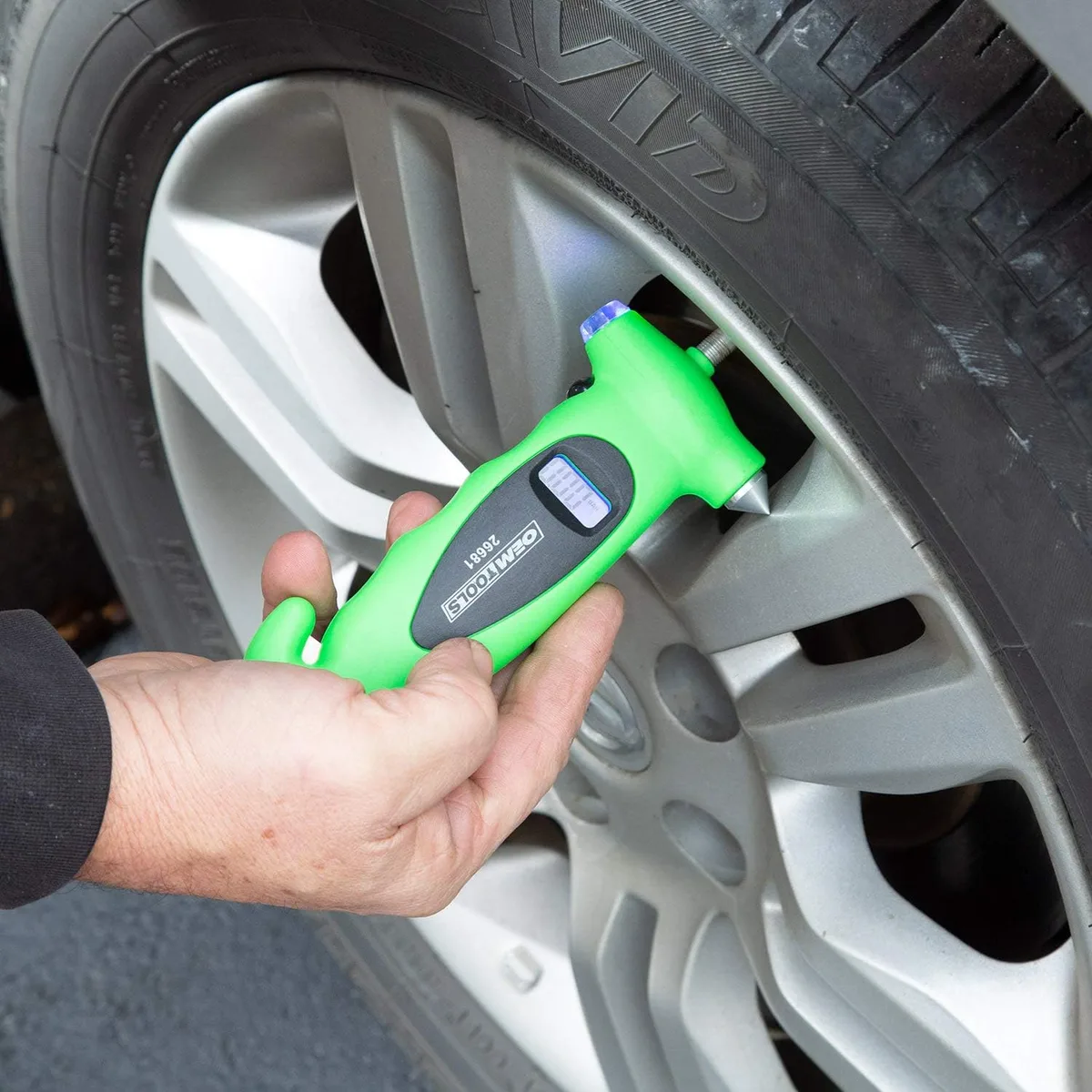
Image source: Bing (Web (fair-use with source credit))
You'll need a tire pressure gauge and an air source. A digital gauge runs $8 to $15. A portable 12V compressor costs around $25 to $40.
Find Your Target PSI
Open the driver's side door. Look for the sticker on the door jamb. It lists the correct cold tire pressure for your trim.
Most Sportage models sit between 33 and 36 PSI as of 2026. The number on the tire sidewall is the maximum the tire can handle, not what your car needs.
Check When Tires Are Cold
Drive less than a mile first, or check after the car has sat for three hours. Warm tires read higher. Checking after a highway run gives a false number.
Inflate or Deflate to Spec
Press the gauge onto the valve stem. Read the number. Add air in short bursts if it's low.
Recheck after each burst. Press the valve stem tip briefly to release pressure if it reads high.
Repeat for All Four
Check every tire individually. Don't skip the spare if your Sportage carries a full-size wheel with a TPMS sensor.
| Detail | Value |
|---|---|
| Target PSI | 33 to 36 (check door jamb) |
| When to check | Cold tires, parked 3+ hours |
| Tools needed | Digital gauge, air compressor |
Once all four match the door jamb spec, you're ready to reset.
How to Reset the TPMS Light
The reset procedure changed between generations. The wrong sequence won't damage anything, but it won't work either.
2016 and Newer (Fourth and Fifth Generation)
- Inflate all tires to the door jamb specification.
- Turn the ignition to ON. The engine doesn't need to run.
- Find the SET button on the lower left dashboard, left of the steering wheel.
- Press and hold until you hear three beeps or the light flashes three times.
- Drive at 50 mph or higher for 5 to 10 minutes to complete recalibration.
2010 to 2015 (Third Generation)
- Inflate all tires to spec.
- Turn the ignition ON.
- Use the steering wheel controls to scroll through the instrument cluster menu.
- Select Vehicle Settings, then TPMS, then Reset.
- Confirm on the cluster display.
- Drive at highway speed for several minutes to finish recalibration.
If It Doesn't Reset
The system won't reset if a sensor isn't transmitting. Our guide on the Hyundai Tucson tire pressure warning light covers the same platform and sensor architecture. If the light returns within a day, get a sensor diagnosis.
When the Light Won't Go Away
Inflated every tire. Completed the reset. Light comes back.
The problem isn't air pressure.
Likely causes:
- Dead sensor battery. Rated for five to ten years. If your Sportage is that age, this is the top suspect. The full sensor gets replaced. No battery-only service exists.
- Damaged sensor. Tire service, potholes, or curb strikes can crack one. Visual inspection won't always reveal the damage.
- Signal interference. Rare, but aftermarket electronics near the wheel wells can disrupt the 315 MHz signal.
- Missing spare sensor. The temporary spare usually lacks a TPMS sensor. The light stays on until you reinstall a proper wheel.
A shop connects an OBD-II scanner with TPMS capability to pinpoint the failing sensor. Replacement costs $50 to $150 per sensor, plus $20 to $50 for labor. The National Highway Traffic Safety Administration publishes detailed TPMS guidance if you want the federal background.
If multiple dashboard warnings appear simultaneously, our walkthrough on the Hyundai Tucson check engine light explains how to prioritize overlapping indicators on this shared platform.
Common Mistakes That Keep the Light On
Using the tire sidewall number. The max PSI molded into the rubber is not your target. Always use the door jamb sticker.
Inflating without checking first. One tire might be low while another is overinflated from a previous session. Check all four before adding air.
Skipping the drive cycle. After resetting, you need five to ten minutes of driving above 50 mph. A parked reset doesn't finish recalibration.
Ignoring temperature swings. A light on a cold morning that clears by afternoon isn't a fault. It's physics. Fill to spec and the fluctuation stays manageable.
Forgetting after tire rotation. Different wheel positions experience different loads and heat. Verify all pressures after any rotation.
Tire pressure directly affects braking and steering. If you've noticed steering wheel shaking at speed, check pressure before assuming a suspension problem. Uneven inflation can also cause brake pedal softness or brake noise.
Tire Pressure Specs, Sensor Costs, and Key Numbers
| Specification | Value |
|---|---|
| Recommended pressure | 33 to 36 PSI (door jamb) |
| Warning threshold | ~25% below recommended |
| Loss per 10°F drop | ~1 PSI |
| Sensor frequency | 315 MHz (North America) |
| Sensor battery life | 5 to 10 years |
| Replacement sensor | $50 to $150 each |
| Labor per sensor | $20 to $50 |
| Tire gauge cost | $5 to $30 |
| Portable compressor | $25 to $60 |
| Recalibration drive | 50+ mph for 5 to 10 min |
The 25% threshold means a Sportage set to 35 PSI won't warn you until pressure drops below roughly 26 PSI. That's a significant loss before any alert appears. Monthly manual checks matter even with a working TPMS.
All four sensors tend to fail around the same age. Budget $200 to $600 for a full set with installation. Independent tire shops typically charge less than dealerships for this work.
A portable compressor in your cargo area lets you address a low tire immediately instead of driving to find an air pump.
Frequently Asked Questions
Why is my Kia Sportage tire pressure light on when the tires look fine?
Tires lose pressure gradually without appearing flat. A 5 to 8 PSI drop rarely changes how a tire looks but triggers the warning. Temperature shifts cause invisible pressure loss too.
Always verify with a gauge.
Can I drive with the tire pressure light on?
Short distances at moderate speed are fine. Avoid highways and heavy loads. A severely underinflated tire generates excess heat and can fail.
If the light is flashing, the issue may be sensor-related, but you still shouldn't ignore it.
How long does a TPMS sensor battery last?
Manufacturers rate them at five to ten years. Once dead, the full sensor needs replacement. No battery-only service exists.
Our guide on Hyundai Tucson battery drain patterns covers related electrical issues on this shared platform.
Do I need to reprogram sensors after tire rotation?
Standard rotation usually doesn't require it. Sensors stay in their wheels and the system recognizes them. If the light activates after rotation, a TPMS relearn procedure with a scan tool resolves it.
Will a temporary spare keep the TPMS light on?
Yes. The temporary spare lacks a TPMS sensor. The system detects the missing signal and keeps the warning active.
Drive carefully and get the damaged tire repaired soon.
Does cold weather always trigger the light?
Not always, but it's the most common seasonal trigger. A 30°F swing can drop pressure by 3 PSI. If tires were already slightly below spec, that pushes them past the threshold.
Our coverage of radiator problems on the Tucson explains how seasonal temperature changes affect multiple vehicle systems in parallel.